
 Rifan Muazin
In the high-stakes environment of 2026, the delta between stagnant growth and market leadership rarely comes down to ad spend or creative flair. It comes down to the architecture of the marketing program itself. Marketing teams globally are running more campaigns and tracking more metrics than ever, yet many find their pipelines stalled. The culprit is almost never a lack of effort; it is a fundamental misunderstanding of process.
Digital marketing optimization is not a project with a defined finish line; it is a continuous operating rhythm. Companies that outperform their peers are shifting away from isolated channel tweaks toward a unified, systemic approach that treats testing as a core business function. By integrating shared KPIs, connecting every touchpoint to revenue, and embracing the AI-driven shift toward Answer Engine Optimization (AEO), elite marketers are generating up to 40% more revenue than their competitors.
The Core Philosophy: Why Optimization Fails
The most pervasive mistake in modern marketing is treating optimization as a periodic "check-in." Teams launch a campaign, review the numbers, make a minor tweak to a subject line, and wonder why their performance plateaued. This is optimization in a vacuum.
True optimization is built on three pillars:
- Shared KPIs: If the paid team is chasing Click-Through Rate (CTR) while the email team tracks Open Rates and the sales team monitors pipeline, the organization is optimizing for activity, not outcomes.
- Unified Data: When CRM data, campaign performance, and revenue attribution live in silos, optimization becomes guesswork.
- Test-and-Learn Workflows: Testing must be a consistent, disciplined process rather than a task performed only when the team has "downtime."
The Lifecycle Ripple Effect
Optimization does not happen in isolation. Every stage of the customer lifecycle is inextricably linked to the next. When a team achieves a 15% lift in landing page conversion, the impact cascades: Cost Per Lead (CPL) drops, the budget becomes more efficient, and the sales team receives higher-quality prospects.
Consider a B2B SaaS scenario: By reducing a demo form from seven fields to four, a company boosts conversion rates from 2% to 2.8%. While this seems like a minor change, the downstream result is an additional 40 leads per month for the same budget. When these leads are further refined through intelligent lead scoring and automated behavioral triggers, the cumulative effect on Revenue and Expansion MRR is exponential. This is the power of a holistic, lifecycle-based optimization strategy.
10 Strategic Levers for Modern Optimization
1. Transitioning from A/B Testing to a Testing Program
Isolated A/B tests are tactical, but a testing program is strategic. It requires a documented hypothesis backlog, a prioritization framework—such as the ICE (Impact, Confidence, Ease) model—and a clear process for scaling winners. A well-structured hypothesis should follow this logic: "We believe [change] will result in [outcome] because [reason]. We’ll know we’re right if [metric] changes by [X]."
2. Multi-Touch Attribution and Incrementality
While multi-touch attribution provides essential visibility into the customer journey, it measures correlation, not causation. Savvy marketers use attribution as a baseline and validate budget allocation through incrementality testing (e.g., holdout groups or geo-based experiments). This prevents the common trap of shifting budget based on vanity metrics that don’t actually drive incremental revenue.
3. The Era of AEO (Answer Engine Optimization)
AI-powered search—including Google’s AI Overviews, ChatGPT, and Perplexity—is fundamentally altering the discovery funnel. AEO is the new frontier. To thrive, brands must provide definitive, structured, and factually grounded content. This involves adding FAQ sections, using schema markup, and prioritizing topical authority. Success is no longer measured solely by organic traffic, but by "share of AI citations" and branded search volume.
4. Activating First-Party Data
With the erosion of third-party cookies, first-party data has become the most valuable asset in the marketer’s arsenal. By leveraging CRM data, email engagement, and website behavior, marketers can create high-performing audiences that consistently outperform third-party segments in ad platforms.
5. Loop Marketing: The Continuous Engine
Replace the traditional "Plan-Launch-Report" cycle with a Loop marketing model: Listen → Learn → Launch → Measure → Amplify → Loop. This engine feeds data signals—such as sales call themes or search trends—directly into the planning phase, ensuring that every campaign is backed by validated hypotheses.
6. Scaling Personalization with AI
AI tools like HubSpot’s Breeze AI have moved beyond novelty. High-leverage applications now include using AI to dynamically segment audiences, generate personalized content variants at scale, and predict lead intent. The effectiveness of these tools, however, remains entirely dependent on the quality of the underlying CRM data.
.png)
7. Reducing Landing Page Friction
Landing pages remain the highest-leverage conversion target. Common blockers include excessive form fields and poor message match. Ensure that the promise made in the advertisement is perfectly mirrored in the headline and tone of the landing page to minimize cognitive dissonance and maximize conversions.
8. The Content Optimization Gap
Most organizations suffer from a content volume problem, not a creation problem. Rather than constantly churning out new assets, teams should focus on refreshing existing high-potential content—specifically pages ranking in positions 4 through 15—and adding clear conversion paths to high-traffic educational content.
9. Quarterly Budget Modeling
Market dynamics shift faster than annual planning cycles can accommodate. Marketers should build a budget allocation model that is reviewed quarterly. Benchmarking marketing spend as a percentage of revenue helps ensure the organization remains properly invested relative to its growth targets.
10. The Optimization Operating Model
A winning team is defined by its governance. A "minimum viable operating model" includes a shared hypothesis backlog, a centralized testing calendar, and a rigorous review cadence. This prevents duplicate testing and ensures that failures are documented just as thoroughly as successes.
Supporting Data and Industry Implications
According to research from McKinsey, companies that master personalization—a direct output of disciplined optimization—consistently generate 40% more revenue than their peers. Furthermore, data indicates that structured testing programs produce two to three times more reliable lift than ad-hoc experiments.
The implication for marketing leaders is clear: the era of "gut-feeling" marketing is ending. In 2026, the winners will be the organizations that treat their marketing stack as a high-precision instrument. By unifying CRM intelligence, campaign orchestration, and AI-driven insights, teams can remove the "guessing" from their growth strategy.
Frequently Asked Questions
Q: How often should I review my campaigns?
A: Match your review cadence to the accumulation of data. Paid channels require weekly analysis, while SEO and content efforts should be reviewed monthly. Strategic channel-mix decisions are best handled on a quarterly basis.
Q: What is the biggest mistake small teams make?
A: Small teams often lack the discipline to document and act on results. They frequently abandon tests before reaching statistical significance. Even with limited budgets, focusing on landing page optimization and existing content refreshes can yield massive results without extra ad spend.
Q: When should a winning experiment be scaled?
A: Only scale when three criteria are met: 95% statistical significance, practical significance (meaning the lift is large enough to impact the bottom line), and reproducibility across different segments.
Q: Does AEO make SEO obsolete?
A: No, but it changes the goal. SEO targets rankings; AEO targets visibility within AI responses. You should treat them as complementary strategies that require both technical optimization and high-quality, authoritative content.
Conclusion: Optimization as a Culture
Ultimately, the most successful marketing teams are those that view optimization not as a series of hacks, but as a cultural commitment to improvement. Whether it is refining a landing page or re-allocating a portion of the media budget based on incrementality tests, every action must be measured, documented, and integrated into the broader business strategy. By fostering an environment where failure is treated as data and success is scaled rapidly, organizations can build a predictable, repeatable, and scalable engine for growth.


 Ammar Sabilarrohman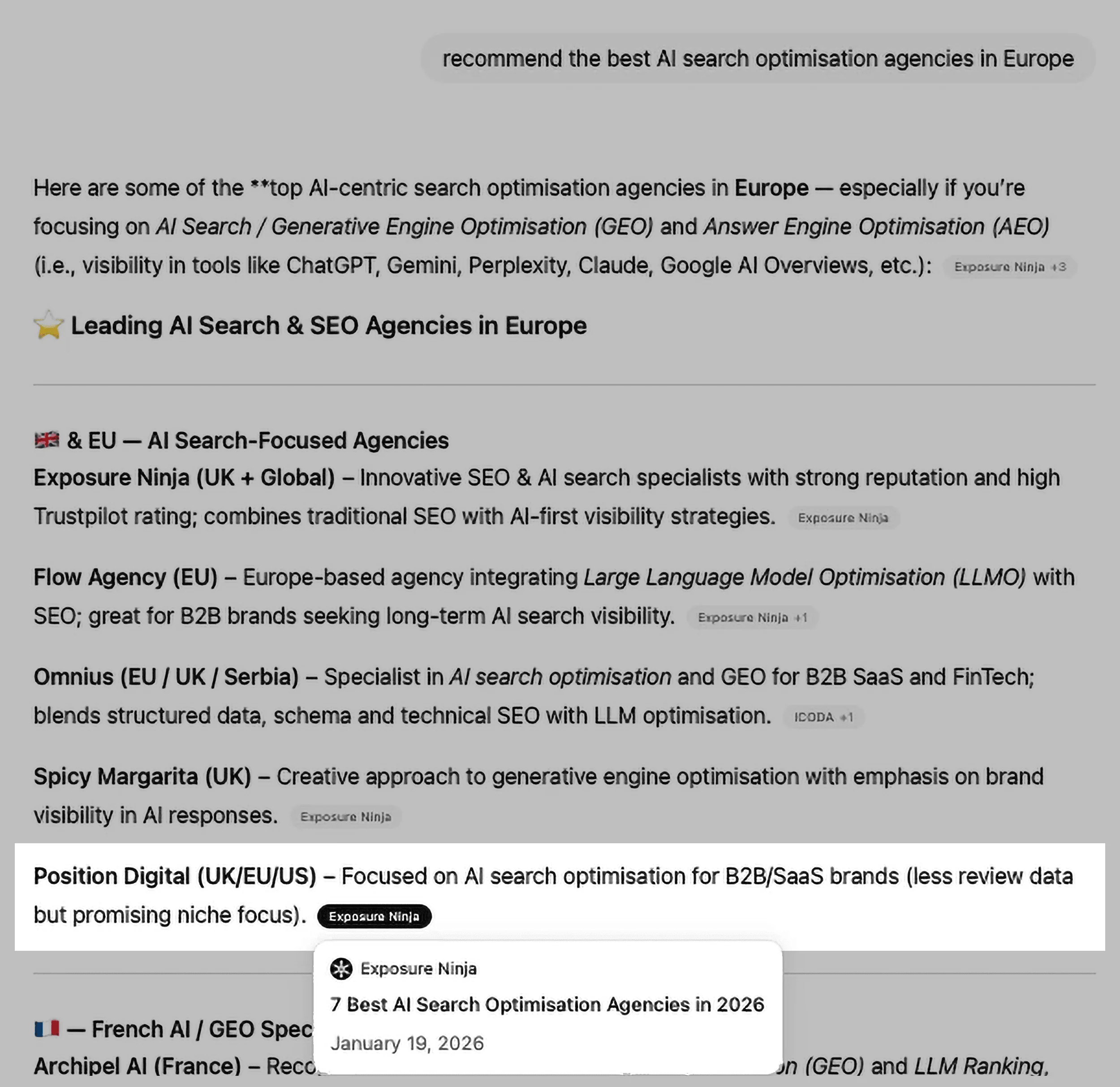
 Sagoh
Sagoh
 Raul Delapena Setiawan
 Reynand Wu

 Azzam Bilal Chamdy
 Ali Ikhwan