
 Pevita Pearce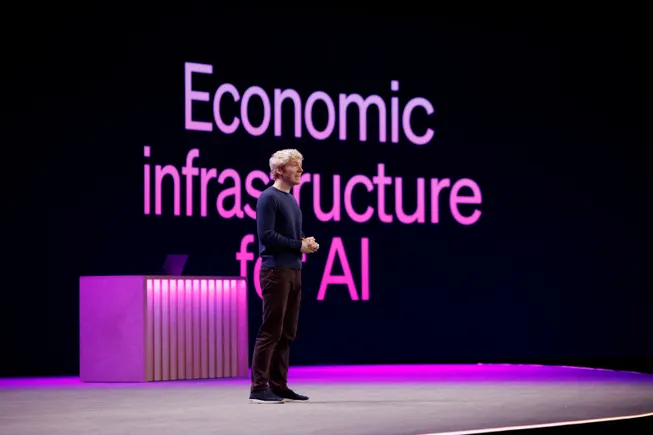
In a definitive shift for the global fintech landscape, Stripe has unveiled a series of strategic initiatives that aim to bridge the gap between human intent and machine execution. At its recent Sessions 2026 conference, the company cemented its role as the primary financial infrastructure provider for the era of "agentic commerce"—a future where AI agents act as autonomous economic actors. By integrating with tech giants like Google, Meta, Microsoft, and OpenAI, Stripe is transforming the internet from a destination for human browsing into a frictionless, automated engine for global trade.
Main Facts: The New Architecture of Commerce
The core of Stripe’s latest announcement is the expansion of its partnership ecosystem. By collaborating with Google, Stripe is effectively standardizing the "checkout experience" for AI. This follows a string of similar agreements established since September 2025 with Meta, Microsoft, and OpenAI. The objective is to allow merchants to sell goods and services directly within these platforms, using an integrated, secure, and invisible checkout flow.
Crucially, Stripe is evolving its "Link" wallet product to support AI agents. In this new paradigm, an AI agent can initiate and complete a purchase on behalf of a human user. While the wallet owner retains ultimate control—approving the transaction parameters—the agent executes the purchase, removing the manual "grunt work" of shopping.
Beyond AI-driven commerce, Stripe is broadening its support for diverse payment rails. U.S. merchants are now gaining the ability to accept stablecoins and Pix, Brazil’s highly successful instant payment system. This move reflects Stripe’s broader strategy to meet global consumers where they already transact, regardless of whether that environment is traditional fiat, instant digital payments, or blockchain-based assets.
Chronology: A Rapid Evolution in Fintech
The path to today’s announcement has been marked by a rapid sequence of strategic integrations:
- September 2025: Stripe announces major agentic commerce partnerships with Meta (Facebook), Microsoft (Copilot), and OpenAI (ChatGPT), establishing the foundation for integrated checkout within large-scale tech platforms.
- Early 2026 (Q1): Google, through its parent company Alphabet, signals its commitment to building "agentic protocols" for the entire commerce ecosystem during its Q1 earnings call, setting the stage for deeper collaboration with payment providers.
- Present (Sessions 2026): Stripe officially announces its partnership with Google to enable agentic commerce. Simultaneously, Meta reveals the expansion of stablecoin payouts to Colombia and the Philippines via Solana and Polygon blockchains, with Stripe managing the complex regulatory and administrative layer.
- Concurrent Developments: MoneyGram announces a global modernization of its retail network, utilizing Stripe’s infrastructure to unify its physical and digital payment channels.
Supporting Data: The Scale of the Shift
The implications of these changes are backed by significant shifts in payment adoption and infrastructure demand:
- Global Reach: Meta’s stablecoin payout initiative, supported by Stripe’s custody and licensing expertise, is slated to scale to approximately 160 countries by the end of 2026. This underscores a pivot toward using blockchain technology for cross-border remittances where traditional banking infrastructure is often sluggish or prohibitively expensive.
- Retail Modernization: MoneyGram’s upgrade, powered by Stripe, highlights the necessity of "omnichannel" consistency. By deploying new payment terminals that support tap-to-pay (Apple Pay, Google Pay) and "pay-by-link" technology, MoneyGram is attempting to connect its global retail footprint into a single digital experience.
- The Velocity of AI: As noted by Stripe’s leadership, the speed of agentic commerce is expected to be exponential compared to human-led shopping. When agents manage transactions, the volume and frequency of spending are projected to increase significantly, necessitating the robust, high-frequency infrastructure Stripe is currently building.
Official Responses: Voices from the Industry
Stripe’s Strategic Outlook
Will Gaybrick, Stripe’s president of technology and business, articulated the urgency of the moment during the opening keynote: "It’s easy to underestimate the implications of a near future where agents are autonomous economic actors responsible for most internet transactions. Just as agents work faster than we do, they’re going to spend money a lot faster, too."
Google’s Vision for Frictionless Retail
Philipp Schindler, chief business officer at Alphabet, emphasized the consumer-centric goals of the partnership. "Our goal is to really remove the grunt work of shopping so that consumers can focus on the enjoyable parts," Schindler noted. For Google, the focus is not merely on transaction speed but on elevating the retail experience to include brand loyalty and customer service, shifting the competitive landscape "beyond just price."
Meta’s Perspective on Financial Sovereignty
Ginger Baker, who heads Meta’s fintech and payments division, highlighted the philosophical shift in how humans will interact with money. "Payments will pivot from being a moment to being a policy," she stated. Baker argues that as users become comfortable setting "spending limits" and "payment preferences" for their agents, the human will gradually be removed from the direct oversight of individual transactions. "It feels radical today to suggest that we would just completely give something else permission to manage our financial transactions," Baker admitted, "but I think that’s going to be the reality we’re in."
Implications: A Fundamental Shift in the Digital Economy
The integration of AI into the commerce stack signals the end of the "browser-based" era of online shopping. We are entering an era of Policy-Driven Commerce, where the consumer defines the rules, and the AI agent navigates the complexity of the merchant ecosystem.
The Death of the "Checkout"
Historically, the checkout process has been a significant point of friction, leading to high cart abandonment rates. By moving the payment layer into the background of AI agents, Stripe, Google, and Meta are essentially eliminating the "checkout" as a distinct event. In the future, a user might simply express a desire for an item, and the agent—armed with payment authorization via Stripe’s Link wallet—will negotiate the purchase, verify the shipping, and confirm the transaction without the human ever visiting a retailer’s website.
The Global Normalization of Crypto
The partnership between Meta and Stripe regarding stablecoin payouts in emerging markets like the Philippines and Colombia is a watershed moment for cryptocurrency. By handling the "off-ramp" complexities, custody, and licensing, Stripe is making crypto-based payments invisible to the end user. This allows merchants to leverage the speed and low cost of blockchain networks without requiring them to become experts in wallet management or decentralized finance (DeFi).
The "Unified Experience" Mandate
MoneyGram’s pivot, enabled by Stripe, serves as a case study for legacy firms. As digital-first AI agents dominate the online space, physical retailers are under immense pressure to provide a "unified omnichannel experience." If a consumer can command an AI agent to handle a complex financial transaction at home, they will no longer tolerate clunky, fragmented payment processes in a physical store. The modernization of retail infrastructure is no longer a luxury; it is a prerequisite for survival in an AI-augmented world.
A New Regulatory Horizon
While the efficiency of agentic commerce is clear, it introduces new regulatory challenges. As AI agents become "autonomous economic actors," the question of liability, fraud prevention, and financial transparency becomes paramount. Stripe’s role as the intermediary is critical here; by embedding compliance and security directly into the protocol of the agentic interaction, they are attempting to build a safe foundation before the technology scales to its full, global potential.
In conclusion, the collaboration between Stripe and the tech giants of the world marks the beginning of a profound transformation in how we interact with money. The transition from human-led transactions to AI-managed commerce will require a new type of financial infrastructure—one that is as fast, intelligent, and autonomous as the agents it serves. With these recent announcements, Stripe has positioned itself not just as a payment processor, but as the underlying operating system for the next generation of global trade.


 Jia Lissa
 Basiran
 Nila Kartika Wati
 Sagoh
Sagoh

 Lina Hope