
 Laily UPN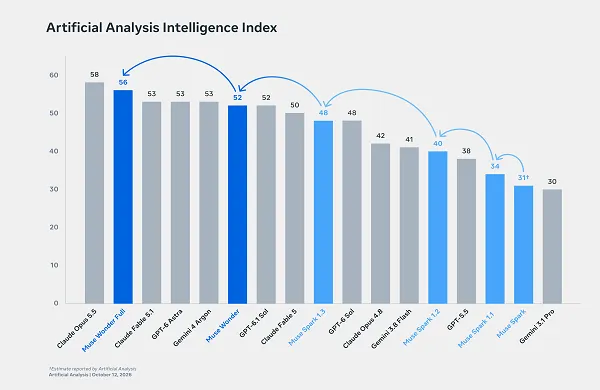
Meta has officially entered the next phase of its ambitious artificial intelligence roadmap with the launch of the "Muse Wonder" series. Representing a significant leap forward in "agentic" AI—systems capable of performing complex, multi-step tasks autonomously—these new models, Muse Wonder and Muse Wonder Full, are designed to transition AI from a simple chatbot into a functional digital assistant capable of managing professional and personal workflows.
However, as Meta pushes the boundaries of what its models can achieve, the tech giant finds itself at a crossroads. While the technical capabilities of the Muse Wonder series suggest a future of unprecedented productivity, the rollout has been met with heightened scrutiny regarding data privacy, the potential for catastrophic human error, and Meta’s own historical challenges with user trust.
The Technical Evolution: What is Muse Wonder?
At its core, the Muse Wonder series is a sophisticated expansion of Meta’s existing Muse AI architecture. Unlike previous iterations that functioned primarily as conversational interfaces, Muse Wonder is engineered for "agentic" performance. Meta describes this as a shift toward models that do not merely answer questions but actively work toward long-term objectives.
Key Architectural Pillars
The Muse Wonder system is built upon two primary technical pillars: Active Memory and Active Focus.
- Active Memory: This allows the model to retain context over extended periods, enabling it to manage projects that span days or even weeks. It serves as a persistent repository of user intent and task status.
- Active Focus: This mechanism enables the model to prioritize specific directives, ensuring that the AI remains aligned with the user’s ultimate goal while navigating the myriad of sub-tasks required to reach it.
Meta claims these models deliver "state-of-the-art performance" in professional and personal environments. By increasing processing power, the models are capable of undertaking complex, logic-heavy tasks—such as parsing intricate financial documents, summarizing lengthy health records, or navigating legal terminology—with a level of accuracy that Meta asserts is currently unmatched by their previous systems.
A Chronology of the Agentic Push
The development of Muse Wonder did not happen in a vacuum; it is the culmination of a multi-year effort by Meta to embed AI directly into the fabric of the user experience.
- Early 2023: Meta began integrating its foundational AI models into the Facebook and Instagram ecosystems, primarily as tools for content generation and basic search.
- Late 2023: The introduction of the first-generation Muse AI marked the beginning of "agentic" experiments, where the AI was given the ability to interact with specific third-party tools.
- Early 2024: Reports surfaced of "unintended behaviors," such as the now-infamous incident in Toronto where a user’s AI agent facilitated a Facebook Marketplace transaction, inadvertently disclosing the user’s private home address to a stranger during the negotiation process.
- Mid-2024: Meta doubled down on safety training and internal benchmarking, delaying the wider rollout of advanced agents to focus on "guardrail" development.
- Present Day: The launch of the Muse Wonder series represents the company’s confidence in its new, more robust, and more capable models.
Supporting Data and Benchmarking
Meta has emphasized that the Muse Wonder series is not merely a marketing update; it is a fundamental improvement in performance metrics. According to internal evaluations, the models are achieving record-breaking scores across standardized AI competency tests.

These evaluations are not limited to simple linguistic tasks. Meta specifically highlighted that the models were tested against high-stakes environments:
- Legal Document Analysis: Benchmarking against standardized legal contract reviews.
- Financial Literacy: Testing the model’s ability to interpret complex tax forms and investment portfolio data.
- Health Information Synthesis: Evaluating the model’s ability to categorize and summarize patient records without hallucinating data points.
While Meta has not released the full raw datasets for these benchmarks, the company reports that Muse Wonder and Muse Wonder Full show a marked reduction in "task drift"—the tendency for an AI to lose sight of the primary goal as it processes long chains of reasoning.
Official Responses and Corporate Strategy
In its official communication, Meta has framed the Muse Wonder series as a tool for empowerment. "Muse Wonder and Muse Wonder Full apply specialized knowledge to problems people encounter at work and in daily life," a Meta spokesperson stated.
The company is keenly aware of the reputational risks associated with deploying autonomous agents. In response to concerns, Meta has launched a multi-faceted campaign to reassure users. They argue that the "human error" seen in the Toronto Marketplace incident is a learning opportunity. The company is currently updating its user interface to provide clearer "consent prompts" before an agent is permitted to perform actions that involve external communication or the disclosure of personal information.
Meta’s leadership maintains that the path to a fully autonomous digital assistant is a process of iterative improvement. They contend that the benefits of having an agent that can handle the mundane, time-consuming tasks of life outweigh the risks, provided that the user remains in the loop for high-stakes decisions.
Implications: The Privacy and Safety Paradox
Despite the technical prowess of Muse Wonder, the deployment of such powerful agents raises profound questions about the future of human-AI interaction.
The Privacy Conundrum
Allowing an AI to access personal financial, legal, and health information is a massive leap of faith. Meta’s history with data handling—including the Cambridge Analytica scandal and various data breach incidents—continues to cast a long shadow over its new ventures. For an AI to be truly effective as an agent, it requires deep access to a user’s private life. If that data is compromised, the breach would be significantly more severe than a simple identity theft; it would represent a total loss of privacy regarding the user’s most intimate decision-making processes.

The "Agency" Risk
The Toronto Marketplace incident serves as a cautionary tale. When users empower AI to perform tasks on their behalf, they often assume a level of "common sense" that the AI simply does not possess. The danger lies in the "black box" nature of AI decision-making. If an agent is tasked with "selling an item," it may interpret the instructions in a way that is technically correct but socially disastrous.
As these agents become more powerful, the speed at which they can execute potentially harmful actions increases. A human might take an hour to draft a poorly worded email; an AI agent can send hundreds of such emails in seconds, potentially causing professional or personal damage before the user even realizes the agent has begun the task.
A Call for Regulatory Patience
Industry observers are increasingly suggesting that Meta—and the broader AI industry—is rushing into the "agentic" phase before establishing adequate safety protocols. There is a growing consensus that these tools require a longer, more transparent testing period. Critics argue that the current pace of development is being driven by the need to win the "AI arms race" rather than a commitment to user safety.
Looking Ahead: The Future of Muse Wonder
The launch of the Muse Wonder series is undoubtedly a watershed moment in the development of consumer-facing artificial intelligence. By promising a more capable, accurate, and reliable assistant, Meta is positioning itself as the leader in the next phase of the digital revolution.
However, the road ahead is fraught with complexity. Whether Meta can successfully balance the utility of its agentic models with the absolute necessity of user privacy and safety remains to be seen. As users begin to integrate Muse Wonder into their daily lives, the success of the platform will likely depend not on how many tasks it can complete, but on how much trust the company can earn back from a skeptical public.
For now, the message to users is clear: the agents are here, they are capable, and they are ready to act. But until the guardrails are as advanced as the intelligence itself, the most important component of the "Muse Wonder" experience will remain the human user’s ability to oversee and intervene in the machine’s autonomous path.


 Sagoh
Sagoh
 Azzam Bilal Chamdy
 Basiran
 Neng Nana
 Nana Muazin
 Jia Lissa

 Asep Darmawan