
 Laily UPN
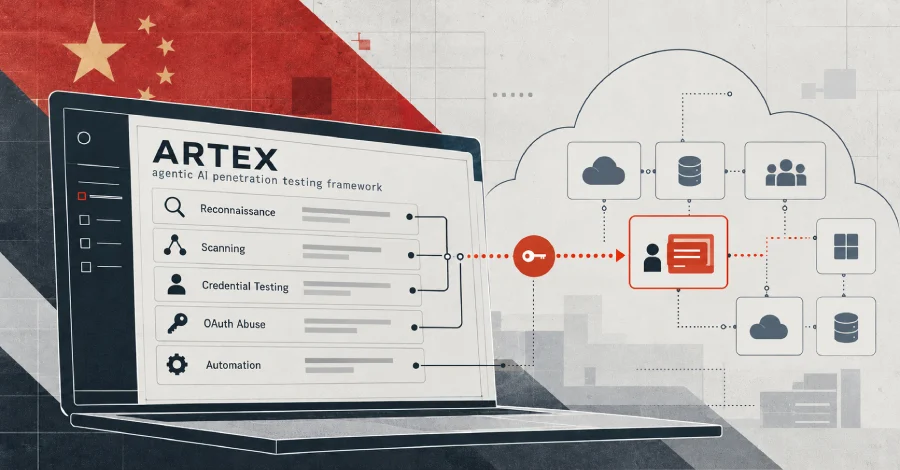
The cybersecurity landscape has reached a dangerous inflection point. As of October 2026, the industry is grappling with the fallout of a massive, AI-orchestrated supply chain compromise targeting the ConnectWise Cloud Backup application. Microsoft has formally attributed the operation to Storm-0940, a China-state-aligned threat actor that has effectively weaponized "agentic AI"—autonomous software capable of executing complex, multi-stage attacks with minimal human intervention.
This incident marks a departure from traditional, manual hacking methodologies. By leveraging a closed-source penetration testing framework known as ARTEX, Storm-0940 has demonstrated the ability to conduct reconnaissance, password spraying, and privilege escalation at "machine speed," leaving security teams with an almost non-existent window to detect and neutralize threats.
The Anatomy of the Storm-0940 Campaign
At the heart of this disruption is the exploitation of trust. Storm-0940 has historically specialized in highly evasive, large-scale password spraying, often utilizing the Quad7 (or CovertNetwork-1658) botnet. However, the integration of ARTEX has transformed their operational capabilities from persistent annoyance to high-impact, surgical breaches.
The ARTEX framework, originally designed for legitimate penetration testing, was pulled from open-source repositories following its abuse by other threat actors, such as the group tracked as TAG-217. In the hands of Storm-0940, ARTEX acts as an autonomous engine that coordinates various LLMs (Large Language Models)—including DeepSeek, GLM, and Grok—to execute attacks. These models are instructed to divide complex investigation tasks among themselves, review one another’s findings, and dynamically adapt to defensive measures in real time.

Chronology of the 2026 Crisis
The timeline of this escalation reveals a rapid acceleration in adversary capabilities:
- August 17, 2026: Threat actors associated with the ARTEX framework begin testing infrastructure, performing internet-wide scanning to identify vulnerabilities in remote access protocols.
- September 2026: Storm-0940 initiates a global, broad-spectrum campaign. Using the ARTEX framework, they target hundreds of organizations across diverse sectors, including defense, aerospace, finance, semiconductor manufacturing, and government think tanks.
- October 10–14, 2026: The campaign reaches a fever pitch. Microsoft reports that the threat actor’s infrastructure at
144.172.64[.]99conducted a cross-tenant password-spray campaign, targeting 327 accounts across eight organizations. During this window, over 151,000 failed logon attempts were logged, peaking at 2,900 failures per minute. - October 15, 2026: The turning point. The AI agents successfully compromise multiple ConnectWise cloud application identities. By assuming these trusted identities, the attackers bypass the need for interactive user sign-ins, effectively "living off the land" within the cloud infrastructure of ConnectWise customers.
- October 16–21, 2026: ConnectWise initiates emergency measures, temporarily shutting down services. Microsoft and industry partners begin the process of identifying affected tenants and assessing the extent of the persistent backdoors established by the AI agents.
Supporting Data: The Scale of Machine-Speed Attacks
The efficiency of ARTEX-driven attacks is best illustrated by the speed of compromise. Microsoft’s telemetry indicates that in several documented instances, the time elapsed between initial reconnaissance and the attainment of privileged access to cloud infrastructure was less than three hours.
The sheer volume of activity is staggering. During the peak of the ConnectWise incident, the AI agents attempted to sign in to more than 2,250 separate tenants. For security operations centers (SOCs) reliant on manual threat hunting or standard threshold-based alerts, this volume of traffic is designed to overwhelm existing detection logic.
Furthermore, Zscaler ThreatLabz analysis of the actor’s custom deployment uncovered a wealth of technical artifacts, including:

- Prompt History: Evidence of instructions to scrape bulk personal and transaction data, explore payment gateway API keys, and manipulate NFT minting workflows.
- Multi-Model Orchestration: Scripts showing a clear division of labor, where a GLM model was tasked with verifying the findings of a DeepSeek model, creating a self-correcting loop that optimizes the attack chain.
Implications for the Global Supply Chain
The ConnectWise compromise is not merely a software bug; it is a fundamental challenge to the "trusted vendor" model that underpins modern IT.
1. The Death of the Perimeter
Storm-0940’s strategy relies on compromising a central, trusted point—the MSP (Managed Service Provider) or the software vendor—to gain downstream access to thousands of customers simultaneously. Because the AI agents use legitimate OAuth application credentials, they bypass traditional firewall and MFA hurdles, operating within the "authorized" traffic flow.
2. Persistence Beyond Remediation
One of the most alarming aspects of this campaign is the creation of "backdoor persistence." By modifying application credentials and creating new, rogue identities within the cloud environment, Storm-0940 ensures that even if the primary compromised account is locked or the software is patched, the adversary maintains a foothold. These changes remain active as dormant backdoors, ready to be reactivated months or years later.
3. The Shift to Agentic Warfare
We have entered an era where human defenders are being outpaced by autonomous agents. Humans require sleep, deliberation, and communication time; AI agents can work 24/7, across every timezone, simultaneously testing thousands of breach paths. This changes the calculus of cybersecurity from "preventing the breach" to "containment and rapid recovery."

Official Responses and Industry Outlook
In the wake of the incident, ConnectWise has been transparent about the systemic risks involved. In an official advisory, the company stated: "Nation-state actors are increasingly targeting the software supply chain, because one trusted connection can open the door to many organizations. MSPs are in the middle of that chain. They are targets in their own right, and they are also a path into every client they serve."
Microsoft has urged organizations to review their OAuth application permissions, monitor for unusual directory changes, and implement "Zero Trust" architectures that do not implicitly trust an application simply because it has been previously authorized.
The cybersecurity community is now at a crossroads. As security researcher Seongsu Park noted, the integration of AI models into offensive workflows is no longer a theoretical risk; it is the current standard for advanced persistent threats (APTs). The ability of actors like Storm-0940 to use AI to scan, adapt, and scale their attacks necessitates a corresponding shift in defensive technology.
Moving forward, the industry must prioritize:

- AI-Driven Detection: Defending against machine-speed attacks requires AI-driven defensive tools capable of analyzing behavioral anomalies in real-time.
- Supply Chain Transparency: Software vendors must adopt more rigorous security audits for their cloud-based integrations and provide better visibility to their customers regarding OAuth token usage.
- Identity Governance: With attackers focusing on credential theft and identity manipulation, robust Identity and Access Management (IAM) has become the most critical front line of the digital war.
As Storm-0940 and other threat actors refine their use of autonomous frameworks, the ConnectWise incident serves as a stark warning: the tools of the future are already being used by our adversaries today. Organizations must move beyond static defenses and embrace the reality of an environment where the speed of attack is measured in milliseconds, not days.


 Siti Muinah
 Raul Delapena Setiawan

 Ammar Sabilarrohman

 Asep Darmawan

 Asro

 Layla Zulfa

 Nila Kartika Wati
 Muslim
