
 Sagoh
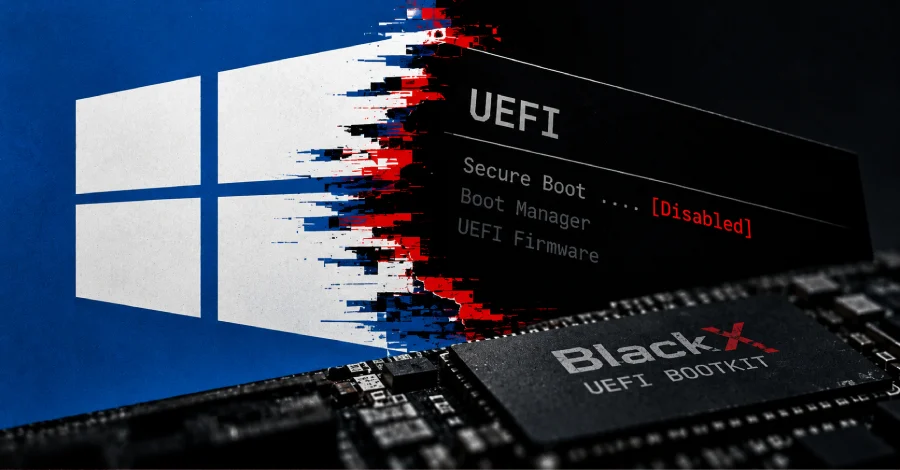
In a chilling development for global cybersecurity, a sophisticated new Unified Extensible Firmware Interface (UEFI) bootkit dubbed BlackX has emerged, targeting diplomatic organizations across Central Asia. Security researchers from Kaspersky have linked this campaign to suspected China-aligned state-sponsored threat actors, specifically those operating under the umbrella of the prolific APT41 group.
The discovery of BlackX marks a significant escalation in the use of low-level, firmware-based malware. By compromising the boot process, attackers gain a foothold that is notoriously difficult to detect and even harder to remove. As diplomatic entities in Tajikistan, Uzbekistan, and Turkmenistan grapple with this breach, the incident highlights a growing trend of nation-state actors adapting commercial crimeware techniques to bypass modern hardware security measures.
The Core Threat: Anatomy of the BlackX Bootkit
BlackX is not a first-stage entry tool; rather, it is a persistence and defense-evasion mechanism designed to survive operating system reinstalls and drive replacements. Its primary objective is to undermine the integrity of the Microsoft Windows startup process, effectively blinding security solutions by intercepting the system before the OS kernel—and its associated EDR (Endpoint Detection and Response) tools—can even load.
The bootkit is widely considered an evolved "copycat" of BlackLotus, the notorious UEFI bootkit first observed in the wild in late 2022. While BlackLotus was the first of its kind to be sold as a service on cybercrime forums, its source code has never been public. The appearance of BlackX suggests one of two alarming possibilities: either the threat actors behind the Central Asian campaign successfully reverse-engineered the complex BlackLotus architecture, or they secured access to its private source code through illicit underground channels.
The Vulnerability Gap: Why Patches Aren’t Enough
At the heart of the BlackX infection vector lies the "Baton Drop" vulnerability (CVE-2022-21894). This flaw allows an attacker to bypass Secure Boot, the hardware-validated security standard meant to ensure that only trusted software runs during the startup sequence.
While Microsoft released patches to address CVE-2022-21894 years ago, the vulnerability remains effectively unpatched in many enterprise environments. This is because remediation requires a manual, multi-step process: specifically, updating the UEFI Forbidden List (DBX) to revoke the certificates of vulnerable boot managers. Many organizations have failed to perform these manual mitigations, leaving a "window of opportunity" that BlackX is now actively exploiting.

A Chronology of the Campaign
The activity, which began surfacing in early 2026, reflects a methodical approach to espionage.
- Initial Breach (Pre-2026): The threat actors, believed to be linked to the "FishMonger" (also known as Aquatic Panda or Earth Lusca) subset of APT41, first gain initial access to the target network through conventional means—likely spear-phishing or known application exploits.
- Privilege Escalation: Once inside, the attackers move laterally until they secure administrator-level privileges. This is a critical prerequisite, as the deployment of BlackX requires the ability to write to the system’s EFI partition.
- Deployment (Early 2026): Attackers drop the BlackX installer, typically camouflaged within the
C:ProgramDataInteldirectory. The installer uses an RC4-encrypted command-line argument to execute its payload. - Persistence and Kernel Hijacking: BlackX installs Machine Owner Keys (MOK) to facilitate the loading of arbitrary, malicious EFI files. This allows the malware to inject a driver directly into the Windows kernel during boot.
- The October 2026 Realization: Researchers Georgy Kucherin, Vladimir Nestor, and Vasily Berdnikov noted that while a specific certificate used by the malware expired in October 2026, the expiration does not prevent the vulnerable binaries from loading unless the certificate is explicitly blocklisted by the administrator.
Supporting Data: The Chinese Connection
The attribution to China-aligned actors is supported by a confluence of technical artifacts and operational patterns.
- The "xdd" Signature: Kaspersky researchers identified an "xdd" string within the BlackX code. This same string has been observed in kernel implants used by FishMonger, a group previously implicated in attacks on government entities across Taiwan, Thailand, and Pakistan.
- DLL Sideloading: The use of DLL sideloading to deploy secondary payloads is a hallmark technique frequently employed by Chinese threat actors.
- Cross-Pollination of Tools: The use of a commercial bootkit (BlackLotus) by a state-sponsored group is highly unusual. Typically, APTs develop bespoke tooling to avoid attribution. However, by adapting an existing, proven tool, the attackers demonstrated a pragmatic approach to bypassing rigorous Windows boot protections.
The malware also attempts to disable security software by dropping a user-mode payload for espionage. Interestingly, the driver includes routines specifically targeting Kaspersky and Avast, though researchers confirmed these attempts are currently ineffective—an indication that the toolset is still undergoing refinement.
Official Responses and Remediation Guidance
The discovery of BlackX has prompted renewed warnings from security vendors and government cybersecurity agencies regarding the necessity of manual Secure Boot revocations.
Microsoft’s documentation is clear: installing the latest Windows updates is insufficient if the vulnerable boot managers remain valid in the firmware’s database. Security teams must:
- Manually update the DBX: Add the "Windows Production PCA 2011" certificate to the UEFI Forbidden List.
- Monitor EFI partitions: Regularly scan for unauthorized file changes in the system and UEFI partitions.
- Audit Administrator Privileges: Since BlackX requires administrative access, limiting the scope of high-privileged accounts is the most effective way to prevent the bootkit from being installed in the first place.
Implications: The New Frontier of Firmware Espionage
The emergence of BlackX represents a paradigm shift in how we perceive the "ceiling" of cyber threats. By operating at the UEFI level, adversaries are no longer fighting for control of the operating system; they are effectively owning the hardware.

1. The Death of Traditional Forensics
Because the malware resides in the firmware, traditional disk-based forensic analysis may fail to detect the infection. If a system is compromised by BlackX, a clean install of Windows—even one that wipes the hard drive—may not suffice, as the malware persists within the UEFI partition or the SPI flash memory. This necessitates a more rigorous approach to hardware verification and firmware integrity checks.
2. The Commercialization of State-Sponsored Tools
The crossover between cybercrime and espionage is becoming increasingly blurred. When state-sponsored actors "borrow" or purchase source code from the cybercrime underground, it complicates the task of attribution and provides a "plausible deniability" layer. If a bootkit is based on a leaked tool, defenders cannot immediately point to a specific nation-state based on the codebase alone.
3. The Central Asian Theater
The focus on Tajikistan, Uzbekistan, and Turkmenistan suggests that the geopolitical importance of Central Asia is driving a corresponding increase in cyber-espionage activity. As these nations modernize their digital infrastructure, they have become prime targets for actors looking to influence regional policy, monitor diplomatic communications, and secure long-term intelligence collection.
Conclusion
BlackX serves as a stark reminder that in the world of high-stakes espionage, the most sophisticated tools are not necessarily the ones built from scratch. By repurposing the logic of BlackLotus, APT41 has demonstrated a high degree of operational flexibility.
For organizations worldwide, particularly those involved in sensitive diplomatic or government work, the lesson is clear: firmware security is no longer an optional layer. As attackers move deeper into the stack, the industry must pivot toward "hardware-rooted" security models that treat every component—from the bootloader to the firmware—as a potential, and high-value, point of failure. The battle for the network has moved from the browser to the silicon, and as BlackX proves, the threat is already here.


 Siti Muinah

 Raul Delapena Setiawan

 Ammar Sabilarrohman

 Asep Darmawan

 Asro

 Layla Zulfa

 Nila Kartika Wati

 Muslim
