Basiran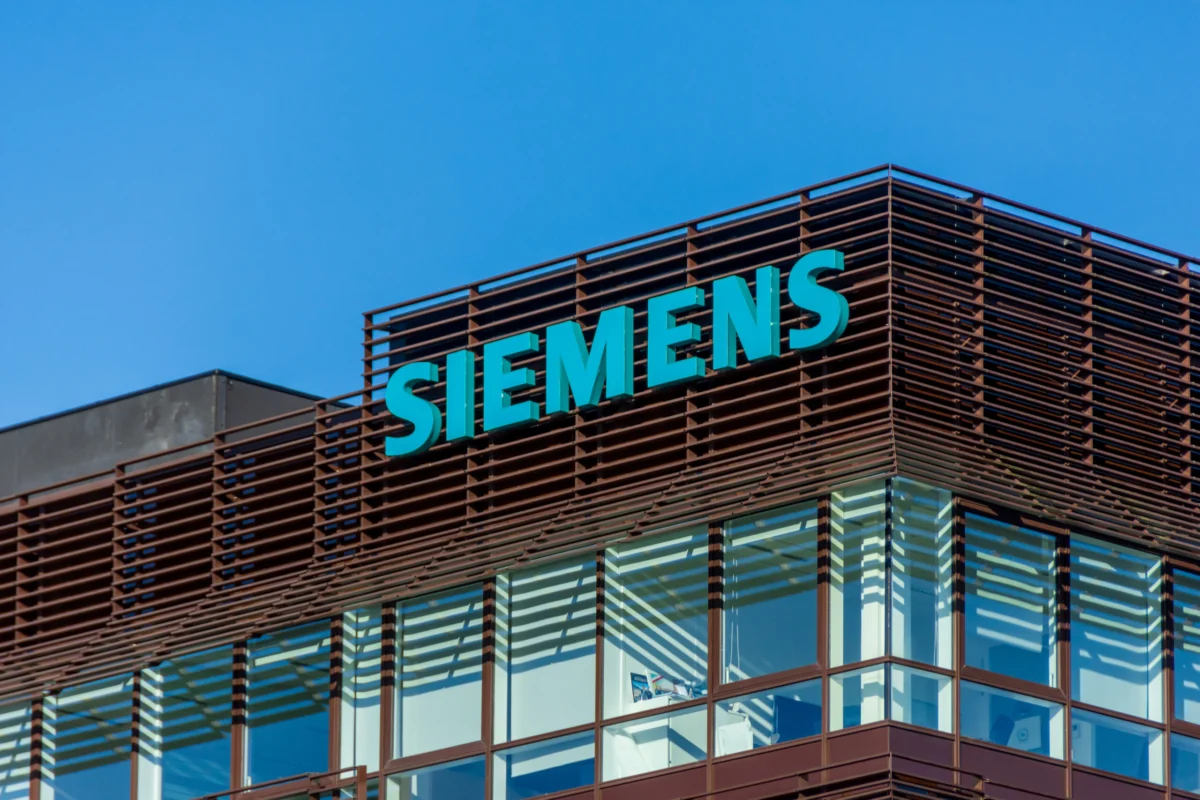
In a move that promises to reshape the landscape of industrial digitalization, global IT powerhouse TD Synnex and industrial technology leader Siemens have announced a comprehensive international distribution partnership. The collaboration seeks to bridge the historic divide between Information Technology (IT) and Operational Technology (OT), leveraging the collective strengths of both firms to accelerate the deployment of Artificial Intelligence (AI) across global manufacturing, infrastructure, and building sectors.
By integrating TD Synnex’s massive global IT distribution ecosystem with Siemens’ deep-rooted industrial automation and infrastructure portfolio, the two companies aim to tap into what executives describe as a potential $1 trillion market opportunity.
Main Facts: The Scope of the Alliance
The agreement, announced on October 5, establishes a "joint framework" designed to facilitate a seamless flow of industrial technology through TD Synnex’s extensive network of over 150,000 resellers and technology partners.
At the core of this partnership is the concept of "IT/OT convergence." Historically, the systems that power office networks (IT) and the systems that drive factory floors and energy grids (OT) have operated in silos. The TD Synnex-Siemens alliance aims to dismantle these silos, providing a unified path for enterprises to implement complex industrial AI, automated control systems, and cybersecurity protocols.
TD Synnex, fresh off a record-breaking fiscal third quarter with $21.6 billion in revenue, provides the necessary scale to bring Siemens’ specialized hardware and software to a diverse array of markets. Siemens, in turn, provides the industrial "heavy lifting"—the sensors, automation controllers, and building management systems that constitute the backbone of modern infrastructure.
Chronology: A Strategic Evolution
The partnership did not emerge overnight; it is the culmination of a shifting technological paradigm where the "Edge" meets the "Enterprise."
- Pre-2024 (The Foundation): Both companies began identifying the increasing demand from enterprise clients for integrated solutions. Customers were no longer satisfied with buying industrial hardware and IT software separately; they required interoperability.
- Early 2024: Discussions intensified between the two firms regarding the scalability of industrial AI. Executives recognized that while Siemens had the technical prowess, TD Synnex possessed the "last mile" logistics and partner enablement capabilities to reach the global market.
- October 5, 2024: The companies formally unveiled their global distribution framework. The announcement signaled a move away from traditional transactional distribution toward a value-added, ecosystem-based approach.
- Post-Announcement (Current Phase): The companies are now focused on integrating their partner portals and training programs, ensuring that TD Synnex’s IT-focused resellers can effectively market and support Siemens’ OT-focused technology stack.
Supporting Data: The Trillion-Dollar Opportunity
The enthusiasm surrounding this partnership is underpinned by massive growth projections in the industrial AI sector. Dion Smith, head of global partner ecosystem at Siemens, explicitly cited a $1 trillion addressable market. This figure represents the total value of the "industrial digitalization" wave, which includes:
- Industrial AI: The integration of predictive maintenance and generative AI into production lines to reduce downtime and optimize output.
- Cybersecurity for Infrastructure: As OT systems move online to support AI, the surface area for cyberattacks expands, necessitating integrated IT/OT security solutions.
- Digital Infrastructure: The backbone of smart buildings and smart cities, which requires high-level IT management to handle the data influx from millions of IoT sensors.
TD Synnex’s reach is a critical component of this calculation. With operations in more than 100 countries, the distributor serves as a conduit for "hyperscalers"—the cloud providers that will host the data processed by Siemens’ industrial equipment. By connecting these hyperscalers to the factory floor, the partnership creates a closed loop of data, processing, and actionable intelligence.
Official Responses: The Strategic Rationale
The leadership from both organizations emphasized that this partnership is a fundamental pivot in how industrial technology is brought to market.
Alastair Borissow, Head of Global Distribution Sales at Siemens:
"With the incredible pace of change driven by AI, bringing IT and OT closer together has never been more important. By combining our established and highly capable global OT distribution network with TD Synnex’s complementary strengths in IT distribution, scale, and ecosystem, we intend to create new opportunities for our entire distribution channel."
Cheryl Day, Senior Vice President, New Vendor Acquisition and Global Solutions at TD Synnex:
"IT and OT convergence is creating significant opportunities for partners to connect enterprise technology with the systems that power industries, infrastructure, and buildings. By combining Siemens’ industrial technology expertise with TD Synnex’s global partner ecosystem, enablement capabilities, and value-added services, we can help partners access new markets, develop new skills, and address emerging opportunities in areas such as industrial AI, automation, cybersecurity, and digital infrastructure."
Dion Smith, Head of Global Partner Ecosystem at Siemens:
"This is about far more than the distribution of technology—it is about connecting the industrial and IT worlds at unprecedented scale. We aim to create new routes to market, engage new buying centers within existing customers and reach entirely new customers, while accelerating the convergence of IT and OT."
Implications: The Future of Industrial Digitalization
The implications of this partnership are far-reaching, affecting how businesses purchase technology, how they secure their assets, and how they scale their AI ambitions.
1. Democratizing Industrial AI
Until now, complex industrial automation was often the domain of specialized integrators. By moving these technologies through TD Synnex’s broader distribution channel, Siemens is effectively "democratizing" industrial AI. Thousands of smaller IT resellers will now have the ability to offer sophisticated industrial solutions, potentially lowering the barrier to entry for small-to-medium-sized manufacturing enterprises.
2. A New Standard for Cybersecurity
The convergence of IT and OT has historically been a security nightmare, as OT systems—often designed for long lifespans and reliability—are frequently vulnerable when connected to the internet. The partnership aims to bake security into the distribution process. By providing standardized, vetted solutions, the companies are offering a more secure pathway for "Industry 4.0" adoption.
3. Expansion of the Channel Ecosystem
For the channel partners, this is a major growth lever. IT-focused partners who have traditionally sold servers, laptops, and software licenses are being given a seat at the table in the massive industrial sector. This transition allows these partners to diversify their revenue streams, moving away from commoditized hardware into high-margin, long-term industrial service contracts.
4. Scalability and Global Reach
The combination of Siemens’ brand authority and TD Synnex’s logistics network allows for rapid global deployment. As global supply chains are reconfigured and manufacturing is "reshoring" to various regions, the ability to rapidly ship, install, and integrate industrial-grade IT/OT systems will be a competitive differentiator for both companies.
Conclusion
The TD Synnex-Siemens partnership is more than a commercial agreement; it is a recognition that the digital and physical worlds have finally collided. In the coming years, the success of this alliance will be measured by how effectively they can move beyond the "proof of concept" phase and into widespread, scalable industrial AI adoption.
As the lines between the office server room and the factory floor continue to blur, the unified ecosystem created by these two giants will likely become the standard architecture for the next generation of industrial innovation. For stakeholders, partners, and customers, the message is clear: the future of industry is digital, it is intelligent, and it is now significantly more accessible.


 Laily UPN
 Rifan Muazin
 Iffa Jayyana
 Dwi Wanna
 Asep Darmawan