
 Reynand Wu
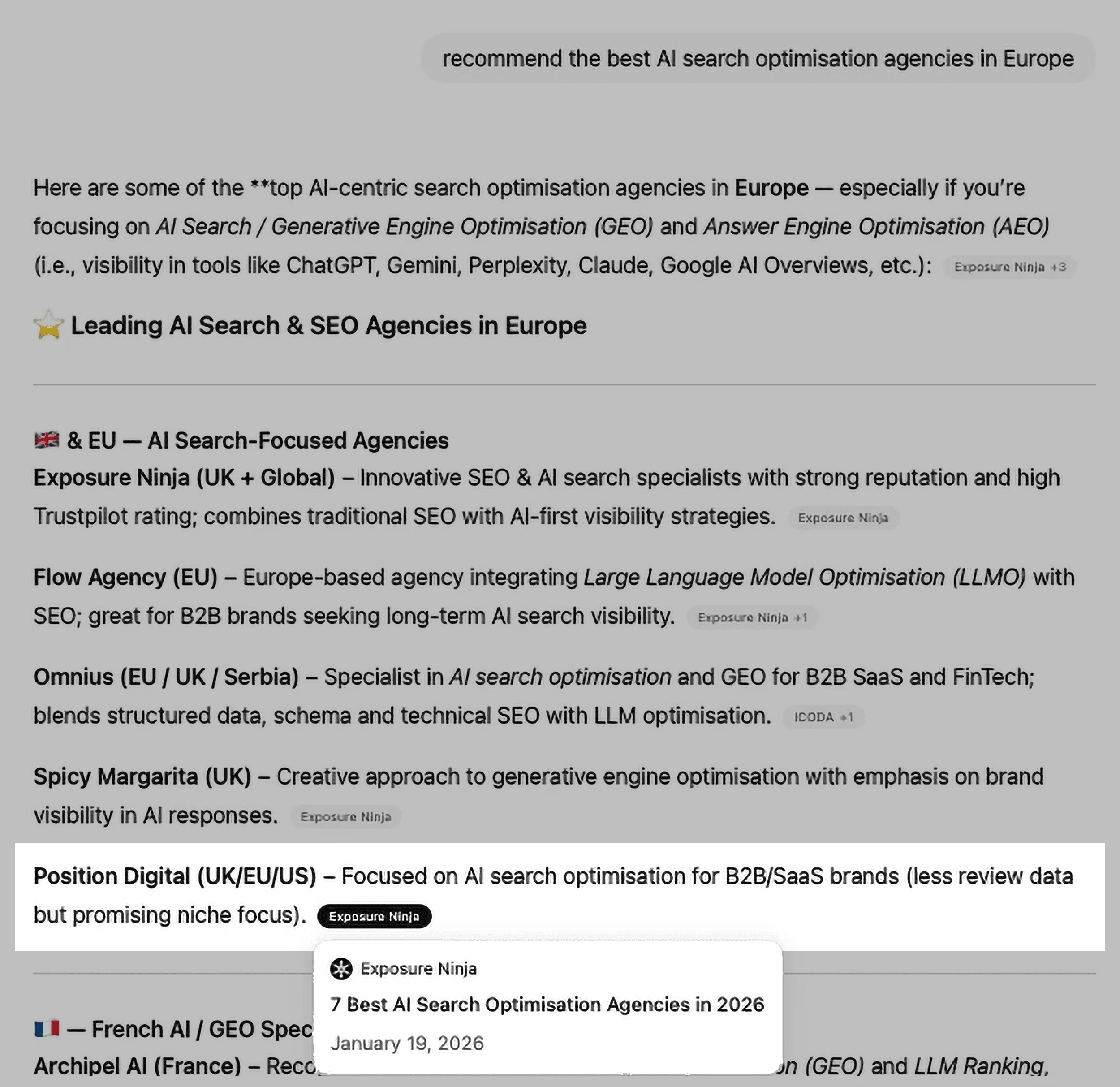
The landscape of online discovery has fundamentally shifted. When today’s buyers engage with AI-powered engines—such as ChatGPT, Perplexity, or Google’s AI Overviews—they are no longer met with a traditional "blue link" list of websites. Instead, they receive a single, synthesized response that synthesizes information from a handful of trusted sources.
For brands, this transition represents an existential pivot in digital strategy. If your brand is among those few cited in the AI’s response, you win the battle for attention, traffic, and—most importantly—trust. If you are not, you are effectively invisible to the user, even if your website ranks on page one of a traditional search engine.
The Shift from Search to Synthesis
The urgency of this shift is reflected in recent data: referral traffic from AI tools has tripled over the past year. According to industry surveys, 44% of marketers report having made a business purchase based on a brand they first discovered through an AI-generated answer. Perhaps more telling, nearly one-third of these professionals have made such a purchase more than once. The audience has not disappeared; it has simply moved into the answer.
This reality has birthed a new discipline: AI Search Optimization (AEO). Unlike traditional Search Engine Optimization (SEO), which centers on keyword density and link-building to secure a high SERP (Search Engine Results Page) rank, AEO focuses on making content machine-readable, extractable, and "grounded" in factual, structured clarity.
How AI Search Works: Under the Hood
To understand AEO, one must first understand the mechanics of modern AI retrieval. As Pat Reinhart, Vice President of Professional Services at Conductor, notes, "An LLM does not operate the same way a traditional search engine does. It’s not just reaching into an index to link a query to a URL. If the LLM doesn’t know the answer, or doesn’t feel it’s comprehensive enough, it will perform real-time retrieval to ground its response."

Retrieval-Augmented Generation (RAG)
RAG is the primary mechanism that prevents AI from hallucinating. It allows the model to access current web data, fetch relevant pages, and synthesize an answer based on live information. The "grounding" process is the connective tissue of AI search; it is what creates those clickable citations you see next to generated answers. If your content is not crawlable, indexable, and snippet-eligible, it simply does not exist for the RAG process.
Query Fan-Out
While RAG handles the "where" (the sources), query fan-out handles the "why" (the user intent). When a user asks a complex question, the AI engine breaks that query into dozens of sub-queries. It analyzes intent based on pricing, timelines, and implied context. Consequently, a single, conversational prompt (which now averages 23 words, compared to the 3-word standard of old) requires a website to answer a cluster of related questions to maximize the chance of retrieval.
The Anatomy of an AI-Optimized Page
AI engines do not regurgitate entire pages; they lift specific passages. Therefore, the unit of optimization has shifted from the "webpage" to the "extractable block."
1. The Claim-Evidence Pattern
Content must be structured to accommodate how models "chunk" information. The most successful format is a direct, self-contained claim statement followed immediately by supporting evidence—data, a source, or a specific example. By leading with the answer and providing the nuance thereafter, you create a "snippet-ready" passage that is easy for the AI to attribute.
2. Question-Based Subheads
By organizing your content using H2 and H3 subheads that mirror the actual questions users ask, you align your site with the AI’s "query fan-out" process. If your subhead is the question and the first three sentences below it provide the answer, you are giving the model exactly what it needs to resolve the user’s intent.

3. Standardizing Entity Authority
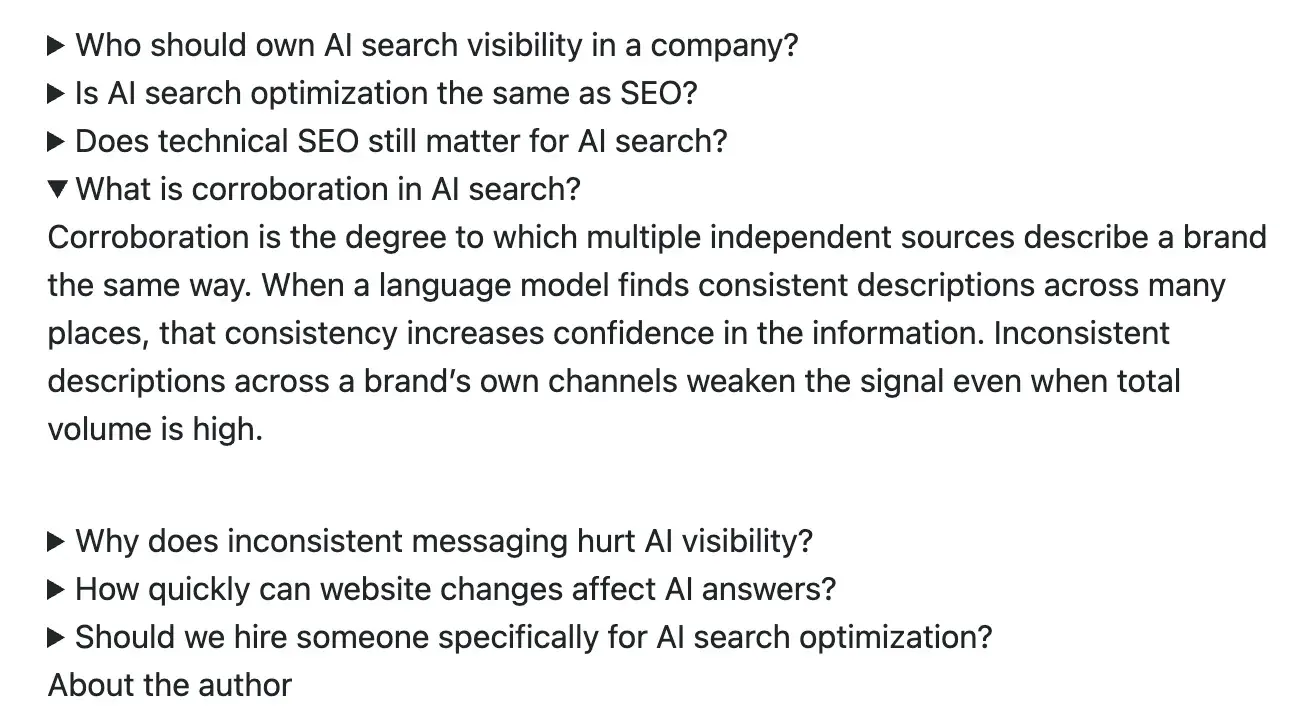
In the AI era, authority is less about a static Domain Authority score and more about "entities." An entity is a person, brand, or organization that the model recognizes and trusts. Consistency is the key to building this authority. Your brand name, author bios, and company descriptions should be identical across your website, social media, and third-party mentions. When a model sees the same information repeated across diverse, credible sources, its confidence in that entity increases.
Debunking Common AEO Myths
As with any emerging field, folklore has outpaced fact. Brands are currently wasting time on several ineffective strategies:
- The "llms.txt" Fallacy: Many believe a specific
llms.txtfile is required for Google. Google has clarified that it does not require, nor actively use, such files for search indexation. Focus on content, not unnecessary files. - Over-Chunking Content: There is no need to shred your articles into single-sentence fragments. Modern LLMs are highly capable of understanding context. A well-structured article with clear headings is more effective than a page of disjointed fragments.
- Rewriting for Machines: AI is proficient in natural language. Writing solely for the machine results in sterile, unengaging content that humans—and by extension, the models that learn from human preferences—will reject.
- Manufacturing Links: Inauthentic, spammy, or "manufactured" mentions do not create authority. The models are increasingly adept at identifying spam. Authentic, earned mentions on credible industry sites and community platforms like Reddit are the only way to build durable, trust-based authority.
Measuring Success: Beyond the Click
Traditional SEO success is measured by clicks and traffic volume. AEO success is measured by visibility and citation frequency. Because the user may get their answer directly in the chat interface, the "click" is becoming a secondary metric.
Key Performance Indicators (KPIs)
- Brand Mentions in AI Answers: How often does your brand appear in citations for your core topics?
- Share of Voice in AI Overviews: Track your brand’s presence in synthetic answers compared to competitors.
- Assisted Conversions: Use attribution modeling to track users who engaged with AI-synthesized content before visiting your site.
HubSpot’s State of AEO report highlights a compelling case for investment: companies that prioritized early AEO tactics saw a 1600% lift in qualified leads from AI and a 411% improvement in brand citations over two years. The conversion rates for AI-referred traffic are also significantly higher—often double that of traditional organic search—because the user arrives at your site with a pre-validated, high-intent mindset.
Implications for the Future
The move toward AI search is not a temporary trend; it is the evolution of information retrieval. As search engines transition from "indexers" to "reasoners," the brands that will survive are those that provide clarity, structure, and genuine value.

To start, audit your top five commercial pages this week. Add short, two-to-three sentence Q&A blocks, standardize your author bios, and ensure your site is technically crawlable. As you refine your approach, remember the mantra of the new search landscape: Optimize for the answer, and you optimize for the future.
By shifting your focus from "ranking" to "being cited," you align your brand with the way modern consumers now interact with the internet. In an age where the AI is the gatekeeper of information, becoming the most "extractable" source of truth is no longer an optional strategy—it is the baseline requirement for digital relevance.


 Ammar Sabilarrohman
 Sagoh

 Raul Delapena Setiawan




 Azzam Bilal Chamdy

 Ali Ikhwan
