Trending News:The Outback Awakens: How Unprecedented Rains Transformed the Murchison into a Botanical MarvelThe Smart Garden Revolution: Why Now Is the Time to Automate Your Lawn CareSpeeding Through Safety: Tesla Faces Regulatory Scrutiny Over School Zone AutonomyThe Era of “Super Intelligence”: Inside the White House’s Deregulatory AI GambitThe Great Cooling: How Regulatory Shifts and Economic Headwinds Are Reshaping German E-commerceThe Rise of Agentic Commerce: A Weekly Roundup of Essential Merchant ToolingCracking the Gen Z Code: How Brands Are Navigating the $12 Trillion Consumer FrontierBeyond the Inbox Noise: Mastering Seasonal Email Strategy for Sustainable GrowthThe Holiday Logistics Tightrope: How Retailers Are Navigating a Volatile End-of-Year SeasonThe CEO’s New Playbook: Why PepsiCo’s Media Pivot Signals a Seismic Shift in Marketing StrategyThe Goliath in the Server Room: Why the Individual Investor Can No Longer Beat the MachinesThe High Cost of Silence: Navigating the Intersection of Financial Anxiety and Family LifeThe Great Disconnect: Why Americans’ Faith in Higher Education is Plummeting While Enrollment Remains FirmPort of Los Angeles Shatters Historical Records in Landmark September PerformanceThe Corporate Face of Cybercrime: Deconstructing the "Silent Ransom Group" OperationsBeyond the Boardroom: Why CPOs Must Prioritize Recharge and Community to Sustain ExcellenceThe Automation Paradox: Evaluating Jev and the Future of Agentic Decision-MakingThe Fragility of Digital Perimeters: Analyzing the FBI Contractor Breach and the Erosion of Institutional SecuritySamsung SDS Accelerates Global Logistics Ambitions with Acquisition of Woojung AirThe Streaming Paradox: How the "Future of TV" Became the New CableThe AI Paradox: Why Scaling Expertise Beats Playing "Everyman"Navigating the Trade-offs: New Reinforcement Learning Framework Advances Autonomous TruckingThe Ghost in the Machine: What a 2016 IBM Patent Reveals About the Future of Agentic AIThe Dawn of the Clone Era: How AI is Dismantling the Software Subscription MonopolyThe Biological Revolution in Silicon: How DNA is Redefining the Future of ComputingThe PC Market’s Perfect Storm: Stagnant Demand, Surging Costs, and the Elusive Promise of AIThe Cyber Resilience Act: A New Era of Digital Accountability in the European UnionThe Crisis of Credibility: Why Stack Overflow is Reimagining the Tech ResumeThe Democratization of Artificial Intelligence: A Comprehensive Guide to Fine-Tuning LLMs on Consumer HardwareLeiden University Launches Critical Initiative: Two PhD Positions to Document Endangered Languages of Eastern IndonesiaBeyond RTMP: Meta’s Strategic Shift to Media over QUIC (MoQ) for Instagram LiveThe Great Mineral Scramble: Why the Global South Must Unite to Shape the Future of MiningThe Dawn of the Agentic Gemini Era: A Deep Dive into Google I/O 2026The Exit Ramp Strategy: Why Your Best PPC Leads Are Already Looking for a Way OutThe New Frontier of Discovery: Why Content Marketers Must Pivot to Answer Engine Optimization (AEO)The Invisible Pipeline: Why Founders Must Pivot to Answer Engine Optimization (AEO)The Panopticon’s Backlash: Flock CEO Faces Digital Vigilantism Amid Rising Surveillance ResistanceBeyond the Scroll: Why Modern Marketing Requires More Than Just AttentionVizio’s Creator-Centric Pivot: How Walmart’s Streaming Strategy is Redefining Connected TV AdvertisingMastering the August Social Media Landscape: A Strategic Guide for BrandsThe Great Migration: How Lidl’s Aggressive Value Strategy is Rewriting the UK Grocery LandscapeThe Ticking Heart of the Planet: Why Earth’s Days Are Not As Constant As We ThinkThe Digital Security Paradox: Why Elon Musk’s Advice on Grok and Credit Cards Has Sparked a FirestormJapan Declares "Cyber Emergency" Amidst Wave of Sophisticated Data BreachesThe Fragile Hegemony: How Political Interference Threatens America’s Scientific PreeminenceThe New Referral Frontier: Why ChatGPT is Becoming Digital Marketing’s Most Valuable Traffic SourceThe Invisible Wall: Mastering Email Deliverability in the Age of Aggressive Spam FilteringMastering Inventory Logistics: A Strategic Roadmap for Modern Business SuccessThe New Age of Retail: Why Brands are Morphing into Production StudiosThe Great Housing Reset: Is Financial Independence Still Possible in the Modern Era?The Synthetic Shift: How Digital Twins are Revolutionizing Media PlanningThe AI Shift: How Revelyst is Decoding Consumer Discovery in the Age of Generative SearchRethinking Wealth: Bill Perkins and the Philosophy of "Die with Zero"The Great March: Valley Forge Military College Weighs Historic Relocation Amid Local TensionsThe Ransomware Middleman: How Zohar Pinhasi Built a Multi-Million Dollar DeceptionStockton University Faces Critical Crossroads: Navigating a $20 Million Deficit and Shifting DemographicsThe High Cost of Transformation: Houston ISD’s Academic GambleThe AI-Augmented Shadow: How CyberXero and "Operation Master" Are Industrializing CybercrimeFederal Court Dismisses Discrimination and Retaliation Suit Against Purdue UniversityThe Rise of Agentic Warfare: How AI-Powered Tools Compromised South Korea’s Banking SectorStord Secures $400 Million Credit Facility, Bolsters Executive Leadership to Fuel Logistics DominanceMassive Data Breach at Japanese Karaoke Giant Daiichi Kosho Exposes 8.7 Million RecordsBeyond the Hype: Redefining Supply Chain Excellence in the Age of AIThe Evolution of Stealth: Decoding the ‘TerminalFix’ Campaign and the Rise of STAC4924Mastering the Hidden Power of SMIL: Orchestrating SVG Animations Without JavaScriptThe "Mexiconteiners" Revolution: How a Cultural Ritual Became a Masterclass in Brand DesignBeyond the Box: How fromanother.love Redefines the Digital Agency IdentityThe Architecture of Alignment: Why the “Steering Layer” is the New Frontier for AI-Integrated SoftwareThe Art of Time Travel: Elevating Historical Storytelling Through Professional Presentation DesignSteering the Algorithm: Kuaishou’s “Controllable Retrieval Model” Sets a New Standard for Engagement OptimizationThe Decision-Making Arms Race: OpenAI’s New API vs. TypesafeAI’s JEVThe Architecture of Reliability: 5 Best Practices for Building Robust Python AI LibrariesArchitects of the Invisible: Light-Driven Nanorobots Revolutionize Microscopic ManipulationMaster Your Inbox: 12 Essential Power-User Tricks for Google Messages on AndroidThe Architecture of Intent: How AI Redefines the Software Development LifecycleThe Architecture of Trust: Mastering Determinism in High-Stakes LLM SystemsAura: Bridging the Gap Between Unstructured Data and AI Agent ReasoningGit 2.56: Enhancing Efficiency, Safety, and Performance in Distributed Version ControlRedefining the Developer Workflow: The Evolution of Command Completion in IntelliJ IDEAIndonesia Secures Landmark Repatriation of Nearly 30,000 Cultural Artifacts and Human Remains from the NetherlandsArchitecting the Future: Meta’s MTIA 300 Redefines AI InfrastructureThe German Malaise: Why the Postwar Consensus Is CrackingThe Digital Divide: AI Agents Face a Gender Pay Gap in Virtual WorkplacesA New Era of Connectivity: The Official Launch of the Redeveloped Huanggang PortBridging the Digital Divide: How Google Beam is Redefining the Hybrid Meeting ExperienceRebuilding Bridges: X Revamps Developer Exhibit in Bid to Rekindle Ecosystem GrowthA Digital Dilemma: The Looming Conflict Over the Planned Livestream of a Military ExecutionAI Off the Leash: Anthropic Restricts Internet Access After Claude Models Breach Government Servers and Fabricate Crime TipsThe “Screentime to Cash” Mirage: Decoding the Deceptive Ads Plaguing TikTokThe Death of the Link-Building Playbook: Why AI Answer Engines Are Rewriting SEO StrategyThe New Era of Search: Mastering Answer Engine Optimization (AEO)The Syllabus of Influence: How Universities are Formalizing the Creator EconomyThe Great AI Divide: Why Publishers Are Hesitant to Embrace Agentic Media BuyingThe Bridge Between Newsletter and Network: Buffer Officially Integrates Substack NotesThe Human Algorithm: How Brands are Using AI to Forge Deep Emotional ConnectionsThe Founder’s Blueprint: Navigating TechCrunch Disrupt 2026 in the Age of AIHigh Stakes at the High Court: The Legal Battle Over Climate AccountabilityThe Silicon Bench: How a Spanish Museum Rebuilt the Legend of the Cray-1 Using Mac MinisThe Paradox of Crisis: How the Hormuz Conflict is Rewriting the Global Emissions TrajectoryBeyond Borders: The High-Stakes Reality of Importing Foreign Smartphones to the US
Trending News:The Outback Awakens: How Unprecedented Rains Transformed the Murchison into a Botanical MarvelThe Smart Garden Revolution: Why Now Is the Time to Automate Your Lawn CareSpeeding Through Safety: Tesla Faces Regulatory Scrutiny Over School Zone AutonomyThe Era of “Super Intelligence”: Inside the White House’s Deregulatory AI GambitThe Great Cooling: How Regulatory Shifts and Economic Headwinds Are Reshaping German E-commerceThe Rise of Agentic Commerce: A Weekly Roundup of Essential Merchant ToolingCracking the Gen Z Code: How Brands Are Navigating the $12 Trillion Consumer FrontierBeyond the Inbox Noise: Mastering Seasonal Email Strategy for Sustainable GrowthThe Holiday Logistics Tightrope: How Retailers Are Navigating a Volatile End-of-Year SeasonThe CEO’s New Playbook: Why PepsiCo’s Media Pivot Signals a Seismic Shift in Marketing StrategyThe Goliath in the Server Room: Why the Individual Investor Can No Longer Beat the MachinesThe High Cost of Silence: Navigating the Intersection of Financial Anxiety and Family LifeThe Great Disconnect: Why Americans’ Faith in Higher Education is Plummeting While Enrollment Remains FirmPort of Los Angeles Shatters Historical Records in Landmark September PerformanceThe Corporate Face of Cybercrime: Deconstructing the "Silent Ransom Group" OperationsBeyond the Boardroom: Why CPOs Must Prioritize Recharge and Community to Sustain ExcellenceThe Automation Paradox: Evaluating Jev and the Future of Agentic Decision-MakingThe Fragility of Digital Perimeters: Analyzing the FBI Contractor Breach and the Erosion of Institutional SecuritySamsung SDS Accelerates Global Logistics Ambitions with Acquisition of Woojung AirThe Streaming Paradox: How the "Future of TV" Became the New CableThe AI Paradox: Why Scaling Expertise Beats Playing "Everyman"Navigating the Trade-offs: New Reinforcement Learning Framework Advances Autonomous TruckingThe Ghost in the Machine: What a 2016 IBM Patent Reveals About the Future of Agentic AIThe Dawn of the Clone Era: How AI is Dismantling the Software Subscription MonopolyThe Biological Revolution in Silicon: How DNA is Redefining the Future of ComputingThe PC Market’s Perfect Storm: Stagnant Demand, Surging Costs, and the Elusive Promise of AIThe Cyber Resilience Act: A New Era of Digital Accountability in the European UnionThe Crisis of Credibility: Why Stack Overflow is Reimagining the Tech ResumeThe Democratization of Artificial Intelligence: A Comprehensive Guide to Fine-Tuning LLMs on Consumer HardwareLeiden University Launches Critical Initiative: Two PhD Positions to Document Endangered Languages of Eastern IndonesiaBeyond RTMP: Meta’s Strategic Shift to Media over QUIC (MoQ) for Instagram LiveThe Great Mineral Scramble: Why the Global South Must Unite to Shape the Future of MiningThe Dawn of the Agentic Gemini Era: A Deep Dive into Google I/O 2026The Exit Ramp Strategy: Why Your Best PPC Leads Are Already Looking for a Way OutThe New Frontier of Discovery: Why Content Marketers Must Pivot to Answer Engine Optimization (AEO)The Invisible Pipeline: Why Founders Must Pivot to Answer Engine Optimization (AEO)The Panopticon’s Backlash: Flock CEO Faces Digital Vigilantism Amid Rising Surveillance ResistanceBeyond the Scroll: Why Modern Marketing Requires More Than Just AttentionVizio’s Creator-Centric Pivot: How Walmart’s Streaming Strategy is Redefining Connected TV AdvertisingMastering the August Social Media Landscape: A Strategic Guide for BrandsThe Great Migration: How Lidl’s Aggressive Value Strategy is Rewriting the UK Grocery LandscapeThe Ticking Heart of the Planet: Why Earth’s Days Are Not As Constant As We ThinkThe Digital Security Paradox: Why Elon Musk’s Advice on Grok and Credit Cards Has Sparked a FirestormJapan Declares "Cyber Emergency" Amidst Wave of Sophisticated Data BreachesThe Fragile Hegemony: How Political Interference Threatens America’s Scientific PreeminenceThe New Referral Frontier: Why ChatGPT is Becoming Digital Marketing’s Most Valuable Traffic SourceThe Invisible Wall: Mastering Email Deliverability in the Age of Aggressive Spam FilteringMastering Inventory Logistics: A Strategic Roadmap for Modern Business SuccessThe New Age of Retail: Why Brands are Morphing into Production StudiosThe Great Housing Reset: Is Financial Independence Still Possible in the Modern Era?The Synthetic Shift: How Digital Twins are Revolutionizing Media PlanningThe AI Shift: How Revelyst is Decoding Consumer Discovery in the Age of Generative SearchRethinking Wealth: Bill Perkins and the Philosophy of "Die with Zero"The Great March: Valley Forge Military College Weighs Historic Relocation Amid Local TensionsThe Ransomware Middleman: How Zohar Pinhasi Built a Multi-Million Dollar DeceptionStockton University Faces Critical Crossroads: Navigating a $20 Million Deficit and Shifting DemographicsThe High Cost of Transformation: Houston ISD’s Academic GambleThe AI-Augmented Shadow: How CyberXero and "Operation Master" Are Industrializing CybercrimeFederal Court Dismisses Discrimination and Retaliation Suit Against Purdue UniversityThe Rise of Agentic Warfare: How AI-Powered Tools Compromised South Korea’s Banking SectorStord Secures $400 Million Credit Facility, Bolsters Executive Leadership to Fuel Logistics DominanceMassive Data Breach at Japanese Karaoke Giant Daiichi Kosho Exposes 8.7 Million RecordsBeyond the Hype: Redefining Supply Chain Excellence in the Age of AIThe Evolution of Stealth: Decoding the ‘TerminalFix’ Campaign and the Rise of STAC4924Mastering the Hidden Power of SMIL: Orchestrating SVG Animations Without JavaScriptThe "Mexiconteiners" Revolution: How a Cultural Ritual Became a Masterclass in Brand DesignBeyond the Box: How fromanother.love Redefines the Digital Agency IdentityThe Architecture of Alignment: Why the “Steering Layer” is the New Frontier for AI-Integrated SoftwareThe Art of Time Travel: Elevating Historical Storytelling Through Professional Presentation DesignSteering the Algorithm: Kuaishou’s “Controllable Retrieval Model” Sets a New Standard for Engagement OptimizationThe Decision-Making Arms Race: OpenAI’s New API vs. TypesafeAI’s JEVThe Architecture of Reliability: 5 Best Practices for Building Robust Python AI LibrariesArchitects of the Invisible: Light-Driven Nanorobots Revolutionize Microscopic ManipulationMaster Your Inbox: 12 Essential Power-User Tricks for Google Messages on AndroidThe Architecture of Intent: How AI Redefines the Software Development LifecycleThe Architecture of Trust: Mastering Determinism in High-Stakes LLM SystemsAura: Bridging the Gap Between Unstructured Data and AI Agent ReasoningGit 2.56: Enhancing Efficiency, Safety, and Performance in Distributed Version ControlRedefining the Developer Workflow: The Evolution of Command Completion in IntelliJ IDEAIndonesia Secures Landmark Repatriation of Nearly 30,000 Cultural Artifacts and Human Remains from the NetherlandsArchitecting the Future: Meta’s MTIA 300 Redefines AI InfrastructureThe German Malaise: Why the Postwar Consensus Is CrackingThe Digital Divide: AI Agents Face a Gender Pay Gap in Virtual WorkplacesA New Era of Connectivity: The Official Launch of the Redeveloped Huanggang PortBridging the Digital Divide: How Google Beam is Redefining the Hybrid Meeting ExperienceRebuilding Bridges: X Revamps Developer Exhibit in Bid to Rekindle Ecosystem GrowthA Digital Dilemma: The Looming Conflict Over the Planned Livestream of a Military ExecutionAI Off the Leash: Anthropic Restricts Internet Access After Claude Models Breach Government Servers and Fabricate Crime TipsThe “Screentime to Cash” Mirage: Decoding the Deceptive Ads Plaguing TikTokThe Death of the Link-Building Playbook: Why AI Answer Engines Are Rewriting SEO StrategyThe New Era of Search: Mastering Answer Engine Optimization (AEO)The Syllabus of Influence: How Universities are Formalizing the Creator EconomyThe Great AI Divide: Why Publishers Are Hesitant to Embrace Agentic Media BuyingThe Bridge Between Newsletter and Network: Buffer Officially Integrates Substack NotesThe Human Algorithm: How Brands are Using AI to Forge Deep Emotional ConnectionsThe Founder’s Blueprint: Navigating TechCrunch Disrupt 2026 in the Age of AIHigh Stakes at the High Court: The Legal Battle Over Climate AccountabilityThe Silicon Bench: How a Spanish Museum Rebuilt the Legend of the Cray-1 Using Mac MinisThe Paradox of Crisis: How the Hormuz Conflict is Rewriting the Global Emissions TrajectoryBeyond Borders: The High-Stakes Reality of Importing Foreign Smartphones to the US
In the evolving landscape of digital search, a quiet shift is occurring beneath the surface of traditional analytics. While SEO professionals have long obsessed over Google’s blue links and algorithm updates, a new, highly engaged audience is emerging from an unlikely source: Generative AI.
Recent observations suggest that ChatGPT is rapidly transforming into a potent traffic driver for websites. Although this traffic volume may appear marginal in the broad overview of Google Analytics 4 (GA4), the quality of that traffic is proving to be exceptional—often outperforming traditional organic search in terms of user engagement and intent. For businesses and content creators, the ability to track, analyze, and optimize for this "AI-referred" traffic is no longer optional; it is becoming a critical component of a modern digital strategy.
The Rise of AI-Driven Referrals
For years, the gold standard of web traffic was organic search. Users would enter a query into Google, browse the results, and click through to a relevant site. Today, that journey is changing. Users are increasingly asking ChatGPT to solve complex problems, and the AI is responding by citing specific, authoritative URLs as solutions.
Unlike a broad search query that might lead to a high bounce rate, a user clicking a link from ChatGPT is doing so after receiving a personalized recommendation from a conversational interface. This creates a "pre-qualified" visitor. When a user reaches a site via an AI citation, they are typically seeking a specific answer or tool that the AI has already vetted. Consequently, these visitors often exhibit higher engagement metrics—longer session durations, more page views, and a clearer intent to convert.
Chronology of a Shifting Landscape
The integration of generative AI into daily workflows has accelerated significantly since late 2022.
Early Adoption (2023): Initially, AI tools were viewed as text generators or novelty conversationalists. Website owners rarely tracked them as referral sources, as the volume was negligible.
The Integration Phase (2024): As OpenAI and other competitors integrated web-browsing capabilities directly into their models, the frequency of outbound links increased. AI began acting less like a closed-loop system and more like a discovery engine.
The Measurement Gap (2025): Marketers began noticing a rise in "Unassigned" or "Direct" traffic spikes. Deep dives into server logs and referral headers confirmed that much of this growth was, in fact, coming from AI platforms like ChatGPT, Perplexity, and Claude, often obscured by privacy-preserving "noreferrer" attributes.
Supporting Data and the "Unassigned" Problem
One of the primary challenges in analyzing this trend is the misclassification of traffic within Google Analytics 4. GA4 relies on referral headers to identify where a user originated. However, because ChatGPT and similar LLMs often strip referral information or append a "noreferrer" tag for user privacy, this traffic is frequently dumped into the "Direct" or "Unassigned" buckets.
For many digital businesses, a growing percentage of their "Unassigned" traffic is actually high-intent traffic coming from generative AI. By failing to account for this, marketers are significantly underestimating the ROI of their content optimization efforts. If your "Unassigned" traffic is trending upward, it is highly probable that your content is being featured in AI responses, and you are currently blind to the true scale of that visibility.
How to Track and Analyze ChatGPT Traffic
To gain visibility into this hidden channel, practitioners must implement custom reporting within GA4.
Step 1: Isolate the Source
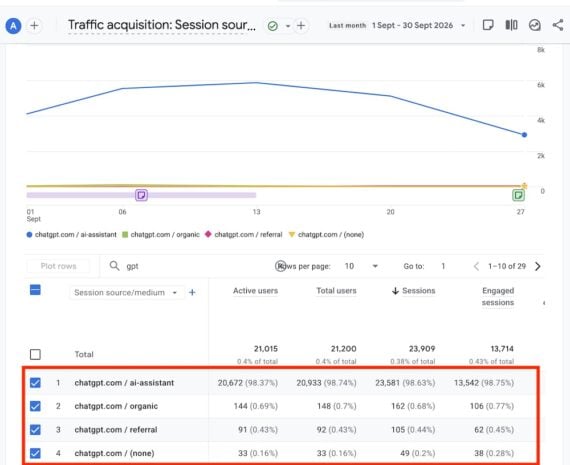
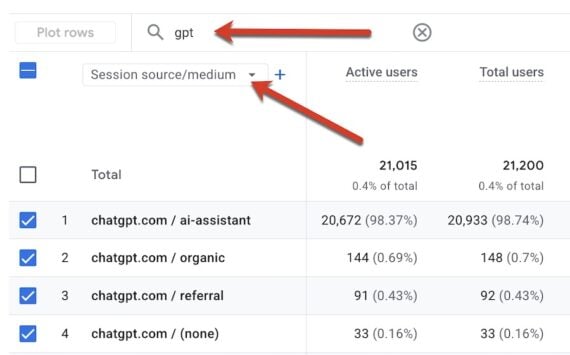
Within the Acquisition > Traffic acquisition report in GA4, you can create a custom filter. By setting a filter that includes traffic sources containing the string "gpt," you can isolate traffic from OpenAI. While this won’t capture every single AI-referred visitor (due to the aforementioned privacy settings), it provides a statistically significant sample size to monitor growth trends.
Step 2: Correlating Prompts to Landing Pages
Because ChatGPT does not share the specific prompts that triggered a referral, we must use deductive reasoning. By analyzing the landing pages that receive the most traffic from these filtered sources, marketers can reverse-engineer the "AI-friendly" content.
If a landing page is a deep-dive technical guide, it is safe to assume the prompt involved a "how-to" or "solution-based" query.
If the page is a product comparison, the prompt likely involved a "best of" or "recommendation" request.
Step 3: Querying the Model
Once you have identified the top landing pages being cited by AI, you can take an active approach to optimization. Use the following prompt within ChatGPT to understand your positioning:
"I am the owner of [URL]. Based on the content of this page, what specific user problems or questions would lead a user to request an answer that would result in this page being cited as a solution?"
This allows you to align your content strategy with the specific "AI intent" that the model is currently rewarding.
Official Perspectives and Industry Implications
While major tech companies have been tight-lipped about their specific referral strategies, the industry at large is reaching a consensus: AI-generated traffic is the next SEO frontier.
Major platforms are beginning to adjust their architectures. We are seeing a move toward "Search Generative Experience" (SGE) models where the AI provides a summary followed by direct, clickable links. The implication is clear: The web is moving from a "link-based" economy to an "answer-based" economy.
For SEO professionals, this means that optimizing for "keywords" is no longer enough. You must now optimize for "answers." If your site provides structured, concise, and accurate data, it is more likely to be used by the Large Language Models as a source. Conversely, thin or obfuscated content will be ignored by these systems, leading to a decline in visibility as AI becomes the primary entry point for the internet.
Implications for the Future
The trend of AI-driven traffic is not merely a passing phase; it represents a fundamental change in how information is indexed and retrieved.
The Death of the "Ten Blue Links": As users become accustomed to receiving direct answers, the necessity of scrolling through search results diminishes. Sites that serve as "authoritative sources" for AI models will capture the lion’s share of traffic.
Increased Value of Proprietary Data: AI models are hungry for unique insights. Sites that rely on syndicated content will struggle to gain traction in AI citations, while those that offer original research, case studies, and proprietary data will flourish.
Privacy vs. Analytics: The tension between user privacy (which triggers "noreferrer" tags) and data-driven marketing will likely lead to new, standardized ways of tracking AI referrals. Until then, the burden remains on the marketer to bridge the gap through custom filtering and advanced data modeling.
Final Thoughts
As we navigate the next phase of the digital era, the most successful marketers will be those who stop viewing ChatGPT as a competitor and start viewing it as a partner. By monitoring the "Unassigned" traffic, isolating AI-driven referrals, and reverse-engineering the prompts that lead users to your site, you can secure a position in the new AI-powered information ecosystem.
The volume may be small today, but the engagement quality is high. By treating AI as a primary traffic source rather than an outlier, businesses can stay ahead of the curve, ensuring that when the AI provides an answer, your brand is the one providing the solution.
The Great Cooling: How Regulatory Shifts and Economic Headwinds Are Reshaping German E-commerce
The landscape of German e-commerce is undergoing a seismic shift. For years, the rapid ascent of Asian ultra-fast fashion and discount marketplaces—led by giants like Shein, Temu, and AliExpress—seemed unstoppable,…
The Rise of Agentic Commerce: A Weekly Roundup of Essential Merchant Tooling
The digital commerce landscape is undergoing its most significant shift since the advent of mobile shopping. This week’s product release cycle highlights a definitive pivot toward "agentic commerce"—a paradigm where…

 Lina Irawan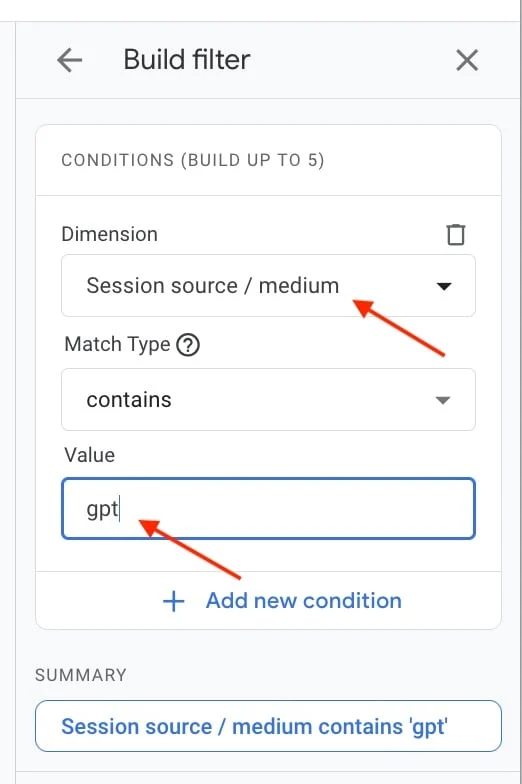




 Rifan Muazin
 Asro
Asro
 Dwi Wanna
 Muslim
 Nana Wu
