
 Rifan Muazin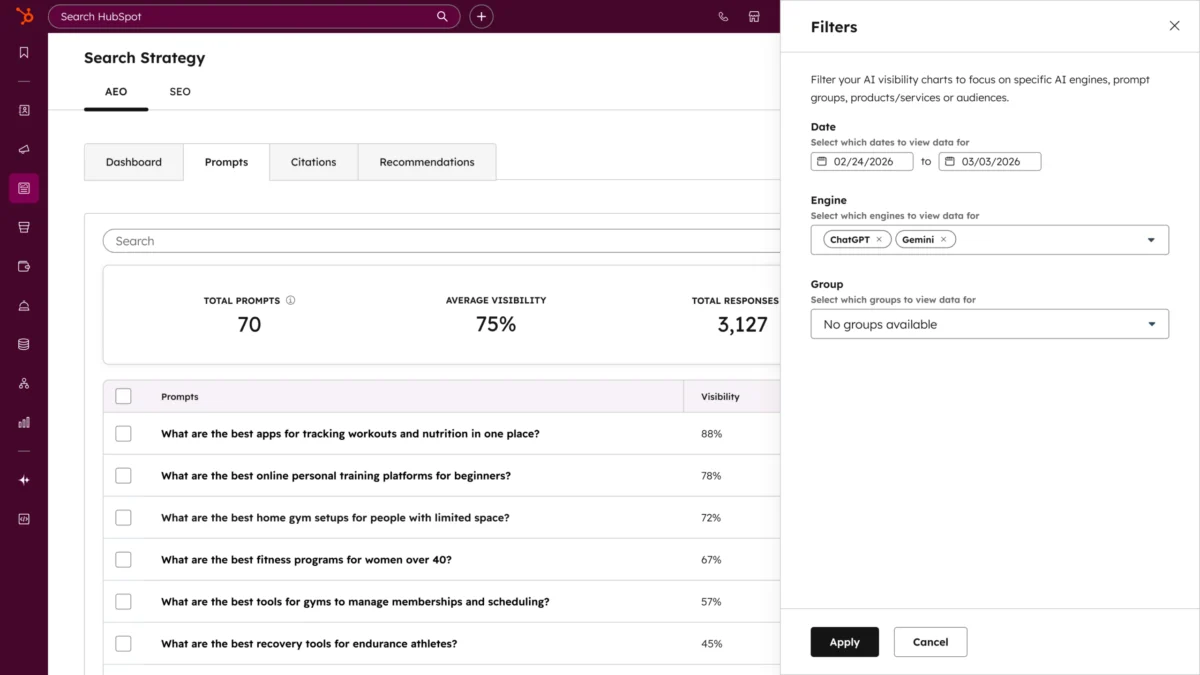
For decades, the bedrock of product marketing has been positioning: the deliberate act of defining how a product is described, identifying the competitive landscape, and articulating the differentiators that matter most to buyers. Traditionally, these narratives were meticulously crafted and then deployed through controlled channels—sales decks, website copy, advertising campaigns, and press releases.
However, the digital landscape has undergone a seismic shift. Today, a new, autonomous channel is interpreting and rebroadcasting your positioning at scale, often without asking for permission: Answer Engines.
When a prospective buyer asks an AI assistant or a search-integrated LLM about your product category, they are no longer presented with a list of blue links to curate themselves. Instead, they receive a confident, synthesized summary generated from hundreds of sources—ranging from third-party reviews and comparison sites to competitor blogs and industry forums. If your owned content is absent from that source mix, your positioning is no longer yours; it is being written for you by the rest of the internet.
The Evolution of Search: From Links to Synthesis
To understand the urgency of this transition, one must look at the chronology of information discovery.
In the "Search 1.0" era, marketers focused on Search Engine Optimization (SEO). The goal was to rank for keywords, drive traffic to a landing page, and hope the buyer read the messaging we carefully curated. We held the "last mile" of control.
With the advent of "Search 2.0"—the era of Answer Engines—the paradigm has shifted. Buyers now rely on AI agents to act as intermediaries. These systems aggregate, digest, and summarize information, effectively creating a "final answer" before a user ever reaches your domain.
This change has moved product marketing from a world of "distribution" to a world of "synthesis." The question is no longer "How do I get them to click?" but "How do I ensure the AI understands and advocates for my positioning?"

The Three Pillars of Modern AEO Strategy
Product marketing teams currently leading the charge in this space have moved beyond passive observation. They are operationalizing Answer Engine Optimization (AEO) through three critical, interconnected pillars: monitoring, authoritative content creation, and pipeline attribution.
1. Monitoring: The "Positioning Drift" Problem
In traditional marketing, monitoring is straightforward. You can read competitor ads, audit your own landing pages, and listen to sales calls to spot "positioning drift"—the tendency for a brand’s message to become diluted or misaligned over time.
AI-driven positioning drift is far more insidious. Because answer engines synthesize data from diverse sources, they may inadvertently surface stale information, outdated product specs, or competitor-influenced narratives that frame your brand in a disadvantageous light.
Advanced teams are now utilizing tools like the HubSpot AEO Brand Visibility Dashboard to track specific prompts. By monitoring how their product is described across various AI models—including how the brand is framed relative to competitors—marketers can identify gaps where the AI narrative deviates from the brand’s core messaging. This proactive monitoring acts as an early-warning system, alerting teams when they need to "re-seed" the ecosystem with updated, accurate information.
2. Creating Authoritative, "Extractable" Content
If you want to shape the AI, you must speak its language. Answer engines prioritize sources they deem "authoritative," but authority in the AI age is defined by structural clarity as much as it is by brand reputation.
Many marketing teams continue to publish "marketing-heavy" content—rhetorical, fluff-filled, or emotionally driven copy that, while great for humans, is difficult for AI to parse. When an AI scans your page looking for a factual comparison, it may skip over your prose and cite a competitor who has published structured, "extractable" content—bulleted lists, comparison tables, and clear, declarative statements about product utility.
The current industry standard for AEO success involves creating content that answers the why, what, and who of a product in a way that is machine-readable. Tools like HubSpot’s Recommendations agent are now being used to guide content creation, helping marketers build customized pages that explicitly cater to the way LLMs synthesize information. By prioritizing high-quality, structured source material, brands can effectively "feed" the answer engines the exact narrative they want to see reflected in the final output.

3. Measuring the ROI of AI Visibility
The most difficult hurdle for any new marketing discipline is attribution. Product marketing’s contribution to pipeline quality is historically challenging to quantify, and AEO is particularly susceptible to being deprioritized if its impact on the bottom line cannot be proven.
However, the correlation between AEO and sales velocity is becoming increasingly clear. Buyers who reach the sales team with accurate, AI-informed expectations close faster, experience lower churn rates, and require significantly less education during the sales cycle.
By integrating brand visibility data directly into the CRM, marketers can now draw a line from AI-referred traffic to closed-won revenue. This allows teams to compare the pipeline velocity and deal quality of buyers who arrived through AI-assisted channels versus traditional search. The data is compelling: recent research from HubSpot indicates that organizations effectively utilizing AEO strategies generate 2.6x more leads than those that do not.
Implications for the Future of Product Marketing
What does this shift mean for the future of the profession?
First, it signals the death of the "one-size-fits-all" narrative. Because AI models synthesize data in real-time, the narrative must be dynamic. Product marketers will need to spend less time on static brand guidelines and more time on "narrative engineering"—continuously updating the source material across the web to ensure the AI’s "understanding" of the product evolves in real-time.
Second, the relationship between SEO and AEO will become increasingly adversarial. While traditional SEO might prioritize volume, AEO prioritizes precision. A high-ranking SEO page may not be the page that an AI chooses to cite if it lacks the structural clarity required for synthesis. Consequently, we are seeing a decoupling of these two disciplines.
Finally, the competitive landscape is about to become more transparent. If your positioning is weak or your product lacks a distinct differentiator, the AI will expose it. There is no longer a place to hide behind clever ad copy or high-budget branding campaigns if the functional data points, reviews, and comparison metrics don’t support your story.

The Call to Action: Taking Control of the Narrative
For product marketers, the core challenge remains unchanged: "How do we define our value in a crowded market?" What has changed is the scale and speed at which that value is communicated to the buyer.
The answer engines are here to stay. They are not merely tools; they are the new arbiters of brand truth. Brands that ignore this shift are leaving their reputation in the hands of algorithms that prioritize convenience over accuracy.
However, for those who lean into the challenge, the opportunity is immense. By building a systematic, data-driven approach to AI visibility—monitoring the narrative, creating extractable content, and proving the revenue impact—product marketing teams can move from a reactive posture to a proactive one.
In this new era, the winners will not be the brands with the loudest marketing budgets. The winners will be the brands that are the most "understandable" to the machines that now act as the primary gatekeepers of customer discovery. It is time to treat your brand’s AI visibility with the same rigor you apply to your most important sales presentations, because in the eyes of the modern buyer, the AI’s summary is the first, and often the last, impression.


 Nana Wu
 Suro Senen
 Raul Delapena Setiawan
 Dwi Wanna
 Muslim


