
 Jia Lissa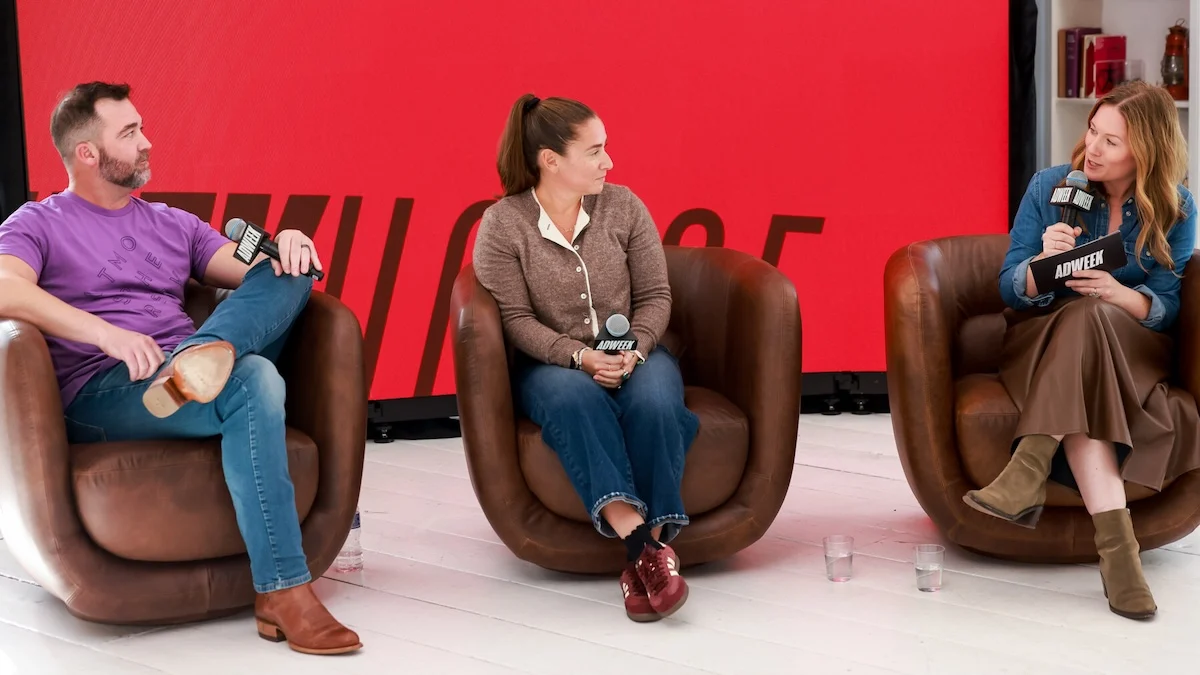
This report was produced in partnership with Atmosphere TV.
In the landscape of modern advertising, the digital gold rush has long been focused on the individual. For over a decade, marketers have obsessed over the "personal journey"—tracking cookies, refining algorithms, and targeting users in the solitude of their own screens. Yet, as the post-pandemic world settles into a new rhythm, a profound behavioral shift is occurring: consumers are actively choosing communal experiences over isolation.
From bustling neighborhood bars and high-energy fitness centers to vibrant restaurant hubs, the public square is back. For brands, this transition represents a seismic opportunity to capture "shared attention." To explore how marketers can transition from the saturated digital silo to the high-impact communal environment, ADWEEK recently hosted an Advertising HQ panel featuring Atmosphere TV CEO Blake Sabatinelli and SVP of Marketing Lindsay Sutton, moderated by ADWEEK Chief Content Officer Zoë Ruderman.
The Evolution of the Consumer Mindset: From Solitude to Solidarity
The primary catalyst for this shift is a fundamental change in how people value their leisure time. Following years of physical distancing, consumers have become hyper-intentional about where they go and whom they spend their time with.
"Community experiences matter again," Blake Sabatinelli noted during the ADWEEK panel. "People are being much more thoughtful about their time. They are seeking out environments that provide a sense of belonging and shared energy."
For brands, this presents a unique "right place, right time" scenario. Unlike the intrusive nature of pop-up ads on a smartphone—which are often met with frustration or immediate dismissal—ads encountered in a communal setting benefit from the context of the environment. When a consumer is at a restaurant or a gym, their guard is down in a different way. They are engaged, present, and open to the sensory input of their surroundings.
The Science of Shared Energy
The power of this medium lies in emotional contagion. When a group of people gathers to watch a sporting event, the collective emotional high of a last-minute goal or a buzzer-beater is a potent, tangible force. Sabatinelli argues that brands have a rare opportunity to "piggyback" on this positive psychological state.
"If you think about the mindset you’re in when you’re watching sports, just think about the energy and the feeling that you have," Sabatinelli explained. "If you’re a brand, you want to be associated with that feeling and that energy because it’s bringing a positive mindset to the viewer. You’re not just reaching a person; you’re reaching a person who is currently in a state of high emotional engagement."
The Creative Imperative: Authenticity Over Intrusion
While the communal space is a goldmine for attention, it is not a "plug-and-play" environment for standard digital assets. A common mistake marketers make is repurposing a 30-second spot designed for a YouTube pre-roll and expecting it to resonate on a screen in a crowded bar.
Lindsay Sutton, who brought years of experience as a brand strategist to Atmosphere TV, emphasized that the key to success in these spaces is subtlety and integration. The goal is to avoid breaking the spell of the consumer’s experience.
"There are nuances in marketing in these spaces," Sutton stated. "Brands should avoid producing campaigns that feel intrusive or distracting. It has to be a collaboration. We ask, ‘What makes sense for this moment?’ and we build that together with the brand."
Thinking Outside the Box: The Boston Marathon Case Study
To illustrate the potential for high-impact creativity, Sabatinelli pointed to a campaign for a financial services partner that leveraged real-time data. Rather than static advertisements, the brand utilized Atmosphere TV’s infrastructure to track runners in the Boston Marathon in real-time.
By displaying live data points, the brand transformed from a simple advertiser into a source of value and entertainment. "We’re doing things that you can’t get anywhere else because we have an engineering team that sits down and works with brands to build custom experiences," Sabatinelli said. This approach shifts the paradigm from "interruptive advertising" to "contextual value-add."
The Great Migration: Moving Beyond Meta and Google
Perhaps the most compelling argument for the adoption of communal-space advertising is the mounting evidence of "digital fatigue." For years, the advertising industry has operated under the assumption that Meta and Google are the only viable paths to scale.
However, as the cost of customer acquisition (CAC) continues to climb and the efficacy of traditional social media ads wanes due to market saturation, marketers are finding themselves in a corner.
"Marketers need to think about the media ecosystems that exist outside of Meta and Google," Sabatinelli urged. "We’ve reached a point of saturation on those platforms, especially when it comes to acquisition. At a certain point, you’re going to have to find another modality to reach people."
The Strategic Blind Spot
Lindsay Sutton admits that she, like many other marketers, initially fell into the trap of over-relying on "tried and true" platforms. Before joining the team at Atmosphere TV, her strategic focus was almost exclusively on the individual’s digital journey.
"We always thought about marketing as one person traveling along their journey, versus these much larger, shared moments that we could have been planning for," Sutton reflected. "We weren’t thinking about the communal space as a place where we could get additional value."
This realization is becoming a turning point for many CMOs. As the digital ecosystem becomes increasingly fragmented and difficult to navigate—partly due to privacy regulations and the death of third-party cookies—communal, physical environments offer a "cookie-less" way to maintain brand relevance and visibility.
Implications for Future Campaigns: A Call to Action
The data suggests that the future of brand engagement will be hybrid. While digital remains essential for direct response, communal spaces provide the brand-building, emotional resonance, and mass-reach capabilities that social media can no longer deliver with the same efficiency.
Key Takeaways for Marketers
- Prioritize Context: Ask how your brand fits into the specific physical environment. Is it a high-energy gym? A relaxing lounge? A sports-heavy bar? Your creative should adapt to the mood of the room.
- Invest in Customization: Use the engineering and creative teams of your partners to build interactive or data-driven experiences that feel like part of the entertainment, not a disruption to it.
- Diversify the Ecosystem: Acknowledge that Meta and Google are no longer the "be-all and end-all." To achieve true market penetration, brands must diversify into real-world, high-dwell-time environments.
- Embrace Shared Moments: Shift the internal strategic mindset from the "individual journey" to the "collective moment."
Conclusion
The shift toward communal experiences is not a fleeting trend; it is a fundamental correction to the isolation of the previous decade. Consumers are reclaiming their public lives, and in doing so, they are creating a massive, untapped frontier for brands.
As Blake Sabatinelli and Lindsay Sutton highlighted, the opportunity is not merely to "place an ad," but to become a part of the communal fabric of a space. Brands that succeed in this new era will be those that stop treating advertising as an interruption and start treating it as a contribution to the shared human experience. By moving beyond the saturated digital silos of Big Tech, marketers can find a more authentic, impactful, and ultimately more profitable way to reach the hearts and minds of their audience.
The stage is set in our bars, our gyms, and our restaurants. The question is no longer whether brands should enter these spaces, but how effectively they can show up when the crowd is watching.

 Asep Darmawan
 Rifan Muazin
 Laily UPN
 Iffa Jayyana

 Suro Senen
 Lina Hope
 Lina Irawan