
 Pevita Pearce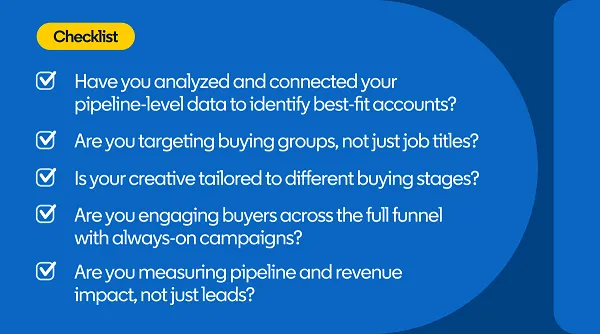
In an era where the traditional B2B sales cycle has been radically disrupted by generative AI and autonomous research tools, LinkedIn has released a comprehensive new strategic guide aimed at helping marketers regain visibility. As decision-makers increasingly rely on Large Language Models (LLMs) to curate shortlists and vet providers, the "hidden" portion of the buyer’s journey—often referred to as the "dark funnel"—has expanded, leaving many marketing teams struggling to attribute revenue to their top-of-funnel efforts.
To combat this, LinkedIn’s latest initiative, titled B2B Performance Principles: Outcomes, offers a roadmap for modern marketers to align their campaigns with the realities of modern discovery. By shifting the focus from simple lead capture to a more holistic view of the customer journey, LinkedIn aims to provide a framework for brands to remain relevant even when the majority of initial evaluation happens behind a "black box" of AI interfaces.
The Core Challenge: Why Traditional Metrics Are Failing
For decades, B2B marketing has been predicated on a linear model: a prospect sees an ad, clicks a link, fills out a form, and enters the sales pipeline. However, as LinkedIn notes in its latest documentation, this model is no longer reflective of how complex enterprise purchases occur.
The Rise of the "Dark Funnel"
Today’s buyers are conducting extensive research—comparing vendors, reading peer reviews, and even asking LLMs to generate procurement criteria—long before they ever engage with a sales representative. Because these AI-assisted research sessions often occur in private, un-trackable environments, marketers are finding it increasingly difficult to map the impact of their awareness campaigns to eventual conversions.
LinkedIn explicitly identifies this disconnect: "Buyers now ask AI tools to shortlist providers and weigh options, so much of their evaluation happens where marketers can’t track it. Measuring performance only at lead capture misses most of what shapes their decision."
This fundamental shift means that marketers who rely solely on "last-click" attribution or direct-response metrics are likely underestimating the influence of their brand-building efforts. The result is a dangerous feedback loop where effective brand awareness campaigns are cut because they don’t produce immediate leads, even though they are the very efforts that lead to the buyer choosing the vendor when they finally emerge from their research phase.
Chronology of the Shift: From Gatekeeping to Guidance
The evolution of B2B marketing has moved through three distinct phases, each requiring a different set of skills and tools.
Phase 1: The Gatekeeper Era (Pre-2015)
In the early days of digital marketing, the vendor held the power of information. Buyers were forced to contact sales teams to receive pricing, technical documentation, or case studies. Marketing’s primary goal was to create "friction" (gated content) to capture contact information as early as possible.
Phase 2: The Self-Service Revolution (2015–2022)
As content marketing matured, companies began providing high-quality resources upfront. Buyers became empowered to research on their own, moving the focus of marketing from "lead generation" to "nurturing." Attribution models became more sophisticated, attempting to track every touchpoint.
Phase 3: The AI-Assisted "Dark" Era (2023–Present)
We have now entered an era where the buyer is no longer just browsing websites; they are utilizing intelligent agents to synthesize information. The buyer is effectively "outsourcing" their initial discovery phase to AI. Consequently, marketers must pivot from chasing clicks to ensuring their brand presence is strong enough to be "referenced" by AI models and "recalled" by human decision-makers during the final stages of the selection process.
Supporting Data and The Five Key Principles
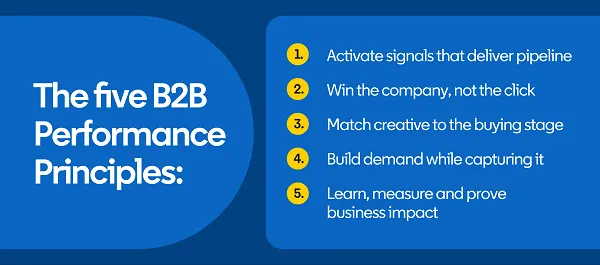
To address these challenges, LinkedIn has outlined five key pillars for success. These principles are designed to move marketers away from short-termism and toward a sustainable pipeline-building strategy.
1. Holistic Market Research
Rather than relying on outdated personas, brands must conduct active, ongoing research into how their specific industry is currently evaluating solutions. This includes analyzing the common questions asked by potential customers and identifying the "triggers" that cause a company to seek a new provider.

2. Broadening the Targeting Net
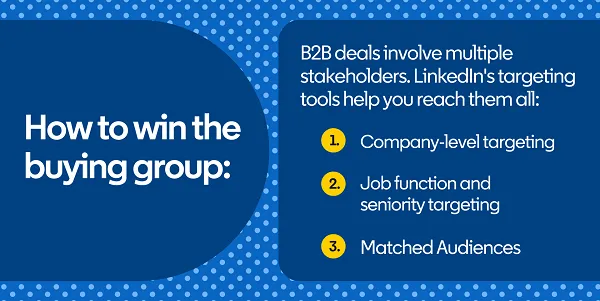
One of the most common mistakes in B2B marketing is focusing exclusively on the "decision-maker." However, in modern organizations, purchasing decisions are collaborative. By expanding targeting to include influencers, end-users, and internal stakeholders, brands can create "consensus" within a target account, making the ultimate sale significantly easier.
3. Content Alignment with the Buyer’s Journey
Marketers must map content to specific stages of the decision-making process.
- Awareness: Content that addresses industry shifts and challenges.
- Consideration: Content that highlights the efficacy of a specific approach.
- Decision: Content that validates the vendor’s unique value proposition.
4. Granular Performance Measurement
LinkedIn urges brands to measure success at every stage of the funnel. If a campaign is not driving immediate leads but is showing high engagement rates among a target account’s key employees, that is a success. Using LinkedIn’s Conversion Tracking tools, marketers can move beyond mere clicks to track specific, meaningful actions that signal intent.
5. Audience-Specific Personalization
Utilizing LinkedIn’s sophisticated targeting, brands should tailor their messaging to different audience segments. A message targeting a CTO will differ drastically from one targeting a procurement officer or a department manager.
Official Perspective: Insights from LinkedIn’s Strategic Team
LinkedIn’s documentation emphasizes that the pressure to show "measurable business results" is at an all-time high. However, they argue that the definition of "measurable" must change.
"B2B marketers face growing pressure to show how their work drives measurable business results," the company stated in its latest update. By providing these five principles, LinkedIn is essentially encouraging a shift in culture within marketing departments—from being a "lead generation engine" to being a "business growth partner."
The company highlighted that its own toolsets, including Audience Targeting and Conversion Tracking, are designed to give marketers a clearer window into the dark funnel. By identifying which companies are engaging with content—even if those individuals don’t fill out a lead form—marketers can provide sales teams with "intent data" that is far more valuable than a cold lead.
Strategic Implications: Adapting to the New Reality
What does this mean for the average B2B marketing manager? It necessitates a fundamental change in both strategy and reporting.
For the CMO: Redefining Success
Chief Marketing Officers must recalibrate their dashboards. Reporting must move away from "Cost Per Lead" (CPL) as the sole North Star metric. Instead, KPIs should include metrics like "Share of Voice" within target accounts, "Brand Sentiment," and "Account-Level Engagement." These metrics are the leading indicators of future revenue.
For the Content Team: The AI-Ready Pivot
Content must now be optimized not just for human searchers, but for the information ecosystems that feed AI. This means focusing on deep, proprietary data and expert thought leadership that LLMs will likely prioritize as "authoritative" information. If your brand is not providing the best, most clear information on a topic, an AI tool will simply choose a competitor that is.
For the Demand Generation Specialist: Closing the Loop
Demand gen teams must bridge the gap between marketing engagement and sales activity. By using LinkedIn’s tools to identify the organizations showing high engagement, they can provide "warm" account lists to sales, rather than expecting sales to hunt through individual leads that may or may not be interested.
The Role of Technology
The reliance on LinkedIn’s native tracking tools is no longer optional. As third-party cookies crumble and privacy regulations tighten, the "first-party" data provided by platforms like LinkedIn—which captures the professional identity and intent of users—becomes the most valuable asset in the marketer’s arsenal.
Conclusion: Embracing the Shift
The transition to an AI-driven, transparent-yet-opaque buying journey is the most significant challenge B2B marketing has faced in the digital age. LinkedIn’s new guide serves as a necessary wake-up call: the old ways of tracking, targeting, and measuring are no longer sufficient.
By adopting these five principles—researching deeply, targeting broadly, aligning content, measuring granularly, and personalizing consistently—marketers can stop fighting the nature of the "dark funnel" and start mastering it. The goal is no longer to "capture" the buyer, but to be the most visible, helpful, and relevant partner in their inevitable journey toward a decision.
As the landscape continues to evolve, those who lean into these shifts, rather than resisting them, will be the ones who maintain a competitive edge in an increasingly automated world. The tools are available; the strategy is defined. Now, the execution begins.

 Ammar Sabilarrohman
 Layla Zulfa
 Raul Delapena Setiawan
 Dwi Wanna
 Muslim
 Nana Wu

 Rifan Muazin