
 Rifan Muazin
By Crystal Bell
Digital Culture Editor
In an era dominated by hyper-optimized "that girl" morning routines, productivity-hacking influencers, and the relentless pressure to monetize every waking moment, the internet has found a new, unlikely hero. She is not selling a workout program, she isn’t promoting a high-end wellness retreat, and she certainly isn’t filming a "get ready with me" video designed to sell luxury skincare.
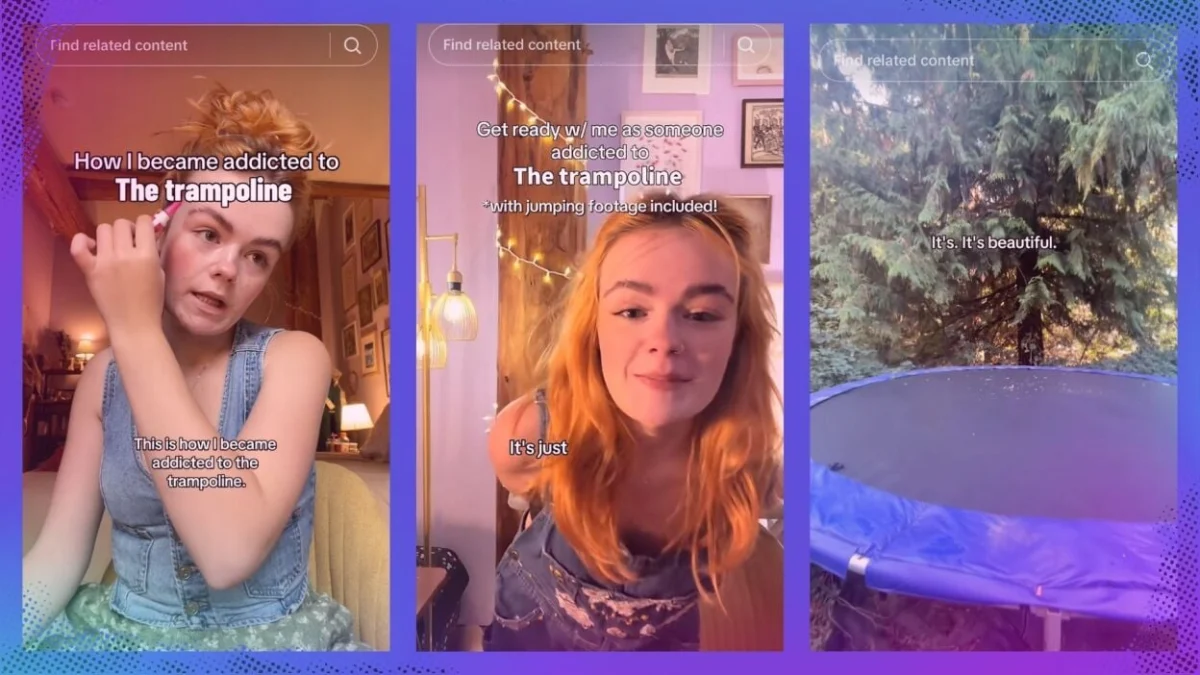
Instead, TikTok creator @whatifimjustagirl is capturing the collective imagination of millions by doing something profoundly simple, deeply personal, and entirely uncommercial: she jumps on a backyard trampoline in the middle of the night.
For the past seven years, this nocturnal ritual has served as her primary form of decompression. While the rest of the world sleeps—or doom-scrolls through social media—she is outside, usually between the hours of midnight and 3:00 a.m., bouncing under the stars. Her videos, which feature little more than the rhythmic creak of springs and the sound of her own breath, have gone viral, sparking a massive digital conversation about the nature of joy, the intrusion of public diagnosis, and the desperate modern need for "unproductive" hobbies.
The Anatomy of a Routine: A Seven-Year Commitment
The ritual is remarkably consistent. There is no elaborate setup, no complex choreography, and no audience-pandering theatrics. When asked about the logistics of such an unusual hobby, the creator remains pragmatic. She has curated a specialized rotation of clothing—leggings and a flannel for the biting chill of late-night sessions—and her only constant companion is a pair of headphones.
For seven years, this has been her "anchor." In a world where hobbies are frequently discarded as quickly as they are picked up, a nearly decade-long commitment to a solo physical activity is a statistical anomaly. It is not an athletic training regimen; she is not preparing for a trampoline competition, nor is she tracking her heart rate to optimize her cardiovascular health.
"I look forward to it every single day," she stated in a recent viral clip. This candid admission of pure, unadulterated anticipation is perhaps why the content resonates so deeply. In a landscape where we are told to "optimize" our leisure time—to read books to learn, to exercise to live longer, to paint to be creative—she is jumping simply because she wants to.
The Burden of Internet Diagnosis
The virality of her routine, however, brought with it the darker side of internet culture: the unsolicited psychiatric evaluation. As her videos gained traction, the comment sections were flooded with viewers attempting to categorize her behavior. Many users immediately jumped to the conclusion that the creator is autistic, citing her repetitive behavior and intense focus as "classic indicators."

This phenomenon—where the internet acts as a collective, amateur clinician—is a recurring issue for content creators who deviate from social norms. The creator eventually addressed these claims directly, firmly setting the record straight.
"I just wanted to comment on the mental health aspect of it because I have a lot of people assume I have autism, and I do not," she explained in a follow-up video. While she clarified that she does live with OCD, she was careful to distinguish the nature of her condition from the act of jumping itself.
"Yes, is my obsession with the trampoline a little extreme? Yes. Does my OCD play a factor in that? Yes, but that’s not why I jump," she maintained. Her response serves as a necessary boundary-setting moment in digital culture. By refusing to let the internet pathologize her joy, she reclaims the narrative: sometimes, a hobby is just a hobby. It does not require a diagnosis, a justification, or a scientific explanation to be valid.
The Psychology of Movement and Sensory Regulation
While the creator herself rejects the need for a clinical explanation, mental health professionals often point to the therapeutic benefits of rhythmic, repetitive physical movement—a concept known as "stimming" or simply sensory regulation.
"Rhythmic movement, such as jumping, walking, or swaying, can be a highly effective way for the nervous system to self-regulate," says Dr. Aris Thorne, a specialist in behavioral psychology. "When we engage in repetitive motions, it can lower cortisol levels and create a sense of predictability and safety, which is often missing in our chaotic, tech-saturated lives."
For many people, the act of jumping on a trampoline provides a specific type of proprioceptive input—the sense of where our body is in space—which can be deeply grounding. Whether or not the creator intended to "regulate" her nervous system, the effect remains the same: a profound sense of peace. The fact that she chooses to do this at night, when the world is quiet and the visual stimuli are low, further suggests an intuitive need to escape the over-stimulation of modern life.
Why We Are Obsessed with Her Freedom
Why does this matter? Why are millions of people watching a woman jump on a trampoline in the dark?
The answer lies in our collective exhaustion. We are currently living through an era of "hustle culture fatigue." Every hobby, from sourdough baking to knitting, has been filtered through the lens of potential monetization or personal branding. We are told that if we aren’t "leveling up," we are failing.

When we watch the "Midnight Bouncer," we aren’t watching a performance; we are witnessing a genuine human experience. She represents a radical act of rebellion against the productivity machine. By choosing to spend her late-night hours in a way that serves no one but herself—and requires no public validation—she is modeling a type of freedom that many of us have forgotten how to access.
Furthermore, there is a nostalgic, almost childlike wonder to the activity. For most adults, the trampoline is a relic of the backyard, a toy left behind in childhood. By reclaiming it as an adult, she breaks the unspoken social contract that dictates how adults are "supposed" to spend their time.
The Implications for Modern Digital Life
As we look toward the future of digital culture, the story of the trampoline-jumping creator serves as a cautionary tale and a beacon of hope. It reminds us that:
- Public figures are not public property: The immediate impulse to diagnose or "solve" a creator’s personality is a toxic byproduct of parasocial relationships.
- Joy is inherently valid: We must move away from the belief that our downtime must be "productive." If an activity brings someone peace, it is valuable in and of itself.
- The internet yearns for authenticity: The most viral content is no longer the most polished. It is the most human.
The creator’s routine is not a "secret to happiness" in the sense that everyone should go out and buy a trampoline at 2:00 a.m. (though, as she has shown, the neighbors might have something to say about that). Rather, the "secret" is the permission to find your own version of that trampoline.
Maybe for you, it isn’t jumping. Maybe it’s staring at the ceiling, or long-distance running in the rain, or organizing a collection of rocks. The specific activity matters less than the intention behind it: a deliberate, private retreat from the demands of the world.
As the nights grow longer and the pressures of the digital age continue to mount, we might all do well to find our own metaphorical trampoline. In a world that demands we always be "on," the most radical thing we can do is find a quiet space, put on our headphones, and simply bounce until we feel like ourselves again.
The creator has reminded us that the world is a heavy place, and sometimes, the only way to deal with the gravity of it all is to jump.


 Lina Irawan

 Asep Darmawan

 Asro

 Azzam Bilal Chamdy

 Ali Ikhwan

 Suro Senen
