
 Rifan Muazin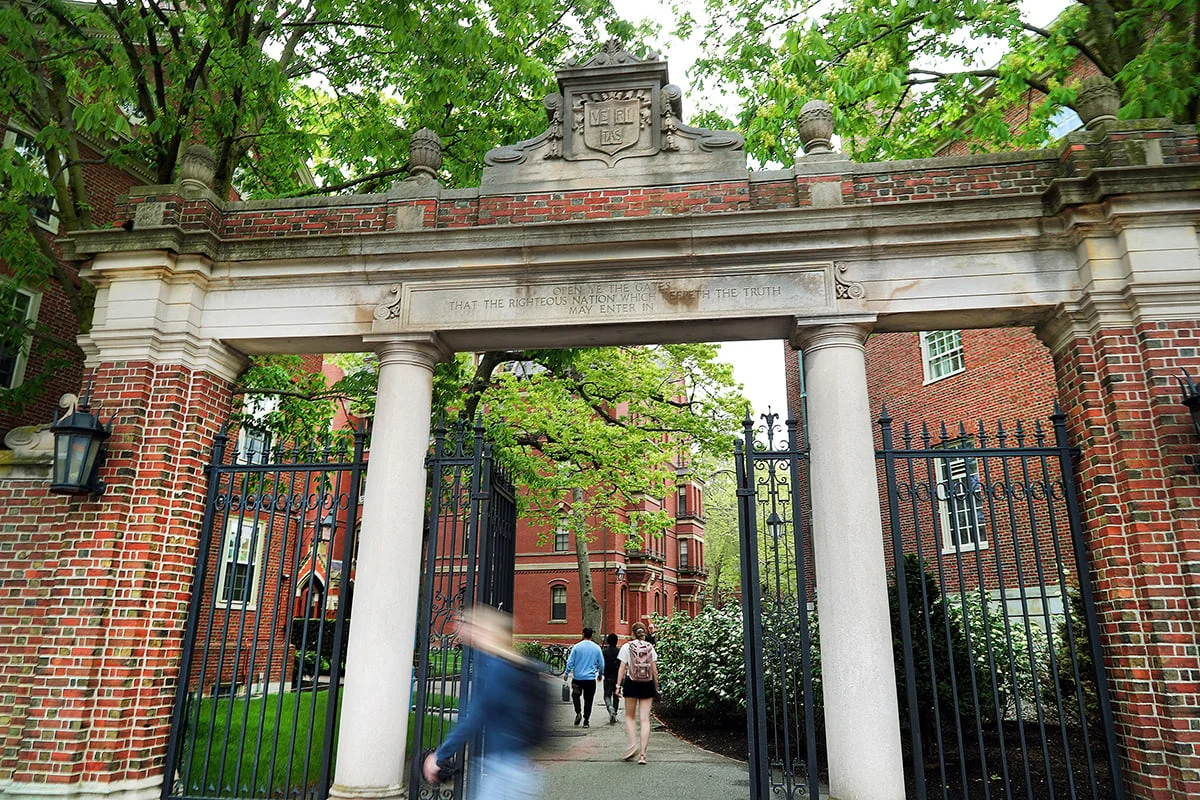
In a monumental effort to unearth the obscured foundations of American higher education, Harvard University has released a groundbreaking database that details the lives of more than 1,600 people enslaved by the institution’s leaders, faculty, and staff over the course of two centuries. The project, which represents a massive expansion of previous historical inquiries, serves as a sobering accounting of the human cost that underwrote the rise of one of the world’s most prestigious academic citadels.
The Scope of the Revelation
The newly published data, released this past Tuesday, confirms that between 1636 and 1865, at least 259 individuals in positions of power at Harvard—ranging from university presidents and board members to professors and administrators—held people in bondage. This figure of 1,613 enslaved individuals is a staggering increase from the mere 70 names identified in the university’s 2022 landmark report, Harvard & the Legacy of Slavery.
The database is the culmination of a rigorous, multi-year collaboration between the Harvard & the Legacy of Slavery (H&LS) initiative and American Ancestors, a national genealogical nonprofit. By cross-referencing probate records, wills, tax inventories, and personal correspondence, researchers have begun to reconstruct the lives of individuals who were historically reduced to line items in personal ledgers. University officials have made it clear that this figure is not a ceiling; as archival research continues, they fully expect the number of identified enslaved people—and the number of complicit Harvard officials—to grow.
A Chronology of Complicity: 1636–1865
To understand the depth of this history, one must look at the timeline of Harvard’s institutional development. Founded in 1636, Harvard was deeply integrated into the colonial economy of New England, a region often erroneously sanitized in public memory as being separate from the plantation systems of the South. However, the new research illuminates how the wealth, labor, and social standing of the university’s elite were inextricably linked to the enslavement of human beings.
- The Early Colonial Era (1636–1750): During the university’s first century, enslavement was an accepted facet of domestic and academic life for the colonial elite. Harvard officials frequently kept enslaved people in their households to serve the faculty and their families.
- The Revolutionary and Post-Revolutionary Period (1750–1830): Even as the rhetoric of "liberty" grew in the American colonies, the university’s leaders continued to participate in the trafficking and holding of enslaved people. Probate records from this era reveal the legal machinery used to pass enslaved people from one Harvard official to another as part of their estates.
- The Abolitionist Era and the Road to Emancipation (1830–1865): As the national divide over slavery intensified, the internal records of Harvard officials reflect the tension of the era. The database captures the final decades of this practice, ending with the legal abolition of slavery in the United States following the Civil War.
Data and Methodology: Beyond the Ledger
The methodology behind this project represents a shift in how elite institutions approach historical trauma. By partnering with American Ancestors, Harvard has moved beyond superficial acknowledgments, opting instead for a granular, genealogical approach.
The database does not merely list names; it attempts to recover the humanity of those who were enslaved. It documents families, occupations, and, in some cases, the specific ways in which their labor supported the university’s operations. For researchers, the challenge is not just identifying the "owners," but identifying the "owned"—a task complicated by the fact that many enslaved people were denied the right to use surnames, or were simply omitted from official records altogether.
"To expand our research from just over 70 individuals to now 1,613 has taken genealogical expertise on the part of countless researchers," noted Sara Bleich, vice provost for special projects at Harvard and leader of the H&LS initiative. "And, while our work is by no means done, this is a big step forward."
Institutional Responses: The Weight of History
The release of this data has been met with a mix of academic scrutiny and solemn reflection. Henry Louis Gates Jr., the eminent Harvard professor who directs the Hutchins Center for African & African American Research and serves on the initiative’s advisory council, emphasized the necessity of this "uncomfortable" work.
"Every chapter in history, every family tree, and every institution has its share of shadows and surprises," Gates remarked in a statement following the release. "The journey isn’t always neat and easy, but it’s a crucial part of self-knowledge—an experience both necessary and transformative."
For the university administration, the database is presented as a mechanism for institutional honesty. By exposing the "shadows" of its past, Harvard is attempting to position itself as a leader in a broader national movement of historical reckoning. This is not merely an academic exercise; it is an attempt to address the ongoing legacy of these ties, which influenced the university’s wealth accumulation, curriculum, and social hierarchy.
Implications for Higher Education
Harvard is not acting in a vacuum. The release of this database comes at a time when universities across the United States are facing mounting pressure to investigate their historical connections to the trans-Atlantic slave trade and the institution of American chattel slavery.
The ripple effect of this research is already being felt. Recently, The Columbia Spectator reported that student researchers at Columbia University identified a living descendant of a person who was enslaved by one of the university’s founders. This breakthrough—the first of its kind for Columbia—highlights a growing trend: the shift from abstract historical research to the identification of direct familial lineages.
These projects share a common goal: to move beyond institutional apologies and toward a more tangible understanding of how the wealth and prestige of the Ivy League were built upon stolen labor. For the descendants of those 1,613 individuals, this database may offer a vital link to ancestors who were erased from the public record. For the university, it represents a commitment to "institutional humility"—a process of acknowledging that the very walls of the campus were built, maintained, and sustained by those who were not free.
The Road Ahead: Transparency as Accountability
As the database continues to evolve, the implications for Harvard’s future are significant. Critics argue that the release of data must be followed by concrete actions, such as reparations, memorialization, and a fundamental change in how the university supports the descendants of those it enslaved.
The H&LS initiative has signaled that this research is not the end of the inquiry but the beginning of a long-term commitment. As they continue to scour archives, verify accounts, and partner with genealogical experts, the university is effectively opening its doors to a history that it previously kept shuttered.
The "shadows and surprises" mentioned by Professor Gates are now part of the public domain. For a university that prides itself on the pursuit of truth, this project serves as a test of its own core values. Can an institution that was built on the backs of the enslaved ever fully reconcile with its past? The answer, according to the researchers, lies not in the finality of the data, but in the ongoing, transformative work of acknowledging the truth of that history, no matter how painful it may be.
By providing this information to the public, Harvard has set a new standard for transparency. The ledger is open, and for the first time in history, the names of the 1,613 are being recognized, studied, and remembered as an essential—and no longer hidden—chapter of the Harvard story.


 Layla Zulfa
 Ali Ikhwan
 Ammar Sabilarrohman
 Reynand Wu
 Iffa Jayyana
 Azzam Bilal Chamdy
 Sagoh
Sagoh
 Suro Senen