
 Sagoh
Sagoh
You have done the hard part. You have spent hours agonizing over a subject line that demands attention. You have crafted copy that sounds human, empathetic, and compelling. You have built the complex automation, scheduled the campaign, and hit the "Send" button with the quiet confidence of a founder who knows their craft.
Then, silence.
The open rates remain stagnant. Your revenue goals for the quarter begin to slip. You haven’t been hacked, and your offer isn’t "bad"—you have simply fallen victim to the brutal, invisible reality of email deliverability. In the modern digital landscape, you can have the most sophisticated marketing strategy in the world, but if your emails are being rerouted to the spam folder, none of it matters.
Email deliverability is the silent killer of ecommerce growth. Understanding how to navigate the complex algorithms of Gmail, Outlook, and Yahoo is no longer a technical "nice-to-have"—it is a foundational pillar of modern business operations.
The Anatomy of Deliverability: More Than Just "Sent"
To understand the problem, we must first distinguish between delivery and deliverability.
When an email is "delivered," it simply means it didn’t bounce; it successfully reached the recipient’s mail server. Whether it ends up in the primary inbox, the promotions tab, or the dreaded spam folder is an entirely different matter. Deliverability is the measurement of your ability to land in the inbox. It is a dynamic, real-time score influenced by your technical infrastructure, your historical sending behavior, the quality of your list, and the content within your messages.
For ecommerce founders, this is not a marginal concern. If 20% of your emails are filtering into spam, you have effectively lost 20% of your reach overnight. Worse, the damage is often invisible; most founders don’t realize their reputation has been compromised until their revenue dips and their engagement metrics crater.
The Credit Score of the Internet: Your Sender Reputation
Think of your sender reputation as a credit score for your email program. Every time you hit "send," email providers are watching. They analyze your volume, your bounce rates, your spam complaint percentages, and, crucially, how users interact with your messages.
Are your recipients opening your emails? Are they clicking links? Are they marking your messages as "not spam"? Or are they ignoring your messages entirely?
Over time, this behavioral data aggregates into a reputation score tied to your sending domain and IP address. A strong reputation acts as a "fast pass," ensuring your emails bypass the heavy filters. A weak one triggers defensive protocols from Internet Service Providers (ISPs), leading to deprioritization or total blocking.
The two greatest threats to this reputation are high bounce rates—which signal a neglected, "dirty" list—and high spam complaints, which serve as a loud, unmistakable signal to ISPs that your audience does not want your content.
Technical Foundations: Why Authentication Is Non-Negotiable
If sender reputation is your credit score, authentication is your ID. In an era of rampant phishing and domain spoofing, ISPs require proof that you are who you say you are. Without proper authentication, even the most legitimate businesses will be treated as malicious actors.
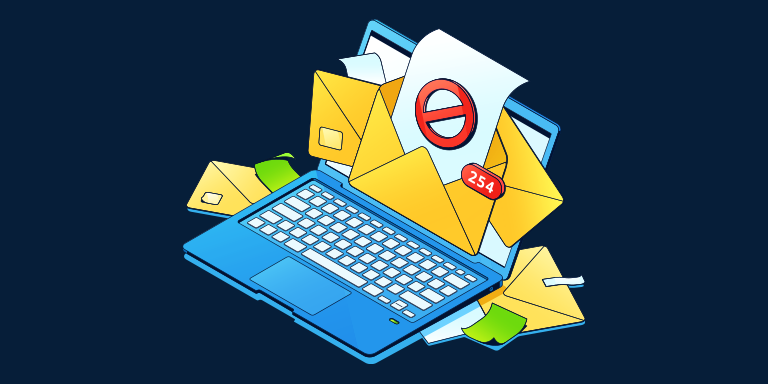
There are three primary technical standards that every business must implement:
- SPF (Sender Policy Framework): This acts as a guest list for your domain, explicitly stating which IP addresses or services are authorized to send email on your behalf.
- DKIM (DomainKeys Identified Mail): This adds a digital signature to your emails, ensuring that the content hasn’t been tampered with or altered in transit.
- DMARC (Domain-based Message Authentication, Reporting, and Conformance): This ties SPF and DKIM together, providing instructions to the receiving server on what to do if an email fails authentication.
If you are using a professional platform like Omnisend, these settings are often handled during the onboarding process. However, complacency is dangerous. A missing or misconfigured DKIM record is one of the most common reasons legitimate emails end up in the spam folder, and it can be rectified in under 15 minutes.
List Hygiene: The Unsexy Work That Drives Results
List hygiene is rarely discussed at industry networking events, yet it is arguably the most powerful tool for protecting your deliverability. Every email list accumulates "dead weight" over time—expired addresses, abandoned accounts, and typos captured during the sign-up process. These dead addresses do nothing but drag down your engagement rates and inflate your bounce rates.
The strategy for cleaning your list is straightforward:
- The 90-Day Audit: Run a re-engagement campaign for contacts who haven’t opened or clicked in 90 to 180 days.
- The Purge: If they don’t respond to your "last call," remove them. It feels counterintuitive to shrink your list, but a smaller, highly active list will always deliver higher ROI than a large, disengaged one.
- Double Opt-In: While it adds friction to the signup process, requiring users to confirm their email address ensures that your list is populated by individuals who genuinely want to hear from you. This simple step pays massive dividends in long-term deliverability.
The Psychology of Engagement Signals
Email providers are increasingly shifting toward engagement-based filtering. They are looking for "positive signals": opens, clicks, replies, and moving an email from the spam folder to the primary inbox. Each of these actions acts as a vote of confidence for your domain.
This is where content strategy meets technical infrastructure. If your welcome series—the first interaction a subscriber has with your brand—is bland or irrelevant, you have already started to erode your reputation. Every email is an opportunity to prove your value. If you consistently provide content your audience wants to receive, you are essentially training the ISPs to treat your future emails as "wanted" mail.
Content Habits That Trigger Automated Filters
Modern spam filters have evolved beyond simple keyword scanning. They now use machine learning to analyze the "DNA" of your emails. To keep your deliverability high, avoid these common red flags:
- Poor HTML-to-Text Ratios: Emails that are entirely images with no text are often flagged as phishing attempts.
- Excessive Link Density: Including too many calls-to-action (CTAs) can look like a "link farm" to an algorithm.
- Spammy Formatting: Avoid excessive capitalization, excessive use of exclamation points, or jarring color schemes that mimic "get rich quick" schemes.
- Inconsistent Sending Cadence: Sending sporadic, high-volume blasts after weeks of silence is a classic tactic used by spammers. Build a consistent rhythm that your audience expects.
Conclusion: The Path Forward
Deliverability is not a one-time configuration; it is an ongoing practice. The most successful founders treat list health, authentication, and content relevance as continuous priorities.
The frustrating truth is that you won’t know your deliverability is broken until you notice the drop-off in your conversion data. By then, your domain’s reputation may have already been downgraded. The solution is to integrate tools that treat deliverability as a central feature of your business operations.
Platforms like Omnisend are designed to solve this by automating the technical heavy lifting. From real-time deliverability monitoring and simplified authentication to smart list-health tools that automatically identify and suppress inactive users, these systems provide the infrastructure necessary to keep your emails in front of your customers.
Take Control Today:
Don’t wait for your open rates to crater. Ensure your authentication is bulletproof, audit your list for dead weight, and prioritize engagement from the first "Welcome" email.
Foundr readers can get 50% off their first three months with Omnisend. Use code FOUNDR50 when you sign up to start building an email program that doesn’t just reach the inbox—it resonates with your audience.


 Nila Kartika Wati
 Asep Darmawan
 Jia Lissa
 Basiran


 Lina Hope