
 Azzam Bilal Chamdy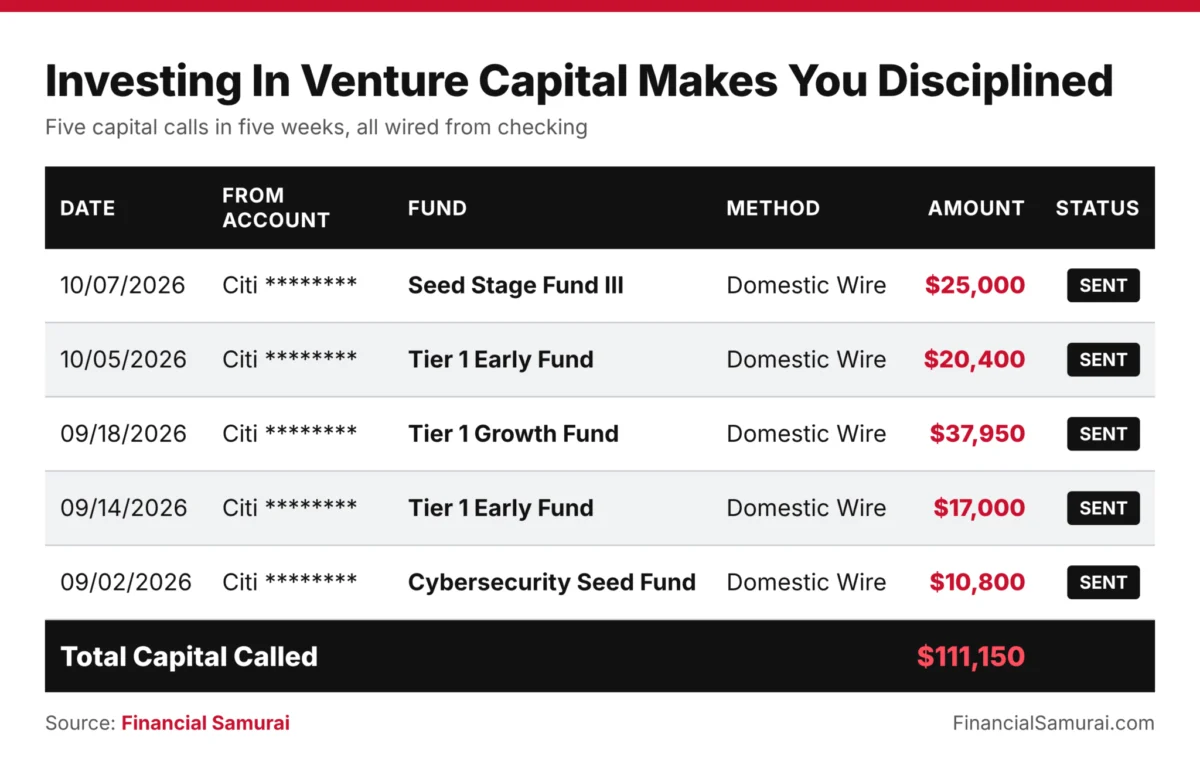
In the world of personal finance, the "FIRE" (Financial Independence, Retire Early) movement is often painted as a pursuit of passive ease—a destination where the labor ends and the dividends begin. However, for many who have achieved this state, the reality is far more complex. Recently, the author behind Financial Samurai sparked a firestorm of debate after disclosing a precarious financial position: being "broke" at 49 due to a aggressive venture capital (VC) investment strategy.
Critics have labeled the approach as "reckless" and "symptomatic of top-of-the-market psychology." Yet, for the investor, this isn’t just about chasing alpha; it is a calculated psychological and financial maneuver designed to hedge against the existential threat of artificial intelligence and to secure a legacy for the next generation.
The Anatomy of a Liquidity Crisis
The core of the recent controversy stems from a misunderstanding of financial terminology. The author draws a sharp distinction between a "liquidity problem" and a "solvency problem."
"One makes me annoying at dinner parties," the author notes. "The other gets your house foreclosed on."

Solvency implies an inability to pay debts, whereas liquidity refers to the availability of cash. The author’s current stress is born from a high-velocity series of capital calls—the legal obligation for limited partners (LPs) to provide the committed capital to a venture fund when the firm identifies an investment opportunity. Over a mere five-week period, the author was required to wire $111,150 to satisfy these calls. This figure significantly outstrips current passive and online income, creating a temporary, albeit intense, cash crunch.
Chronology of a Capital Call Flurry
To understand the scale of the commitment, one must look at the recent timeline of the author’s portfolio activity. Over the last few months, the author has faced an unprecedented flurry of capital calls:
- Weeks 1-5: Five distinct capital calls resulted in the deployment of $111,150.
- Annual View: The author reports four similar, though less compressed, flurries throughout the calendar year.
- The Commitment Strategy: By capping private investments at 20% of total investable capital, the author attempts to ring-fence the risk. This strategy acknowledges that while private markets are opaque and illiquid, they provide access to high-growth potential that public indices often miss.
- The Long-Term View: These investments are not short-term trades. They are multi-year commitments designed to mature alongside the author’s children, who are currently 12 years away from adulthood.
Supporting Data: Risk Allocation and Performance
The decision to allocate 20% to venture capital is not made in a vacuum. It is supported by a rigorous, albeit aggressive, risk management framework. The author’s investment philosophy rests on three pillars:
1. The "Safety Net" of Illiquidity
For a retail investor, the greatest enemy is often the "sell" button. By locking capital into private funds, the investor removes the temptation to trade during market volatility. In the author’s view, the capital is effectively in "safer hands" because it is managed by professional General Partners (GPs) who are incentivized to succeed, rather than a self-managed portfolio prone to emotional tampering.

2. Investing Through the Downturns
Historical data shows that market timing is a fool’s errand. By committing to venture funds, the investor is contractually obligated to invest regardless of market conditions. This ensures participation in the market even during bear cycles—a period where many retail investors, driven by fear, move to cash and miss the subsequent recovery.
3. The "Tier One" Filter
The author explicitly notes that the vast majority of venture funds fail to outperform the NASDAQ over a ten-year horizon. However, the top-tier firms—those with the pedigree and access to the next generation of "world-changing" startups—consistently show the ability to generate superior returns. The author’s strategy involves fighting for allocation in these oversubscribed, top-tier vintage funds to capture outsized returns.
Psychological Implications: The "Sacrifice" Factor
Beyond the spreadsheets and capital call notices lies a psychological component rarely discussed in financial literature. The author, who identifies as a thrill-seeker with a past defined by "stupid teenage risks," views his current financial life through the lens of a parent.
"Sacrifice feels good when it’s for the people you love," the author writes.
There is a profound sense of protective intent behind the wires. The author expresses deep concern over the trajectory of AI, which threatens to disrupt the labor market for the next generation. By investing in the very companies driving this technological shift, the author isn’t just chasing returns; he is hedging his children’s future. Each capital call is reframed not as a loss of liquidity, but as a small act of long-term protection—the financial equivalent of a parent eating last.
Professional Perspectives on Risk Profiles
Financial advisors often warn against the "drift" of asset allocation. A portfolio that starts as a 60/40 split can quickly become an 80/20 growth-heavy portfolio after a few years of a bull market. The author’s emphasis on periodic reviews is a standard recommendation in wealth management.
When an individual’s net worth reaches significant levels, the mechanics of risk change. A $10 million portfolio, when hit with a 20% market decline, suffers a $2 million loss—a sum that could represent a decade of savings. This is why the author favors illiquid assets like real estate. Because they cannot be sold with a "single tap on a phone," these assets remain untouched during market panic, serving as a stabilizing anchor in a volatile storm.
Implications for the Modern Investor
What does this mean for the average investor? The author’s story offers several key takeaways:

- Define Your Risk Ceiling: Knowing that 20% is the absolute limit for high-risk, illiquid assets allows the investor to survive even if those investments go to zero.
- Understand Your "Why": Financial goals are more sustainable when they are tied to a purpose greater than oneself. Whether it is legacy, family, or personal security, a clear "why" helps mitigate the stress of short-term cash flow issues.
- The Danger of "Easy" Investing: The ease of modern trading apps can lead to destructive behavior. Sometimes, the best strategy is to introduce friction into the investment process to prevent emotional decision-making.
- Two-Timeline Thinking: Successful wealth building often requires balancing the immediate need for survival with the long-term goal of generational security.
Conclusion: A Marathon, Not a Sprint
The criticism directed at the Financial Samurai is perhaps the inevitable result of a public discussion on high-stakes wealth management. However, the underlying message is one of discipline and intent. While living "capital call to capital call" is an uncomfortable reality, it is a chosen path.
For the author, the discomfort of today is a small price to pay for the potential security of tomorrow. In an era of economic uncertainty and rapid technological change, the strategy serves as a reminder that wealth management is not just about numbers—it is about the values we hold, the sacrifices we make, and the future we hope to build for those who will follow in our footsteps. Whether one agrees with the specific allocation of 20% to venture, the importance of maintaining a rigid, purpose-driven risk profile remains an essential lesson for any long-term investor.


 Sagoh
Sagoh
 Nana Muazin
 Layla Zulfa
 Nana
Nana
 Pevita Pearce
 Rifan Muazin

 Iffa Jayyana