
 Suro Senen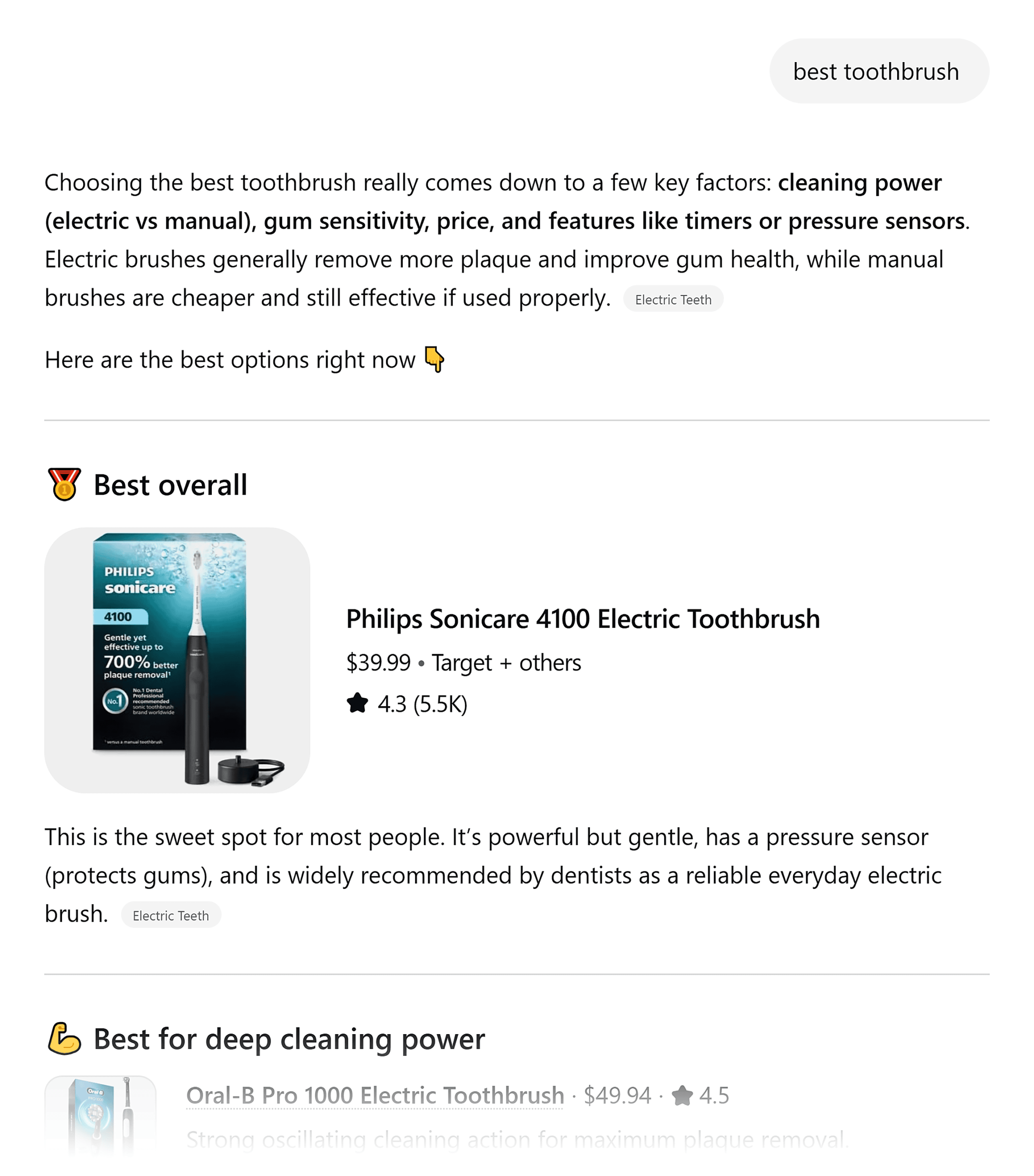
For years, the gold standard of SEO was simple: secure a top-three ranking on Google, and the traffic would follow. But as Large Language Models (LLMs) like ChatGPT, Perplexity, and Google’s own AI Overviews move from novelty to primary search tools, that old rulebook is becoming obsolete.

You can rank on the first page of Google and still never be cited by an AI. This shift is driven by a background process known as query fan-out. Understanding this mechanism is now the single most important factor for brands looking to maintain visibility in an AI-first world.
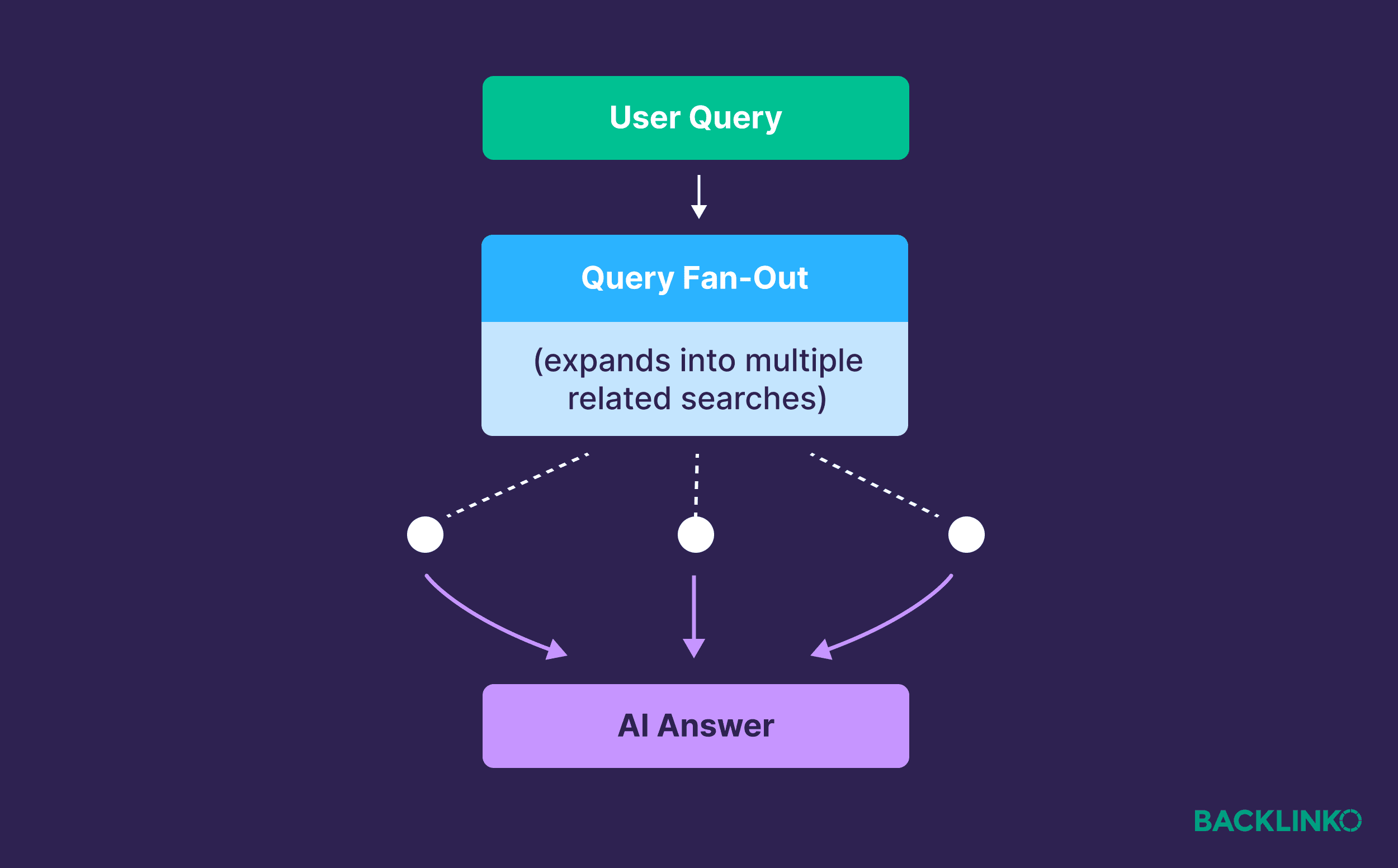
What Is Query Fan-Out?
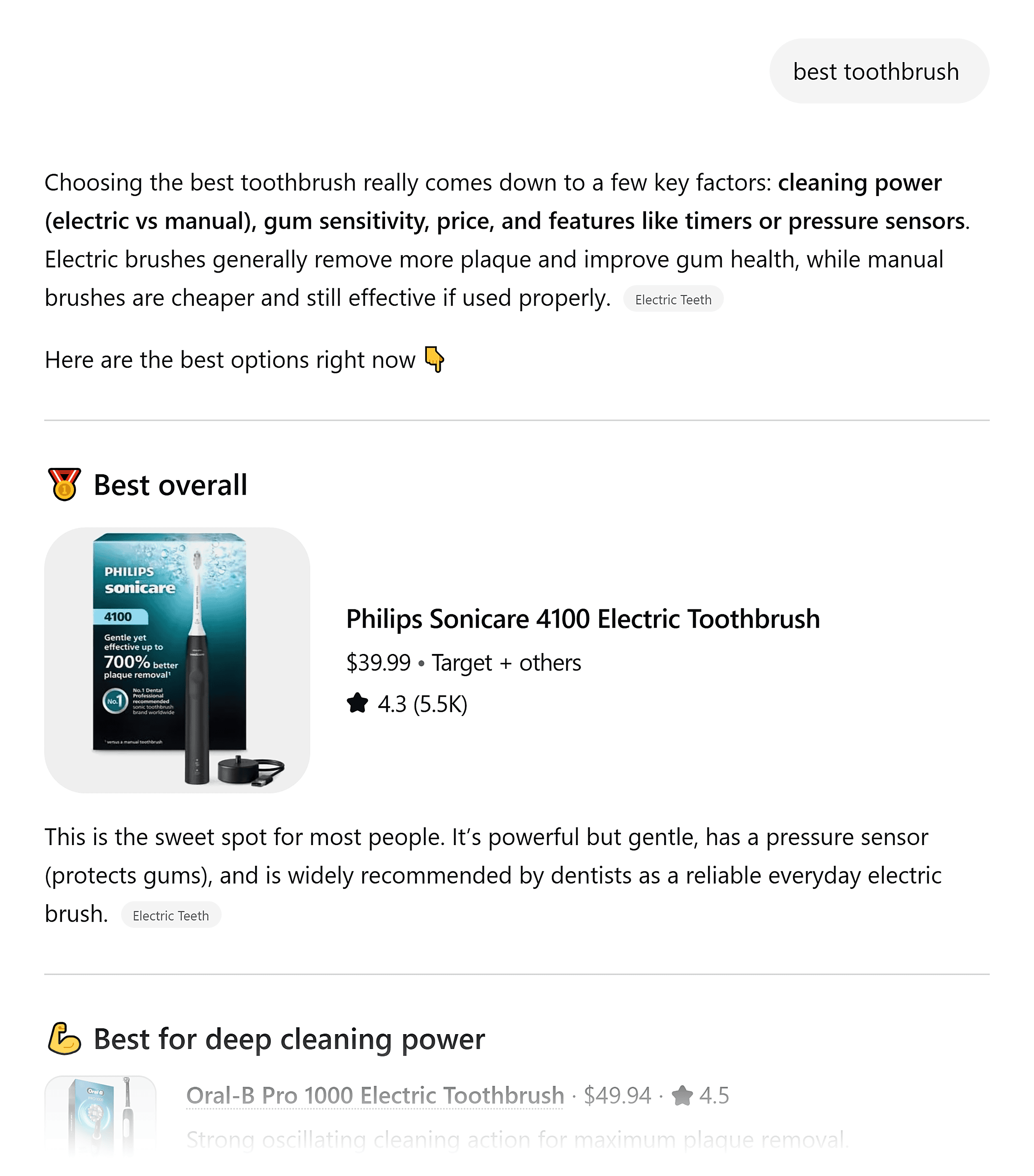
Query fan-out is a sophisticated process used by AI search systems to break down a single, often vague user query into a series of nuanced sub-queries. Rather than relying on a static keyword match, the AI “fans out” the request to construct a multi-dimensional, comprehensive answer.
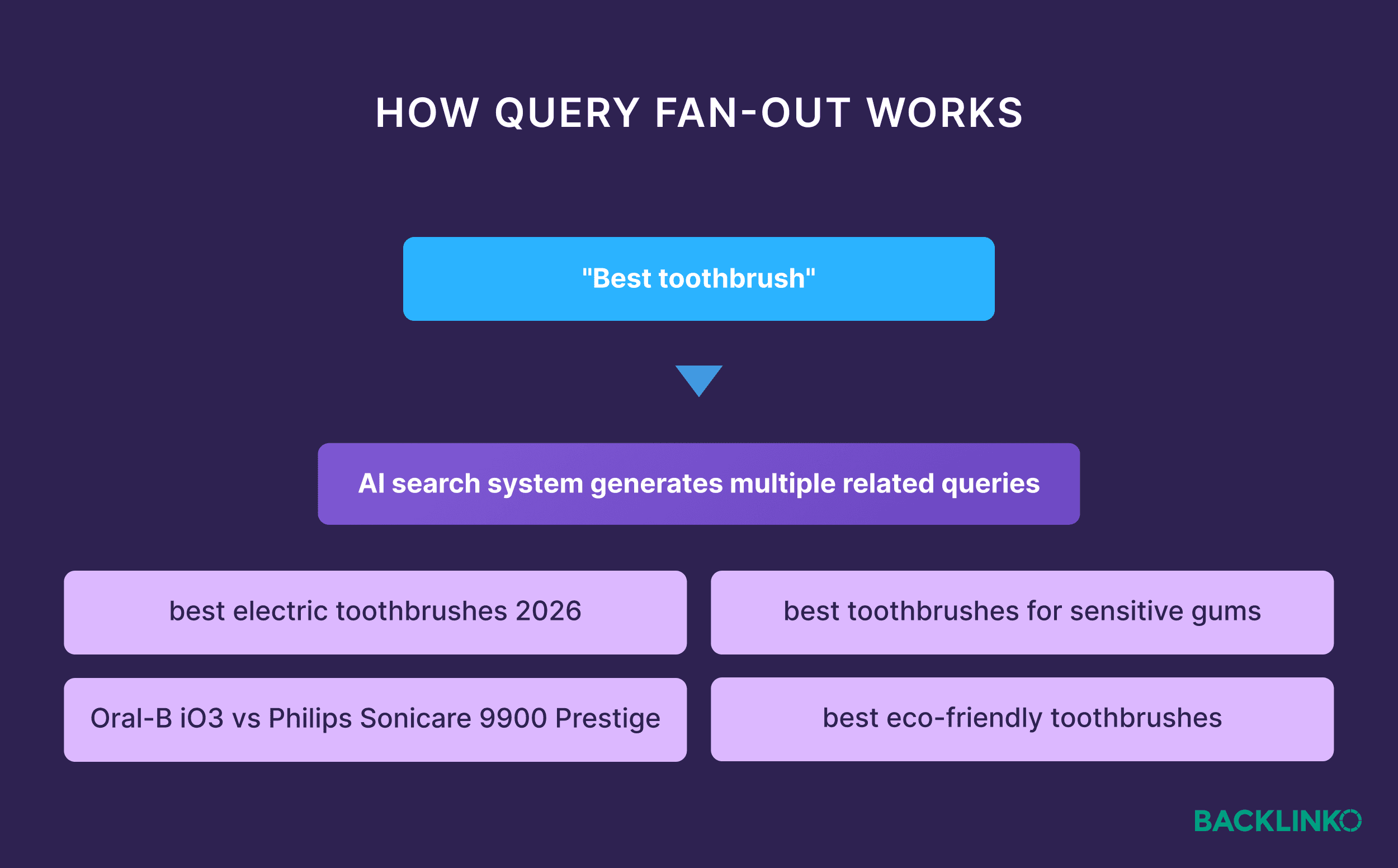
When a user asks a question—for instance, “What is the best running shoe?”—the AI doesn’t simply look for the page with the highest domain authority for that exact phrase. Instead, it anticipates the user’s intent by triggering a series of background searches: “Best running shoes for flat feet,” “Running shoe longevity by brand,” “Best marathon trainers [current year],” and “Affordable vs. high-end running shoe performance.”
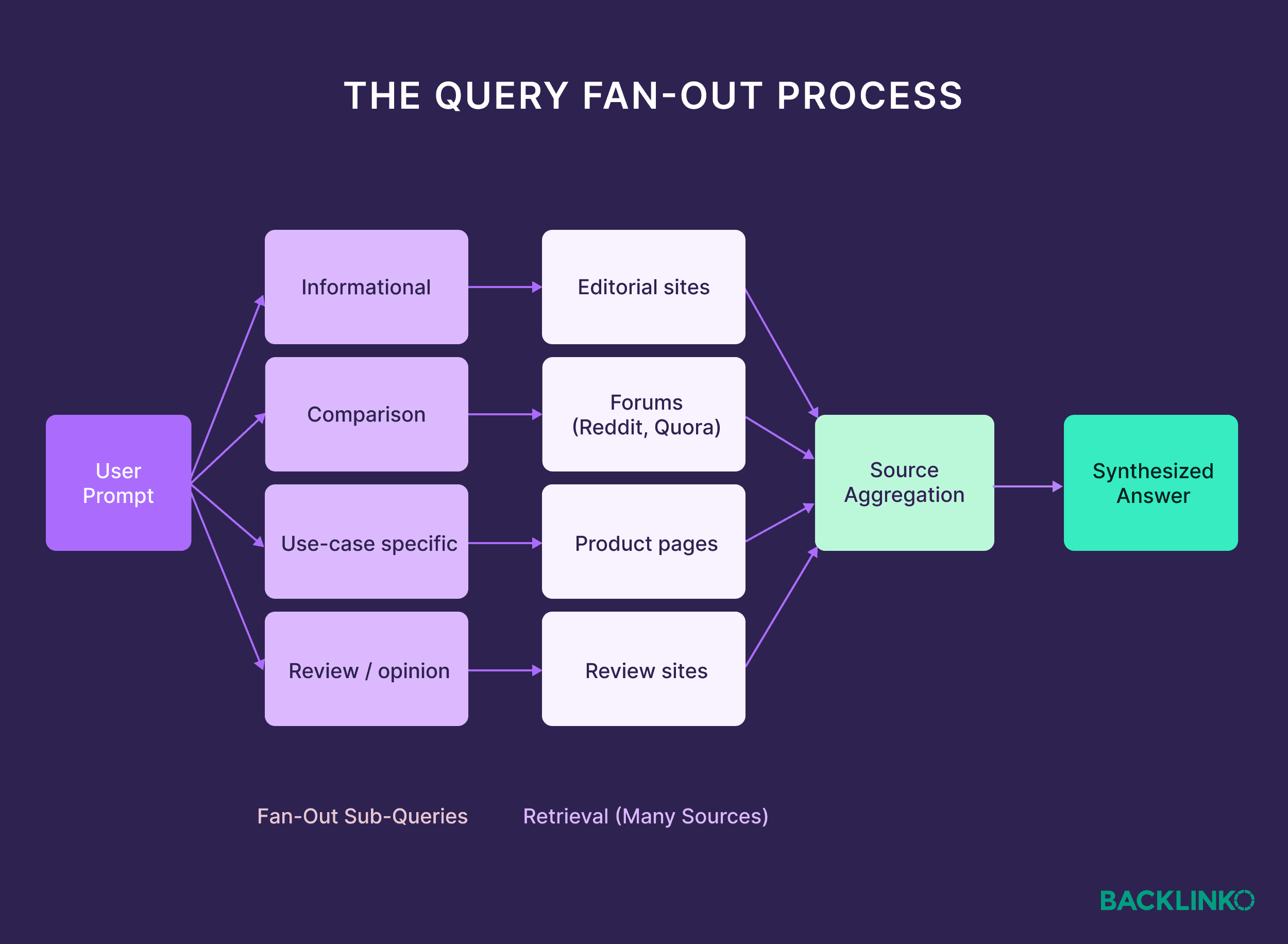
By synthesizing data from editorial reviews, Reddit threads, and specific product specifications, the AI builds a final response that anticipates the user’s needs before they even ask the follow-up questions.
The Chronology of an AI Response
To understand why traditional SEO is struggling to keep up, we must look at the timeline of an AI-generated answer:
- The Prompt: The user enters a query.
- The Fan-Out: The LLM decomposes the prompt into sub-queries.
- The Retrieval: The system scans a vast index of content, prioritizing relevance and direct answers to the sub-queries, regardless of where those pages sit in traditional SERP rankings.
- The Synthesis: The AI filters the gathered information for reliability and conciseness, discarding fluff and long-winded introductions.
- The Output: The AI presents a summarized, cited response, often pulling specific passages from diverse sources to create a cohesive narrative.
Supporting Data: Why Rankings No Longer Guarantee Visibility
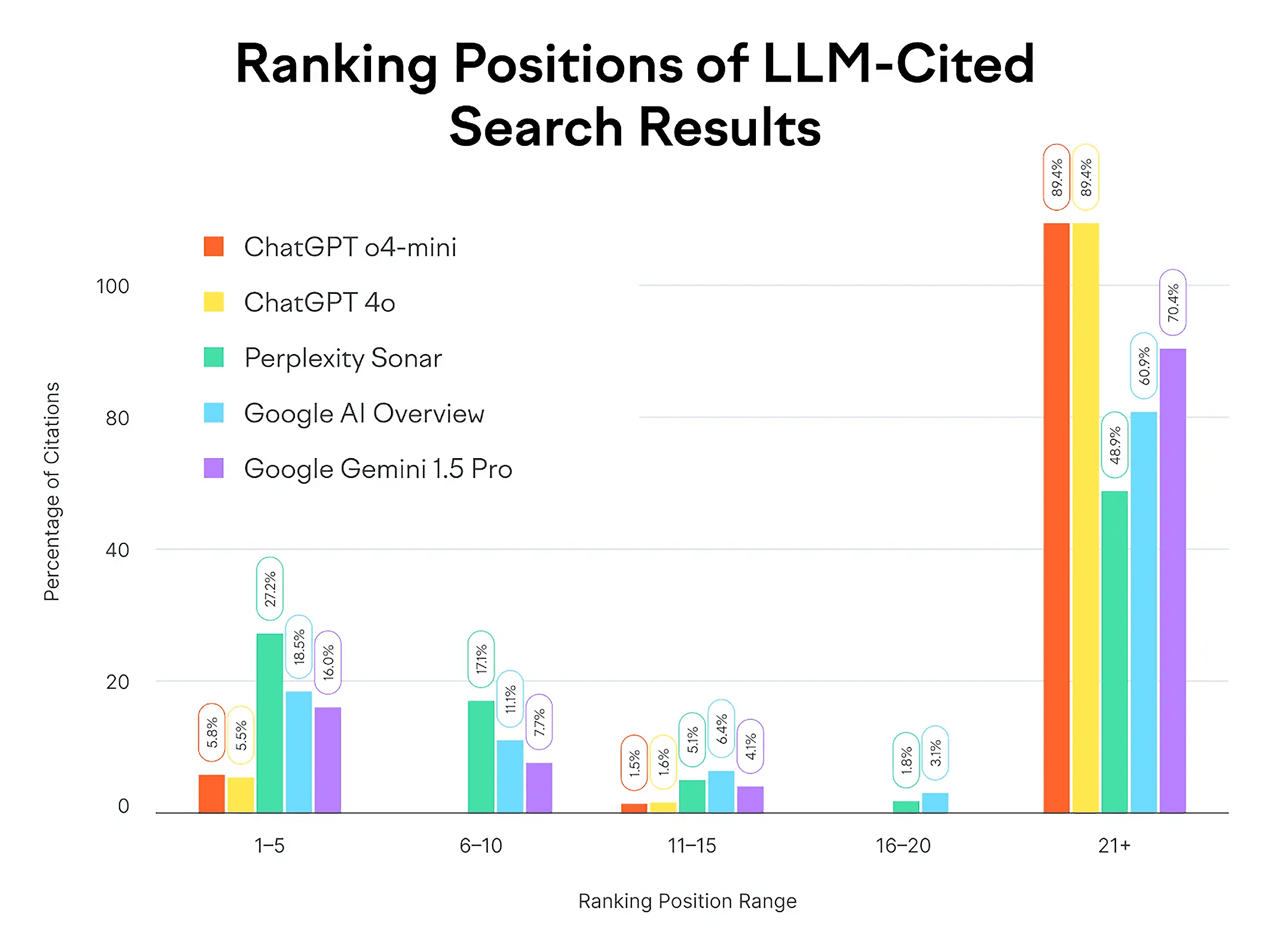
The data is clear: AI systems are not biased toward traditional high-ranking pages. According to recent studies, including analysis from Semrush, pages in the 21st position or lower are cited in AI responses nearly 90% of the time.
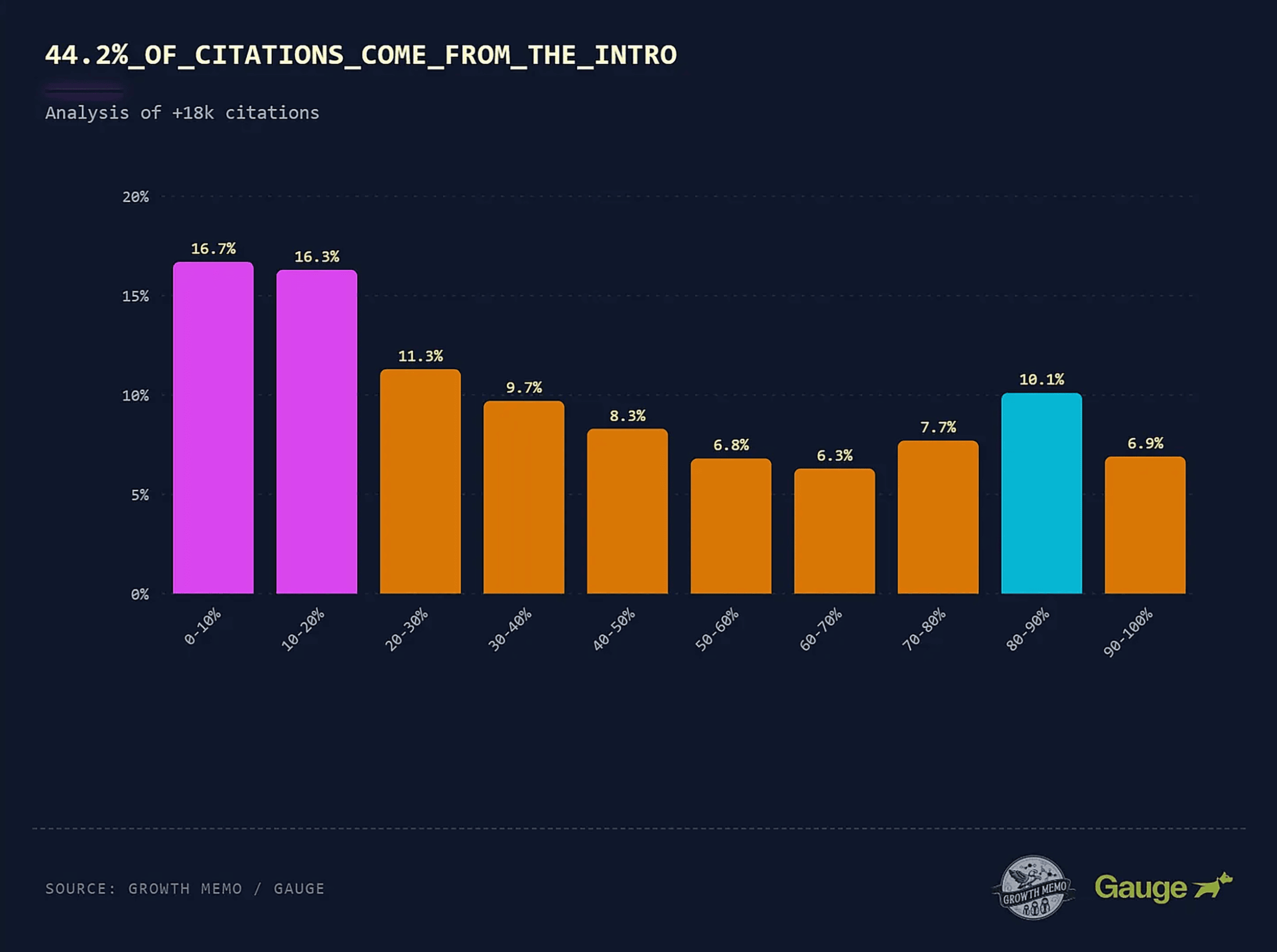
Furthermore, the "attention" of an LLM is heavily biased toward the beginning of a document. Research by growth advisor Kevin Indig, analyzing over 1.2 million ChatGPT responses, reveals that 44.2% of citations are drawn from the first 30% of a page. Another 31.1% come from the middle, while the final third of a page is cited only 24.7% of the time.
This means that high-quality content buried at the bottom of a long-form article is effectively invisible to the AI, even if the page itself is technically authoritative.
The Implications for Content Strategy
The shift to AI search has three major implications for your marketing strategy:
1. The Collapse of the Buying Funnel
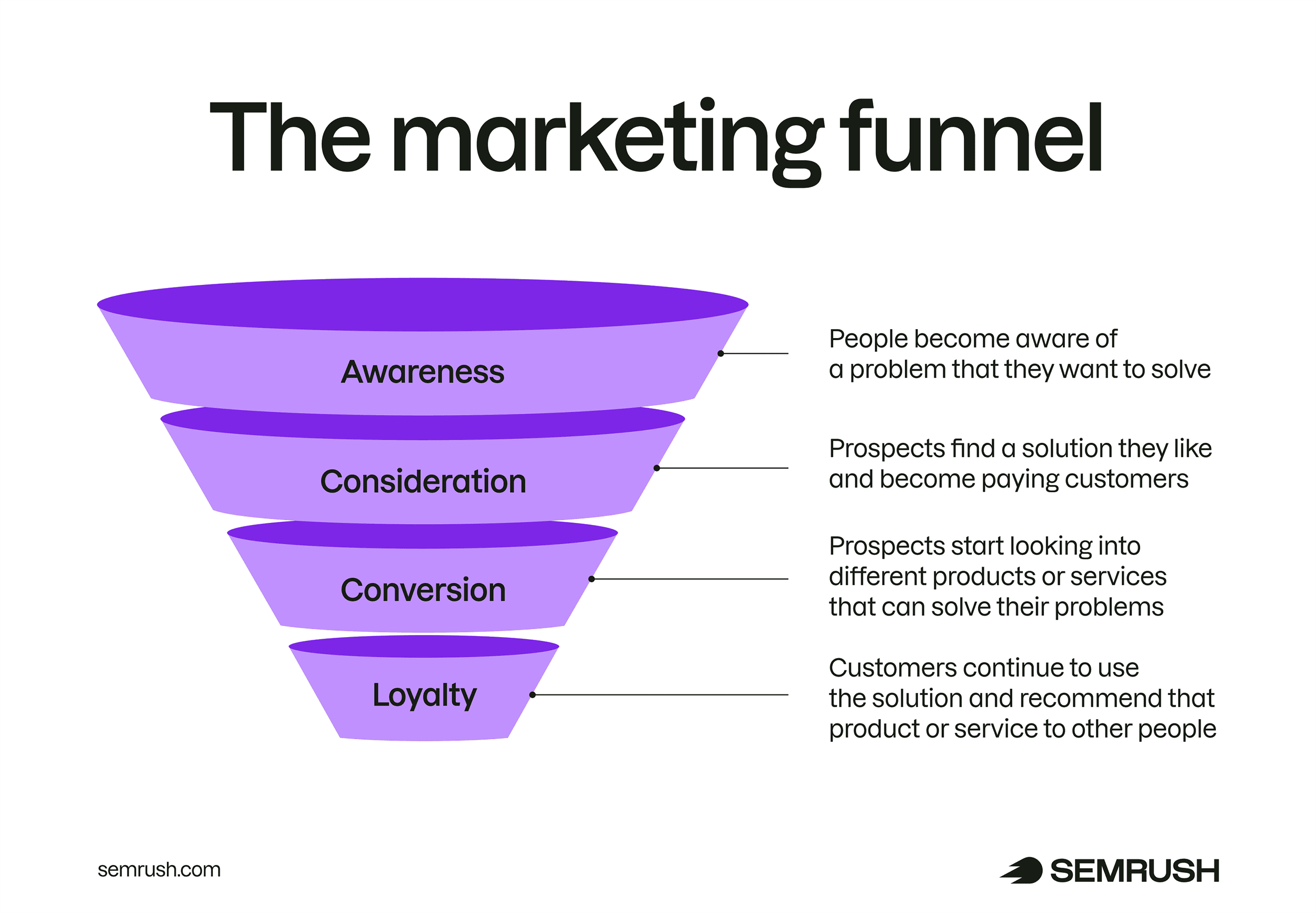
Previously, marketers mapped content to the linear funnel: Awareness, Consideration, and Decision. AI has collapsed this. A single high-intent prompt now forces the AI to pull context from all three stages simultaneously. Your content must now work across the entire funnel; a top-of-funnel blog post that doesn’t provide "decision-level" insights is increasingly likely to be passed over in favor of a more comprehensive, multi-layered source.
2. Passage Extraction Over Page Ranking
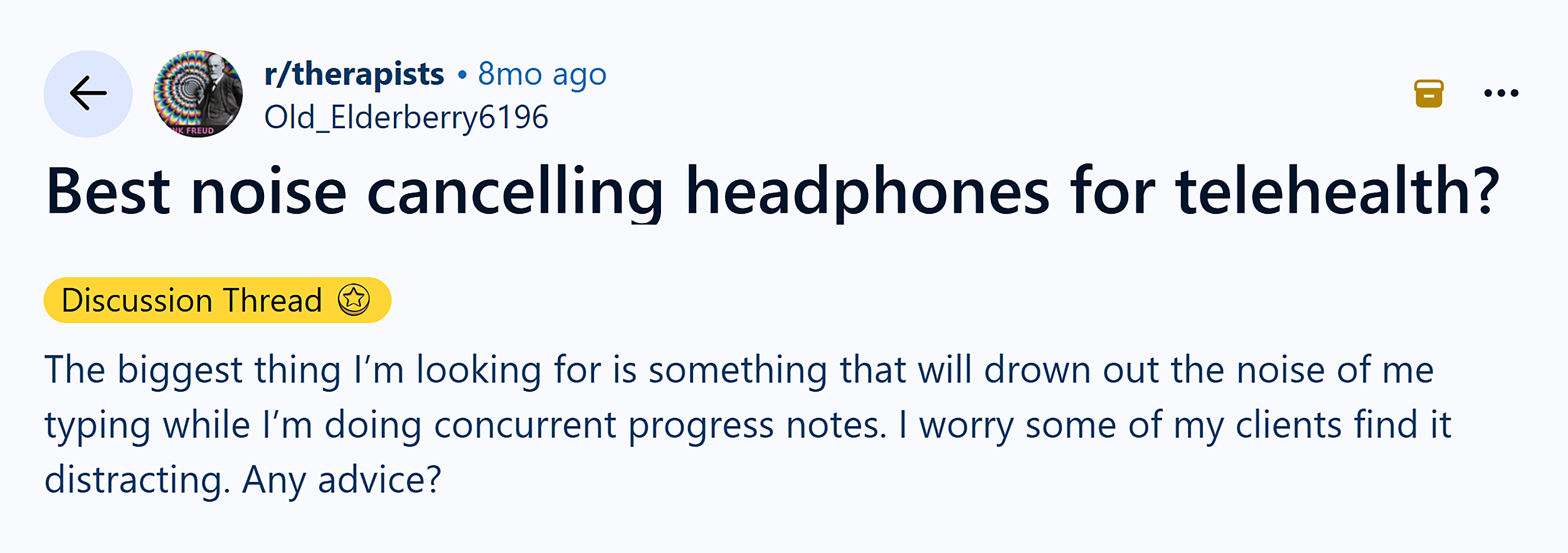
AI systems do not "click" on links; they scan content for passages that solve specific problems. If your page has a 500-word introduction before getting to the answer, you are failing the extraction test. You must front-load your answers, use scannable subheadings, and utilize structured data to help the AI identify your content as the "final word" on a specific sub-query.

3. Topical Authority vs. Keyword Density
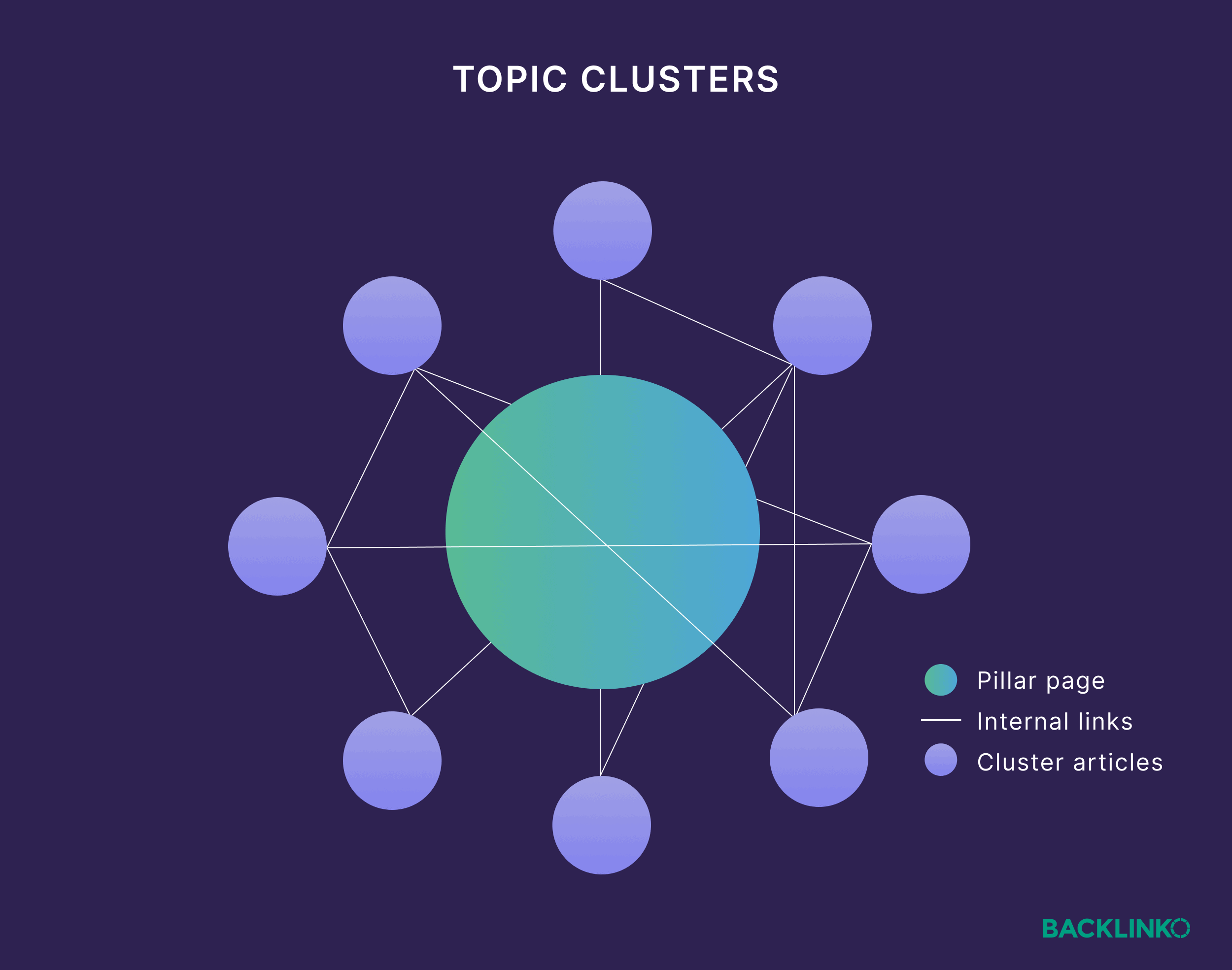
SEO has moved away from individual keyword optimization toward "topical authority." Because the AI is looking for comprehensive coverage of a topic (via sub-queries), pillar pages and well-linked topic clusters are now the primary way to win. If you only cover one facet of a topic, you provide the AI with no reason to look further into your domain.
A 6-Step Workflow to Earn AI Citations
To regain control of your AI visibility, you need a repeatable process. Follow these six steps to optimize your content for query fan-out.
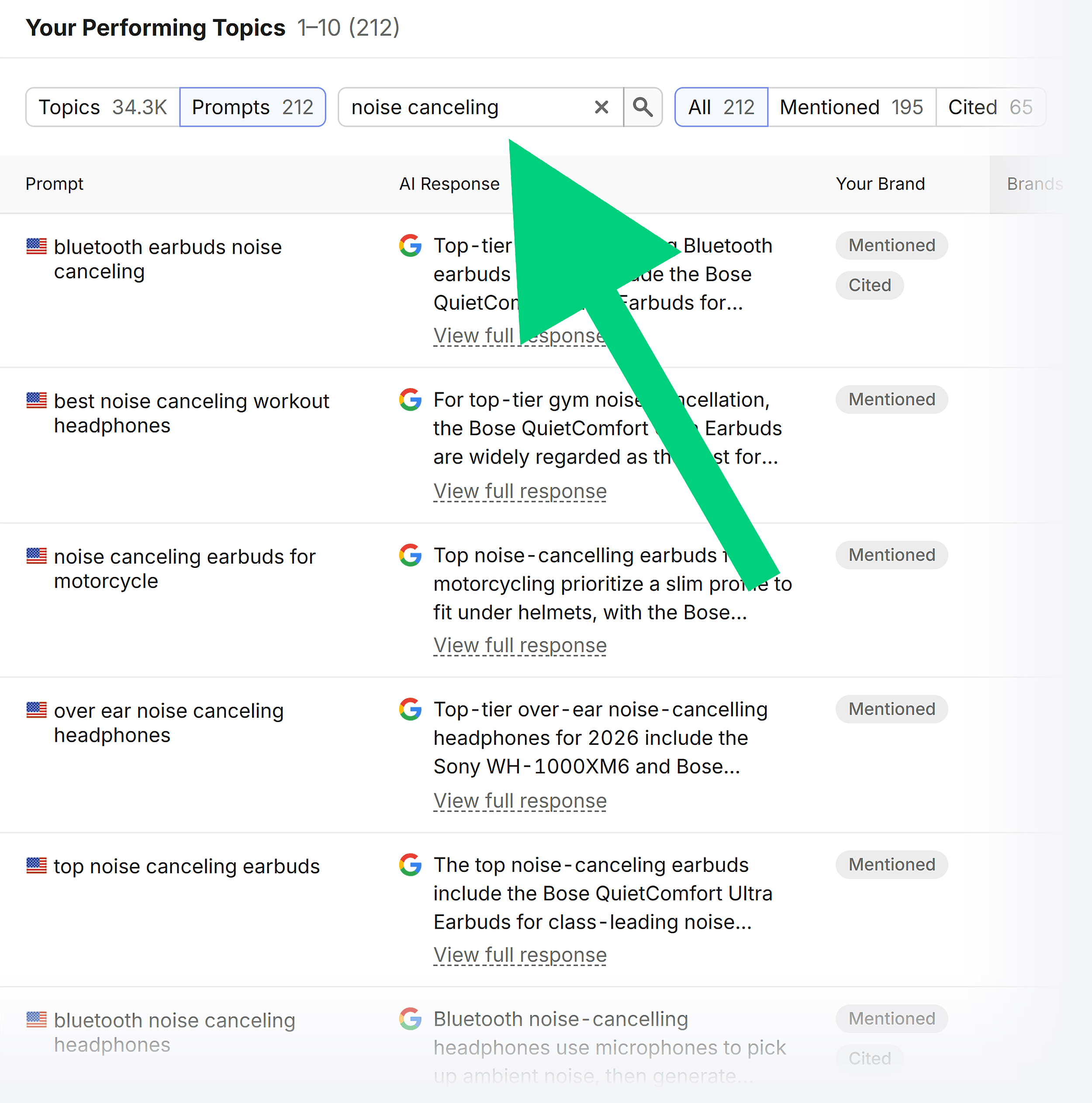
Step 1: Identify "Money Prompts"
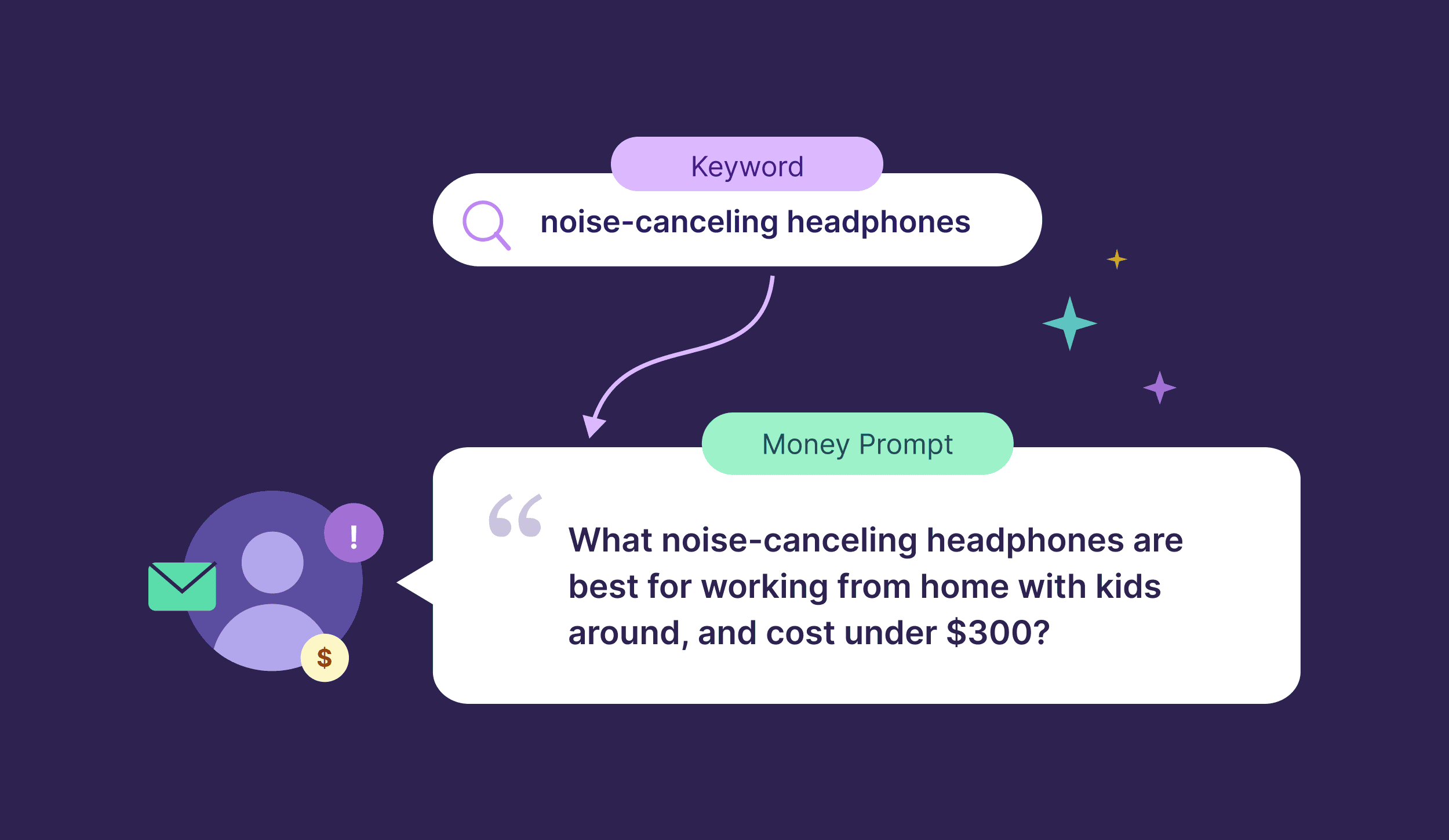
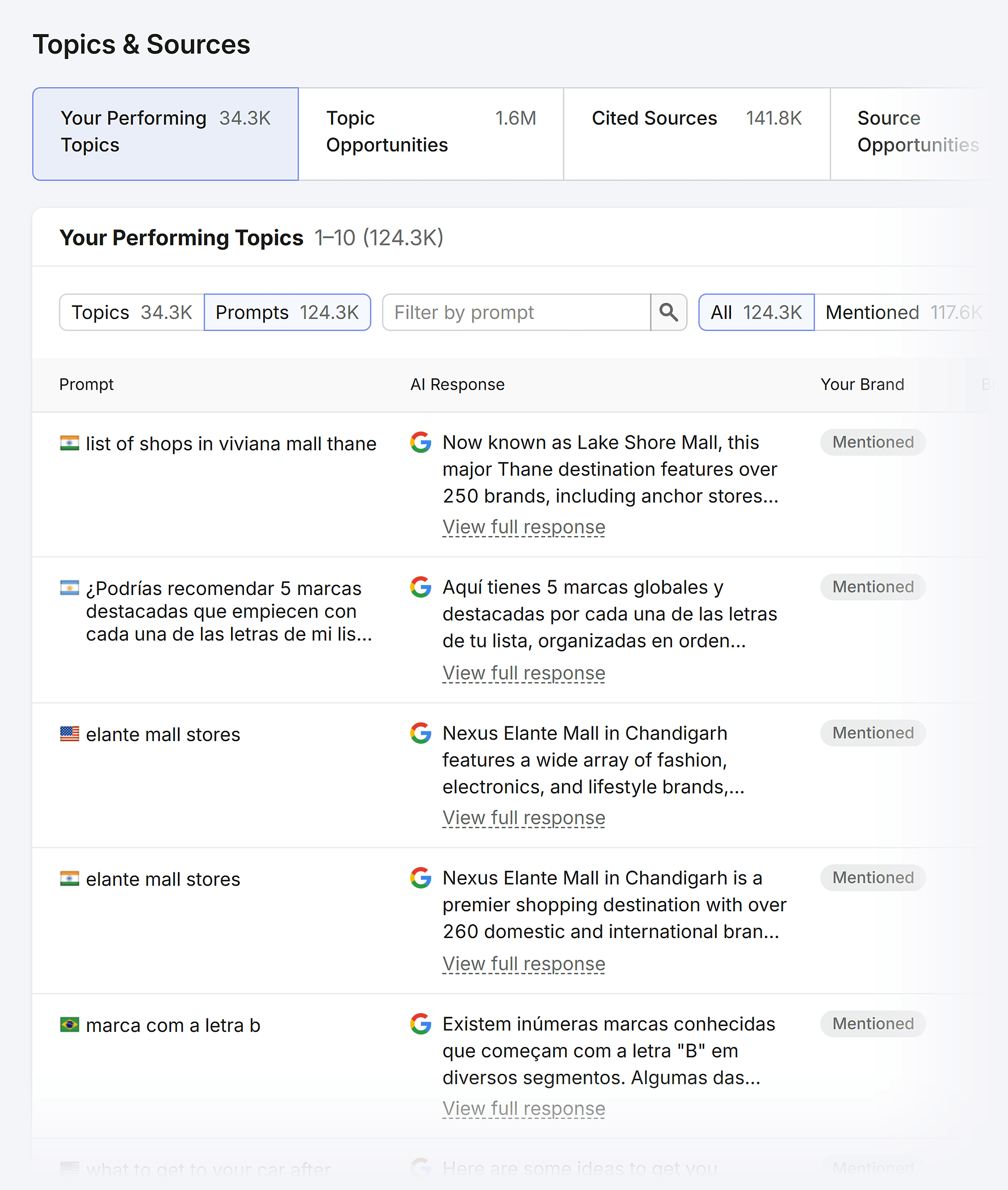
Forget money keywords; identify "money prompts." These are the specific, high-intent questions your customers ask AI when they are ready to buy. For instance, rather than "noise-canceling headphones," look for: "What noise-canceling headphones are best for telehealth and cost under $300?" Use tools like the Semrush AI Visibility Toolkit to see what users are actually typing into LLMs and which sources are currently being cited.
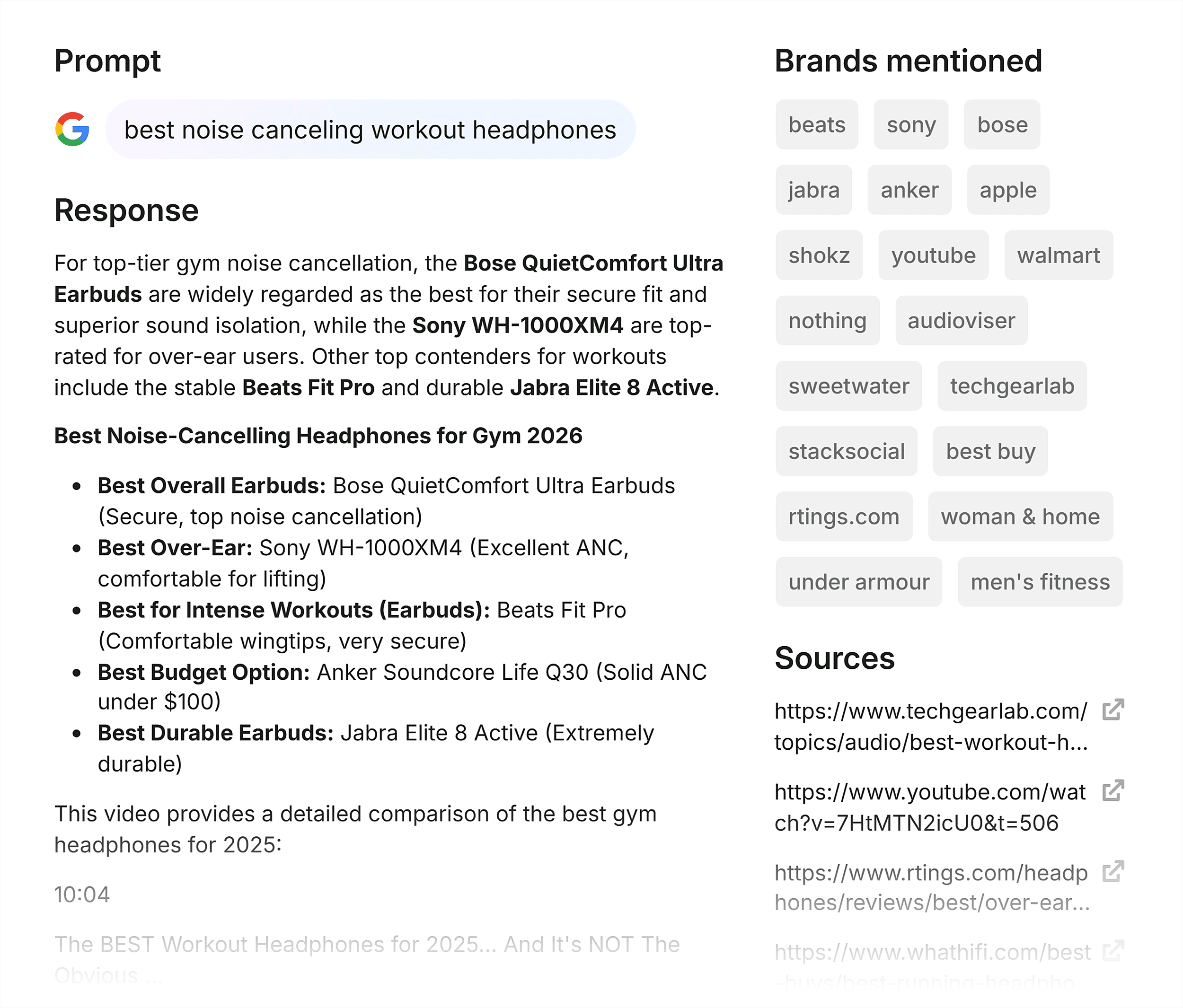
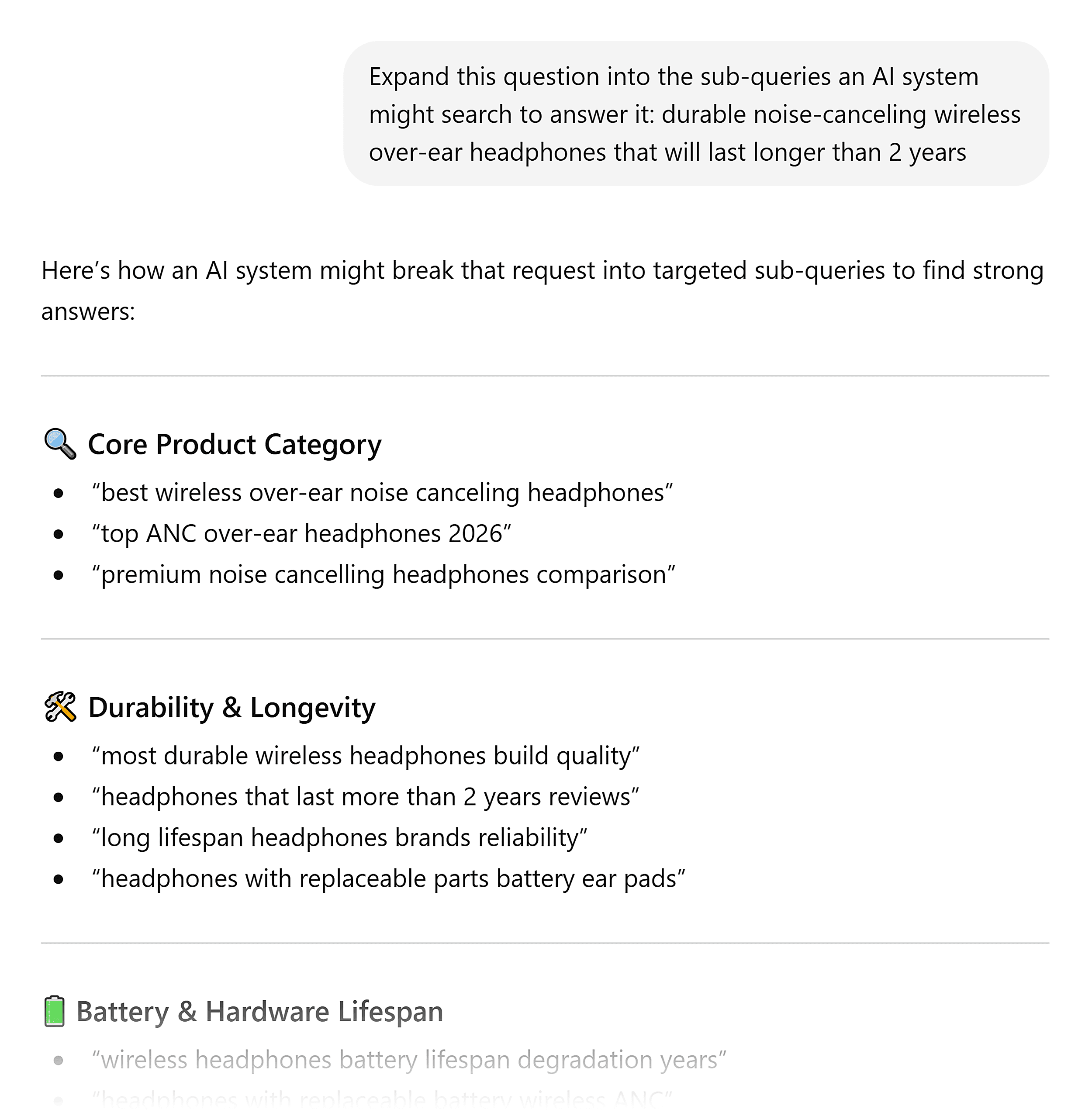
Step 2: Generate Your Fan-Out Set
Use a tool (or a manual ChatGPT prompt) to see how an AI breaks down your money prompt. If you ask, "What is the best way to fix X?", the AI will show you the sub-queries it considers relevant. Capture these. Each sub-query is a content gap you need to address.
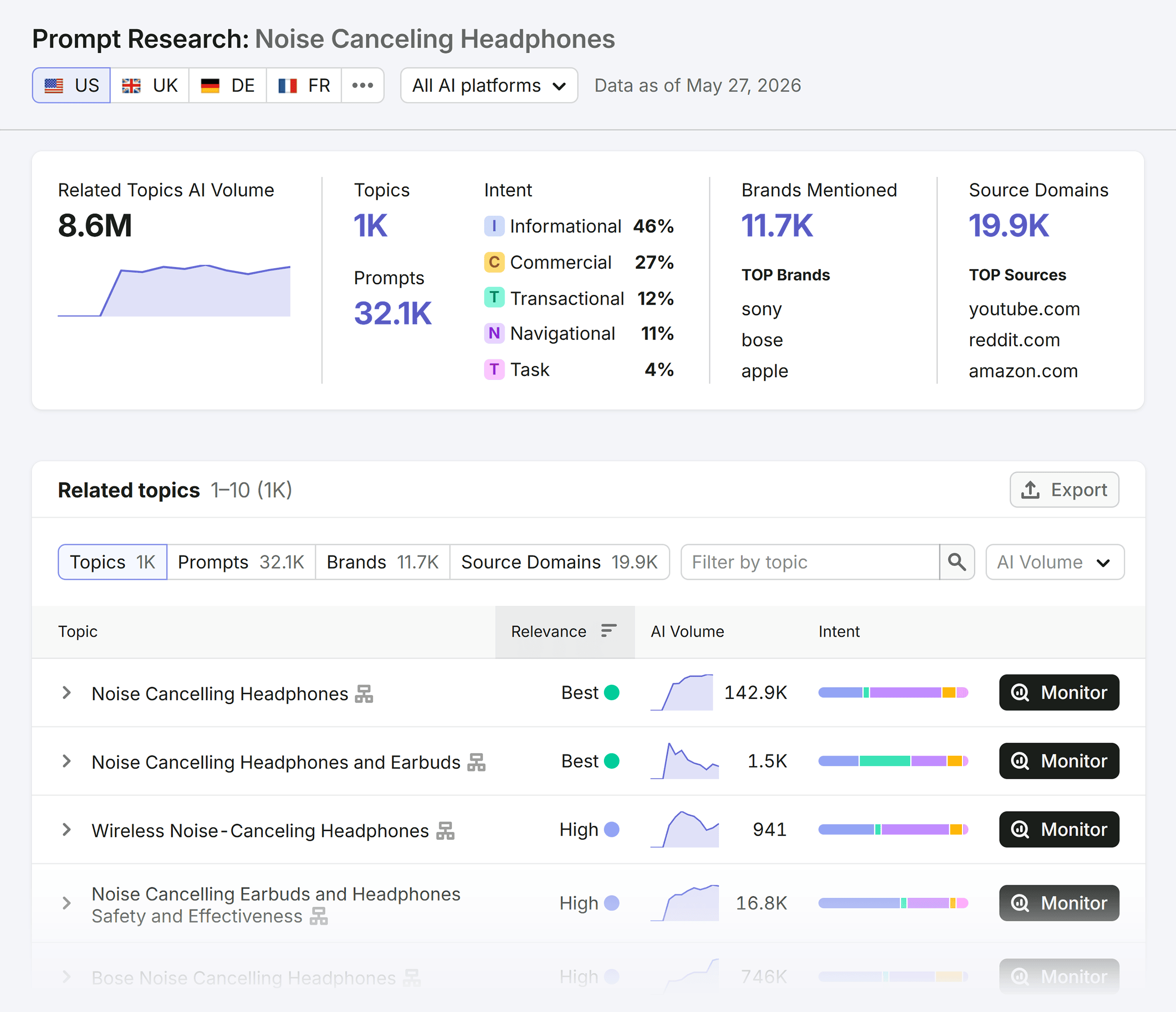
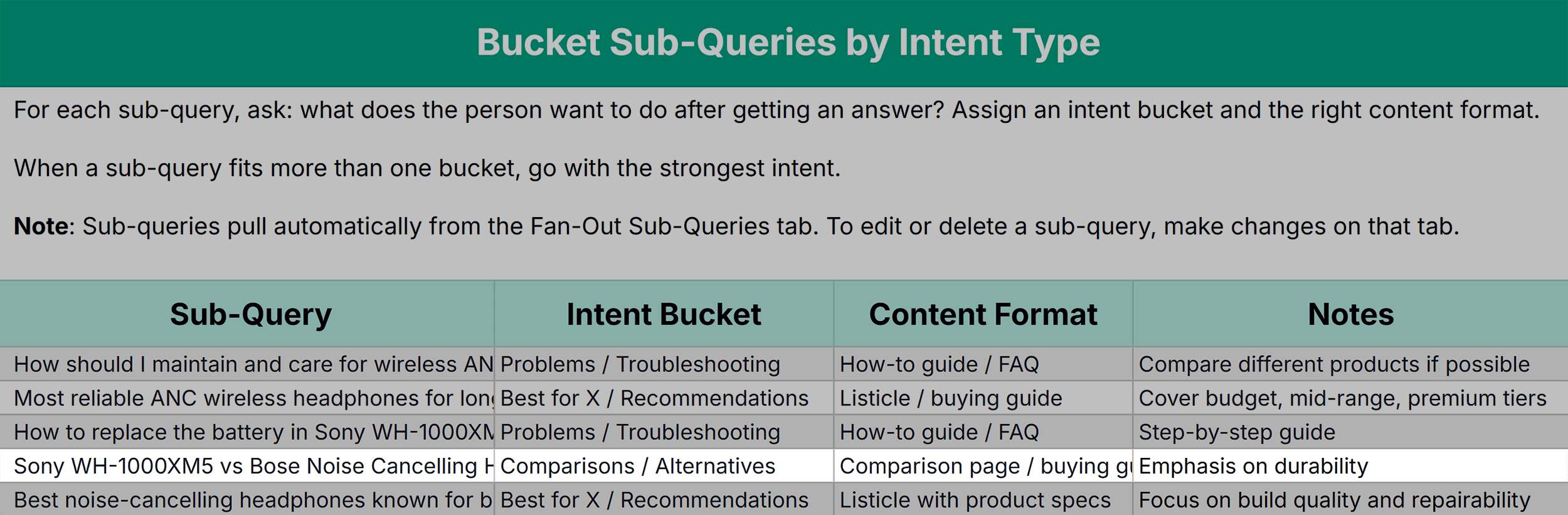
Step 3: Bucket by Intent
Categorize your sub-queries into buckets such as Comparison, Troubleshooting, Pricing, or Social Proof. This tells you exactly what format the content should take. If the AI is looking for a comparison, a 2,000-word essay won’t work; you need a structured comparison table.
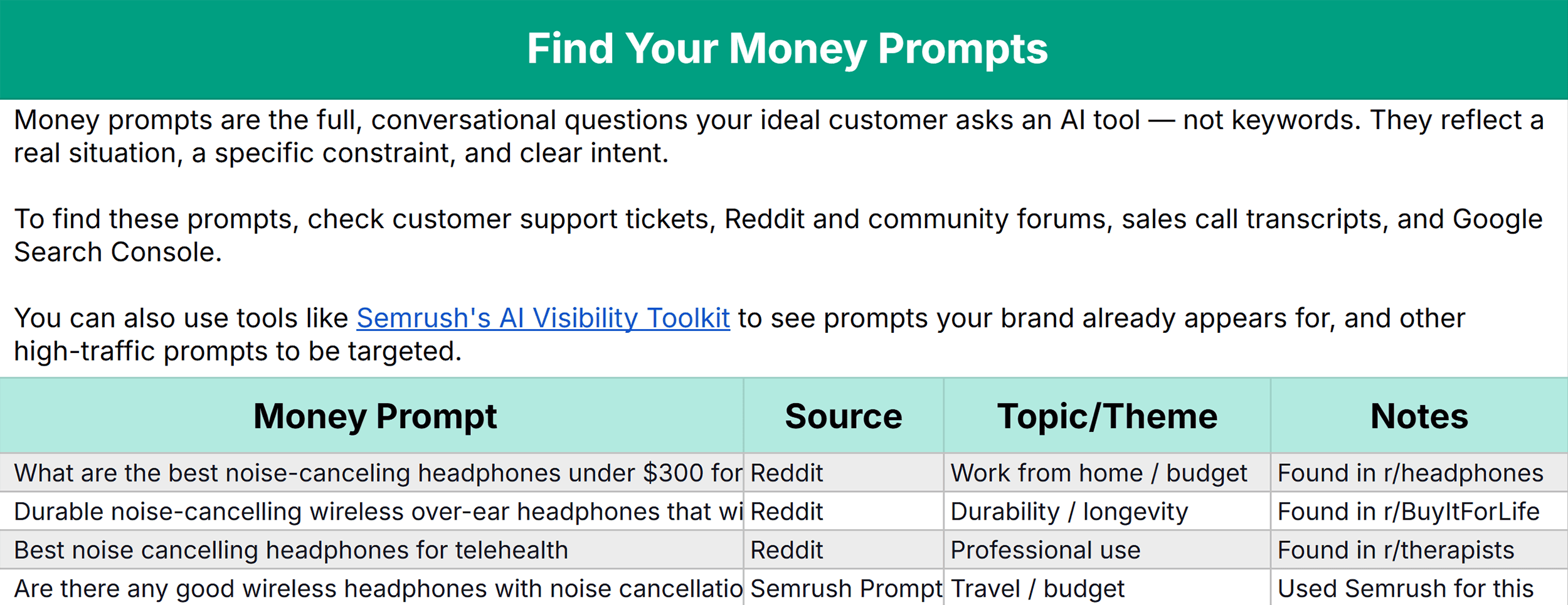
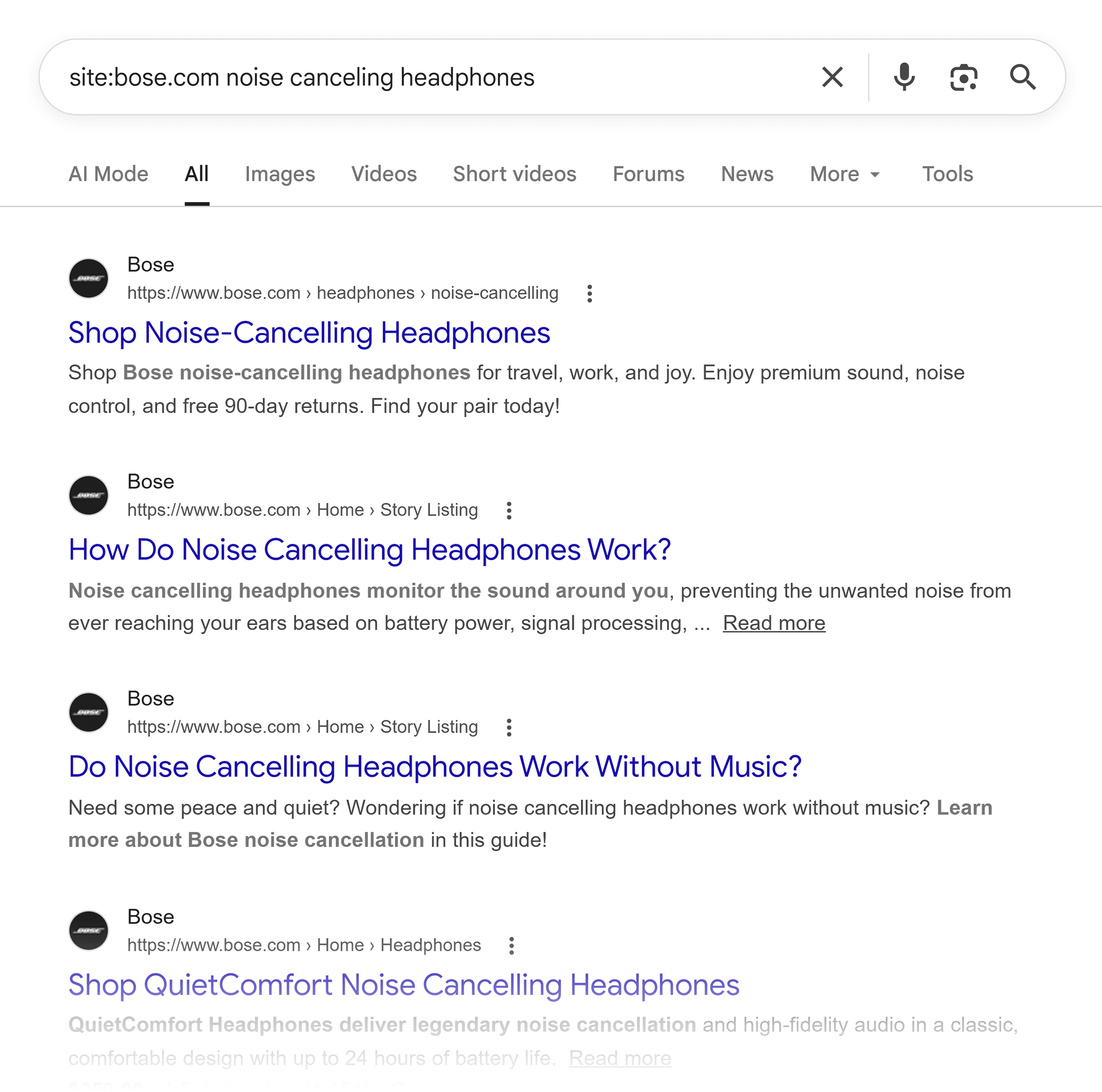
Step 4: Audit for Content Gaps
Use the site:yourdomain.com operator in Google to see if you have existing pages covering these sub-queries. If you don’t, you have a content gap. If you have partial coverage, you need to create a dedicated section within your existing content that is clear and concise enough for an AI to pull as a standalone answer.
Step 5: Structure for Extraction
Once you’ve identified your gaps, write your content with the AI in mind. Use short, punchy sentences. Place the "answer" in the first paragraph. Use Markdown headers to create a logical outline that the AI can easily parse. Think of your headers as "questions" and the text following them as the "direct answers."
Step 6: Measure and Refine
You cannot manage what you do not measure. Use AI-specific tracking tools to monitor whether your brand is mentioned in answers for your money prompts. If a competitor starts appearing in your place, analyze their content structure. Are they using better tables? Are they addressing the sub-query more directly? Use this feedback loop to continuously refine your content.
Conclusion: The New SEO
The era of optimizing for the "blue link" is fading. We are entering the era of "Answer Optimization." By embracing query fan-out, you are not just chasing rankings; you are providing the foundational data that AI systems use to shape the opinions and purchasing decisions of your future customers. Those who adapt to this model—by providing concise, structured, and comprehensive answers—will dominate the AI search landscape.


 Asep Darmawan
 Rifan Muazin
 Laily UPN
 Iffa Jayyana


 Lina Hope
 Lina Irawan