
 Layla Zulfa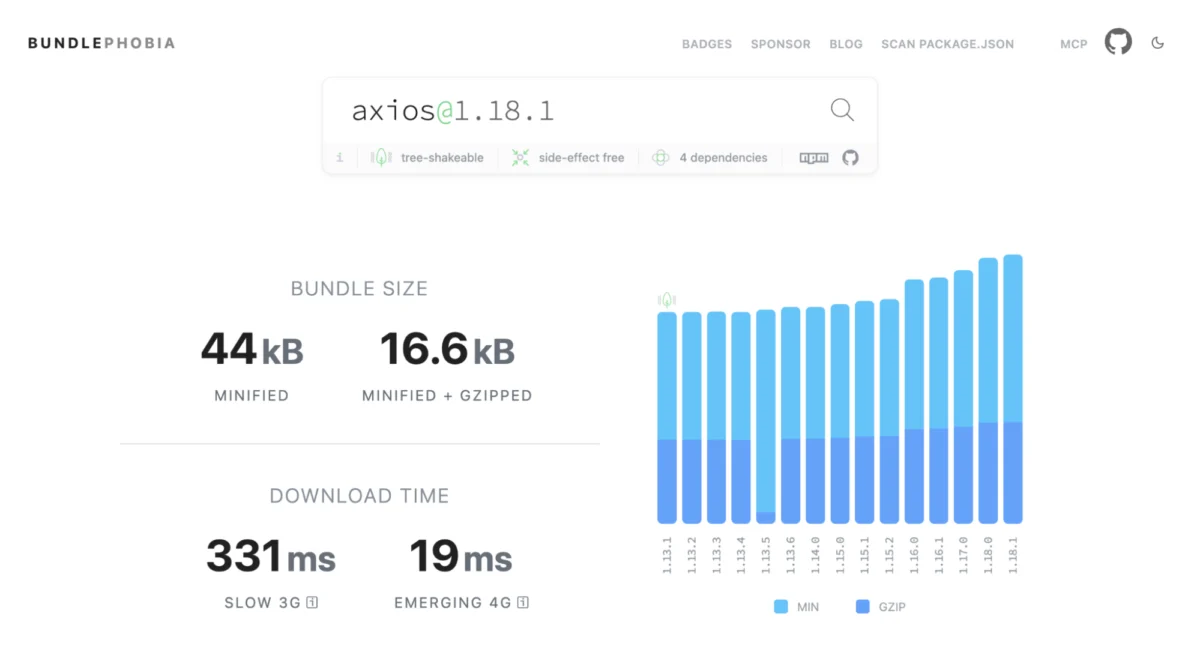
The architectural landscape of the modern web is undergoing a silent, tectonic shift. For over a decade, the developer workflow has been defined by the npm install command—a reflexive response to every UI challenge, from formatting a date to managing a modal. However, as the web platform evolves at an unprecedented pace, the gap between "you need a library for this" and "the browser does this natively" is rapidly narrowing.
For many mid-sized JavaScript applications, a substantial portion of the bundle—often between 60KB and 90KB of minified and gzipped code—is now redundant. By auditing dependencies against current browser capabilities, developers can significantly reduce their payload, improve startup performance, and minimize the maintenance burden of third-party security vulnerabilities.
The Evolution of the Web Platform
The trajectory of web development has moved from "polyfills for everything" to a "platform-first" mentality. This shift is largely driven by the Baseline initiative, a collaborative project from the WebDX Community Group. Baseline provides a clear, objective signal on when a web feature is safe to use across all major browser engines: Chrome, Edge, Firefox, and Safari.
The Baseline Lifecycle
Understanding the lifecycle of a web feature is the cornerstone of a successful dependency audit:

- Newly Available: A feature has recently landed in all major engines. It is often safe for modern applications but may require caution regarding older browser support.
- Widely Available: A feature has been stable for 30 months across all major browsers. These are the "low-hanging fruit" of the audit, ripe for replacing external dependencies.
This 30-month window is critical. It represents the transition from a "bleeding edge" experiment to a standard tool that can be used without reservation, drastically reducing the need for heavy cross-browser compatibility libraries.
A Decision Framework for Dependency Removal
Before initiating a mass deletion of node_modules, it is vital to apply a rigorous decision-making framework. A library swap that appears efficient on paper can introduce bugs or performance regressions if the nuances are ignored. Developers should evaluate every potential removal against three core criteria:
- Baseline Safety: Does the native feature meet the needs of your specific user base? If your analytics show a heavy concentration of users on legacy browsers, a "Newly Available" feature might still require a fallback.
- Bundle Cost-Benefit: If the native feature requires a heavy polyfill, the swap might inadvertently increase your bundle size. The goal is to reduce total weight, not just move it from a dependency to a polyfill.
- Functional Parity: Does the platform feature cover the specific use cases of your library? Many libraries provide "batteries-included" convenience. For example, replacing a complex HTTP client like
axioswithfetchrequires manually reimplementing features like request cancellation, interceptors, or automatic JSON parsing if your application relies on them.
Cluster 1: Internationalization and Formatting
The internationalization (i18n) cluster is arguably the most significant source of "bloat" in modern applications. Libraries like timeago.js, pluralize, and numeral were once essential to handle the complexities of different locales. Today, the Intl namespace in JavaScript offers powerful, natively implemented alternatives.
- Relative Time:
Intl.RelativeTimeFormatallows developers to generate strings like "yesterday" or "in 3 hours" natively. While the library version often handled unit selection automatically, a few lines of logic to determine the largest appropriate unit is a small price to pay for removing an entire dependency. - Numbers and Currency:
Intl.NumberFormathas reached a level of maturity where it handles thousands separators, currency symbols, and compact notations (e.g., "1.2M") with ease. - Lists:
Intl.ListFormatnow elegantly handles the Oxford comma and localized list concatenation, eliminating the need for fiddly string-building helpers.
Cluster 2: The HTTP Client Re-evaluation
The ubiquity of axios and superagent in the React and Vue ecosystems is a legacy of the era when fetch was considered too low-level. In modern development, fetch combined with AbortController provides the core functionality required for 90% of web applications.

The shift to fetch involves moving from an imperative, library-managed request lifecycle to a declarative, platform-native approach. While axios provides elegant interceptors, these can be replicated with a thin, custom-built wrapper around fetch. For applications performing standard GET and POST requests, this transition can save roughly 17KB of gzipped code—a significant win for Time-to-Interactive (TTI) metrics.
Cluster 3: UI Primitives and the "Top Layer"
Perhaps the most dramatic shift has occurred in UI development. Historically, creating a modal required a complex dance of DOM manipulation to handle focus trapping, z-index management, and backdrop styling. Today, the <dialog> element and the Popover API have effectively rendered many UI libraries obsolete.
The <dialog> element handles focus trapping and "inert" background states natively. When combined with the CSS :has() selector, developers can manage body scroll locking with a single line of CSS, replacing libraries like body-scroll-lock entirely. Furthermore, the Popover API and anchor positioning allow for the creation of tooltips and menus that respect the browser’s "Top layer," ensuring they are never obscured by parent container styles.
Cluster 4: Lodash and Utility Functions
Lodash remains a staple in many codebases, but the "full library" import is an anti-pattern. Modern JavaScript now includes built-in methods for the most common Lodash use cases:

- Grouping:
Object.groupByandMap.groupByallow developers to categorize data structures natively. - Deep Cloning:
structuredClonehas replaced the infamousJSON.parse(JSON.stringify())hack and the need forlodash.clonedeep. It correctly handlesDate,Map,Set, and circular references. - Set Operations: The latest ECMAScript updates have added
intersection,union, anddifferencemethods directly to theSetprototype, eliminating the need for utility imports for data manipulation.
Implications: The Case of "Temporal"
While the trend is toward platform-native solutions, it is essential to exercise caution. The Temporal API, intended to replace the flawed Date object, serves as a cautionary tale. While superior in design, it is not yet fully "Widely Available" across all major browsers.
Attempting to implement Temporal today requires a substantial polyfill, which could outweigh the benefits of using a lightweight date library like dayjs. In this instance, the professional choice is to wait until the platform reaches maturity, demonstrating that "native" is not always better if the cost of compatibility is too high.
Conclusion: A Repeatable Process
Reducing bundle size is not a one-time migration; it is a continuous process of stewardship. Organizations should adopt a quarterly audit cadence:
- Map: Use tools like
npm lsto list dependencies. - Measure: Use bundle visualizers to identify which packages are consuming the most space.
- Evaluate: Cross-reference packages against current Baseline status.
- Execute: Replace or, if necessary, retain with a planned timeline for future deprecation.
By periodically "giving back" functionality to the browser, developers not only make their applications faster and more secure but also contribute to a healthier, more performant web ecosystem. The era of the "dependency-heavy" application is ending; the era of the "platform-native" application has arrived.

 Jia Lissa
 Nana Wu
 Ali Ikhwan
 Raul Delapena Setiawan
 Nana
Nana
 Muslim
 Asep Darmawan
 Neng Nana