
 Jia Lissa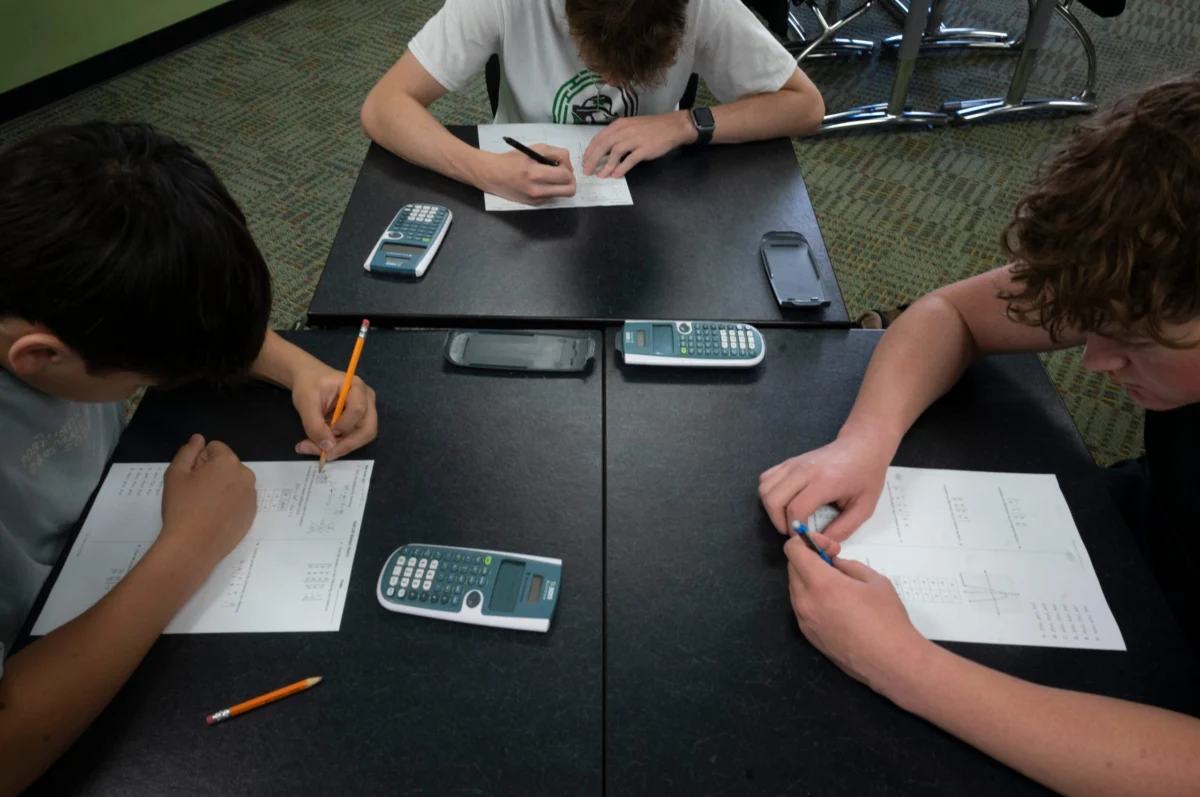
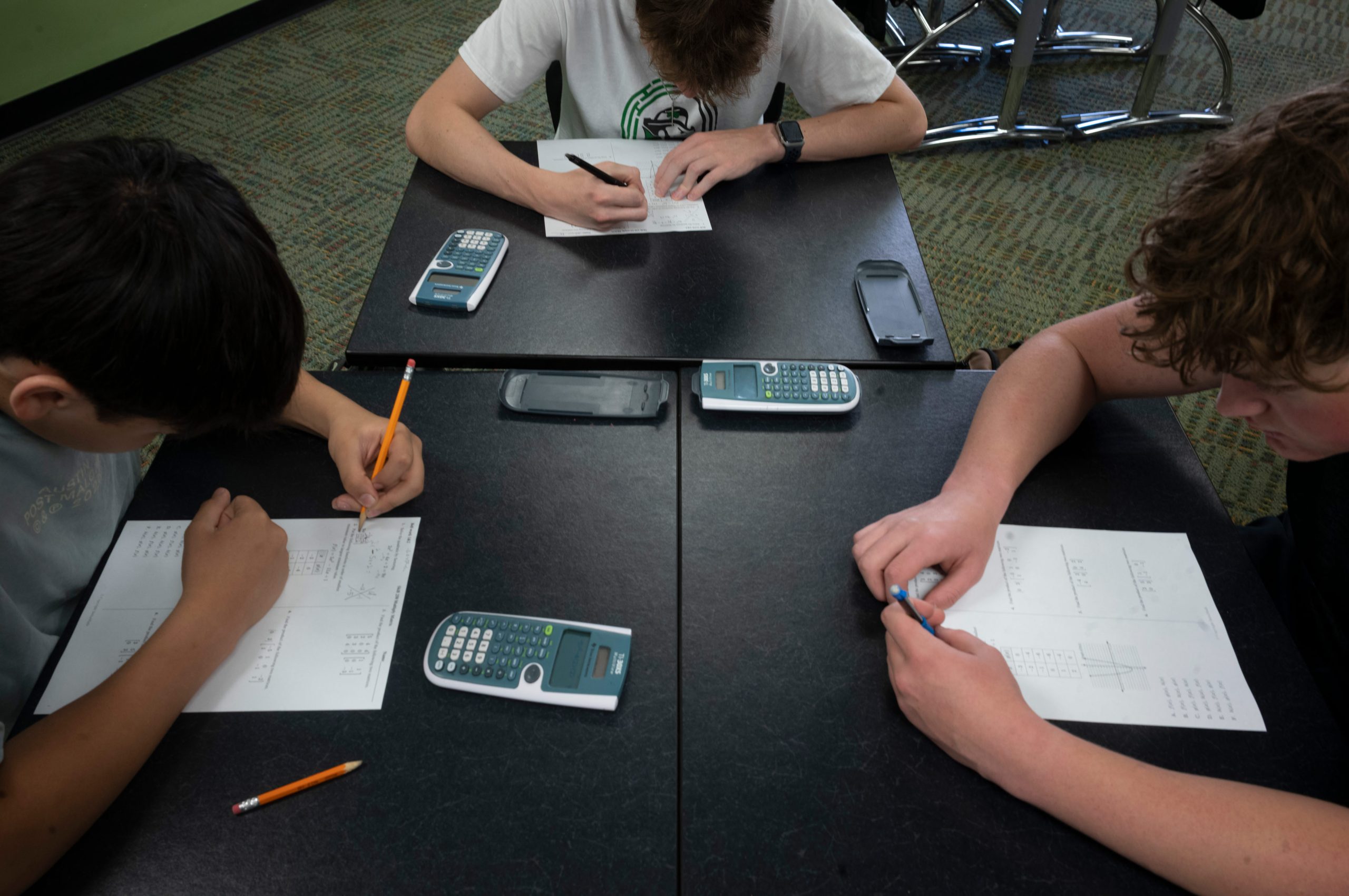
In James Bell’s classroom at Chapman High School in rural Kansas, the traditional boundaries of mathematics are dissolving. Here, sophomores aren’t just learning to solve for "x" in isolation; they are using matrices—complex grids of numbers—to calculate the trajectories of objects in motion. It is a lesson that mirrors real-world engineering and video game design, requiring a synthesis of algebra, geometry, and trigonometry that was once reserved for much older students.
For decades, American high school mathematics has followed a rigid, siloed "AGA" pathway: Algebra I, followed by a year of geometry, and concluding with Algebra II. However, a growing movement of districts and state education boards is moving toward "integrated math"—a model where these disciplines are blended into a multi-year curriculum. As schools scramble to modernize instruction for a data-driven workforce, the debate over how to teach math has become one of the most contentious issues in American education.
The Core Philosophy: Blending Disciplines
The logic behind the integrated approach is rooted in the idea of cognitive retention. By spiraling through algebra, geometry, and trigonometry over multiple years, students are forced to revisit key concepts rather than "dumping" them after a single year of study.
"You’re going to have the opportunity to change course and change direction and see different things," says Bell, who helped develop the curriculum at Chapman. "Students even do a little trig—which is a scary word for kids, but when it’s integrated into every year of math, it doesn’t sound as overwhelming. It’s the best of both worlds."
Proponents argue that this model better prepares students for the modern world, where mathematics is rarely divided into clean, distinct boxes. By moving away from the "race to calculus," supporters suggest that integrated math allows for a more robust understanding of data science and statistics, fields that are increasingly vital for students entering the modern labor market.
A Chronology of Change: From Tradition to Integration
The traditional American math sequence became the standard in the mid-20th century, largely modeled on Russian curricula that prioritized a direct path to calculus. By the early 2000s, however, educational reformers began to question if this sequence was serving all students.
- 2008: Georgia becomes a high-profile testing ground, mandating an integrated math approach statewide.
- 2015: Following significant pushback from parents and educators, Georgia makes the integrated model optional, reverting to a dual-pathway system.
- 2015: Chapman Unified School District in Kansas implements a sweeping reform, shifting entirely to integrated math. The results are stark: proficiency on state exams jumps from 11 percent to 41 percent in a single year, eventually reaching 67 percent by 2025.
- 2023: The Center for Education Market Dynamics reports that roughly 16 percent of U.S. districts have adopted some form of integrated math.
- 2027: Maryland is set to require a two-year integrated math sequence for all high school students statewide, as part of the "Blueprint for Maryland’s Future."
Supporting Data: Examining the Impact
The evidence regarding the efficacy of integrated math remains mixed, leading to heated discussions among policy experts. On one side, success stories like Chapman High suggest that the integrated approach can significantly boost scores for "regular" students—those who might otherwise languish in a year of geometry with no algebraic reinforcement.
Conversely, broad-scale data is less conclusive. California, a state that has championed integrated math for over a decade, still sees only 37 percent of its students reach proficiency in math.
Recent research, including a study by University of Florida policy researcher Elizabeth Huffaker, suggests that the effects of switching to integrated math are "small and positive." Huffaker notes that the shift is often implemented alongside other reforms, such as the Common Core, making it difficult to isolate the impact of integration alone. "I would not make this change expecting giant, transformative, high-impact-tutoring-type impacts," Huffaker cautions. "But I do think that the idea of creating more coherence and more opportunities to revisit key topics is sensible."
Official Responses and Educator Resistance
The transition to integrated math has not been without its detractors. Critics—often veteran teachers who have spent decades mastering the AGA progression—argue that the integrated model can be disjointed. By trying to teach everything at once, some fear that students fail to master deep, foundational skills in any single area.

"A lot of our veteran teachers, they’re the ones who say, ‘Oh, I miss teaching the AGA format, of being compartmentalized a little bit,’" says Mike Spencer, a secondary math specialist with the Utah State Board of Education. Utah, which implemented a three-year integrated model a decade ago, is now among the states re-evaluating its stance, surveying teachers to determine if the benefits truly outweigh the loss of traditional, focused instruction.
Furthermore, there is a legitimate concern regarding the "STEM pipeline." David Merryman, a professor of biomedical engineering at Vanderbilt University, warns that students who lack a deep, traditional foundation in trigonometry and calculus often struggle when they arrive at university. "The kids who come to my class and are weak in trig, they struggle," Merryman says. "I don’t think it serves kids who are going into STEM."
The Implications: A New Path Forward?
As the landscape of American education evolves, the push for integrated math is becoming inextricably linked to a broader movement to rethink "rigorous" math. Organizations like the Charles A. Dana Center at the University of Texas at Austin are leading the "Launch Years Initiative," which encourages states to offer alternatives to the standard calculus-bound path, such as advanced statistics, discrete mathematics, and data science.
For many, the "race to calculus" has become an outdated metric of student success. As Maryland’s director of mathematics, Lyndsey Brightful, explains, "Higher-level statistics is advanced math; data science is advanced math. For students who are going into humanities majors, or even in some cases nursing or business, they need to have strong math application skills."
However, the implementation of these pathways requires significant systemic change. The biggest challenge remains the transition between high school and college. Currently, many university systems still use the traditional three-year AGA sequence as a benchmark for admissions. If integrated math is to succeed on a national scale, states must work closely with higher education institutions to ensure that these new, integrated courses are recognized as equally rigorous to the traditional pathways.

The Road Ahead
The debate is ultimately about how we define "readiness." Is a student "ready" if they have mastered the mechanics of calculus, or if they possess the ability to apply statistical reasoning to real-world problems?
For students like Ben Kitchl, a freshman at Loyola University in Chicago, the transition was painful. After moving to a district that exclusively offered integrated math, he found that his previous credits didn’t align, forcing him to retake courses and delaying his path to calculus. His experience highlights the friction that occurs when systemic change is implemented without universal alignment between districts and colleges.
Despite these tensions, the momentum behind integrated math is undeniable. As states like Maryland move forward with state-mandated integration, the rest of the country will be watching closely. Whether this shift represents a genuine modernization of math education or a move that risks sacrificing the depth of foundational knowledge remains to be seen. What is clear, however, is that the era of the "one-size-fits-all" math curriculum is rapidly coming to an end.
The task for policymakers now is to prove that by moving away from the traditional model, they are building a more inclusive, more relevant, and ultimately more capable generation of thinkers—without leaving the future scientists and engineers behind in the process.


 Nana Muazin
 Layla Zulfa
 Raul Delapena Setiawan
 Reynand Wu
 Sagoh
Sagoh

 Azzam Bilal Chamdy
 Ali Ikhwan