
 Lina Hope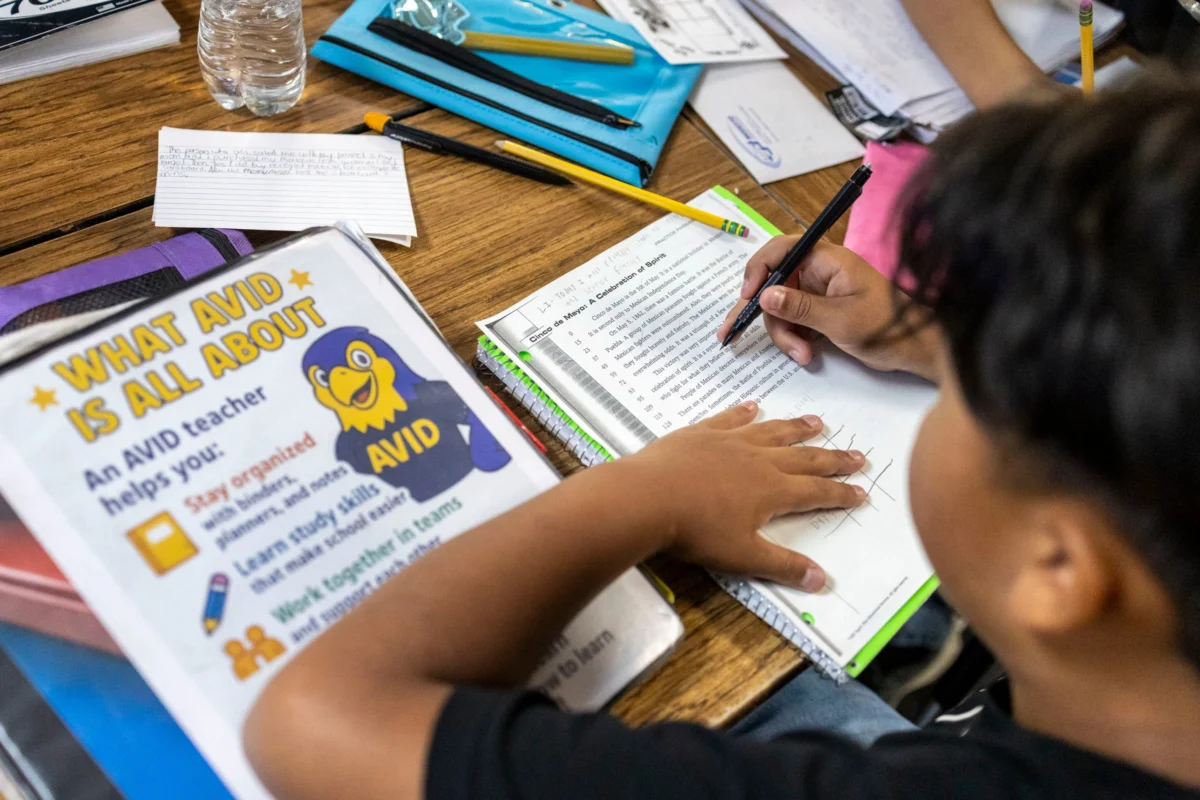
In a sixth-grade classroom in Modesto, California, teacher Nancy Barajas performs a ritual that has become the hallmark of her pedagogy. Before the tension of a standardized exam takes hold, she dims the lights, activates a spinning disco ball, and floods the room with high-energy music. Her students dance in a collective "pre-celebration," a tactical infusion of confidence meant to prime their minds for the academic challenge ahead.
For the Modesto City Schools, this mixture of morale-boosting and rigorous instruction has yielded tangible results: reading and math scores have shown a consistent upward trajectory over the past several years. Yet, when viewed against the broader tapestry of American education, Modesto’s success stands out as a rare oasis in a landscape of systemic decline. Across the United States, the educational apparatus is grappling with a profound "reading recession"—a phenomenon that experts note predates the pandemic-induced disruptions of 2020.
The National Context: A Decade of Erosion
The narrative of American education is currently one of sobering statistics. According to a landmark analysis conducted by scholars at Harvard, Stanford, and Dartmouth—who synthesized state test scores from over 5,000 districts across 38 states—the recovery from the pandemic remains uneven at best. The findings, published via the Education Scorecard, reveal that only five states and the District of Columbia saw meaningful growth in reading scores between 2022 and 2025.
"The pandemic was the mudslide that followed seven years of steady erosion in achievement," says Thomas Kane, a Harvard professor and co-creator of the Education Scorecard.
Data from the National Assessment for Educational Progress (NAEP) indicates that the decline in literacy is not a recent phenomenon. Eighth-grade reading scores began their downward slide in 2013, followed by fourth-graders in 2015. Today, national proficiency levels remain nearly half a grade level behind pre-pandemic benchmarks, with math scores showing only marginal, albeit more consistent, improvements.
Chronology of a Crisis: From "Context Clues" to the "Science of Reading"
To understand how the U.S. reached this inflection point, one must look at the evolution of literacy instruction over the last twenty years.
The Era of Guesswork (2000s–2015)
For over a decade, American classrooms were dominated by instructional strategies that de-emphasized phonics. Instead, curricula often encouraged students to rely on "context clues"—guessing words based on pictures or the surrounding sentence structure. While this was framed as a holistic approach, critics and cognitive scientists argued that it neglected the fundamental mechanics of language acquisition.
The Turning Point (2015–2019)
As scores on national and international assessments plummeted, the disconnect between classroom practice and cognitive research became impossible to ignore. Parents, literacy advocates, and scholars began to mount a coordinated campaign for a return to evidence-based methods, specifically the "science of reading," which centers on phonemic awareness and systematic, explicit phonics instruction.
The Pandemic and Beyond (2020–2025)
The COVID-19 pandemic acted as an accelerant. School closures and the resulting learning loss forced a re-evaluation of district priorities. States that had already begun the pivot toward phonics-based models found themselves better positioned to address the fallout. Currently, the national conversation has shifted from "how to reopen" to "how to rebuild," with a heavy focus on teacher training, learning disability screenings, and the aggressive implementation of evidence-based literacy programs.
Supporting Data: The Geography of Success
While the national picture is bleak, the Education Scorecard identifies pockets of significant progress. In over 400 school districts—including Modesto, Detroit, and several systems in the South—growth in reading and math has outpaced demographically similar peers.
The Southern Renaissance
Perhaps the most surprising development is the resurgence of the American South. Long criticized for lagging behind in education rankings, states like Louisiana, Alabama, Tennessee, and Kentucky have surged forward by embracing legislative mandates for literacy reform.
In Alabama, the state legislature mandated phonics-based instruction, and later modeled its 2022 "Numeracy Act" on the success of those literacy reforms. The result: Alabama and Louisiana are among the few states where math scores in 2025 exceeded pre-pandemic levels. Louisiana, in particular, stands out as the only state to surpass its 2019 reading average, with 87% of its public school districts showing improvement.
The Detroit Model
In Detroit, the path to improvement was paved with accountability and resource allocation. Following a 2016 lawsuit that famously asserted students were being denied the "right to read," a $94 million settlement fueled a systemic overhaul. The district hired dedicated attendance agents and small-group educators, specifically at schools like Munger Elementary-Middle. The results are visible: consistent attendance has replaced the chronic absenteeism that plagued the district just a few years ago.
Official Responses and Strategic Shifts
The debate over the causes of the reading recession remains heated. Researchers point to a constellation of factors, including the ubiquity of smartphones, the rise of social media, and a corresponding decline in recreational reading among children. Furthermore, experts like Thomas Kane suggest that the weakening of standardized testing consequences over the last decade may have contributed to a lack of urgency in some districts.
The "Back-to-Basics" Mandate
State leaders, such as Louisiana Superintendent of Education Cade Brumley, emphasize the need to ignore educational "fads" in favor of proven methodologies. "I’ve used my pulpit to preach a back-to-basics approach," Brumley stated. "We’re not trying to chase every new and shiny thing that’s out there that could distract students and teachers."
The Modesto Approach
Modesto City Schools provides a blueprint for resource-intensive reform. The district revamped its math and reading departments, invested in an English Language Learner (ELL) support framework, and paid educators $5,000 stipends to complete the LETRS (Language Essentials for Teachers of Reading and Spelling) program. This investment yielded an estimated 13 extra weeks of learning in reading and 18 weeks in math.
Implications: A Roadmap for the Future
The implication of this data is clear: educational recovery is not an accident; it is the result of deliberate policy choices. The success stories from Birmingham, Detroit, and Modesto suggest that three elements are essential:
- Instructional Rigor: Moving away from "guessing" strategies toward explicit, phonics-based literacy instruction.
- Wraparound Support: Addressing non-academic barriers, such as chronic absenteeism, through dedicated home-visit programs and small-group interventions.
- Teacher Empowerment: Investing in high-quality professional development so that teachers are not just delivering curriculum, but understanding the cognitive science of learning.
However, the cautionary tale remains: reform is not a silver bullet. States like Florida, Arizona, and Nebraska implemented partial reforms but still saw scores fall, suggesting that success requires a cohesive, state-wide alignment of curriculum, training, and testing.
As students at Modesto’s Fairview Elementary practice their fluency—reading in unison until the words flow "like water"—the goal is clear. The nation proved during the 1990s and early 2000s that it could drive dramatic, sustained growth in student achievement and close racial disparities. Stanford professor Sean Reardon notes that this historical context is the strongest evidence we have that the current trajectory can be reversed.
"We made enormous progress as a country," Reardon said. "That says, as a country, we can improve education and educational opportunity."
The "reading recession" is a significant challenge, but the path forward—built on the pillars of data, phonics, and consistent classroom presence—is already being mapped by the districts that have chosen to act. The question for the remainder of the decade is whether the rest of the nation will follow the evidence or continue to drift in the current of decline.


 Nana Muazin
 Layla Zulfa
 Raul Delapena Setiawan
 Reynand Wu
 Sagoh
Sagoh

 Azzam Bilal Chamdy
 Ali Ikhwan