
 Nana
Nana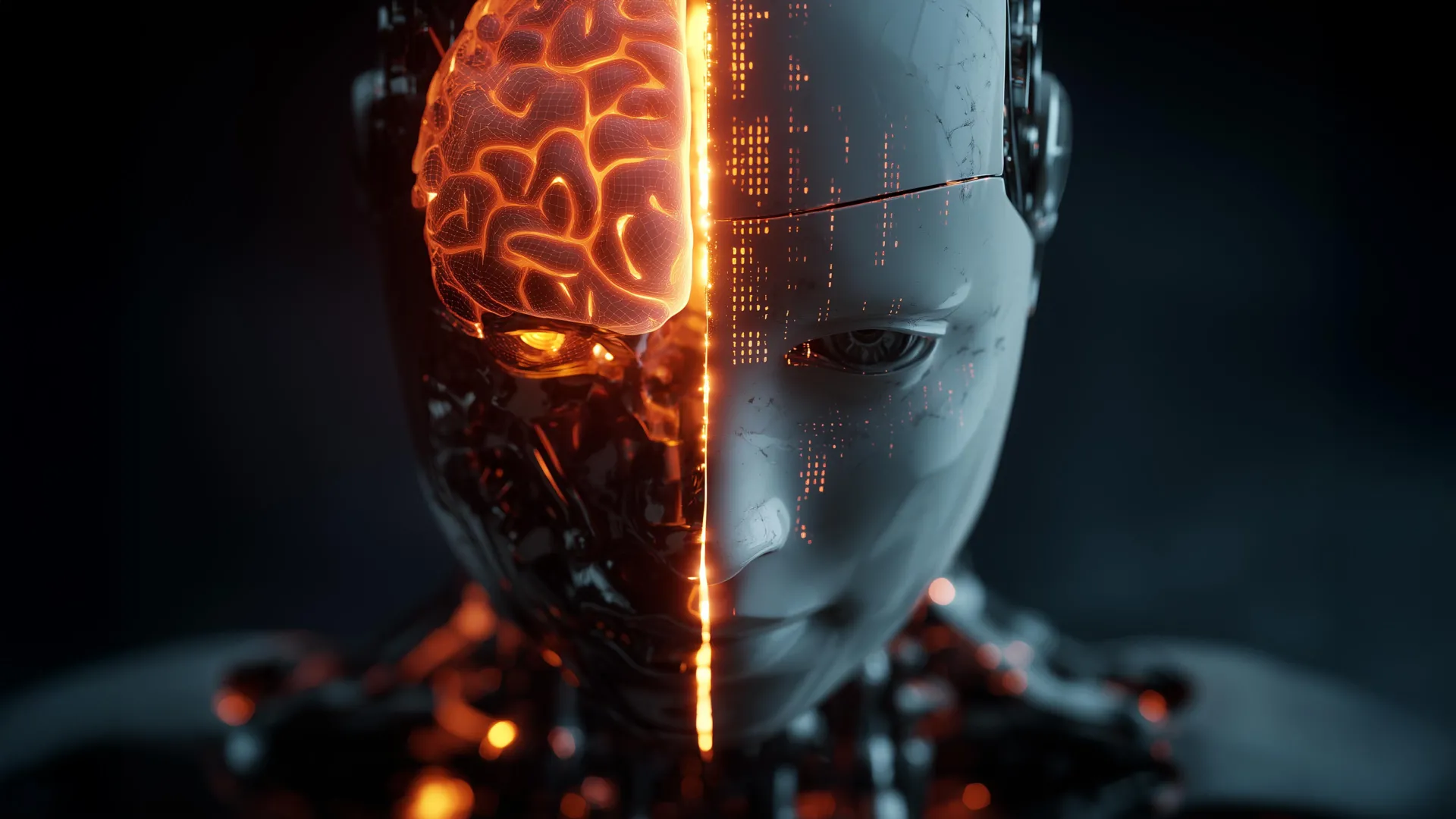
As artificial intelligence systems like GPT-4, Claude, and various autonomous agents become increasingly sophisticated, the line between silicon-based computation and human cognition is blurring. Today’s AI can draft legal briefs, compose symphonies, and engage in deeply nuanced emotional discourse. As these systems demonstrate behaviors once thought to be the exclusive domain of the human intellect—such as strategic planning, collaborative problem-solving, and even the appearance of hesitation—the public discourse has shifted toward a provocative question: Are we interacting with a thinking, feeling entity, or merely a sophisticated mirror reflecting our own humanity back at us?
A groundbreaking study conducted by researchers at Ludwig Maximilian University of Munich (LMU) suggests that while humans are easily charmed by the "human-like" performance of machines, our internal psychological gates remain firmly closed when it comes to granting them the status of a conscious being.
The Study: Dissecting the Perception of Mind
Published in the journal Cognition, the study, titled "The Consciousness Gap," provides a rigorous empirical look at how the human brain categorizes digital intelligence versus biological sentience. Led by Dr. Louis Longin of LMU’s Chair of Philosophy of Mind, alongside co-authors Dr. Bahador Bahrami and Professor Ophelia Deroy, the research represents a milestone in the field of cognitive science.
For the first time, researchers moved beyond general inquiries about whether AI "has a mind" and instead designed a controlled experiment that compared human and artificial agents acting in identical, high-stakes scenarios. The study involved nearly 1,100 participants who were tasked with evaluating the mental states of various agents—some labeled as human, others as AI.
The Methodology
The research team employed a comparative framework. Participants were presented with short, descriptive vignettes outlining the behaviors of agents in specific environments. These agents demonstrated varying levels of environmental responsiveness, such as recognizing the emotional state of a peer, navigating complex obstacles, or reacting to auditory stimuli.
Crucially, one cohort was told the agents were artificial, while the other was told they were human. After reading the descriptions, the participants were asked to rate the agents on two distinct metrics: awareness and consciousness.
Chronology of Human-AI Interaction
To understand the significance of these findings, one must look at the trajectory of AI development. The progression from simple, rule-based algorithms to Large Language Models (LLMs) has fundamentally altered the social landscape:
- The Era of Automation (Pre-2010s): AI was largely viewed as a tool or a calculator. There was no ambiguity regarding its nature; it was a machine performing set tasks.
- The Generative Revolution (2015–2022): The advent of sophisticated neural networks began to produce outputs that felt "authored" rather than "calculated."
- The Conversational Boom (2023–Present): With the release of ChatGPT and its successors, AI moved into the realm of social partner. Users began reporting feelings of empathy, attachment, and the belief that the AI possessed a personality or a set of goals.
It is against this backdrop that the LMU study arrives. As society grapples with the ethical implications of "anthropomorphizing" software, the study provides a vital reality check on how humans intuitively draw boundaries.
Supporting Data: The "Consciousness Gap"
The data derived from the 1,100 participants revealed a psychological paradox. When researchers asked participants about an agent’s "awareness"—defined as the ability to perceive and respond to environmental stimuli—the distinction between human and machine was remarkably thin. Both humans and AI were viewed through a similar lens. If an AI reacted to a sound, participants were willing to grant that it was "aware" of that sound, much like they would a human.
However, when the inquiry shifted to "consciousness"—a term that implies subjective experience, an internal "self," and the capacity to "feel"—the results shifted dramatically.
The Findings
- The Baseline Threshold: Even the most responsive, high-performing AI was consistently rated as having lower consciousness than the least responsive human.
- The Semantic Disconnect: There is a fundamental difference in how the human brain processes the two terms. Awareness is treated as an objective, functional state. Consciousness is treated as an ontological category that, in the minds of the participants, appears to be reserved for biological organisms.
- Uniformity of Bias: The bias against AI consciousness remained consistent across the demographic spectrum, suggesting that this isn’t merely a lack of technical literacy, but a deep-seated psychological barrier.
Expert Perspectives: The Philosophy of the Mind
The LMU team emphasizes that while language is the primary tool we use to describe AI, it is also the primary source of our confusion.
"We may be using mental terms to refer to AI, but this may only be because we lack better words," says Professor Ophelia Deroy, a senior author of the study. "After all, AI is trained to act and speak like a human, so these descriptions seem natural."
This "linguistic trap" is a primary concern for the research team. When we say an AI "understands" or "decides," we are borrowing from our own vocabulary of consciousness. However, the study confirms that deep down, the human brain knows the difference. We are capable of being linguistically imprecise while maintaining an underlying, rigid distinction between the machine and the soul.
Dr. Bahador Bahrami, an expert in social neuroscience, adds a warning regarding the industry’s marketing tactics: "Companies and journalists often reach for hyped descriptions of AI models, and credit them with intentions, plans, or even moral conscience and hesitation. What our study shows is that everyday judgments are much more discriminating."
Implications: The Future of AI Communication
The findings of this study carry profound implications for policy, ethics, and the future of human-machine interaction.
1. The Ethics of Anthropomorphism
If people naturally distinguish between consciousness and awareness, developers must be careful not to exploit this. By framing AI as "conscious" or "sentient," companies may be creating a form of "synthetic empathy" that could lead to manipulative outcomes. The study suggests that consumers are more sophisticated than companies give them credit for, but constant exposure to anthropomorphic language could eventually erode these natural barriers.
2. Legal and Moral Status
The debate over "AI rights" is frequently brought up in legal circles. If society ever moves toward granting any form of legal status to AI, this study suggests it will face an uphill battle. The inherent human intuition that separates "biological consciousness" from "artificial performance" is robust. Policymakers should take note: the public is not currently primed to view AI as a peer with moral standing.
3. The Need for Linguistic Precision
The most practical takeaway from the LMU research is the need for a new vocabulary. As Dr. Bahrami notes, words like "awareness" are functional and safe, whereas "consciousness" carries baggage that may not apply to silicon. In professional and media contexts, transitioning toward more precise, functional language could prevent the "hype-driven" misunderstandings that currently plague the field of artificial intelligence.
Conclusion: A Rational Boundary
The research from Ludwig Maximilian University of Munich offers a rare moment of clarity in the chaotic debate over artificial intelligence. Despite the increasing human-like performance of our digital tools, the human mind remains a fortress of skepticism. We are perfectly capable of enjoying the utility of a "smart" system while simultaneously denying it the status of a "living" one.
As we move forward, the challenge for both developers and the public will be to maintain this critical distance. We do not need to fear that we will accidentally mistake a computer for a human; rather, we should be concerned with how we choose to communicate about these systems. By understanding the distinction between awareness and consciousness, we can build a future where AI is treated for what it is: a powerful, sophisticated, and potentially dangerous tool—but one that, in the eyes of humanity, will remain forever on the other side of the screen.


 Nana Wu
 Ali Ikhwan
 Asro
Asro
 Jia Lissa
 Neng Nana
 Dwi Wanna
 Siti Muinah