
 Evan Lee Salim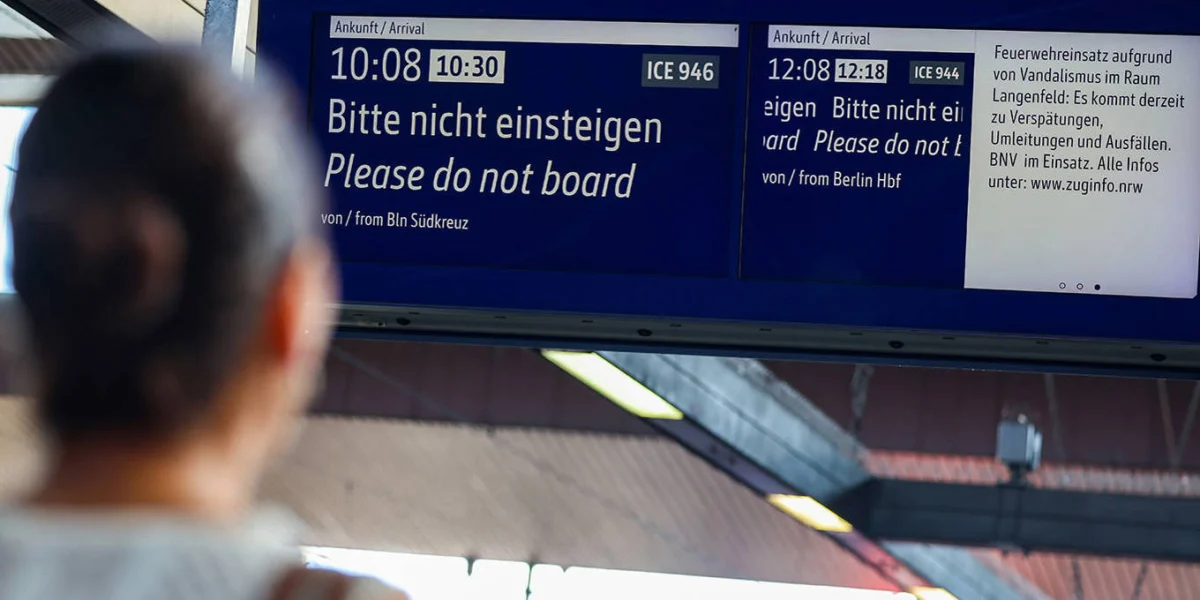
By Helmut K. Anheier
October 8, 2026
For decades, the Federal Republic of Germany stood as the undisputed anchor of European stability—a paragon of industrial prowess, social cohesion, and institutional reliability. Its postwar trajectory, defined by the Wirtschaftswunder (economic miracle) and a steadfast commitment to democratic consensus, allowed its political and corporate elites to enjoy a comfortable, if somewhat complacent, tenure. However, as of autumn 2026, that era of tranquil prosperity has come to a grinding, painful halt.
Germany is no longer the "sick man of Europe" in the classical sense, but it is certainly suffering from a systemic malaise that threatens its very foundation. The complacency of the political establishment, which for too long coasted on the laurels of past successes, has left the country ill-prepared for a volatile geopolitical landscape and a rapidly shifting global economy. As extremist populist movements move from the fringes to the center of the legislative agenda, the mainstream elite finds itself in a desperate, late-stage scramble to rethink the social contract.
Main Facts: A Nation at a Crossroads
The current crisis is not the result of a single event but the culmination of years of structural atrophy. Germany’s growth engine has stalled. Once the undisputed leader of European manufacturing, the nation now faces a trifecta of crises: an aging workforce, a hesitant and costly energy transition, and a crippling digital deficit.
The "barbarians are at the gates," as the populist surge captures voter sentiment in state parliaments and threatens federal cohesion. The primary drivers of this disillusionment are clear:
- Stagnant Productivity: Germany’s manufacturing sector, the backbone of the economy, is struggling to pivot toward green tech and AI.
- Infrastructure Decay: Decades of underinvestment have left the rail networks, bridges, and digital grid in states of disrepair that would have been unthinkable twenty years ago.
- Political Fragmentation: The traditional "Grand Coalition" model, which provided stability for decades, has fractured into a multi-party landscape where governance requires fragile, often paralyzed, coalitions.
Chronology: The Slow Erosion of a Superpower
To understand the current predicament, one must trace the timeline of Germany’s retreat from its peak influence.
- 2010–2015: The Peak of Hubris: Following the 2008 financial crisis, Germany emerged stronger than its peers. This success fostered a dangerous sense of infallibility. Reforms were sidelined in favor of maintaining the status quo, and the digital revolution was largely ignored in favor of traditional automotive strength.
- 2016–2021: The Warning Signs: The migration crisis, the onset of the COVID-19 pandemic, and the early tremors of the climate change debate began to expose the cracks in the federal bureaucracy. The "digitalization of administration" became a running joke, as fax machines remained staples in government offices.
- 2022–2024: The Energy Shock: The Russian invasion of Ukraine shattered the "Wandel durch Handel" (change through trade) doctrine. Germany lost its cheap energy source, and the transition to renewables proved more expensive and socially divisive than policymakers anticipated.
- 2025–2026: The Populist Surge: Discontent reached a boiling point. Economic anxiety fueled the rise of extremist parties, which capitalized on the government’s perceived inability to manage inflation, housing costs, and immigration simultaneously.
Supporting Data: The Indicators of Decline
The metrics of Germany’s decline are stark and unforgiving.
Economic Contraction
According to the latest data from the Federal Statistical Office, Germany has seen three consecutive years of near-zero or negative growth. The manufacturing PMI (Purchasing Managers’ Index) has remained in contraction territory for 18 consecutive months. Business investment has fled to North America and Asia, lured by lower energy costs and more agile regulatory environments.
The Digital Divide
In the OECD’s latest ranking for digital government, Germany languishes in the bottom third of developed nations. Broadband penetration in rural areas remains sporadic, and the integration of AI into the SME (Small and Medium Enterprise) sector—the Mittelstand—has been sluggish at best.
Public Trust
Public sentiment surveys indicate that over 60% of citizens believe the government is "not capable" of solving the country’s primary problems. Trust in the mainstream parties (CDU/CSU, SPD, Greens, and FDP) has plummeted, with the combined polling numbers for these groups struggling to maintain a clear path to a majority in recent regional cycles.
Official Responses: The Struggle for Legitimacy
The response from Berlin has been characterized by a mix of defensive rhetoric and frantic legislative activity.
The Government’s Position
Chancellor and Cabinet ministers have argued that the current downturn is a "necessary transformation period." The government points to the massive investments in battery factories and hydrogen infrastructure as evidence of a long-term plan. "We are undergoing the most significant industrial revolution since the 19th century," a spokesperson for the Ministry of Economics stated earlier this week. "Change is painful, but it is the only path to a sustainable future."
The Opposition’s Critique
The opposition, however, paints a far grimmer picture. They argue that the government’s "transformation" is essentially a process of deindustrialization. "They are taxing the life out of our industries while offering only bureaucracy in return," noted a high-ranking member of the opposition leadership. They are calling for immediate tax relief, a reversal of the nuclear phase-out (a move the government deems impossible), and a drastic reduction in environmental regulations to boost competitiveness.
Implications: A New Era for Europe
The decline of Germany is not merely a domestic concern; it is a structural threat to the European Union.
Geopolitical Weakness
Germany has long been the "paymaster" of the EU. If its economy remains sluggish, the bloc’s ability to project power, manage its borders, and support Ukraine will be severely diminished. A weak Germany leaves a vacuum in European leadership that neither France nor Poland is currently equipped to fill.
The Populist Contagion
The success of extremist parties in Germany is providing a template for populists across the continent. By focusing on "national sovereignty" and "identity politics" in the face of economic hardship, these groups are proving that the postwar liberal consensus is not an inevitable outcome of democracy.
The Need for Radical Reform
The current situation demands a departure from the "muddling through" approach that characterized the Merkel era. To survive, Germany must undergo:
- Bureaucratic Decimation: The state must radically simplify its regulatory framework to allow for faster innovation.
- Labor Market Flexibilization: To combat the shrinking workforce, Germany needs to rethink immigration policy, vocational training, and retirement incentives.
- Fiscal Discipline vs. Investment: The government must find a way to circumvent its rigid "debt brake" (Schuldenbremse) to fund the massive infrastructure projects needed for the 21st century.
Conclusion: The Final Reckoning
Germany is at a crossroads where the ghosts of its past—the rigid adherence to order and the fear of radical change—are colliding with the realities of a digital, decarbonized, and deeply polarized future. The political and corporate elite can no longer hide behind the prestige of the "Made in Germany" label.
The era of complacency is over. Whether Germany emerges from this malaise as a leaner, more innovative, and more resilient state, or whether it continues its slow descent into political and economic marginalization, depends entirely on whether its leaders are willing to dismantle the very systems that once made them successful. The barbarians are at the gates, and they are not merely waiting for the doors to open—they are waiting for the system to collapse under the weight of its own inertia. For Germany, the time for half-measures has passed. The time for a new, fundamental social and economic compact is now.


 Ali Ikhwan
 Raul Delapena Setiawan
 Dwi Wanna
 Muslim
 Nana Wu

 Rifan Muazin