Ali Ikhwan
By Jeffrey Frankel
October 26, 2026
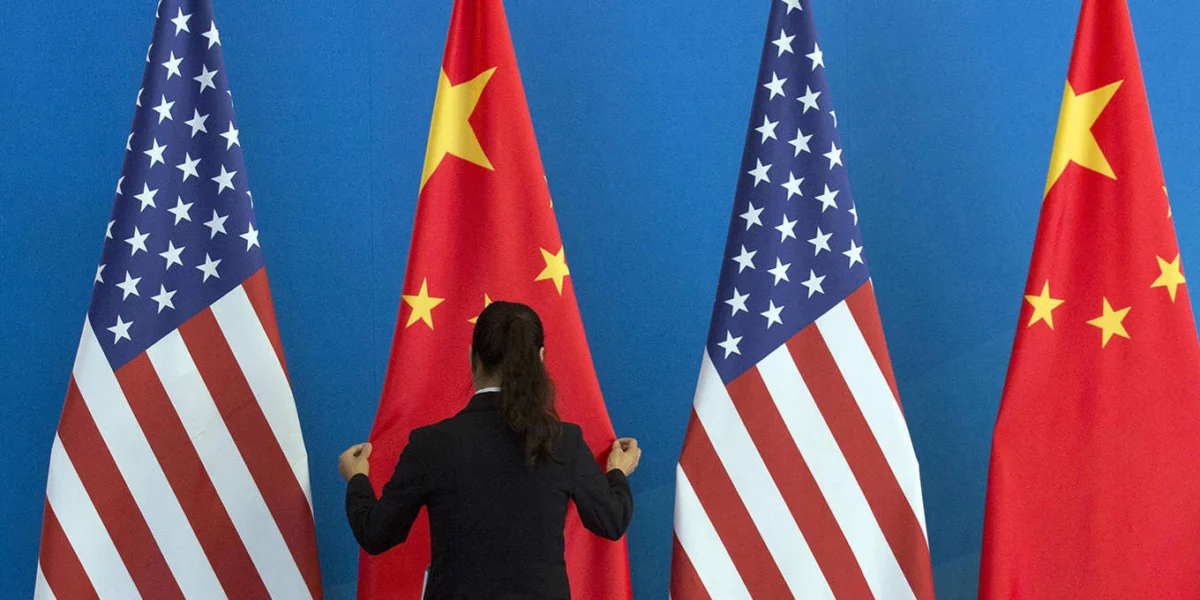
In the modern theater of international relations, the tools of statecraft have shifted from the traditional deployment of naval fleets and ballistic missiles to the surgical application of supply chain blockades, financial sanctions, and trade dependencies. This phenomenon, increasingly labeled as "weaponized interdependence," has become the defining characteristic of 21st-century geoeconomics. Yet, as the global order fractures into competing spheres of influence, a critical question emerges: Who holds the most power in this new era of coercion?
At the European Central Bank’s (ECB) 11th Annual Research Conference held in Frankfurt last month, Nobel laureate Paul Krugman offered a provocative thesis: despite its internal divisions and bureaucratic complexities, the European Union possesses a latent capacity for geopolitical leverage that exceeds that of the United States and China. However, this assertion rests on a controversial statistical foundation—the reliance on Purchasing Power Parity (PPP)-adjusted GDP—that may inadvertently obscure the very volatility it seeks to normalize.
The Rise of Geoeconomics: Defining the New Battlefield
The conference, which convened leading economists and policymakers to dissect the intersection of trade and security, centered on the evolving concept of "geoeconomics." In this context, economic interactions are no longer viewed merely as conduits for mutual prosperity but as potential instruments of coercion.
The most prominent example remains China’s strategic control over rare-earth minerals. By threatening to restrict access to these essential components, Beijing has demonstrated how a dominant position in a critical node of the global supply chain can be leveraged to compel political concessions from trading partners. Similarly, the Western use of the SWIFT banking system and dollar-denominated financial sanctions against Russia following the 2022 invasion of Ukraine marked a watershed moment, confirming that economic connectivity is, in fact, a double-edged sword.
Krugman’s argument posits that the EU, by virtue of its massive single market and its role as a global regulatory superpower, is uniquely positioned to wield this "weaponized interdependence." Unlike the US, which relies heavily on military-backed financial dominance, or China, which relies on manufacturing monopolies, the EU exerts influence through the "Brussels Effect"—the ability to set global standards that corporations worldwide are forced to adopt to maintain market access.
Chronology: The Evolution of European Strategic Autonomy
To understand the current debate, one must look back at the trajectory of the EU’s evolving stance on economic security over the past decade:
- 2019: The Regulatory Turning Point. The European Commission, under the leadership of Ursula von der Leyen, pivots toward a "geopolitical Commission," signaling a departure from the bloc’s traditional focus on pure trade liberalization.
- 2022: The Energy Shock. The abrupt decoupling from Russian gas following the Ukraine conflict forces the EU to reckon with its vulnerabilities, leading to the rapid acceleration of the "Strategic Autonomy" agenda.
- 2024: The Anti-Coercion Instrument (ACI). The EU formally implements the ACI, a legal framework allowing the bloc to impose countermeasures against third countries that employ economic intimidation against EU member states.
- September 2026: The ECB Conference. Paul Krugman delivers his keynote address, challenging traditional assumptions about the EU’s power relative to the US and China, specifically focusing on the metrics of economic weight.
The Statistical Dilemma: PPP vs. Nominal GDP
At the heart of the debate is the methodology used to measure economic "weight." Krugman’s reliance on PPP-adjusted GDP is designed to strip away the distortions caused by fluctuating nominal exchange rates. PPP, which adjusts for the differences in the cost of living and the purchasing power of local currencies, is frequently used by development economists to compare standards of living across nations.
However, applying this to the assessment of geopolitical power is inherently problematic. When calculating the capacity to engage in economic warfare, nominal GDP is often the more relevant metric. Financial sanctions, for instance, are denominated in dollars or euros. If the EU wishes to project power through trade policy or foreign investment, the nominal exchange rate is what matters, not the price of a basket of local consumer goods.
By using PPP-adjusted data to smooth out the "noise" of exchange rate volatility, we may be ignoring even greater, more fundamental swings in the underlying economic reality. For instance, when a currency depreciates sharply due to a geopolitical shock, nominal GDP drops, but the nation’s ability to import foreign technology or service international debt drops even faster. PPP data hides these real-world constraints, painting a picture of stability that may not exist in the volatile, real-time arena of global finance.
Supporting Data: Comparative Economic Weights
The table below illustrates the divergence between Nominal GDP and PPP-adjusted GDP for the three major players, reflecting why the choice of metric is not merely an academic exercise.
| Region | Nominal GDP (2025 Est.) | PPP-Adjusted GDP (2025 Est.) |
|---|---|---|
| United States | ~$29.5 Trillion | ~$29.5 Trillion |
| European Union | ~$20.2 Trillion | ~$26.8 Trillion |
| China | ~$19.5 Trillion | ~$36.5 Trillion |
Data Source: IMF World Economic Outlook / Author estimates.
As the data shows, China’s "weight" changes dramatically depending on the lens used. For the EU, the PPP adjustment significantly inflates its standing relative to the US. If we rely on the PPP lens, the EU appears to be a peer competitor to the US and a massive counterweight to China. However, in terms of global financial dominance—where the US dollar remains the undisputed reserve currency—the nominal figures reveal a much more daunting reality for Brussels.
Official Responses and Counter-Arguments
The reception of Krugman’s thesis at the ECB conference was mixed. Central bankers and trade officials raised several critical points:
The Institutional Barrier
European officials, while appreciative of the recognition of the EU’s market power, pointed to the bloc’s fragmented decision-making process. "Market size is not the same as political cohesion," noted one senior ECB official. While the EU can set regulations, it lacks the centralized "command and control" structure that Washington or Beijing can employ to execute rapid, coordinated economic strikes.
The Role of the Euro
Critics of the "EU as the primary power" narrative emphasize that until the Euro achieves parity with the US dollar as a global reserve and settlement currency, the EU’s ability to project power will always be secondary to the United States. Without a fully integrated capital markets union, the EU remains a "regulatory giant but a fiscal dwarf."
Implications: The Future of Global Economic Statecraft
The implications of this debate extend far beyond the walls of the ECB. As we look toward the remainder of the decade, several key trends are likely to emerge:
1. The Weaponization of Standards
The EU will continue to leverage its role as the world’s foremost regulatory power. From AI governance to environmental mandates, the EU is effectively exporting its values. This "geoeconomic" tool is slower than a sanction, but its effects are often more permanent.
2. The Retreat of Globalism
The reliance on PPP data by academics like Krugman reflects a broader desire to find stability in a world where global trade flows are increasingly disrupted. However, policymakers must avoid the trap of "statistical smoothing." If the EU ignores the volatility inherent in nominal exchange rates, it risks being unprepared for the sudden financial shocks that accompany geopolitical crises.
3. Toward a Multipolar Financial System
We are witnessing a slow, painful transition away from the unipolar dollar-centric world. The EU’s challenge is to build the financial infrastructure—such as an expanded role for the digital euro and deepened capital markets—that allows it to wield power in a way that matches its economic size.
Conclusion
Paul Krugman’s intervention at the ECB research conference serves as a vital reminder that the definition of power is shifting. The European Union undoubtedly possesses the economic scale to be a decisive player in the era of weaponized interdependence. Yet, the path to exercising that power is fraught with both internal political hurdles and the external reality of a global financial system that still prioritizes nominal liquidity over adjusted purchasing power.
To lead in the coming decade, the EU must move beyond the safety of PPP-adjusted comfort zones and confront the raw, volatile reality of nominal power. Only by aligning its regulatory influence with a robust, integrated financial architecture can the Union hope to translate its massive economic footprint into true geopolitical agency. The era of geoeconomics is here; the question is no longer who has the largest market, but who has the institutional resolve to use it.

 Asro
 Muslim
 Suro Senen

 Azzam Bilal Chamdy
 Asep Darmawan

 Nana Wu

 Nana