
 Basiran
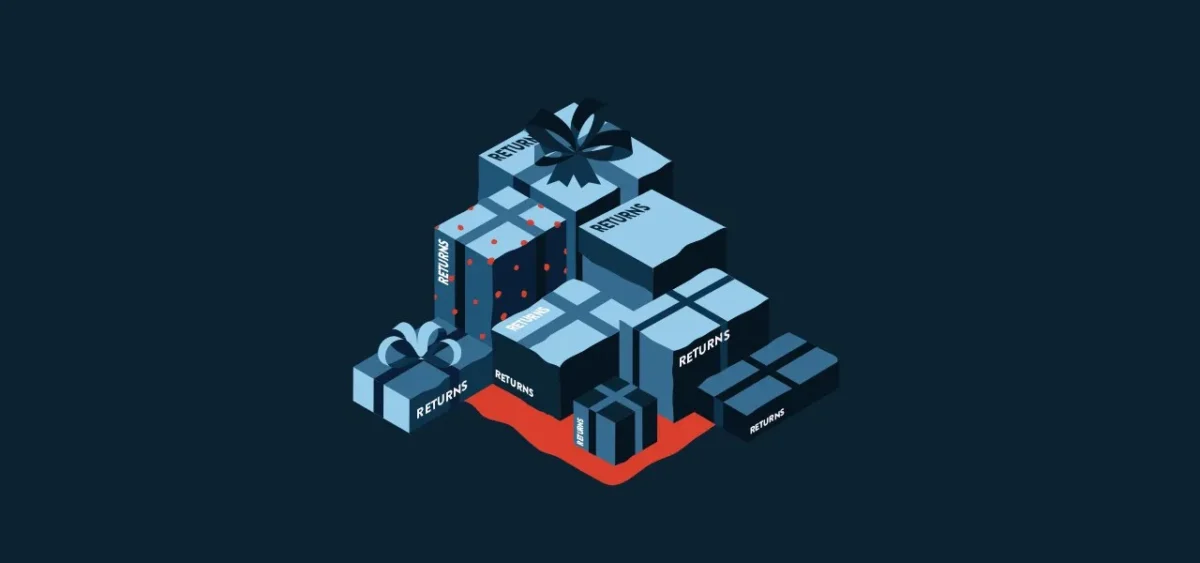
This report is part of Modern Retail’s Supply Chain Weekly, a deep dive into the logistics and operational shifts defining the modern retail landscape.
In the hyper-competitive theater of modern e-commerce, the race to the bottom on price has largely been replaced by a race to the top in convenience. As consumer expectations for digital shopping shift from mere accessibility to total ease-of-use, major marketplaces and delivery giants are identifying a singular, high-stakes pivot point: the returns process.
For years, the "return" was viewed as a necessary evil of retail—a logistical headache that eroded margins and complicated inventory management. Today, however, industry leaders are flipping the script, rebranding the return as a strategic competitive advantage. By removing the friction from the post-purchase experience, platforms like DoorDash and TikTok Shop are attempting to replicate the "Amazon effect," hoping to build the kind of customer loyalty that keeps shoppers returning to their ecosystems again and again.
The Evolution of the "Mall in Your Pocket"
In September, DoorDash made a bold move to solidify its transition from a restaurant delivery service to a comprehensive retail logistics engine. The company announced the launch of a retail returns service, allowing users to schedule a driver to pick up packages from their doorsteps.
While the service comes with a $7.99 fee, the value proposition is rooted in absolute convenience. Consumers no longer need to print labels, find shipping boxes, or trek to a drop-off location. A driver arrives, collects the item, and handles the rest. Currently live in select markets, the service is slated for a full national rollout in November. This expansion is part of a broader mission to position DoorDash as a "mall in your pocket," having already integrated major retail players like Macy’s, Anthropologie, The North Face, Vans, and Timberland into its platform.
Simultaneously, the social commerce juggernaut TikTok Shop is doubling down on its infrastructure. By integrating with Happy Returns—a logistics service that allows users to drop off items without packaging at one of 10,000 nationwide locations—TikTok is signaling that it is ready to compete with traditional e-commerce giants. For brands operating on TikTok Shop, opting into this service is a way to lower the barrier to entry for hesitant shoppers.
Chronology: The Rise of Frictionless Logistics
The current focus on returns is the culmination of a decade-long shift in consumer behavior, accelerated by global events and changing digital habits.
- Pre-2020: Returns were largely siloed. Retailers focused on "omnichannel" strategies, but returns were often a disjointed experience requiring store visits or manual shipping.
- 2020–2022 (The Pandemic Catalyst): The explosion of e-commerce meant that returns volume skyrocketed. Amazon’s policy of "no-label, no-box" returns at Whole Foods and UPS stores set a new gold standard.
- 2023: TikTok Shop launches in the U.S., rapidly expanding from a novelty to a commerce force.
- Late 2024: DoorDash enters the returns market, marking the first major "gig-economy" move to solve the "last-mile" problem of reverse logistics.
Supporting Data: Why Returns Matter
The strategic focus on returns is backed by hard data. According to the Gartner Consumer Omnibus Survey, 35% of U.S. consumers explicitly cite a "good returns policy" as the primary reason they choose one shopping platform over another.
The influence of Amazon in this space cannot be overstated. By coupling fast, free shipping with a "no-questions-asked" return culture, Amazon successfully cultivated a brand identity defined by being "consumer-friendly." When a shopper knows that a mistake or a change of heart will not result in a financial or logistical penalty, they are statistically more likely to finalize a purchase.
Industry analysts point out that this is not just about keeping current customers happy—it is about conversion. When retailers prominently feature their return policies on product pages and at the checkout screen, they see a measurable lift in conversion rates. In an era where customer acquisition costs (CAC) are rising, the return policy has become one of the most cost-effective marketing tools available.
Official Responses and Strategic Vision
The leadership at these platforms is transparent about their motives. For TikTok Shop, the move is about building trust in an environment that is still maturing.
"Our collaboration with Happy Returns builds on our commitment to making the returns experience faster, hassle-free, and more trustworthy for our shoppers," said Patrick Nommenson, TikTok Shop’s president of strategic initiatives.
The underlying logic is clear: to transition from a discovery engine to a marketplace, TikTok must address the inherent anxiety of buying goods from potentially unknown third-party sellers. By leveraging a trusted logistics partner like Happy Returns, they effectively outsource the "trust" component of the transaction.
Implications: The Operational Tightrope
While consumer-facing convenience is the goal, the operational reality for brands is becoming increasingly complex. As retailers like Target, Walmart, Best Buy, and Nordstrom open their websites to more third-party sellers, the burden of inventory management is growing exponentially.
In our recent Big-Box Briefing, we spoke with Monil Kothari, founder of the jewelry brand Haus of Brilliance. For brands selling across multiple marketplaces, the logistical foundation is everything.
"Having a really good operational foundation goes such a long way, especially when you have two-day ship times and incredible volume," Kothari explained. The risk of failing to manage inventory—or the return of that inventory—is high. If a system fails to update in real-time, a retailer might show ten units available when, in reality, nine have been sold and are currently in the process of being returned. "Our systems move very fast," Kothari noted, emphasizing that the operational backend must match the speed of the front-end consumer promise.
The "Luxe for Less" Strategy
Even as logistics dominate the conversation, brick-and-mortar giants like Target are focusing on the intersection of price and supply chain efficiency. During a recent presentation, Target executives highlighted how they are managing the holiday season through a mix of design, sourcing, and AI-driven inventory management.
Their strategy—dubbed "luxe for less"—is a masterclass in supply chain optimization. By utilizing decades of sourcing relationships, Target has successfully managed to bring premium products, such as a $48 cashmere sweater, to market at a price point that defies inflation. This strategy relies heavily on the ability to forecast demand and optimize the supply chain to ensure that the right products are available without excessive inventory bloat.
The Path Forward
The retail industry is currently at a crossroads. On one side, the convenience of the "gig economy" (DoorDash) and the reach of social commerce (TikTok Shop) are redefining the standards for post-purchase service. On the other side, traditional retailers are fighting to maintain their relevance by leveraging their massive physical footprints and sophisticated sourcing capabilities.
What is clear is that the return policy is no longer a footnote in the Terms of Service. It is the core of the value proposition. Retailers and marketplaces that can successfully manage the complexity of the "last-mile" reverse logistics will be the ones that win the holiday season—and the future of commerce.
As we move toward the end of the year, the focus for brands will be on integration. Whether it is syncing inventory across four different marketplaces or deciding whether to offer white-glove pickup services, the winners will be those who can make the "return" feel as seamless as the "buy."
Summary of Key Developments
- DoorDash: Expanding its retail footprint by offering a door-to-door return service, effectively treating the return as a high-convenience, paid logistics product.
- TikTok Shop: Partnering with Happy Returns to provide a seamless, label-free drop-off experience, signaling a move toward parity with established e-commerce giants.
- Consumer Sentiment: With over one-third of shoppers prioritizing return policies, "frictionless" is now a baseline expectation rather than a premium feature.
- Operational Demand: As marketplaces expand, brands must invest in robust, real-time inventory management to survive the volatility of multi-channel selling.


 Nana

 Sagoh

 Suro Senen
 Azzam Bilal Chamdy
 Asep Darmawan

 Nana Wu

 Muslim
