
 Asro
Asro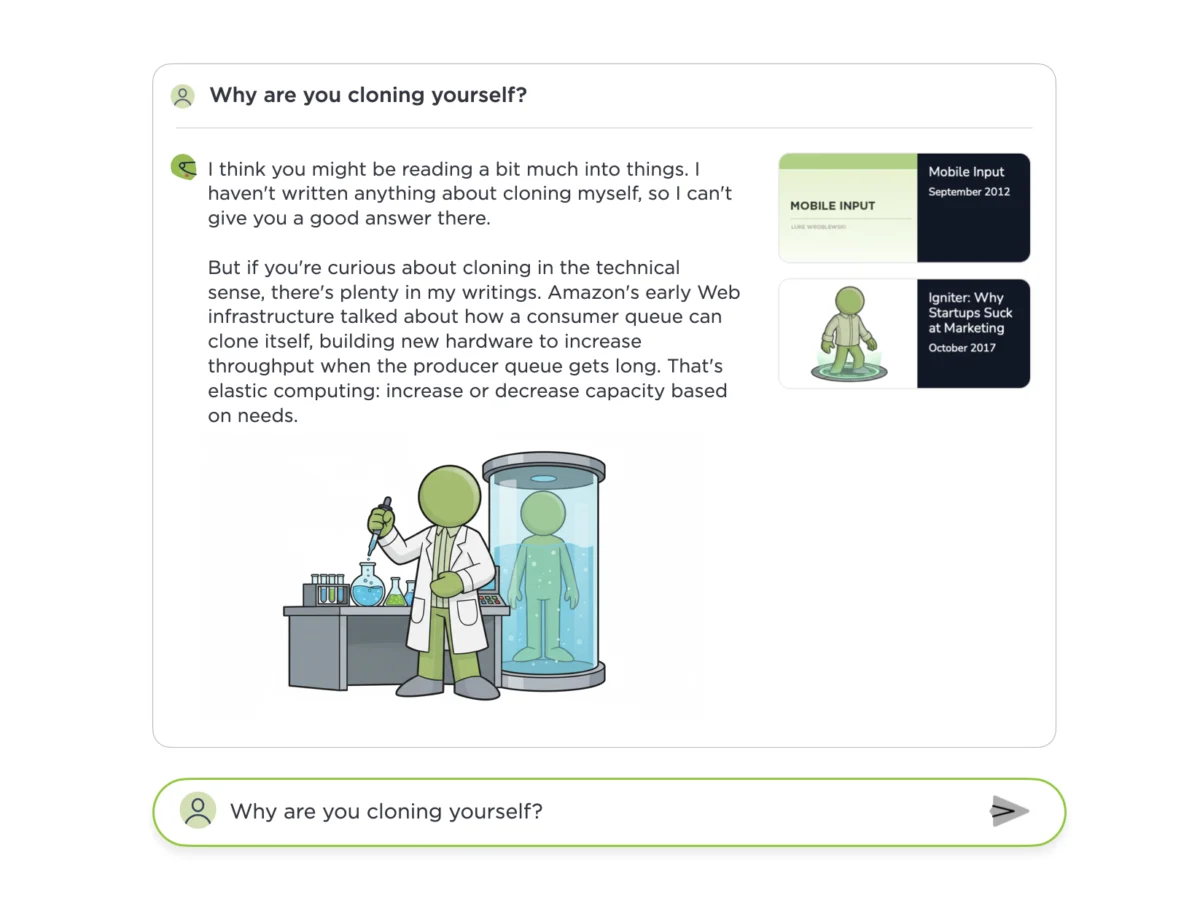
For over three years, Luke Wroblewski’s "Ask LukeW" feature has served as a digital repository of design wisdom, distilling years of articles, talks, and visual assets into a conversational interface. By allowing users to query his extensive body of work directly, Wroblewski created a benchmark for how subject matter experts can leverage their own history to provide value. However, the rapid acceleration of Large Language Model (LLM) capabilities and retrieval technology recently necessitated a fundamental transformation of the system.
Wroblewski recently unveiled a complete overhaul of the "Ask LukeW" architecture. By moving beyond a one-size-fits-all search mechanism, the new system employs an intelligent classification layer, sophisticated chunking strategies, and a nuanced re-ranking process to handle the diverse—and often eccentric—nature of user inquiries.
The Chronology of an Intelligent Search
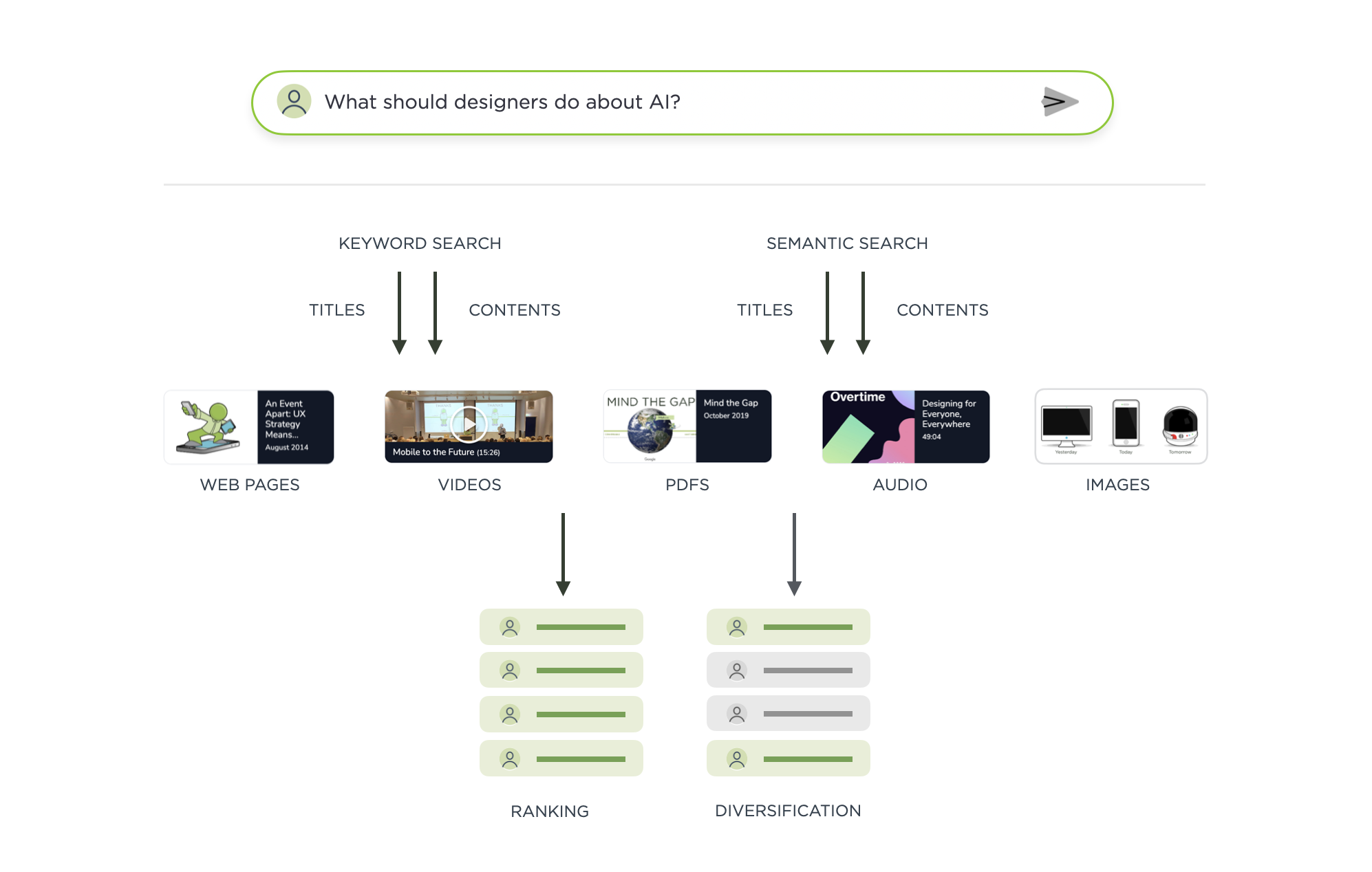
The original "Ask LukeW" system was built on a robust, albeit rigid, framework. When a user submitted a query, the system executed four concurrent searches: semantic and keyword lookups across both article titles and body content. This "shotgun" approach was designed to circumvent the limitations of simple indexing, where relevant insights are often buried deep within articles with tangential titles.
While effective enough to field over 50,000 queries, the system eventually hit a ceiling. As AI models evolved—becoming faster, more capable, and equipped with significantly larger context windows—the old infrastructure began to feel archaic. The "Ask LukeW" team, including contributors Lukas Seklir, Jerome Paulos, and Sam Breed, recognized that the system needed to transition from a retrieval-based tool to a context-aware reasoning engine.
The rebuild process occurred in distinct phases:
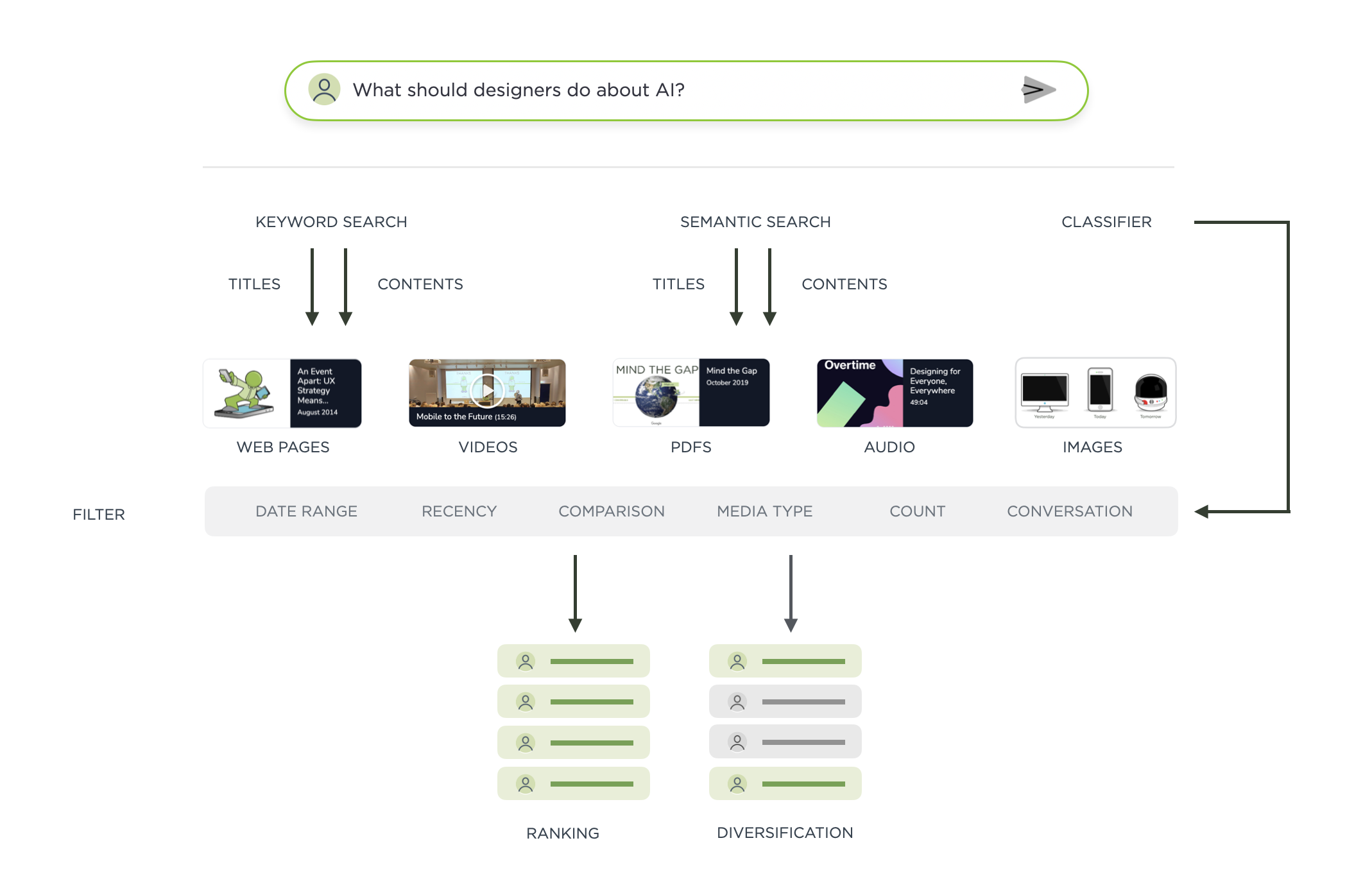
- Intelligence Layer Integration: Implementing a lightweight classifier to categorize the intent of incoming questions.
- Granular Indexing: Breaking down long-form content into "small chunks" to improve the precision of semantic matching.
- Contextual Retrieval: Developing a neighbor-retrieval mechanism to ensure that small chunks retain their original context.
- Human-in-the-Loop Validation: Rigorous manual evaluation of query results to identify and correct bugs that automated metrics failed to capture.
Supporting Data: Why "One Size" No Longer Fits All
Wroblewski’s analysis of the 50,000 questions asked to date revealed a critical truth: user intent varies wildly. Users do not just ask for information; they ask for specific artifacts, temporal data, quantitative counts, and even casual interaction.
The Classification Matrix
The new system introduces a sophisticated classification engine that parses the "type" of question to determine the optimal retrieval strategy. The system now supports:
- Temporal Queries: Questions anchored in time (e.g., "What was your perspective on Web forms in 2010?"). The system now filters content by date, allowing for chronological reasoning.
- Artifact Retrieval: Often, users are looking for a specific file, such as a slide deck or a video. The system now recognizes when a user is hunting for a specific asset rather than a general summary.
- Quantitative Queries: By treating these more like database queries than semantic searches, the system provides concrete counts (e.g., "How many talks did you give in Seattle?") instead of vague descriptive text.
- Visual Discovery: The system has been fully re-indexed to support image retrieval. It can now surface up to three images per answer, cite specific pages in PDFs, and drop slides directly into the response.
- Casual Engagement: Perhaps most notably, the system no longer rejects "off-topic" or "fun" questions. By recognizing casual intent, the system can respond in kind, occasionally incorporating character images for personality.
Technical Architecture: Precision Through Chunking
The core technical challenge in modern RAG (Retrieval-Augmented Generation) systems is the trade-off between granularity and context. If an AI retrieves a massive document, it loses the specific answer. If it retrieves a single sentence, it loses the meaning.
Wroblewski’s team solved this through a "chunking and neighbor" strategy. By breaking content into significantly smaller, more precise segments, the system ensures high relevance for specific queries. To prevent the loss of surrounding meaning, the system automatically pulls in the "neighboring chunks," ensuring the AI has the necessary context to generate a coherent response.
Furthermore, the re-ranking process was fine-tuned to ensure a balance of perspectives. By weighting the results as 75% re-ranked and 25% original embedding search, the system prevents the re-ranker from becoming overly dominant, which could otherwise introduce bias or ignore highly relevant, albeit lower-ranked, information. Finally, the team implemented result diversification, ensuring that near-identical chunks from a specific time period do not overwhelm the answer and stifle the breadth of the information provided.

The Role of Human Evaluation
In the AI development cycle, "Evals" (evaluations) are the gold standard for quality assurance. However, as Wroblewski discovered, they are not infallible.
During the testing phase, the automated evaluation metrics indicated that the new system was superior to the old one across every performance indicator. However, when Wroblewski performed a manual comparison of 100 queries, the old system actually outperformed the new one in several instances.
This finding is a cautionary tale for the AI industry: Automatic evals track the direction of progress, but human evals identify the specific, nuanced failures that lead to user frustration. The team used these manual findings to uncover a critical bug, which was subsequently addressed. This process underscores the necessity of combining high-level automated testing with grounded, human-centric quality control.
Implications: The Future of Subject Matter Expertise
The evolution of "Ask LukeW" holds profound implications for how experts, creators, and companies manage their knowledge bases.
1. From Passive Archives to Active Mentorship
By upgrading the retrieval system, Wroblewski has transformed his website from a static archive into a dynamic mentor. This shift allows the expertise contained within his life’s work to be applied to modern problems in real-time, effectively "cloning" the expert’s reasoning process.
2. The Death of the "Search Box"
The transition from keyword-based search to intent-based retrieval signals the end of the traditional search bar as we know it. In the future, users will not "search" for information; they will "consult" with a curated version of an expert’s knowledge.
3. High-Fidelity Content Management
For content creators, this update serves as a blueprint for the future of digital presence. It suggests that the value of an expert’s content is no longer just in the writing itself, but in the structural integrity of that content. Images, PDFs, and historical data must be tagged, indexed, and organized to be compatible with AI retrieval.
4. Continuous Iteration
Finally, the "Ask LukeW" update serves as a reminder that AI integration is not a "set it and forget it" task. As models evolve, the systems that sit on top of them must be rebuilt, re-tuned, and re-validated. The speed at which this rebuild occurred—and the willingness to admit that the "new" system initially failed—sets a high bar for transparency and technical rigor.
As Wroblewski continues to refine his digital persona, he remains at the forefront of a movement that is redefining the relationship between the creator and the consumer. By treating his own work as a dataset to be optimized, he is not just answering questions; he is proving that the most effective way to leverage AI is to ground it in the unique, hard-won insights of a single human perspective.


 Sagoh
Sagoh
 Asep Darmawan
 Raul Delapena Setiawan
 Reynand Wu


 Azzam Bilal Chamdy
 Ali Ikhwan