
 Jia Lissa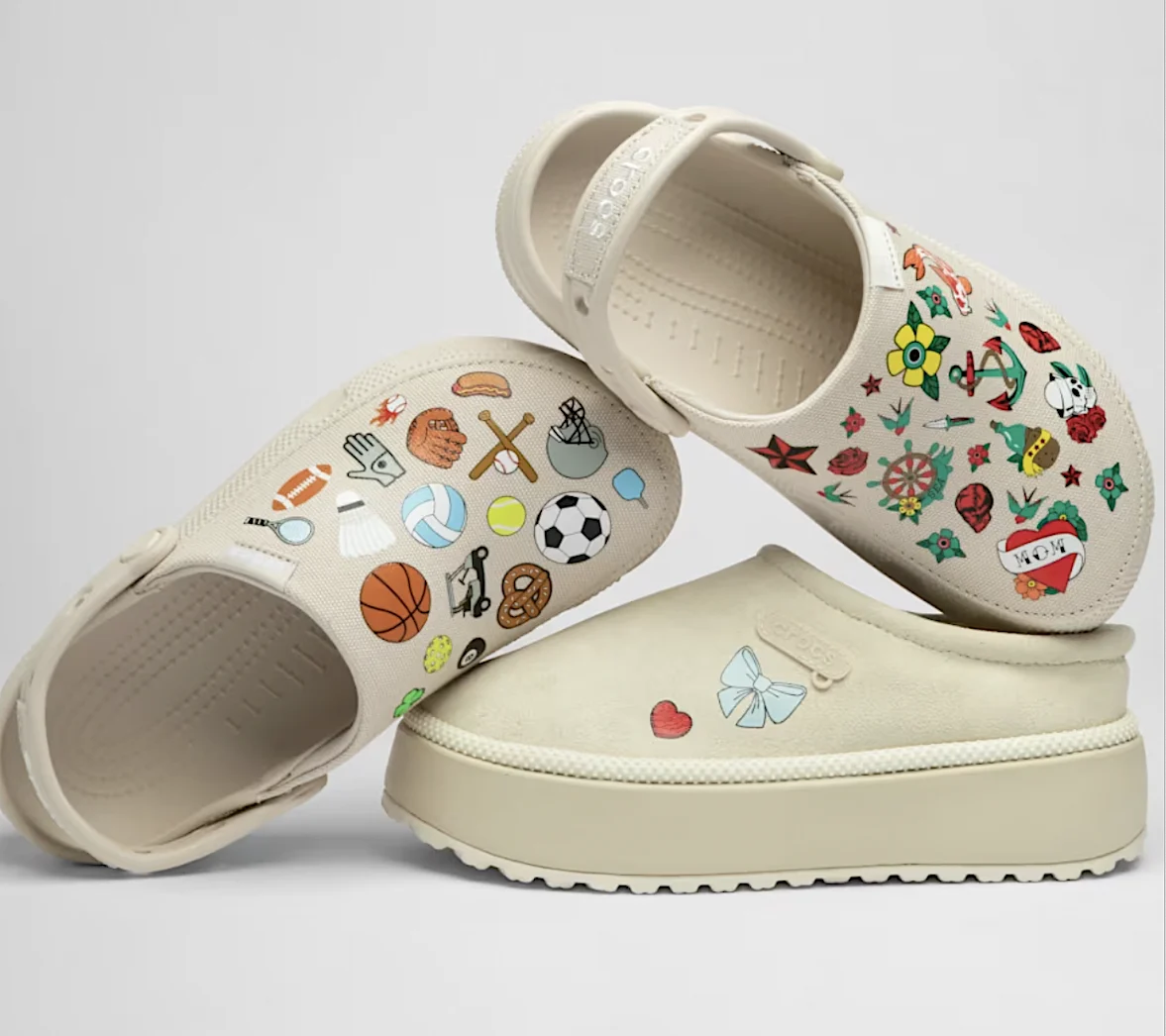
In the world of contemporary fashion, few brands have managed to turn a utilitarian rubber clog into a global cultural phenomenon quite like Crocs. As the company approaches its 25th anniversary in 2027, it is not merely resting on the comfort of its foam soles. Instead, Crocs is aggressively pivoting toward a strategy of hyper-personalization, transforming its footwear into a canvas for individual identity. From the humble Jibbitz charm to experimental, high-end retail boutiques, the brand is redefining the relationship between the consumer and the product.
Main Facts: The New Era of "Shoelry"
The cornerstone of this strategy is the rise of what the company calls "shoelry"—a portmanteau of shoe and jewelry. For years, personalization at Crocs was a niche, youth-oriented segment dominated by licensed characters like Disney icons. Today, that narrative has shifted significantly.
Crocs is witnessing a trend of "elevated personalization." Consumers are increasingly wearing their Crocs to social events, parties, and professional settings, necessitating a more sophisticated aesthetic. To meet this demand, the brand is rolling out premium accessories: gold chains, metallic hearts, faux-pearl embellishments, and rainbow-hued studs.
This move beyond the traditional Jibbitz hole—which historically required the signature circular ports on the shoe’s upper—includes innovative products like sandal charms that clip directly onto straps and "shoe tattoos." These press-on, temporary-style graphics allow for decoration across any surface of the shoe, signaling a departure from the brand’s original design constraints.
A Chronology of Customization
To understand where Crocs is headed, one must examine the timeline of its transformation into a personalization powerhouse.
- 2006: A pivotal year for the brand, marked by the acquisition of Jibbitz LLC for $10 million in cash. At the time, it was a bold gamble, but it effectively laid the foundation for the next two decades of revenue growth.
- 2020–2024: During this period, the brand saw a massive surge in popularity. Personalization became a key differentiator in the market, with the company leveraging Jibbitz to drive customer lifetime value.
- July 2025: A milestone month for the company, as it reported that the Crocs brand surpassed $1 billion in quarterly revenue for the first time in its history. During this same month, the company opened a flagship retail concept in New York City, featuring a "bodega" aesthetic that stocked high-end, exclusive Jibbitz priced as high as $850.
- September 2026: Crocs launched "Crocs by You" in Wuhan, China. This was the brand’s first dedicated, 100% personalization-focused retail space, serving as a laboratory for the future of the company’s global brick-and-mortar footprint.
- Looking Ahead (2027): As the brand reaches its 25th anniversary, the focus remains on scaling these personalization concepts globally, integrating them into the core retail experience rather than treating them as mere add-ons.
Supporting Data: The Economics of Personalization
The financial metrics behind this strategy are compelling. In 2024 alone, sales of Jibbitz surpassed $270 million, accounting for approximately 8% of the company’s total revenue. This is not just a side business; it is a critical component of the brand’s financial health.
Furthermore, internal data from the company indicates a direct correlation between personalization and customer retention. Customers who engage in customizing their footwear exhibit a significantly higher lifetime value than those who purchase standard, unadorned pairs. By turning a commodity product into a unique piece of personal property, Crocs has successfully deepened the emotional connection between the brand and the consumer, effectively shielding itself from the volatility of fashion trends.
Official Responses and Strategic Vision
The Shift from Youth to Universal Appeal
Anne Mehlman, President of Crocs, has been the primary architect of this shift. In discussions with Modern Retail, Mehlman noted that the brand is intentionally moving away from its "kids-only" roots.
"Personalization, when we first started out, was kids-focused," Mehlman explained. "It was more licensed, like Disney. What we’re seeing from a trending perspective is really what we call ‘shoelry.’ It’s about those more elevated Jibbitz, and exploring how you actually make your shoe very beautiful."
The "Crocs by You" Experiment
The "Crocs by You" concept in China is more than just a store; it is a service center for self-expression. Lori Foglia, Chief Product Officer at Crocs, frames the experience as a necessity for the modern shopper.
"You can’t buy a shoe without personalizing it," Foglia stated. The store employs local art and design students as stylists, who guide customers through the process of selecting base models, applying treatments, and installing exclusive, store-specific accessories. This experiential model is being scrutinized for potential expansion into other global markets, including North America and Europe.
Reducing Friction in the Digital Realm
While retail stores focus on the physical experience, the digital team is focused on algorithmic personalization. Feliz Papich, VP of Digital Technology, Experience, and Insights, emphasizes the role of data in removing friction.
"The No. 1 goal is giving customers exactly what they’re looking for, as fast as possible," Papich noted. From personalized email campaigns and curated social media feeds to SMS outreach, the company is using data to ensure that when a customer wants to customize their footwear, the process is seamless. Whether it is suggesting a specific set of Jibbitz based on previous purchases or displaying personalized content on mobile apps, the brand is treating digital navigation as an extension of the customization process.
Implications: The Future of Retail
The implications of Crocs’ strategy extend far beyond the footwear industry. By prioritizing personalization, Crocs is tapping into a broader retail trend—the move toward "co-creation."
The "Co-Creation" Standard
Retailers across the spectrum are moving in this direction. Nike has long maintained its "Nike By You" platform, which allows for deep 3D customization. Luxury bootmaker Tecovas offers in-store stations for branding, stretching, and painting. Crocs is effectively standardizing this approach for the mass market. The lesson for the retail sector is clear: in an era of infinite choice, the consumer no longer wants to be a passive purchaser; they want to be an active designer.
Operational Challenges
Scaling this model is not without its risks. The "Crocs by You" concept requires a higher level of staffing, specialized training, and complex inventory management compared to a standard retail outlet. The brand must balance the cost of these experiential stores against the potential for increased brand loyalty. However, given the success of the NYC location and the Wuhan pilot, the company seems confident that the investment is justified.
The Sustainability of Trends
As the brand looks toward its 25th anniversary, the challenge will be maintaining the momentum of "shoelry." Trends in fashion are inherently cyclical. To stay relevant, Crocs must continue to innovate, moving beyond basic gems and pearls to incorporate new materials, collaborative partnerships, and potentially even digital/physical hybrid products.
Conclusion: A Canvas for the Future
Crocs has successfully evolved from a polarizing piece of functional footwear into a global platform for individual expression. By treating every shoe as a blank canvas and every customer as a potential designer, the brand has created a moat that is difficult for competitors to cross.
As we look toward 2027, the "shoelry" movement is likely to expand even further. Whether through AI-driven design tools, localized limited-edition releases, or the total integration of personalization into every point of sale, Crocs is proving that the most successful brand in the future of retail is one that allows its customers to build the brand alongside them. The message from the boardroom is clear: the future of footwear isn’t just in what you wear, but in how you make it yours.


 Reynand Wu
 Rifan Muazin
 Nila Kartika Wati
 Raul Delapena Setiawan
 Dwi Wanna
 Muslim
 Nana Wu