
 Evan Lee Salim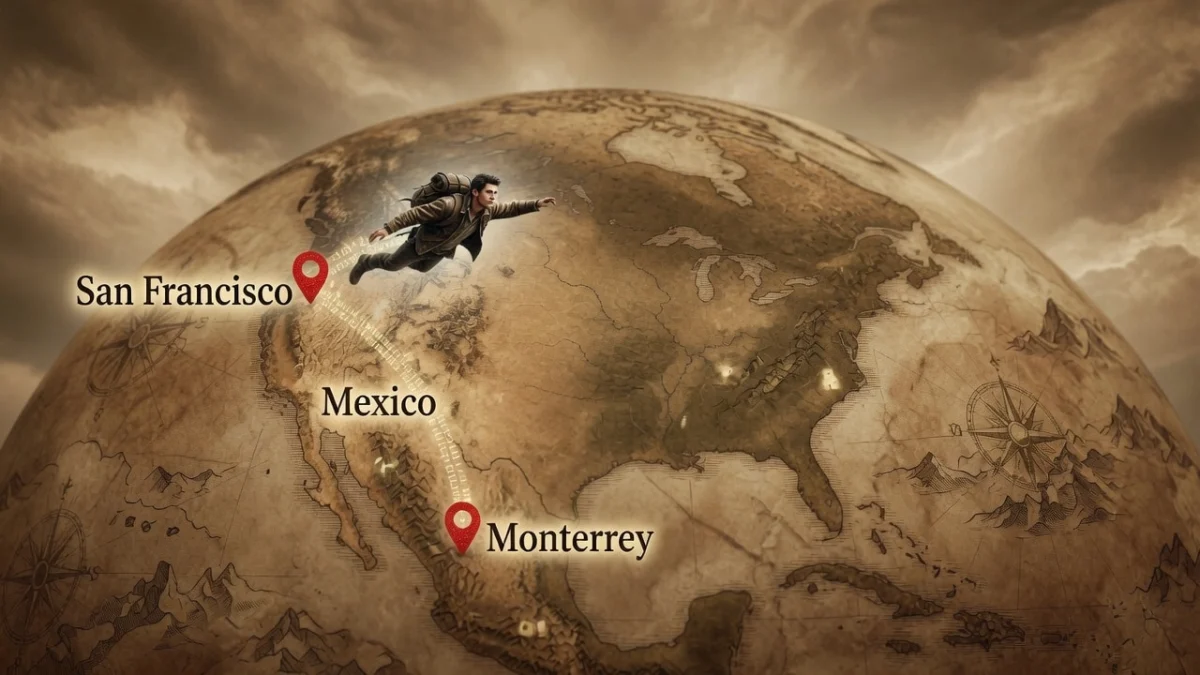
For decades, the traditional career trajectory has been sold as a bulletproof social contract: attend university, secure a stable position with a reputable firm, and spend thirty years climbing a ladder, all while praying that technological shifts or corporate restructuring don’t render your role redundant. It is a path of perceived safety, yet one that leaves millions vulnerable to the whims of the global economy.
In a recent episode of the Financial Samurai podcast, host Sam Dogen sits down with Domingo Guerra—an engineer, founder, and investor—to dissect the reality behind this "safe" path. Guerra’s journey, which spans from Monterrey, Mexico, to a billion-dollar acquisition by Symantec, offers a masterclass in the psychological and financial complexities of entrepreneurship. His story serves as a vital case study for anyone currently navigating the shifting landscape of the AI era, where job security is no longer a given.
The Architecture of an Entrepreneur: From Monterrey to Austin
Domingo Guerra’s origin story defies the typical Silicon Valley trope. While many founders in the United States point to a college dorm room or a Palo Alto garage as their starting point, Guerra’s entrepreneurial spirit was forged in the industrial heart of Monterrey, Mexico.
Growing up in a city defined by its manufacturing roots, Guerra was raised in an environment where starting a business was not a whimsical pipe dream or an act of rebellion; it was a standard mode of existence. This "owner’s mindset"—the belief that one is responsible for creating value rather than merely extracting a salary—was deeply ingrained in his upbringing.
This cultural foundation followed him to the University of Texas at Austin, where he pursued an engineering degree. It was here that he began to marry his technical prowess with the pragmatic, risk-tolerant philosophy of his youth. Unlike the modern trend of "move fast and break things," Guerra’s early approach was defined by identifying tangible gaps in the market, a strategy that would eventually define his career in cybersecurity.
Chronology: The Rise of Appthority
The birth of Appthority occurred at a critical inflection point in the tech world: the dawn of the smartphone era. As mobile devices began infiltrating the enterprise, employees were suddenly carrying high-powered computers in their pockets, often bypassing corporate IT security protocols.
Guerra, alongside his co-founder Kevin Watkins, identified this as a massive, unaddressed vulnerability. They founded Appthority to provide security solutions for this "Bring Your Own Device" (BYOD) paradigm.
- The Inception: Identifying the mobile security gap in the workplace.
- The Growth Phase: Navigating years of uncertainty, iterative pivoting, and the relentless fundraising cycles required to keep a venture-backed startup afloat.
- The Validation: In 2018, the years of sacrifice culminated in an acquisition by Symantec, a global giant in the security space.
- The Complication: In 2019, Broadcom acquired Symantec’s enterprise security business for approximately $10.7 billion. Suddenly, Guerra found himself an employee of a massive, multinational corporation—a world away from the agile startup he had built.
The "Golden Handcuffs" Phenomenon: When Success Becomes Stagnation
The most jarring aspect of Guerra’s journey is not the sale of his company, but what followed. On paper, the acquisition by Broadcom was the zenith of his career. He was earning more money than at any other point in his life. Yet, it was during this period that Guerra reported feeling his most miserable.
This phenomenon, often referred to as "golden handcuffs," occurs when high compensation packages create a dependency that keeps talented individuals tethered to organizations that no longer align with their values or their drive for innovation. For an entrepreneur accustomed to the autonomy of building, the rigid bureaucracy of a $10 billion corporate entity can feel like a cage.
Guerra’s experience highlights a crucial lesson: wealth and professional fulfillment are not always correlated. The "exit" that so many entrepreneurs fixate on—the wire transfer, the dinners, the validation—is merely a transition point, not the destination. For Guerra, the true value was found not in the corporate paycheck, but in the freedom to return to his roots as an investor and mentor.
Supporting Data: The Shifting Landscape of Work
The necessity of the "owner’s mindset" has never been more pressing. As artificial intelligence begins to automate cognitive tasks, the traditional "safe" job is becoming an endangered species.
Data from recent labor market studies suggests that AI is poised to disrupt entry-level and mid-level professional roles across various sectors. For the younger generation, the barriers to entry for entrepreneurship have plummeted. Tools that once required a massive budget and a large team can now be accessed for a nominal monthly fee and a commitment of time.
Dogen notes that for many students and professionals, the most viable path to long-term financial stability is no longer climbing a corporate ladder, but rather becoming a creator. If an individual cannot find a way to compete with AI, they must at least find a way to own a piece of the technology that is driving that change. This is a grim, albeit necessary, reality check for those who haven’t yet reached financial independence.
Implications for the Modern Professional
What does the story of Domingo Guerra teach us about the future of work? The implications are threefold:
1. Know Thyself Before You Jump
Dogen and Guerra offer two different, yet valid, models of entrepreneurship. Dogen advocates for the "side-hustle" approach—building a business alongside a full-time job until the transition becomes financially safe. Guerra, conversely, operated with a higher risk tolerance, choosing to bet on his vision before he had full proof of concept. Both paths lead to success, but they require a deep understanding of one’s own risk profile and emotional capacity for uncertainty.
2. The Myth of the "Safe" Career
The pandemic and the subsequent rise of AI have shattered the illusion of the "permanent" career. Whether you are a corporate executive or a freelancer, everyone is effectively a business of one. The most "dangerous" thing an individual can do is to remain stagnant, assuming that their current skill set will be sufficient for the next decade.
3. The Shift to Ownership
If the corporate world is increasingly prone to mass layoffs and technological displacement, the alternative is to transition from an employee to an owner—or at least an investor. By investing in the companies that are driving innovation, individuals can capture a portion of the value that automation creates.
Final Reflections: Choosing the Life You Want
The conclusion of the podcast episode serves as a sobering reminder: there is no single "correct" path to financial success. The venture-backed rocket ship is not for everyone, just as the corporate ladder is not for everyone.
The ultimate goal, according to Dogen, is to choose the path that aligns with the life you actually want to lead, rather than the one that looks the most impressive on a LinkedIn profile. Freedom, for many, is the ultimate metric of success—a metric that is often sacrificed at the altar of "maximum income."
Domingo Guerra’s journey from Mexico to the boardroom, and finally to the investor’s chair, underscores a powerful truth: the "safe" road feels secure only until the moment your employer decides your role is redundant. Betting on yourself, while terrifying in the short term, is the only way to ensure long-term agency.
For those looking to navigate the complexities of modern entrepreneurship, the path forward involves a blend of technical foresight, emotional resilience, and the willingness to walk away from "golden handcuffs" to pursue work that actually matters. Whether you are building a startup, managing a portfolio, or simply trying to secure your future in an AI-dominated world, the lesson remains the same: take ownership, or be owned.


 Nana Wu
 Sagoh
Sagoh
 Raul Delapena Setiawan
 Reynand Wu


 Azzam Bilal Chamdy
 Ali Ikhwan