
 Jia Lissa
In the modern web landscape, search engines act as the primary librarians of the internet. When a crawler scans your website, it encounters a vast sea of HTML—headings, paragraphs, and timestamps. However, these crawlers lack the human intuition to discern a "product" from a "blog post" or an "author" from an "organization." Structured data is the bridge that resolves this ambiguity, providing a machine-readable roadmap of your site’s content.
As we move deeper into an era defined by AI-driven search, the importance of this markup has transcended basic SEO. It is no longer just about earning a "rich result" (like a star rating or a breadcrumb trail); it is about ensuring your content is accurately indexed and grounded for the next generation of search interfaces. For developers working within the Next.js ecosystem, mastering JSON-LD (JavaScript Object Notation for Linked Data) is a critical skill for building high-performance, discoverable applications.
The Evolution of Structured Data: From Markup to Meaning
Structured data has evolved significantly from the early days of semantic HTML. Originally, the web relied on formats like Microdata and RDFa, which required developers to embed metadata directly into existing HTML tags. While functional, this often led to bloated, difficult-to-maintain codebases.
JSON-LD, a W3C standard, changed the paradigm. By utilizing a plain script block with the application/ld+json type, developers can now separate their structured data from their visual presentation. This is particularly advantageous for React developers, as JSON-LD can be constructed as a standard JavaScript object and serialized into the page—keeping the logic distinct from the JSX.
The Core Vocabulary: Schema.org
At the heart of structured data is Schema.org, a collaborative vocabulary project established by Google, Microsoft, Yahoo, and Yandex. It provides the standardized types—such as Article, Organization, and WebSite—and their associated properties, such as headline, datePublished, and author. Utilizing this shared language ensures that regardless of the search engine, your data is interpreted with precision.
Implementing a Robust JSON-LD Strategy in Next.js
In a Next.js App Router environment, there is no built-in "magic" that automatically writes your structured data. Developers must architect their own solutions. The most effective approach is to create a reusable JsonLd component that ensures type safety and, crucially, security.

Building a Secure Component
A common pitfall for developers is failing to escape the content within their JSON-LD blocks. Because the browser interprets the </script> sequence as the end of a block, an unescaped string (such as a blog title containing that exact sequence) can lead to broken markup or, in malicious scenarios, a Cross-Site Scripting (XSS) vulnerability.
To build a safe component, you should utilize the schema-dts package to provide TypeScript definitions. By creating a serializeJsonLd function that replaces < with u003c, you ensure the browser treats the content purely as data, not as executable HTML.
import type  Graph, Thing, WithContext  from "schema-dts";

type JsonLdData = WithContext<Thing> | Graph;

export function serializeJsonLd(data: JsonLdData): string
  return JSON.stringify(data).replace(/</g, "\u003c");


export function JsonLd( data :  data: JsonLdData )
  return (
    <script
      type="application/ld+json"
      dangerouslySetInnerHTML= __html: serializeJsonLd(data)
    />
  );
Dynamic Content and Data Integrity
The most critical rule in structured data implementation is consistency. If the data in your JSON-LD block differs from the content visible to the user, you risk violating search engine policies and potentially incurring manual penalties.
The strategy should be to derive your JSON-LD directly from the same data source used to render your page. If you are using a CMS, pass the same post object to your JsonLd component that you use to populate your <h1> and author bylines. This ensures that when an editor updates a title, the change is reflected in both the user-facing content and the machine-readable markup simultaneously.
Implications for Search and AI Grounding
The rise of AI search tools has sparked a debate: Does structured data influence ranking? According to industry leaders and official documentation from Google, the answer is nuanced. Google explicitly states that structured data does not provide a direct ranking boost. Instead, it provides the "context" required for search engines to present your content in enriched formats.
The AI Grounding Argument
The real value of structured data today lies in "grounding." As AI models (such as those powering Perplexity, Gemini, or ChatGPT) synthesize information, they look for authoritative, verifiable sources. While there is no specific "AI schema," providing clear, machine-readable definitions of your organization, authors, and content timelines makes your site a more reliable reference point. It is not a "hack" to bypass search algorithms; it is a professional best practice to ensure your content is understood correctly by any system that reads it.
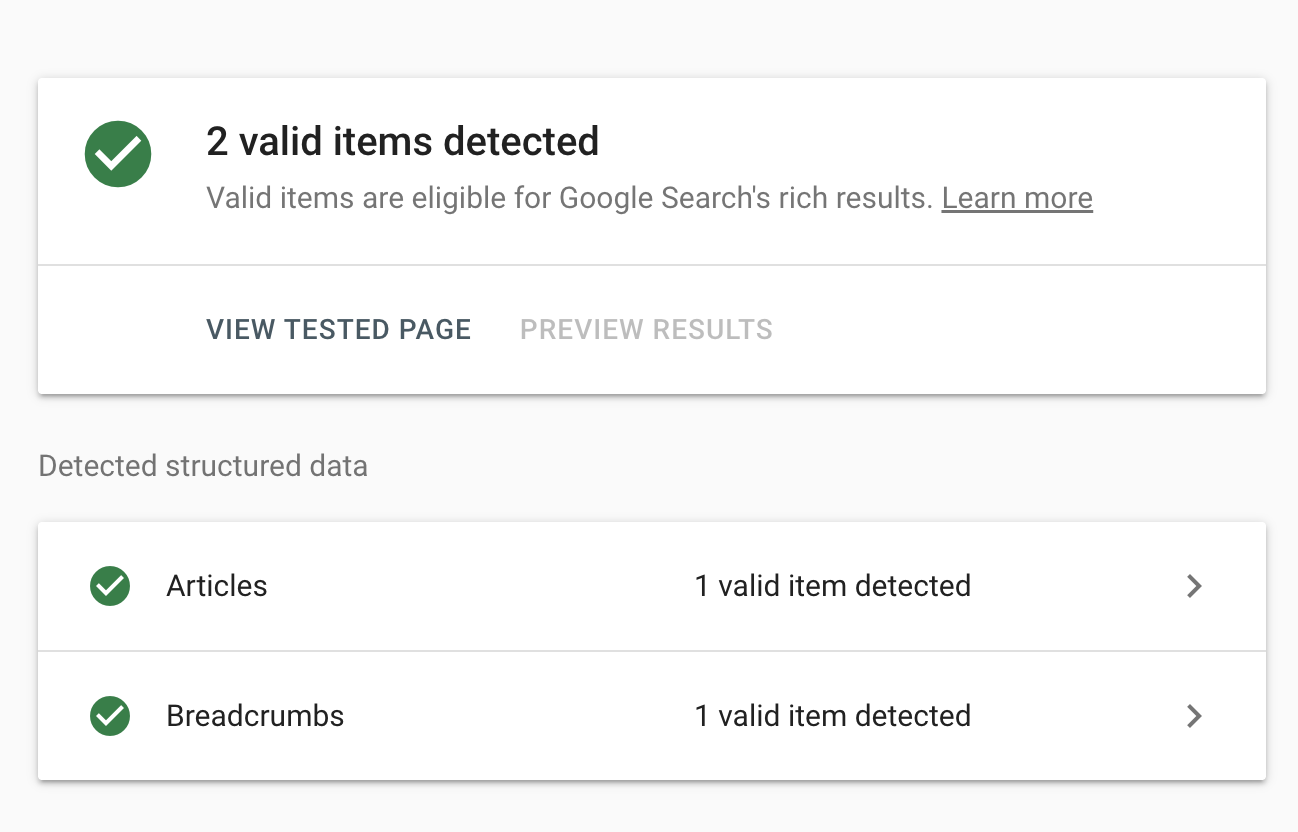
Establishing an Automated Validation Pipeline
In professional software development, you wouldn’t deploy code without running unit tests. Structured data should be treated with the same rigor. Relying on online manual testers is insufficient for large-scale applications. Instead, you should implement an automated validation script in your CI/CD pipeline.
The "Check-After-Build" Workflow
Your validation script should perform the following automated tasks:
- Fetch the rendered HTML from your production-ready build.
- Extract all
application/ld+jsonblocks. - Parse and Validate the JSON syntax.
- Enforce Schema requirements, ensuring that every required property (e.g.,
headlinefor anArticle,logofor anOrganization) is present. - Verify content parity, checking that the
headlinein the JSON-LD matches the text inside the page’s<h1>tag.
By incorporating this script into your npm run build process, you ensure that any breaking changes—such as a deleted field in your CMS or a refactored component—are caught before they ever reach your users.
Conclusion: The Path Forward
Structured data is a fundamental layer of the modern web. It is the language through which we communicate the intent and veracity of our content to the machines that index and serve it. For Next.js developers, the transition from manual, error-prone implementation to a type-safe, automated, and centralized strategy is a mark of professional maturity.
By building reusable components, strictly adhering to Schema.org standards, and treating your markup as a testable part of your codebase, you can ensure that your site remains visible, authoritative, and ready for the future of search. Remember: structured data isn’t a silver bullet for rankings, but it is a prerequisite for clarity. In an increasingly crowded digital landscape, being understood is the first step toward being found.

 Lina Irawan
 Asro
Asro

 Nana
Nana
 Rifan Muazin
 Ali Ikhwan
 Evan Lee Salim
