
 Lina Hope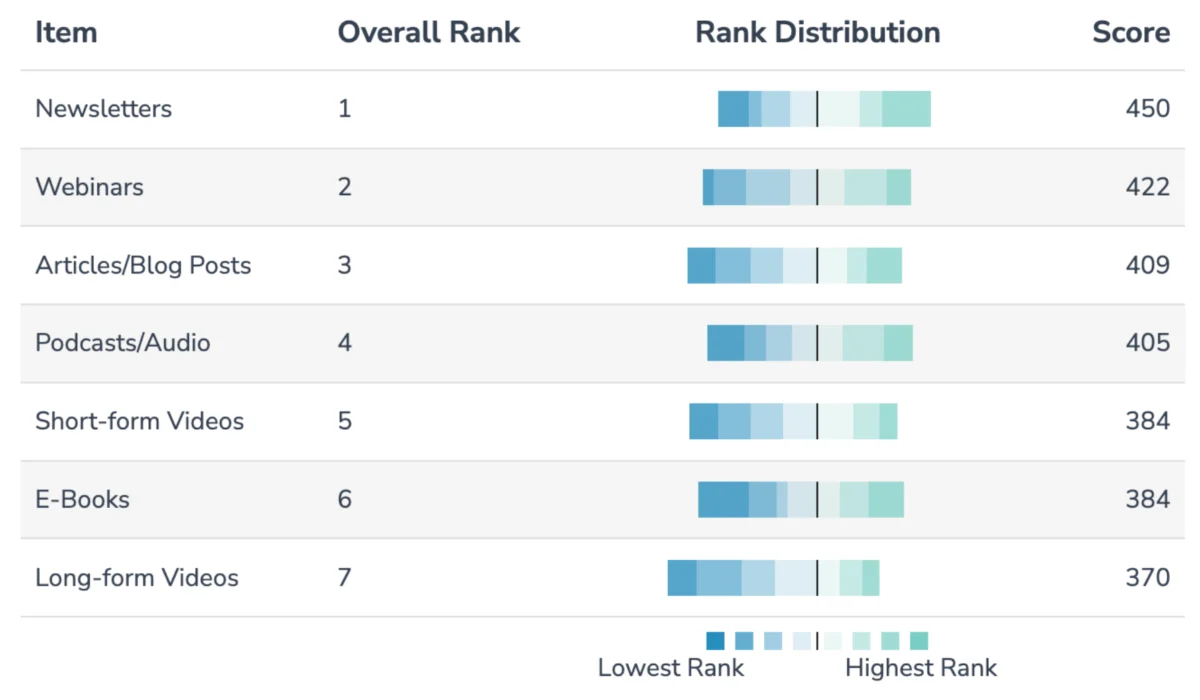
In the modern digital ecosystem, marketing leaders are not suffering from a lack of information; they are suffering from a chronic surplus of it. Every day, the average executive’s inbox and social media feeds are bombarded by a relentless deluge of white papers, tactical "how-to" guides, podcast episodes, and LinkedIn thought-leadership posts. The result is not an informed workforce, but an overwhelmed one.
As the noise floor rises, the industry is reaching a critical inflection point. Marketing strategists are realizing that the traditional "link-farm" newsletter—a static collection of headlines and URLs—is no longer a viable tool for engagement. To remain relevant, brands are moving toward a new paradigm: the "curated debrief."
At the forefront of this shift is Convince & Convert (C&C), which recently announced the retirement of its long-standing newsletter, ON, in favor of a revamped, insight-driven publication titled The Trendline. This transition highlights a broader industry trend: the move from passive content distribution to active, strategic value-add.
The Data-Driven Catalyst: Why Newsletters Still Rule
While short-form video and social media engagement dominate the headlines, internal audience research reveals a surprising truth about how industry leaders actually consume information.
In a recent annual survey of its readership, Convince & Convert polled marketing professionals on their preferred formats for learning about industry trends. The results were categorical: newsletters were ranked as the primary source of intelligence, outpacing podcasts, webinars, and long-form blog posts by a significant margin.
The data suggests that while other mediums are excellent for entertainment or deep-dives, the newsletter occupies a unique "utility" space. It is the only format that fits seamlessly into the morning workflow of a busy executive. Respondents noted that newsletters were nearly twice as likely to be their "go-to" source compared to any other medium.
This preference is rooted in efficiency. A well-constructed newsletter serves as a filter. In an age of algorithmic chaos, the audience is effectively outsourcing their discovery process to trusted curators who can distinguish between fleeting trends and fundamental shifts in the marketing landscape.

The Evolution of Strategy: From ‘ON’ to ‘The Trendline’
The decision to rebrand and restructure Convince & Convert’s flagship email wasn’t a cosmetic change; it was a response to evolving consumption habits. The previous iteration, ON, relied on a traditional format—linking to external content like podcasts and blog posts. While the content was high-quality, it required the reader to do the "heavy lifting" of clicking, reading, and synthesizing information.
"My theory is that marketing leaders don’t need more content. They need better filters," says the team at C&C.
To bridge this gap, The Trendline was engineered to provide value upfront. The philosophy is simple: the reader should be able to gain a strategic insight without ever leaving their inbox. While links to deeper research remain, they are now secondary to the core synthesis provided within the email itself. This shift recognizes that in today’s attention economy, a brand that respects the user’s time is a brand that earns the user’s trust.
The Anatomy of a Modern Newsletter
The shift to The Trendline is characterized by four major pillars designed to maximize cognitive efficiency for the reader:
- The Debrief Perspective: Rather than merely reporting on what happened, the content focuses on why it matters. This provides a "strategic lens" that helps marketers contextualize news within their own decision-making processes.
- Compact Formatting: By imposing strict guidelines on length and structure, the publication ensures that complex topics are distilled into digestible, high-impact segments.
- The "Ownable" Metric: Through the implementation of "Sound Off"—a direct, interactive polling mechanism at the end of each issue—the team can track engagement in a way that is more granular and meaningful than traditional open or click-through rates.
- Actionable Synthesis: Every edition is designed to initiate thought rather than just summarize events. By providing questions for the reader to consider, the newsletter transforms from a passive read into a professional development tool.
The Implications for Marketing Agencies and Brands
The transition at Convince & Convert serves as a case study for any brand currently utilizing email marketing. The traditional playbook—driven by SEO goals and traffic-chasing—is facing diminishing returns.
When presenting to high-level decision-makers like CMOs, the requirement is no longer "more data," but "better synthesis." Executives do not have the time to parse through twenty charts to find a takeaway; they require the takeaway to be presented alongside the context needed to act on it.
This shift has direct implications for how content teams should operate. Producing a "value-forward" newsletter requires more time, more expertise, and a deeper commitment to editorial rigor than simply aggregating links. However, the reward is an owned channel that serves as a high-authority bridge between the agency and its audience.

The Future of Engagement: Building Authority through Trust
As the digital landscape becomes increasingly fragmented, the value of owned media channels is reaching an all-time high. Social media platforms may change their algorithms, and search engines may alter their ranking factors, but a direct line of communication to a curated list of professionals remains the most stable asset in a marketer’s portfolio.
The lessons from this pivot are clear:
- Audit Your Value Proposition: Stop measuring success solely by the number of clicks. Start measuring it by the degree to which your content helps the reader solve a problem or make a smarter decision.
- Listen to the Audience: The shift to The Trendline was not based on industry best practices, but on direct, specific audience feedback regarding their pain points.
- Optimize for the Inbox: Design content for the environment in which it is consumed. If the reader is on mobile or in a high-pressure work environment, make the core message immediately accessible.
Conclusion: The New Mandate
The era of "content for content’s sake" is coming to an end. In its place is a mandate for precision, utility, and strategic foresight. As Convince & Convert demonstrates, the future of email marketing isn’t about being the loudest voice in the room; it’s about being the most useful one.
For marketing leaders, the task ahead is to stop acting as content producers and start acting as intelligence officers. By curating, filtering, and synthesizing the vast expanse of industry data, brands can transition from being a source of noise to being a source of clarity.
Whether it is through the new structure of The Trendline or similar initiatives across the industry, the message is uniform: the modern audience is hungry for signal in the static. Those who provide it will secure the attention, trust, and loyalty of the next generation of decision-makers. The newsletter, once dismissed as a legacy tool, has re-emerged as the most potent weapon in the strategic marketer’s arsenal—provided it is used to teach, to challenge, and to simplify, rather than just to inform.


 Ammar Sabilarrohman
 Sagoh
Sagoh
 Raul Delapena Setiawan
 Reynand Wu

 Azzam Bilal Chamdy
 Ali Ikhwan