
 Lina Hope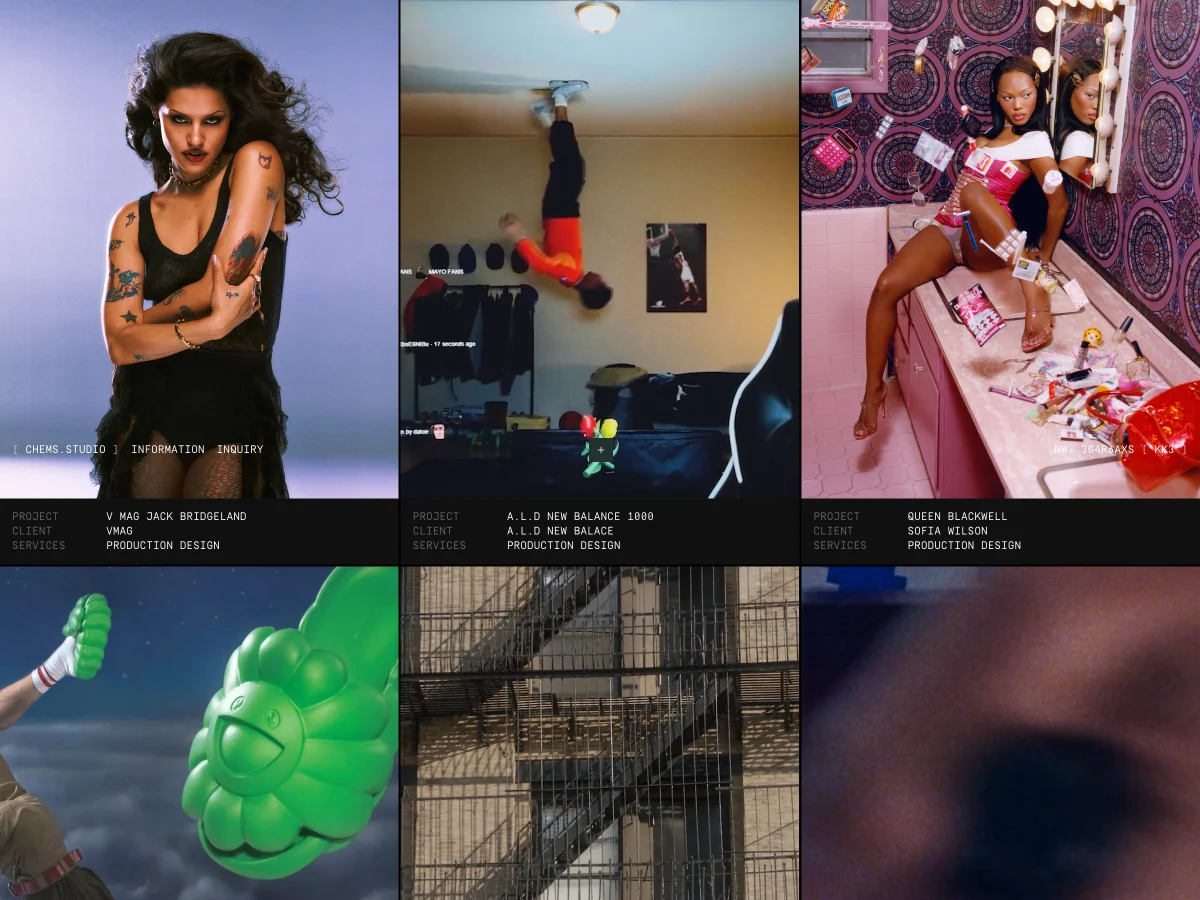
In an era where digital portfolios often prioritize flashy, ephemeral trends over long-term utility, the recent collaboration between New York City’s Chems.Studio and their lead digital designer marks a significant shift in creative web development. By moving away from the "portfolio as a marketing brochure" model and toward the "archive as a living organism," the studio has successfully navigated the challenge of organizing years of diverse creative output into a single, cohesive visual language.
The Challenge: Organizing Chaos
Chems.Studio, a practice operating at the intersection of fashion, culture, identity, and movement, has built a reputation for searching out honest imagery and meaningful storytelling. As their body of work expanded, the studio faced a common dilemma: how to house disparate projects—ranging from high-fashion campaigns to intimate set designs and experimental films—without flattening their individual nuances.
The objective was not merely to showcase the latest work, but to construct a digital home where every project exists with equal significance. The resulting website is a testament to the idea that a digital archive should allow visitors to wander, discover, and synthesize their own interpretations of the studio’s journey.
A Chronology of the Design Process
The development of the site was a study in restraint and architectural thinking. The process can be categorized into three distinct phases:
- Foundational Structuring (The Grid): The designer opted for a consistent three-column grid. Unlike traditional layouts that force content into rigid boxes, this grid establishes a rhythmic cadence. Whether on the homepage’s vertical sequence or the horizontal narrative of individual project pages, the system remains constant while the tempo changes.
- Navigation as Spatial Experience: The development team focused on the "feel" of navigation. By utilizing Swup.js, the transitions between the archive and informational pages were made to feel like moving through physical rooms rather than clicking through separate browser documents. This continuity minimizes the "interruption effect" often felt when browsing digital galleries.
- The Integration Phase: The final stage involved building a flexible CMS (Content Management System) that would allow the studio to add future projects without requiring a redesign of the site’s underlying logic.
Supporting Data and Technical Framework
The project relies on a lightweight, performance-oriented stack designed to withstand the test of time. The technical specifications highlight a commitment to both aesthetic minimalism and functional robustness:

- Platform: Built on Webflow, providing the studio with the agility to manage and scale the archive as their creative portfolio grows.
- Navigation: Powered by Swup.js, enabling near-invisible page transitions that preserve the user’s sense of place.
- Media Handling: A custom Vimeo API integration was developed to ensure that film content feels natively embedded within the interface, rather than existing as external, third-party embeds.
- Typography: A strictly monospaced typeface was selected to evoke the feeling of production notes and archival catalogues. This choice serves a dual purpose: it provides a neutral, technical anchor for the expressive imagery and reinforces the "archive" motif.
Professional Perspectives on Design Philosophy
When asked about the design philosophy behind the project, the creators emphasized the concept of "Designing for Time." The guiding principle was that creative practices are inherently fluid; campaigns cycle out, and visual identities evolve. A website, therefore, should not be a snapshot of a specific moment, but a framework that welcomes change.
"The website shouldn’t compete with the work," the designer noted during a project review. "It needs to be quiet enough to age well. By removing unnecessary information—relying on images for the rhythm and using text only for necessary orientation—we allow the visitor to decide where to look next."
This "image-first" approach is balanced by the strategic use of silence. By minimizing decorative text and unnecessary UI elements, the interface acts as a silent host. The animation, too, is restrained; there are no loops for the sake of decoration. Every movement, whether a scramble-text animation or a page transition, serves a functional role in guiding the user or reinforcing the archival nature of the platform.
Implications for the Creative Industry
The release of this archive represents a broader shift in digital design. For creative studios, the implications are three-fold:
1. Moving Beyond the Portfolio
Traditional portfolios are often designed to sell a service. An archive, conversely, is designed to document a legacy. This project demonstrates that by focusing on the latter, studios can actually achieve more effective brand storytelling. By allowing the work to speak through a consistent, rhythmic structure, the studio builds more authority than a site that updates its design every time a trend changes.

2. The Return of the "Quiet" Interface
In an attention-economy landscape, designers are often tempted to use intrusive animations and complex interactions to grab user attention. Chems.Studio proves the efficacy of the "quiet" interface. By prioritizing performance and consistency, the site actually keeps users engaged for longer periods. The lack of visual clutter encourages deeper exploration, effectively turning the visitor into a participant in the archive’s narrative.
3. Sustainability in Digital Assets
Perhaps the most critical implication is the focus on longevity. Many creative websites become obsolete within two to three years as technologies shift or design trends move on. By utilizing a "system-first" approach, the designers have created an asset that is likely to remain relevant for much longer. The site is a framework that can accommodate new styles of work without needing to be torn down and rebuilt.
Conclusion: A Living Legacy
The Chems.Studio archive is not just a collection of past projects; it is a pedagogical tool that explains the studio’s evolution through visual rhythm and architectural precision. By rejecting the "quick fix" of contemporary web design, the team has created a space that honors the past while leaving the door wide open for future innovations.
As the creative industry continues to grapple with the tension between constant content production and the need for meaningful documentation, this project serves as a beacon. It reminds us that the best design is often the design that knows when to disappear, allowing the work itself to hold the center stage. The result is a platform that does not just show what the studio has done, but perfectly encapsulates how they think, creating a lasting digital footprint that will undoubtedly influence the next generation of creative archives.

 Sagoh
Sagoh
 Asep Darmawan
 Raul Delapena Setiawan
 Reynand Wu

 Azzam Bilal Chamdy
 Ali Ikhwan