
 Ali Ikhwan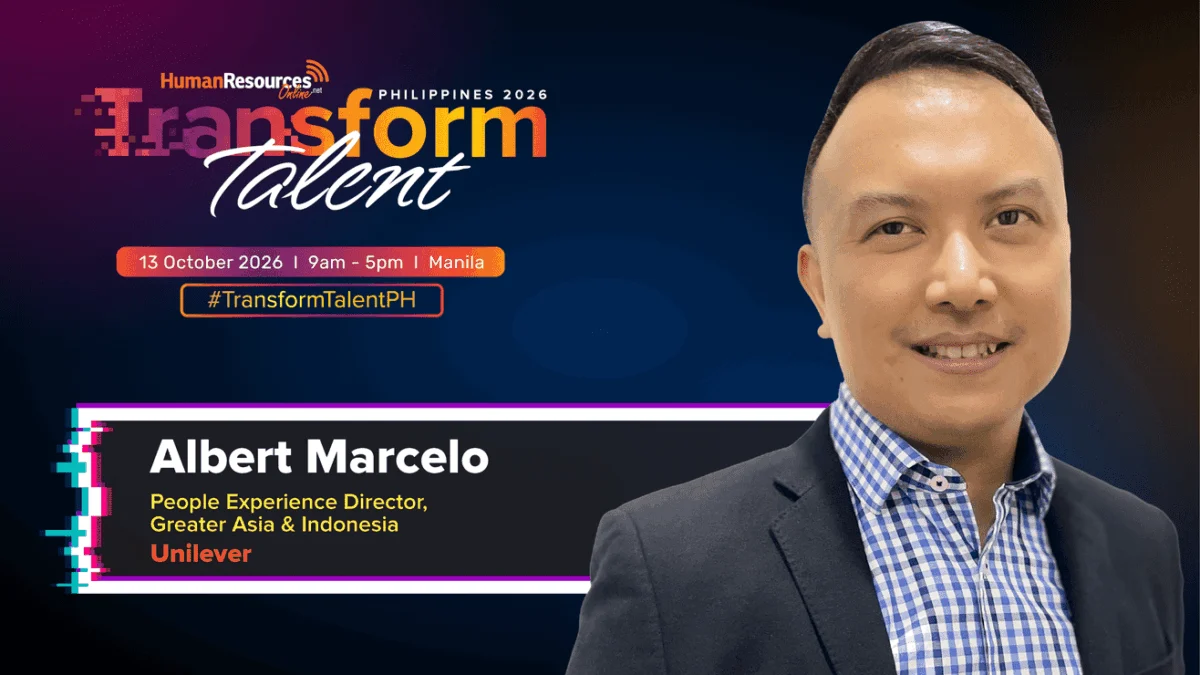
In an era defined by rapid technological disruption and a fundamental shift in the employer-employee social contract, the role of Human Resources has transcended traditional administrative boundaries. No longer merely a support function, HR is now the engine room of organizational transformation. At the forefront of this evolution is Albert Marcelo, People Experience Director for Greater Asia and Indonesia at Unilever.
With a career spanning over two decades, Marcelo has become a pivotal figure in navigating the complexities of global workforce change. As the industry prepares for the Transform Talent Philippines 2026 conference, Marcelo’s insights offer a blueprint for leaders seeking to move beyond superficial engagement programs toward a model of deep, meaningful workplace transformation.
Main Facts: The Shift from HR to People Experience (PX)
The core of Marcelo’s philosophy lies in a simple yet profound realization: employee engagement is not a product of corporate perks or isolated initiatives. Instead, it is the natural byproduct of an environment built on three pillars: Purpose, Growth, and Empathetic Leadership.
At Unilever, one of the world’s most recognized consumer goods companies, the transition from "Human Resources" to "People Experience" (PX) signifies a strategic pivot. While HR often implies the management of a resource, PX focuses on the holistic journey of the individual within the organization. Marcelo argues that employees disengage not because of a lack of office "fun" or generic wellness programs, but because they lose sight of why their work matters or feel their professional trajectory has plateaued.
Marcelo’s approach is particularly relevant in the current economic climate of Greater Asia and Indonesia, where talent competition is fierce and the "Great Re-evaluation" has led workers to prioritize psychological fulfillment alongside financial stability. By focusing on "meaningful work," Marcelo aims to bridge the gap between corporate objectives and individual aspirations.
Chronology: A Career Built on Navigating Transformation
Albert Marcelo’s journey to his current role at Unilever is a testament to the evolving nature of the HR profession. Over the past 20 years, he has witnessed—and led—major shifts in how global organizations manage their most valuable asset.
- The Early 2000s: The Administrative Era. Like many of his peers, Marcelo’s early career coincided with an HR landscape focused on compliance, industrial relations, and standardized processes.
- The Mid-2010s: The Talent War. As globalization accelerated, Marcelo’s focus shifted toward talent acquisition and retention strategies in the highly competitive Asian markets. This period marked the beginning of his focus on "Growth" as a primary retention tool.
- The Post-Pandemic Pivot: The global health crisis acted as a catalyst for Marcelo’s current focus on "People Experience." The blurring of lines between work and home necessitated a more empathetic, purpose-driven leadership style.
- The Road to 2026: Today, as he prepares to address the Transform Talent Philippines 2026 conference, Marcelo is championing a "Bigger Picture" view of HR. He encourages professionals to act as change agents who challenge the status quo rather than just maintaining it.
This chronological progression reflects a broader industry trend: the movement from "managing people" to "designing experiences" that empower them.
Supporting Data: Why "Purpose" and "Growth" are the New Currency
To understand why Marcelo’s strategies are effective, one must look at the broader data surrounding the modern workforce. According to recent global engagement studies (such as those by Gallup), organizations with high employee engagement report 21% higher profitability. However, engagement levels globally remain stubbornly low, often hovering around 20-23%.
Marcelo’s focus on Growth is supported by data showing that "lack of career development and advancement" is consistently cited as the number one reason employees quit their jobs—outranking even total compensation in many sectors. Furthermore, LinkedIn’s Workplace Learning Report suggests that 94% of employees would stay at a company longer if it invested in their career development.
The focus on Purpose is equally data-driven. A study by McKinsey & Company found that employees who say they are "living their purpose" at work are 6.5 times more likely to report higher resilience and 4 times more likely to report better health. For a regional director like Marcelo, covering diverse markets like Indonesia and Greater Asia, purpose acts as the "cultural glue" that binds disparate teams together under a shared vision.
Official Responses: Insights from the People Experience Director
In a recent comprehensive dialogue with Mary Ann Bundukin, Marcelo unpacked the specifics of his leadership and engagement philosophy. His responses provide a rare look into the mindset of a leader managing thousands of employees across some of the world’s most dynamic markets.
The Duality of Impact
When asked what constitutes a "great day" at work, Marcelo highlighted the dual nature of modern HR. "A great day is when I can create impact at both ends of the spectrum," he noted. This involves the macro-level—implementing changes that affect thousands—and the micro-level—one-on-one coaching and problem-solving. This balance ensures that while the "system" (processes and technology) is optimized, the "soul" of the organization (the people) remains the priority.
The "Engagement Trio"
Marcelo was clear that engagement programs are often a band-aid for deeper systemic issues. He reiterated that people stay when:
- They see purpose: Understanding the "Why" behind the "What."
- They feel they are growing: Seeing a clear path for skill acquisition and advancement.
- They have caring leaders: Leaders who treat them as human beings, not just "headcount."
Leadership Philosophy: Purpose, Empowerment, Accountability
Marcelo’s leadership framework is built on these three pillars. He believes in being "honest about reality"—acknowledging challenges and what isn’t working—while simultaneously painting a picture of what is possible.
- Purpose: Creating clarity on the mission.
- Empowerment: Giving employees the freedom and confidence to make an impact.
- Accountability: Ensuring results are delivered and expectations are met.
"When people understand the ‘why,’ feel trusted to act, and know what’s expected of them, they’re capable of achieving far more than they often realize," Marcelo explained.
A Personal Mission to Teach
In a surprising personal revelation, Marcelo shared his aspiration to eventually teach at a university level. This desire to "bring experiences into a classroom setting" aligns with his professional focus on growth and development. It suggests that for Marcelo, the "Impact" he speaks of isn’t just about corporate KPIs, but about the long-term legacy of the next generation of leaders.
Implications: The Call to Action for HR Professionals
Marcelo’s upcoming session at #TransformTalentPH is not just a presentation; it is a call to arms for the HR community. The implications of his message are clear: the "status quo" in HR is no longer sufficient.
1. Challenging the Status Quo
Marcelo urges HR leaders to "think bigger." This means moving beyond the role of a "policy enforcer" and becoming a "business strategist." If a process is redundant or hinders the employee experience, HR must have the courage to simplify or eliminate it.
2. The Simplification of Work
In many large organizations, bureaucracy has become a barrier to engagement. Marcelo’s call to "simplify a process" is a direct response to the "complexity tax" that many employees pay daily. By streamlining operations, HR can free up employees to focus on "meaningful work" rather than administrative hurdles.
3. The Power of "Different Conversations"
Perhaps the most significant implication is the shift in how HR interacts with business leaders. Marcelo advocates for "different conversations"—moving away from just reporting metrics to discussing how leadership behavior and organizational culture are driving or hindering performance.
4. HR as a Community Catalyst
Finally, Marcelo emphasizes that the future of HR is about creating better outcomes not just for the organization, but for the communities they serve. This holistic view aligns with Unilever’s broader corporate social responsibility goals and suggests that the modern workplace is a critical ecosystem for social progress.
Conclusion: Preparing for the Future of Work
As Albert Marcelo prepares to take the stage at Transform Talent Philippines 2026, his message serves as a vital reminder: technology and systems are merely tools. The true heart of any successful transformation is the human experience.
By focusing on Purpose, Growth, and Accountability, Marcelo is not just managing a workforce; he is architecting a culture where people can thrive. For HR professionals attending the conference, the takeaway is clear: meaningful change doesn’t require a massive budget or a five-year plan—it starts with the simple decision to question an assumption and the courage to put people at the center of every strategy.
The transformation of talent in the Philippines and across Greater Asia will depend on leaders who, like Marcelo, are willing to "think bigger" and act with the conviction that behind every strategy is a person waiting to be empowered.
For those interested in joining the dialogue and learning from industry leaders like Albert Marcelo, the Transform Talent Philippines 2026 conference offers a unique platform for growth and networking. Register your interest today to be part of the conversation shaping the future of work.

 Pevita Pearce
 Suro Senen
 Laily UPN
 Iffa Jayyana
 Rifan Muazin

 Lina Hope
 Lina Irawan