
 Basiran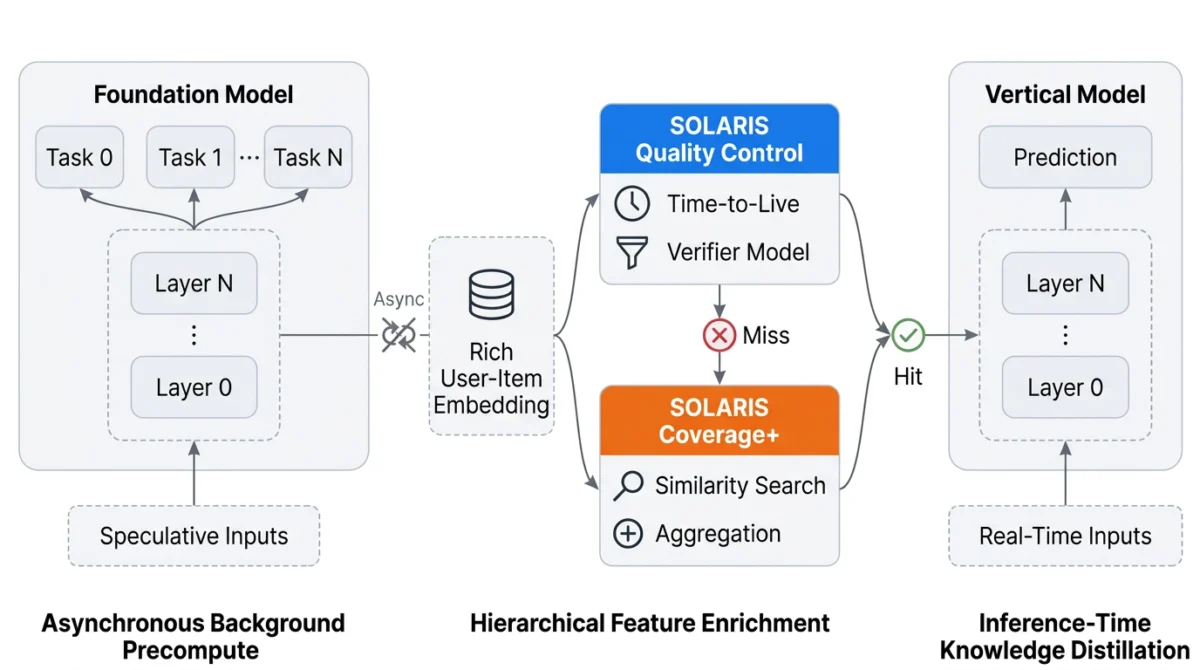
In the rapidly evolving landscape of digital advertising, the barrier between user intent and commercial discovery is being dismantled. Last year, Meta introduced GEM, an ambitious foundation model for recommendation systems (RecSys) that marked a departure from traditional, siloed algorithmic approaches. By adopting an LLM-inspired paradigm, Meta transformed how it serves ads across its massive family of apps.
Today, Meta is unveiling the next generation of GEM—a central "brain" that does not merely optimize ads for specific platforms like Facebook or Instagram, but instead orchestrates a unified, cross-platform intelligence ecosystem. This evolution represents a significant shift in computational strategy, bending the scaling curve to deliver unprecedented performance gains for advertisers while deepening the platform’s understanding of user intent.
Main Facts: The Evolution of the Central Brain
The 2026 iteration of GEM is not just an update; it is a fundamental architectural overhaul. Where previous systems relied on isolated optimizations for individual surfaces, the new GEM functions as a singular, unified foundation model.
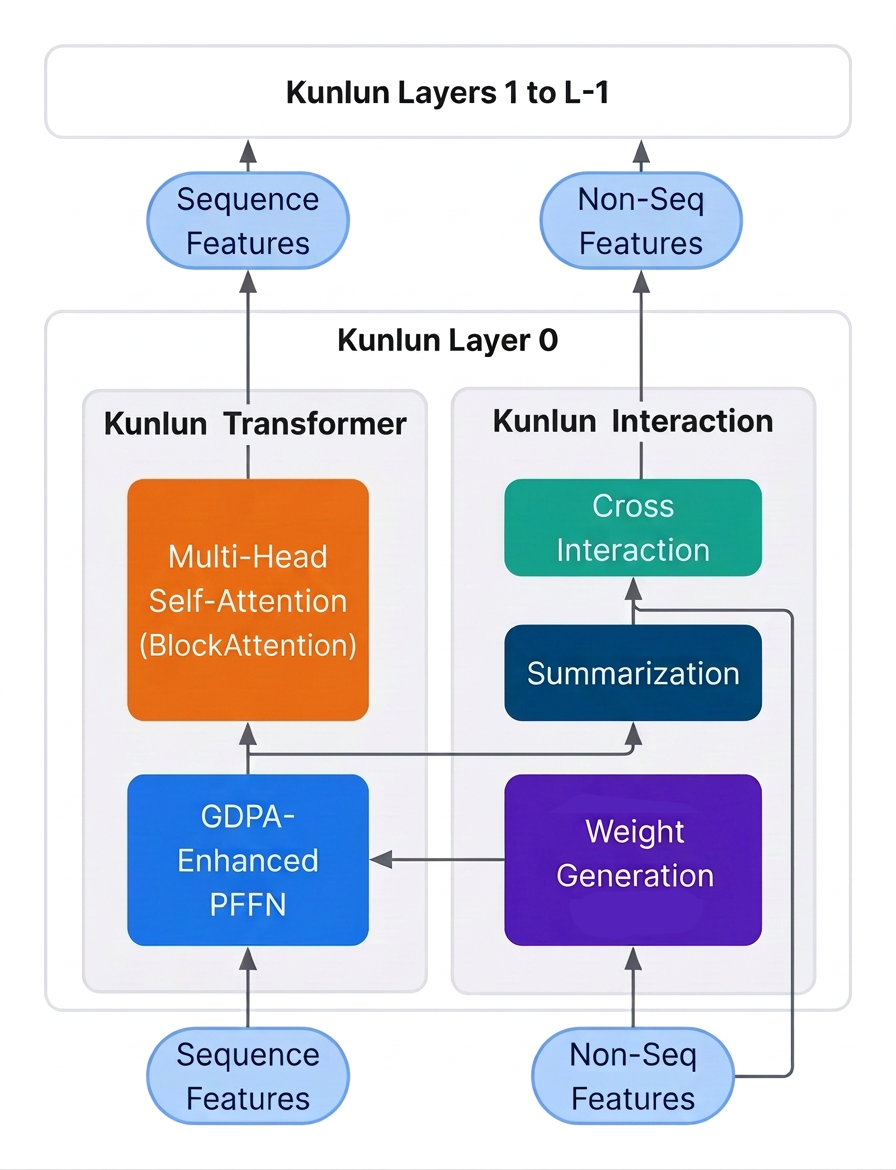
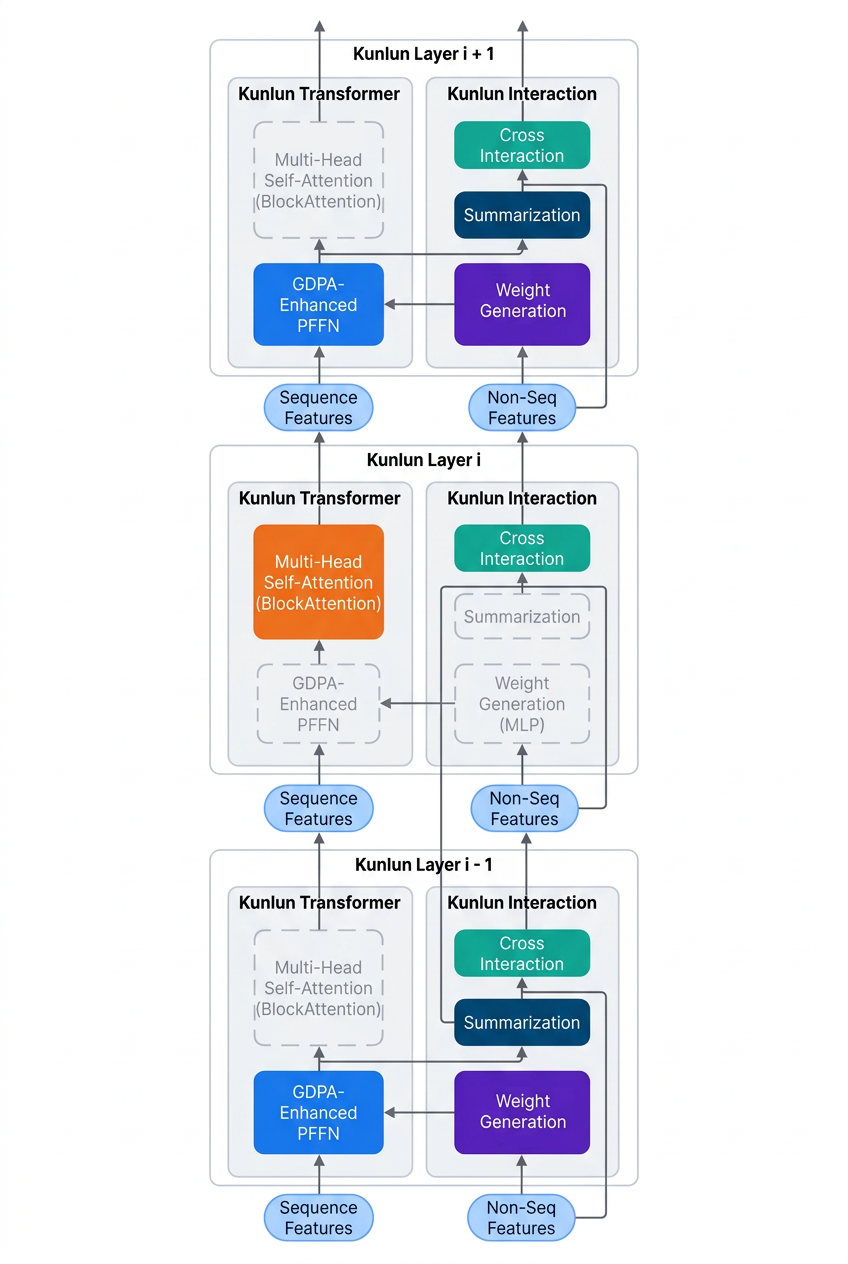
At its core, the system utilizes "Kunlun," a proprietary, LLM-style architecture co-designed with state-of-the-art GPU hardware. This allows the model to process 2.5 times the complexity of its predecessor. By shifting to a centralized intelligence model, Meta has achieved a 18.9% improvement in conversion rates and a 12% boost in click-through rates (CTR) across its ecosystem. These results are not restricted to a single funnel stage; they span the entire spectrum from upper-funnel brand awareness to deep-funnel conversion goals like mobile app installs and off-site purchases.
A Chronology of Innovation
The journey to GEM began with the realization that traditional recommendation models were hitting a performance ceiling. As Meta’s ecosystem expanded to over 3.6 billion daily users, the fragmentation of independent prediction systems—one for Facebook, one for Instagram, one for Reels—created inefficiencies.
- 2025 (The Foundation): Meta introduced GEM, establishing the first LLM-inspired paradigm for ads recommendation. This initial model proved that RecSys could benefit from the same scaling laws that drove the generative AI revolution.
- 2026 (The Scaling Frontier): Meta moved to consolidate these disparate surfaces into a single, cohesive engine. The introduction of the Kunlun architecture allowed for deeper, wider models that could handle heterogeneous data streams without sacrificing latency.
- Mid-2026 (Efficiency Milestone): Meta successfully doubled its End-to-End (E2E) training efficiency to 20–25% Model FLOPs Utilization (MFU), scaling total training FLOPs by 4x. This allowed for the integration of "Solaris" (speculative precomputation) and "LoopFM" (structured representation), solving the bottleneck of real-time inference latency.
Supporting Data: The Quantitative Impact
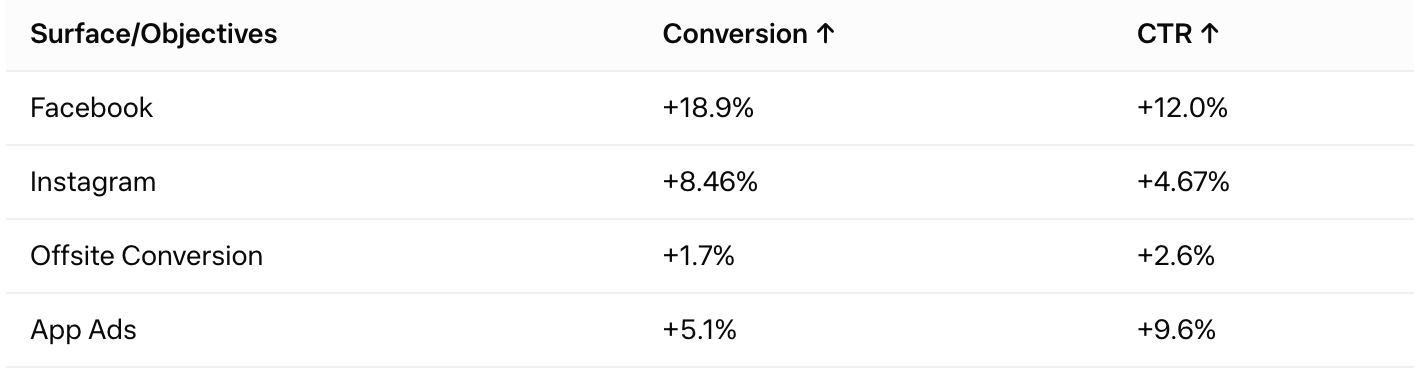
The efficacy of the new GEM model is best illustrated by its performance metrics. Beyond the headline 18.9% conversion uplift, the model’s impact is granular and widespread.
Regional and Surface-Specific Gains
- Facebook: 5.8% conversion uplift.
- Instagram: 4.1% conversion uplift.
- Off-site Conversions: 1.6% conversion uplift for targeted users.
These figures represent a significant competitive advantage for advertisers. By utilizing a shared expert framework, the model allows "data-rich" tasks—such as predicting clicks on high-traffic feeds—to inform and improve "data-sparse" tasks, such as specific off-site purchase conversions. This cross-pollination of data ensures that even niche ad objectives benefit from the collective intelligence of the entire Meta ecosystem.
Technical Pillars of the GEM Architecture
To achieve these results, Meta’s engineers focused on four primary technical breakthroughs:
1. Bending the Scaling Curve with Kunlun
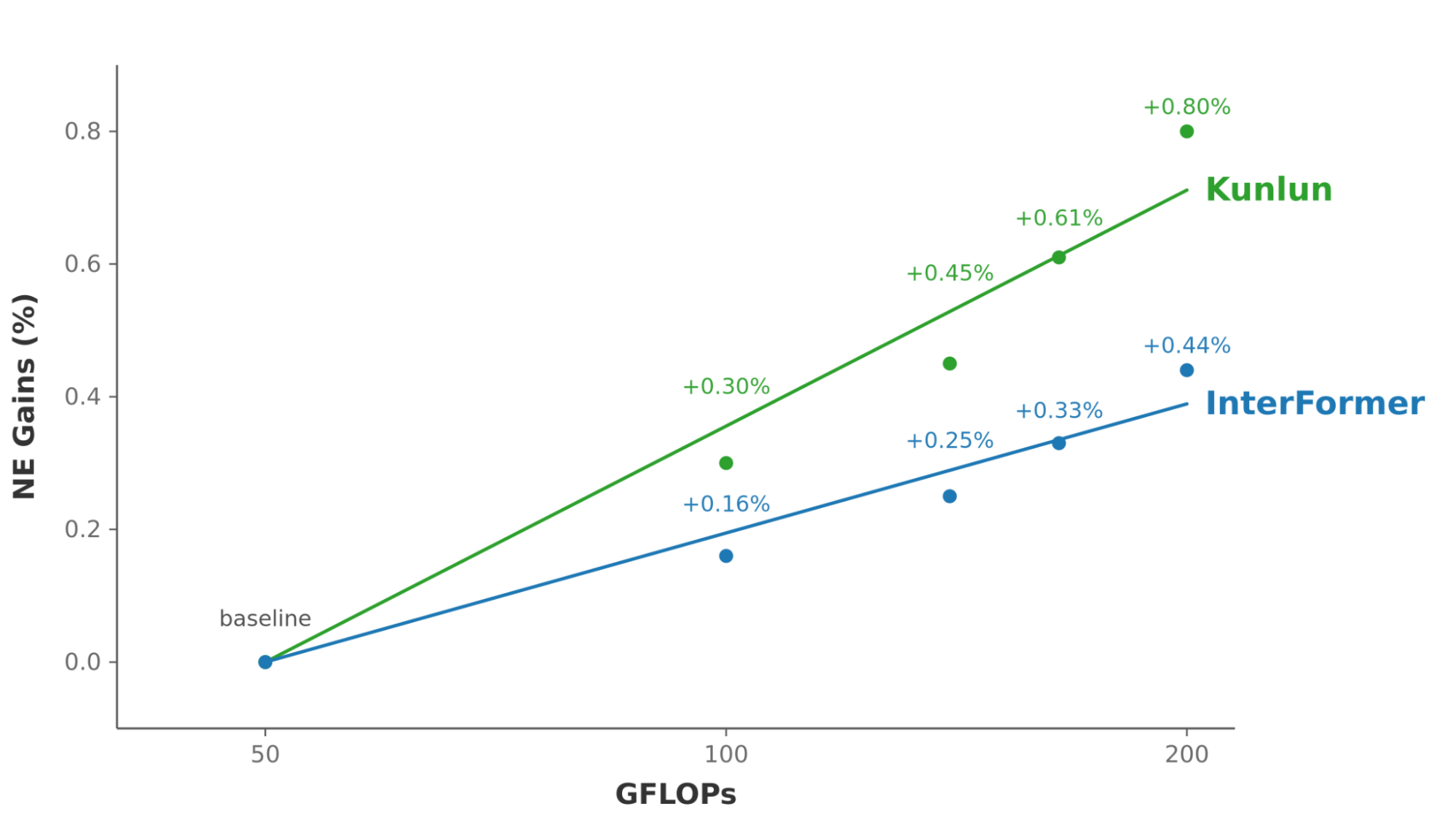
Traditional transformers struggle with the massive, heterogeneous features inherent in recommendation systems. Kunlun solves this by co-designing the model with GPU hardware, enabling long-context learning that mimics the emergent capabilities seen in frontier LLMs. The result is a model that grows in intelligence linearly with compute, rather than plateauing.
2. Intelligent Knowledge Transfer (LoopFM & Solaris)
The biggest challenge for any massive foundation model is serving it in real-time. Meta’s solution is two-fold:
- LoopFM: This technique compresses the "central brain" into a compact structure, allowing downstream vertical models to access historical user memory without the heavy compute cost of the full model.
- Solaris: Borrowing from speculative decoding in LLM serving, Solaris speculatively precomputes user-ad representations. By moving the compute "in time," the system delivers high-quality intelligence just as the ad request hits the server, bypassing traditional latency constraints.
3. The Cross-Domain Unified Engine
By implementing a "Cost-Free Data Mixing" strategy, Meta can now train on diverse data pipelines—ranging from short-form video interactions to complex purchase funnels—without the overhead of physically merging data. This unified training recipe ensures that the model remains stable even when switching between domains, preventing the "over-memorization" of recent, narrow data segments.
4. Training at LLM-Scale
Training a foundation model across thousands of GPUs requires more than just raw power; it requires orchestration. By developing custom kernels and 5D parallelism strategies, Meta has successfully pushed training efficiency to 25% MFU. This efficiency is the key to maintaining a cost-effective advertising ecosystem while simultaneously increasing model complexity.
Official Perspectives and Strategic Implications
For advertisers, the implications of this upgrade are profound. The shift toward a unified, full-funnel optimization engine means that a brand’s presence on Instagram is no longer isolated from its performance on Facebook.
"We are building toward LLM-scale long context," notes the engineering team. "This gives the model the ability to reason over longer spans of engagement, unlocking better ad relevance and helping advertisers connect with the right audiences more efficiently."
The transition to GEM also suggests a broader industry trend: the "RecSys-LLM convergence." As these systems become more capable of processing long-form video, image, and text contexts, the distinction between a "recommendation" and "generative reasoning" continues to blur.
The Future: Toward Autonomous Optimization
Looking ahead, Meta is setting its sights on even more ambitious goals. The team plans to incorporate organic and ads-based engagements across text, image, and video into a single, holistic understanding of user behavior. Furthermore, the introduction of "reasoning" capabilities into the post-training paradigm suggests that future iterations of GEM will not just predict if a user will click, but will understand why, leading to more relevant and less intrusive advertising experiences.
As Meta continues to scale these models on larger compute clusters, the barrier to entry for effective advertising will likely drop, as the system becomes better at identifying intent even with minimal signals. For the digital marketing industry, the message is clear: the era of manual audience targeting is being replaced by the era of the "Central Brain," where the model does the heavy lifting, allowing brands to focus on the creative essence of their message rather than the mechanical complexities of the delivery.
Acknowledgements
The development of the 2026 GEM model represents a monumental collaborative effort from hundreds of engineers, researchers, and data scientists across Meta. The team extends its gratitude to the entire organization, including key contributors across the machine learning, infrastructure, and ads product teams who collectively moved the frontier of recommendation systems to its current state of unprecedented scale and efficiency.


 Asro
Asro
 Jia Lissa
 Nana Wu
 Neng Nana
 Dwi Wanna
 Siti Muinah