
 Nana
Nana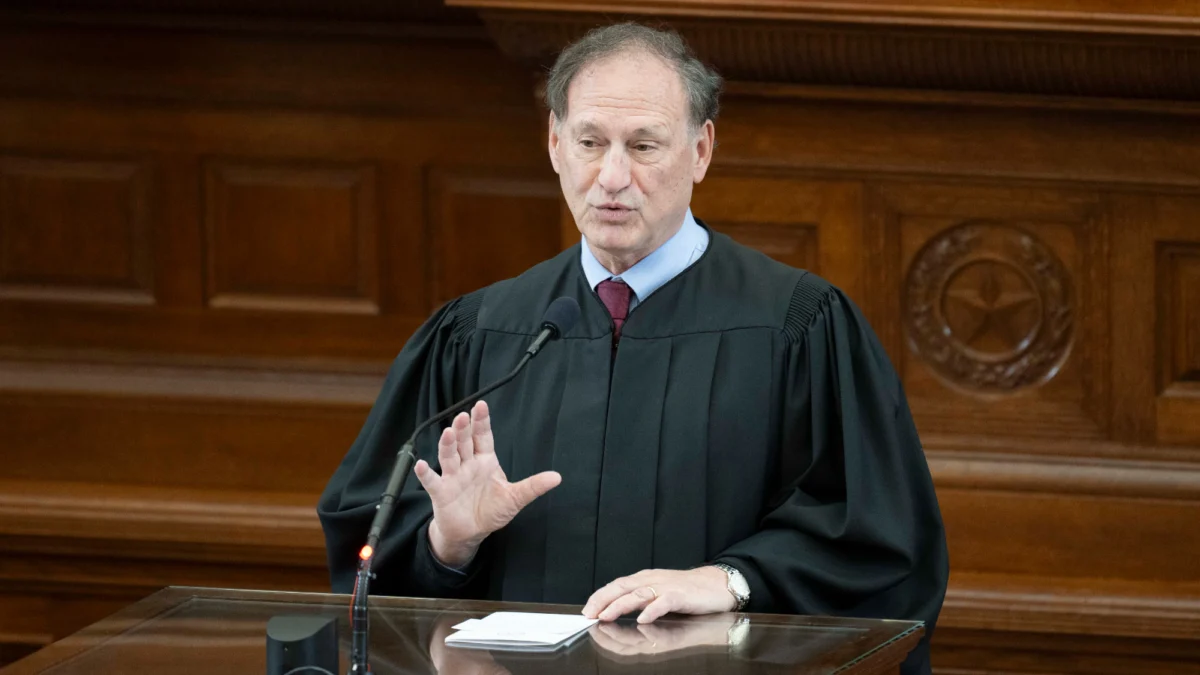
In a move that has reignited the national debate over judicial integrity and the financial entanglements of the highest court in the land, U.S. Supreme Court Justice Samuel Alito announced on September 28, 2026, that he would recuse himself from a pivotal climate change litigation: Suncor v. Boulder.
The decision, communicated via a brief letter from the clerk of the court, came just one week before the start of the Supreme Court’s new term. While the move was applauded by environmental advocacy groups as a necessary step to restore public confidence, it arrived only after months of mounting pressure and persistent questions regarding whether the Justice’s personal investment portfolio—which includes substantial holdings in the fossil fuel industry—posed a material conflict of interest.
The Core of the Conflict: Suncor v. Boulder
At the center of this controversy is a landmark lawsuit filed by Boulder, Colorado, against ExxonMobil and Suncor Energy. The case, which originated in 2018, seeks to hold these oil giants financially accountable for the staggering costs local governments have incurred due to climate-driven disasters.
Boulder’s legal argument rests on the claim that these companies were aware of the catastrophic potential of their products for decades, yet actively misled the public to prevent regulation. The city points to the 2013 historic flooding that destroyed 1,800 homes and caused billions in damages, as well as the 2021 Marshall Fire—the most destructive in Colorado history—as direct manifestations of a climate crisis exacerbated by fossil fuel emissions.
For the oil industry, the case represents an existential threat. They have repeatedly urged the Supreme Court to grant them "blanket immunity," arguing that such lawsuits are an improper "barreling ahead" of state-level litigation that could lead to a domino effect of liability across the country.
A Chronology of Resistance and Reversal
The path to Justice Alito’s recusal was not linear; it was marked by months of institutional friction and shifting narratives.
- 2018–2023: Boulder’s lawsuit works its way through lower courts. During this period, similar climate liability cases are filed across the nation, with several state courts placing them on hold pending a definitive word from the Supreme Court.
- February 2026: The Supreme Court agrees to hear the Suncor case. Justice Alito participates in the conference where the decision to grant certiorari is made. This participation remains a point of contention, as it is unclear whether his vote was the deciding factor in bringing the case before the Court.
- May 2026: A coalition of 30 advocacy groups, including the League of Conservation Voters and the Revolving Door Project, sends a formal letter to the Senate Judiciary Committee requesting an investigation into whether Alito’s stock holdings violate the Court’s 2023 Code of Conduct.
- June–August 2026: Research by Consumer Watchdog reveals that Alito holds stock in multiple companies facing similar climate-related litigation. Critics point out that his refusal to recuse creates an appearance of impropriety, especially given that he has recused himself from other cases in the past involving similar parties.
- September 28, 2026: With the clock running down to the start of the term, Justice Alito abruptly reverses his stance and announces his recusal from the Suncor case, offering no explanation for the change of heart.
Financial Data and the "Material Risk" Question
The scrutiny surrounding Justice Alito centers on his financial disclosure reports. As of August 2026, Alito reported holding individual stocks in over 25 major corporations, seven of which are in the fossil fuel sector. Furthermore, he maintains a mineral interest in Oklahoma worth up to $250,000.
Consumer Watchdog’s investigation found that two of the most significant companies in his portfolio—ConocoPhillips and Phillips 66—have specifically warned their investors about the "material risks" posed by the very type of climate litigation currently pending before the Supreme Court. By holding these stocks, critics argue, the Justice has a direct financial stake in the legal outcomes that shield these companies from massive environmental liability.
Legal ethicists, such as Arthur Hellman, professor emeritus at the University of Pittsburgh, have expressed bafflement at why a Supreme Court justice would choose to hold individual corporate stocks at all. While the Supreme Court adopted its first-ever code of conduct in 2023, the code remains largely self-enforced. It mandates that justices avoid situations where their impartiality might be questioned, yet it fails to address the foundational issue: the propriety of justices managing individual stock portfolios that overlap with their judicial docket.
Official Responses and the Ethics Defense
The Supreme Court has historically maintained a posture of institutional autonomy. Chief Justice John Roberts, in his 2011 year-end report, famously defended the current system, stating, "I have complete confidence in the capability of my colleagues to determine when recusal is warranted."
Justice Alito has previously echoed this sentiment. In a 2023 memorandum, he argued that if justices recused themselves whenever there was even a remote appearance of conflict, the Court would frequently lack a full bench, causing "substantial disruption and distortion" to the judicial process. This line of reasoning—prioritizing the efficiency of the court over the perception of impartiality—has become a cornerstone of the conservative defense regarding the current ethics crisis.
In a recent biography, author Mollie Hemingway offered a personal dimension to the controversy, suggesting that the stocks were inherited by Alito’s wife, Martha-Ann, and hold "sentimental value" that makes her disinclined to sell them. While this may explain the motivation behind the holdings, critics maintain that personal sentiment is not a sufficient justification for overriding the ethical obligations of a Supreme Court Justice.
Implications: The Long Shadow of Recusal
The implications of the Suncor recusal reach far beyond a single climate case.
1. The Question of "Decisive Votes"
Because Justice Alito participated in the February conference that granted certiorari, his influence on the case may already be baked into the proceedings. Even if he does not vote on the final ruling, the Court’s decision to hear the case at all—potentially with his assistance—remains a major point of criticism for those who believe the case was hand-picked by the industry to establish a favorable precedent.
2. The Future of Judicial Ethics
The move highlights the inadequacy of the current, toothless Code of Conduct. While Alito’s recusal "solves" the immediate problem of his participation in Suncor, it does nothing to address the systemic issue of justices owning individual stocks. As Professor Louis Virelli noted, the debate needs to shift from "what is required by the letter of the law" to "what is the right thing to do."
3. Public Perception and Institutional Legitimacy
The recurring nature of these recusal controversies has taken a toll on the Court’s public approval ratings. When the public perceives that a justice’s personal wealth is linked to the outcome of cases involving major corporations, the institution’s claim to impartial, objective jurisprudence is weakened. As the Center for Climate Integrity’s Mike Meno put it, "People have a very cynical view of this court, and actions like this only reinforce the public’s concerns about the court’s integrity."
Conclusion: A New Standard?
The decision by Justice Alito to step aside in Suncor v. Boulder may be a victory for ethics advocates in the short term, but it serves as a stark reminder of the fragile state of judicial oversight. By waiting until the final hour to recuse, Alito highlighted the very problem he sought to avoid: the appearance that the Court’s ethical standards are as malleable as the political winds.
As the Supreme Court moves into its new term, the pressure for more robust, enforceable, and transparent ethics rules will likely only intensify. The question remains whether the Court will continue to defend its tradition of self-regulation or whether the mounting public and professional scrutiny will force a fundamental shift in how the nation’s highest justices handle their private financial lives. Until then, the shadow of "downstream effects"—where personal investment potentially influences constitutional interpretation—will continue to loom over the bench.


 Laily UPN
 Dwi Wanna
 Evan Lee Salim
 Lina Hope
 Jia Lissa
 Suro Senen
 Ali Ikhwan