
 Sagoh
Sagoh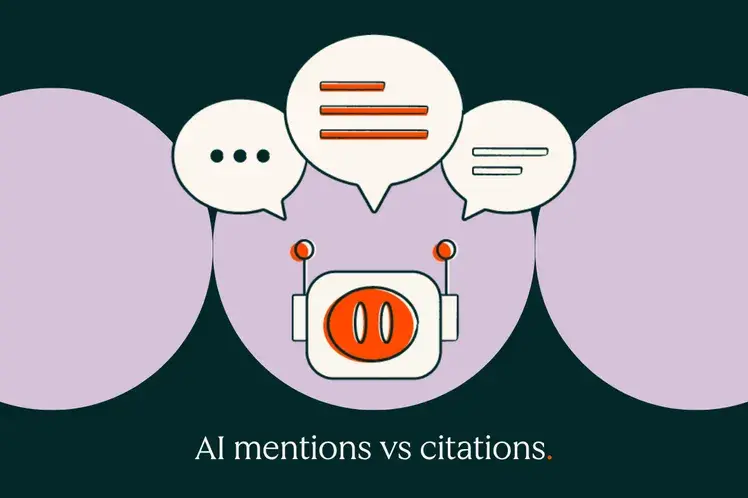
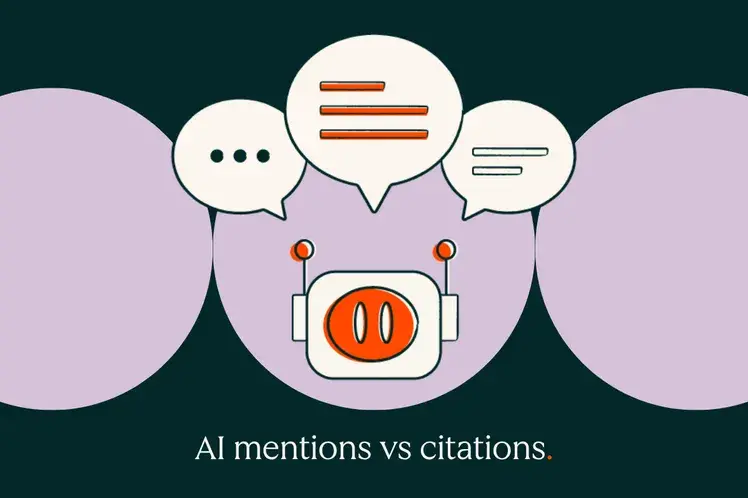
If you have been monitoring your brand’s footprint in the burgeoning world of AI-generated search, you have likely encountered a frustrating paradox: your company’s name appears frequently in AI summaries, yet your referral traffic remains stagnant. This disconnect is the defining challenge of the current search landscape.
The issue lies in a fundamental misunderstanding of Answer Engine Optimization (AEO). To fix your visibility, you must distinguish between an AEO mention and an AEO citation. If you are measuring the wrong metric, you are essentially flying blind while your competitors capture the high-intent traffic you should be owning.
The Core Distinction: Mentions vs. Citations
Answer engine optimization is the strategic evolution of Search Engine Optimization (SEO), necessitated by the shift from traditional link-based results to AI-synthesized responses.
- AEO Mentions: This occurs when an AI model (like Gemini, ChatGPT, or Perplexity) references your brand, product, or content within its narrative summary, but fails to provide a clickable link to your domain. You receive brand recognition, but the reader has no path to your website.
- AEO Citations: This occurs when the AI attributes its claim to your domain via a footnote, a source card, or a "Learn more" link. This is the "golden ticket" of the AI era—it is the only way to convert an AI answer into a measurable, trackable session.
Why the Gap Matters
Mentions are not useless; they serve as critical signals for entity recognition. By repeatedly naming your brand in specific topic clusters, you train the model to associate your domain with those concepts. However, they are not a proxy for performance. Citations are the only form of AI visibility that provides an attribution trail. Without them, your brand awareness exists in a vacuum, invisible to your analytics stack.
Chronology of a Shifting Landscape
The importance of this distinction has accelerated rapidly between 2025 and 2026.
- Mid-2025: Research from The Digital Bloom indicated that the overlap between traditional organic "Top 10" rankings and AI citations was roughly 76%. In this period, a strong SEO strategy was largely sufficient to capture AI traffic.
- Early 2026: That overlap plummeted to between 17% and 54%. This signals a fundamental market shift: AI engines are no longer merely "repackaging" traditional search results. They are creating an independent layer of visibility.
- Present Day: Brands that rely solely on legacy SEO are finding themselves mentioned in AI summaries but rarely cited, creating a "revenue gap" where brand awareness is high, but conversion potential is zero.
Supporting Data: The ROI of the Citation
The business implications of bridging this gap are significant. Studies, including those by Workshop Digital, have shown that AI-driven referral traffic often converts at a higher rate than standard organic traffic. Users arriving from an AI summary have already been "pre-educated" by the model; they are further down the funnel, possessing higher intent and lower friction.
Furthermore, the data shows a clear correlation between traditional authority and AI citation probability. Pages ranking first in organic search have a 33.07% chance of being cited in an AI Overview, while those in the tenth position drop to just 13.04%. While the two ecosystems are diverging, they remain tethered by the same fundamental requirement: trust.
Measuring the Invisible: A Strategic Framework
Because no native tool provides an automated "AI Visibility Report," marketing teams must adopt a rigorous manual or semi-automated auditing process.
The Five-Step Measurement Protocol
- Build a Fixed Query Set: Select 20–50 core queries that define your brand’s space, including branded, unbranded, and competitive comparisons.
- Maintain a Consistent Cadence: Weekly checks are the industry standard. This allows you to identify trends and filter out the "noise" caused by real-time model variations.
- Log Data Granularly: Record both the mention status (Yes/No) and the citation status (Yes/No) for each engine (ChatGPT, Google AI Overviews, Perplexity, Copilot).
- Calculate Divergence: If your mention rate is climbing while your citation rate stays flat, you are failing to provide the engine with a "citeable" piece of content.
- Competitive Benchmarking: Track your competitors alongside your own domain. If a competitor is cited for a query where you are merely mentioned, analyze their specific page structure and schema—they are doing something your content is not.
Solving the Attribution Gap in GA4 and HubSpot
Many brands report "zero" AI traffic simply because they haven’t configured their analytics to look for it. According to research from MeasureU, roughly 22% of ChatGPT traffic is misclassified as "(not set)" or "Direct" in standard GA4 configurations.
Technical Implementation
- GA4 Channel Grouping: Create a custom channel for "AI Search" or "AI Referral." Populate this with the major domains:
chatgpt.com,perplexity.ai,bing.com,claude.ai, andgemini.google.com. Use regex filters to ensure all subdomains are captured. - HubSpot Pipeline Integration: For B2B firms, go further. Create a contact property for "AI Source" and trigger automated workflows when a user enters your site via these domains. This allows you to tie specific AI citations directly to revenue and pipeline attribution, finally proving the ROI of your AEO efforts.
Strategies for Turning Mentions into Citations
If you are being mentioned but not cited, the AI is "aware" of you but does not "trust" your content enough to send its users to you.
1. Clarify Your Entity Model
Ensure your brand, products, and solutions are described consistently across your entire digital footprint. Use "semantic triples"—direct, declarative statements like "[Brand] is a [category] that helps [audience] [outcome]."
2. Answer-First Content Structure
AI models prioritize content that provides an immediate answer. Avoid "fluff" or lengthy introductions. Place the core answer to the user’s question in the first sentence of the section, then follow with supporting detail.
3. Implement Validated Schema
Structured data (JSON-LD) acts as the bridge between your content and the machine’s understanding. Prioritize Article, FAQPage, HowTo, and Organization schema to provide explicit relationships between your content and your brand entity.
4. Lean into E-E-A-T
Google’s E-E-A-T (Experience, Expertise, Authoritativeness, and Trustworthiness) is the gold standard for AI trust. Ensure your content has:
- Clear author bylines with linked professional credentials.
- Original research, data, or proprietary examples.
- A recent "last updated" date to signal accuracy.
5. Refresh Cycles
AI models operate on a moving target. Build an editorial calendar that reviews high-performing pages every 90 days. If your competitor refreshes their content with more current stats or better examples, the engine will favor them, and you will lose your citation.
The Future of AI Search Reporting
The most important takeaway for leadership is to view AEO measurement as directional. Because AI answers vary based on user location, query history, and model updates, a single snapshot is meaningless. Look for sustained patterns over a minimum of four to eight weeks.
When you can tell your stakeholders, "Our citation rate for this cluster increased by 18 points over the last quarter because we optimized our structure and schema," you have successfully transitioned from guessing to managing. AEO is not a "set and forget" project; it is an ongoing, competitive race to be the most trusted voice in the machine’s summary. Those who master the difference between being named and being cited will own the next generation of search.


 Ammar Sabilarrohman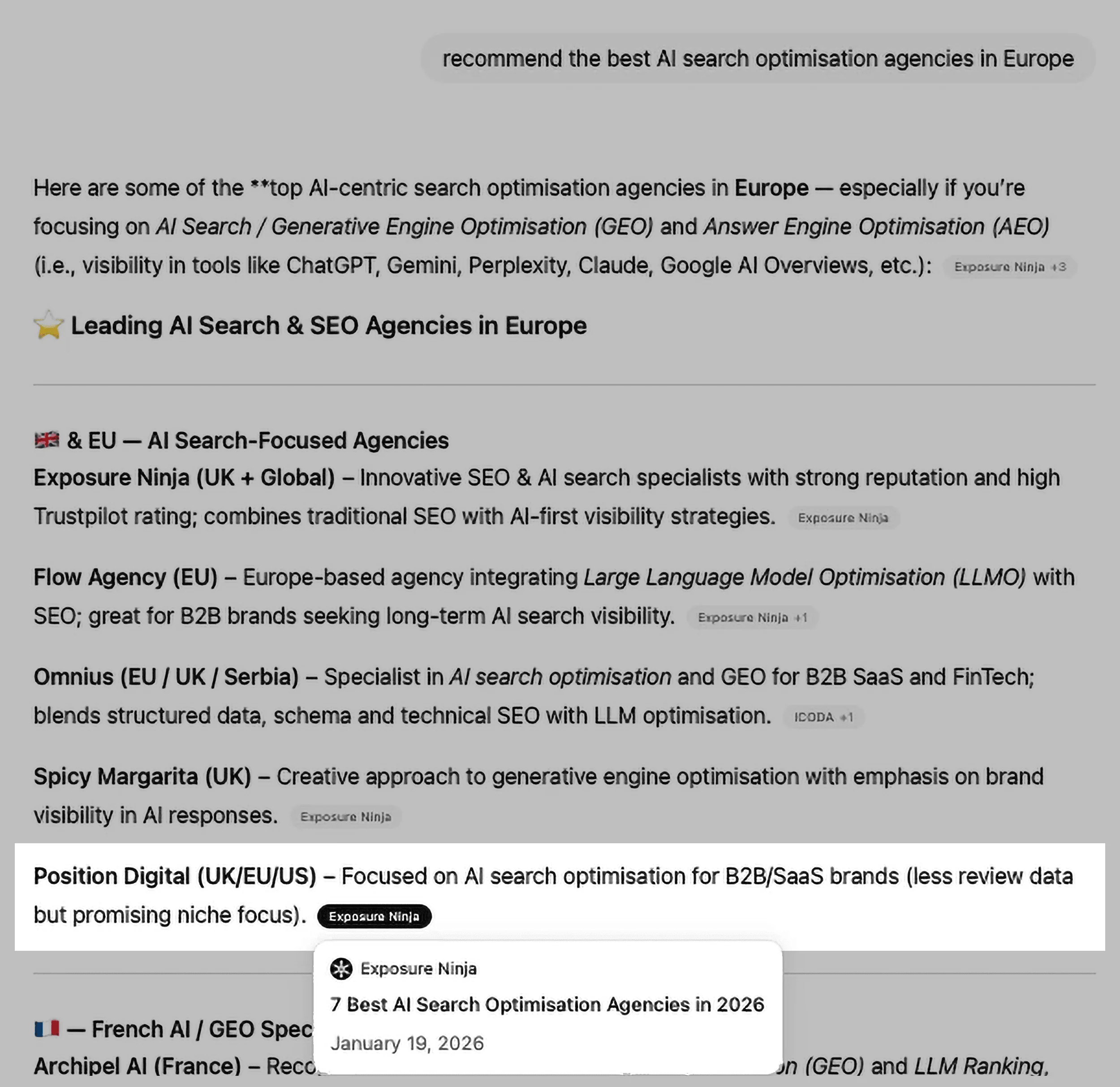

 Raul Delapena Setiawan
 Reynand Wu

 Azzam Bilal Chamdy
 Ali Ikhwan