
 Raul Delapena Setiawan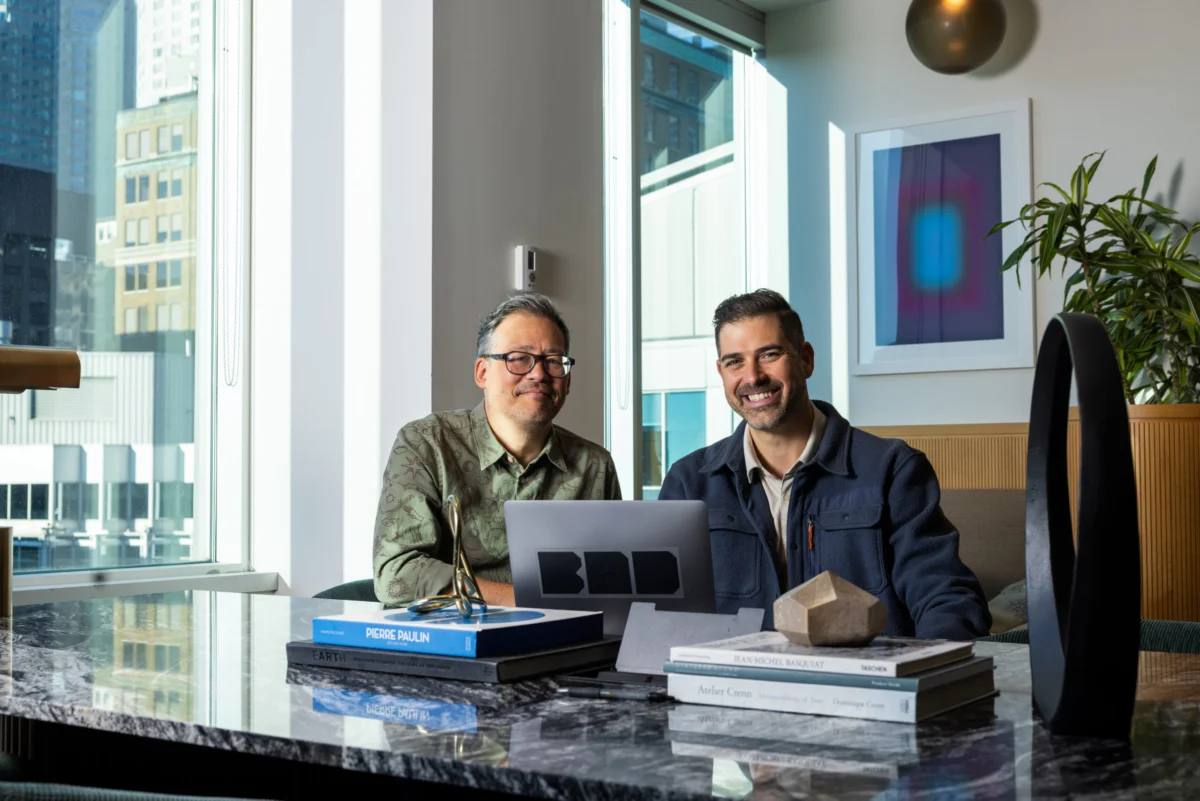
By Michael Bürgi | October 13, 2026
In the fast-evolving landscape of modern advertising, the traditional agency model is increasingly being viewed as a relic of a bygone era. For Ian Buck and Yotam Dor, the founders of the Toronto-based independent agency BaD Mktg, the friction caused by bloated bureaucracies and antiquated billing practices was not just a frustration—it was the catalyst for a radical departure from industry norms. By leveraging proprietary artificial intelligence and a lean, high-velocity operational strategy, the duo has effectively replaced the need for dozens of staffers, generating over $2 million in revenue in just three years of operation.
The Genesis of an Industry Disruptor
The partnership between Buck and Dor spans over 15 years, a tenure that has allowed them to witness the decline of the traditional holding company model firsthand. Their collaboration began in 2011 with the launch of Notch Video, an agile production house designed to fill the void left by legacy ad agencies struggling to keep pace with the explosion of social media content.
"Video was just starting to hit as far as, ‘We need video for social, and our ad agency can’t do it,’" Buck recalled. "We filled that gap—that was our goal, to create really agile production. The technology had changed just enough so that for $10,000, you’ve got a full production studio."
However, the acquisition of Notch Video by a global holding company marked a turning point. What was intended to be an infusion of capital and scale quickly devolved into a culture clash. Buck describes the experience of navigating the holding company bureaucracy as "painful," noting that their innovative, project-based model was fundamentally incompatible with the standardized, billable-hour structures favored by corporate ownership.
Chronology of a Departure
The path to creating BaD Mktg (named after the initials of the founders’ last names) was paved by the realization that legacy agencies were not just slow, but actively resistant to innovation.
- 2011: Buck and Dor launch Notch Video, focusing on agile, high-quality, project-based production.
- The Holdco Era: Notch Video is acquired by a holding company. The founders struggle to integrate their efficient workflow into a system that mandates time-entry logs and administrative bloat.
- The "Anti-Model" Realization: While working within the holding company, Buck and Dor are forced to hire administrative staff to log fake hours, simply because the parent company’s financial systems could not process a project-based invoice.
- 2023: Fed up with the lack of interest in AI integration and operational efficiency, Buck and Dor exit the holdco system to launch BaD Mktg.
- 2023–2026: BaD Mktg achieves profitability in its first month and scales to over $2 million in revenue, utilizing a proprietary AI tech stack.
Operational Excellence: The "Goody" Ecosystem
The core of BaD Mktg’s success lies in its sophisticated use of AI. Unlike many agencies that treat AI as a generative toy, Buck and Dor have treated it as an operational skeleton. They developed a proprietary tool, "Goody," which manages the agency’s back-office operations.
"Goody" acts as an automated project manager and administrator. It connects business systems, automates vendor payments, coordinates administrative tasks, and manages priorities. Crucially, the system preserves human oversight for financial transactions, ensuring that while the speed of operation is machine-driven, the accountability remains human.
By automating these administrative layers, the agency has effectively achieved the output of a dozen-person staff with only two full-time partners and a roster of specialized freelance talent. This shift has allowed them to reduce concepting time from the industry-standard six weeks to a mere six days, and in some cases, even faster.
Data-Driven Efficiency and Human Craft
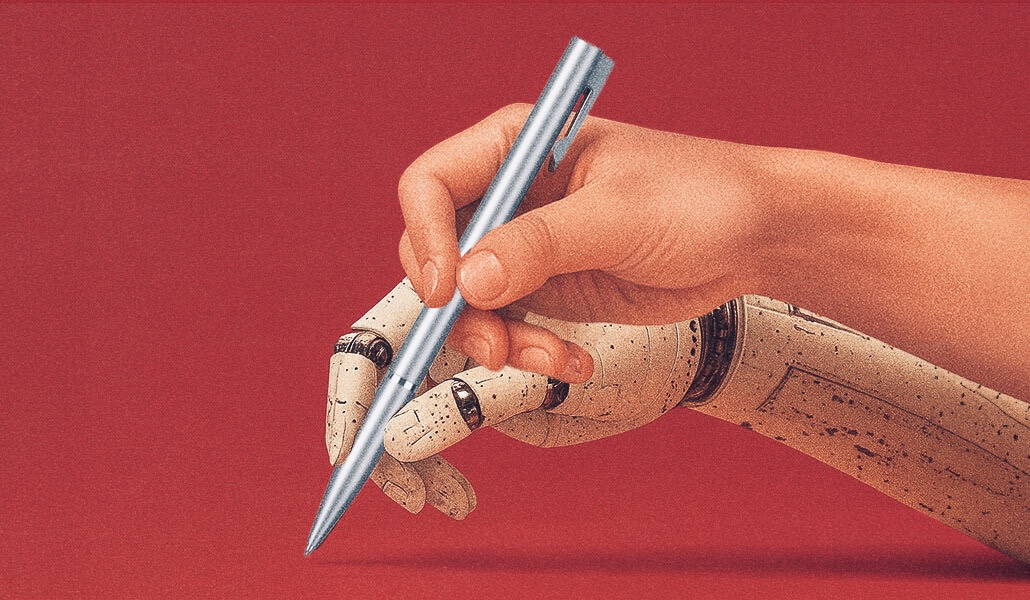
The agency’s strategy for using AI goes beyond mere automation; it involves "uploading their brains" into a closed-loop system. By feeding the AI decades of their own successful campaigns, strategic studies, and even recordings of their own planning conversations, they have trained a bespoke model that understands their specific creative DNA.
The Role of Generative AI in Pitches
Buck emphasizes that AI is not a replacement for human creativity but a force multiplier. During the pitch process, the agency no longer relies on mood boards or vague descriptions. Instead, they leverage AI to generate full-spot visualizations. Clients are presented with specific shot selections, voice-over tonalities, and music arrangements that have been pre-conceived using AI tools.
"When these breakthroughs happen, your brain shifts and it almost hurts," Buck noted. "The difference for the client sitting there is profound. They see the angles, they see the shot selection, they hear the VO in the right way, the music’s already laid out."
Implications for the Future of Marketing
The success of BaD Mktg carries significant implications for the broader advertising ecosystem. It suggests that the future of agency work is not in expanding headcount, but in refining the intelligence of the operational stack.
Breaking the Billable Hour
The most provocative aspect of the BaD Mktg model is its rejection of the billable hour. By moving to a project-based pricing structure, the agency aligns its incentives with the client’s outcomes rather than the duration of the work. If they can solve a creative problem in two hours instead of two weeks, the client benefits from the speed and the lower cost, and the agency benefits from higher margins and a faster turnaround.
The Holding Company’s Existential Crisis
Buck’s experience within the holdco environment highlights a systemic failure to adapt. "What we do just breaks their model," he observed. When agencies are valued by the number of bodies they can bill to a client, efficiency becomes a threat to revenue. For large, publicly traded holding companies, the transition to an AI-first, low-overhead model requires a fundamental restructuring of their balance sheets—a move that is often met with internal resistance.
The Human Element: Experience as the Final Filter
Despite the efficiency gains, Buck is clear: AI is not the creative lead. "Are all the headlines it generates great? Absolutely not. Most of them are shit, worse than humans," he admits.
However, the value lies in the volume. By having the AI generate 100 options in minutes, the human creative can spot the "nuggets of quality" that would have taken a human team days to brainstorm. The AI provides the raw material, but the human experience provides the editorial lens. This synthesis—the speed of the machine paired with the taste of the veteran—is what allows BaD Mktg to operate at a fraction of the cost while maintaining premium quality.
Looking Ahead
As of October 2026, BaD Mktg remains a boutique operation, but its influence is growing. By proving that a two-man shop can outperform a mid-sized agency, Buck and Dor have provided a blueprint for a new generation of "micro-agencies." These firms are not looking to be acquired by holding companies; they are looking to render the holding company model obsolete.
The industry is at an inflection point. As AI tools become more accessible, the barrier to entry for high-level creative production is dropping. The agencies that survive will likely be those that, like BaD Mktg, prioritize internal operational efficiency and use AI to augment human expertise rather than simply trying to replace it. For Ian Buck and Yotam Dor, the future is not about doing more work; it’s about doing better work, faster, and on their own terms.


 Sagoh
Sagoh
 Azzam Bilal Chamdy
 Basiran
 Neng Nana
 Nana Muazin
 Jia Lissa
 Laily UPN
 Asep Darmawan