
 Nana Muazin
The landscape of global ecommerce is undergoing a seismic shift. As the industry moves past the "experimental" phase of generative AI, a new wave of platforms and services is emerging, focused not just on content creation, but on agentic execution. From autonomous back-office management to predictive discovery engines and real-time omnichannel fulfillment, the latest suite of tools is designed to bridge the gap between intent and action.
This week’s roundup highlights the rapid integration of AI agents into the daily workflows of merchants, signaling a move toward fully autonomous, highly responsive digital retail ecosystems.
Main Facts: The Rise of Agentic Commerce
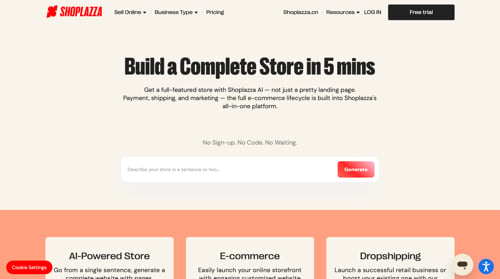
The core theme of the current product cycle is the replacement of manual configuration with AI-native orchestration. Leading the charge are platforms like Shoplazza, which recently debuted "Athena," an AI admin agent capable of performing complex back-office tasks—ranging from discount configurations to product page edits—through simple natural language prompts.

Simultaneously, the infrastructure layer is evolving. Amazon’s introduction of "Bedrock AgentCore" payments marks a milestone in the "agent-to-agent" economy, allowing AI entities to execute financial transactions independently, powered by the rails of Coinbase and Stripe. This is no longer just about chat interfaces; it is about building a digital workforce capable of self-correction, negotiation, and autonomous commerce.
Chronology: A Week of Rapid Innovation
The velocity of recent releases underscores the competitive pressure on ecommerce service providers:
- May 5: Goflow and Nocnoc announce a strategic partnership to simplify cross-border expansion into Latin American marketplaces, providing local infrastructure for payments and logistics.
- May 6: Emberos launches "Merchant," an AI-based visibility layer that allows brands to optimize SKU performance within major LLMs like ChatGPT and Claude.
- May 7: A flurry of activity hits the market:
- GetDandy launches an autonomous AI workforce for local businesses.
- Flowspace introduces its omnichannel B2B fulfillment solution.
- Wunderkind and Bloomreach debut a native integration to turn anonymous traffic into revenue via AI-driven personalization.
- Mid-Week: Major platforms including BigCommerce (via PayPal integration), GoDaddy (with Airo for WordPress), and Marqo (with the Sibbi discovery agent) release tools aimed at streamlining the merchant-to-shopper journey.
Supporting Data and Technical Capabilities
The effectiveness of these new tools is rooted in the depth of data they leverage. Unlike early-stage AI models, these solutions are built on proprietary, first-party data sets:
- Creatable’s Predictive Engine: Built on 12 years of proprietary creator engagement data, this platform claims to predict conversion outcomes at the content level by analyzing social signals and transaction-level sales data.
- Preciso’s Ultima Ads: By syncing granular purchase history and browsing behavior with Shopify’s native ad environment, the tool allows for the creation of "lookalike" audiences that mirror a merchant’s highest-value customers.
- Twilio’s Conversation Memory: This capability introduces "persistent memory" to customer service, maintaining state and history across multiple channels, which is essential for reducing friction in long-tail customer interactions.
Official Responses and Strategic Rationale
Industry leaders emphasize that these tools are not intended to replace human ingenuity, but to eliminate the "administrative drag" that prevents businesses from scaling.
Regarding the launch of BigCommerce Payments by PayPal, the partnership aims to solve the fragmentation of financial data. By bringing payments, balances, and payouts under one roof, the companies are addressing the core merchant need for operational efficiency in an increasingly complex, multi-currency global market.
Asendia and Singapore Post, in their joint announcement regarding the APAC gateway, highlighted the necessity of regional expertise. Their collaboration represents a "physical-digital" synthesis: while the software stack handles the order routing, the partnership ensures that the last-mile logistics—often the primary hurdle in cross-border commerce—are handled by established postal giants.

Implications: The Future of the Merchant Role
The Death of the "Manual" Workflow
The most significant implication of these tools is the gradual obsolescence of manual dashboard management. If an AI agent like Shoplazza’s Athena can analyze data, edit a product page, and respond to an order inquiry simultaneously, the role of the ecommerce manager shifts from "operator" to "architect." Merchants will spend less time clicking through settings menus and more time defining business strategy and creative direction.
The Agentic Economy
Amazon’s Bedrock AgentCore is perhaps the most forward-looking development. By enabling AI agents to pay for API access or other services independently, we are entering an era of "economic autonomy" for software. For an ecommerce business, this could eventually mean that a marketing agent could autonomously purchase advertising space, pay for content generation, and manage budget allocations without human intervention.
Privacy and Personalization
The integration of Wunderkind and Bloomreach, as well as Nimble’s new Web Chat, demonstrates a pivot toward "high-intent" engagement. In a world where third-party cookies are disappearing, these platforms are using AI to make sense of first-party, anonymous traffic in real-time. The ability to identify a user’s intent within a single conversation—as seen with Marqo’s Sibbi agent—will likely become the new standard for user experience (UX) design.

The Cross-Border Complexity
With partnerships like ZigZag and Trade Duty Refund, the friction of international trade is finally being addressed through automation. For U.K. retailers selling into the E.U., the complexity of duty drawbacks has historically been a barrier to entry. By automating claim eligibility and evidence filing, technology is effectively flattening the global market, allowing smaller brands to compete with enterprise retailers on a level playing field.
Conclusion: Adapting to the New Standard
As these services become widely available, merchants are urged to evaluate their current tech stacks. The transition from static, rule-based software to agentic, intelligence-based systems is not merely a trend; it is a fundamental shift in how business is conducted.
For the modern merchant, the challenge will not be a lack of tools, but rather the ability to effectively govern these agents. As the "AI workforce" grows, the winners will be those who can provide the clearest intent, maintain the highest quality of proprietary data, and effectively orchestrate these autonomous agents to create a seamless, end-to-end shopping experience for their customers.

The era of manual, fragmented, and reactive ecommerce is coming to a close. In its place, a proactive, autonomous, and integrated future is taking shape, promising higher margins, better customer engagement, and a more resilient global supply chain.
Do you have an ecommerce product release or a service update that could redefine the industry? Please reach out to our editorial team at [email protected] to ensure your news is included in our upcoming installments.


 Reynand Wu
 Iffa Jayyana
 Raul Delapena Setiawan

 Sagoh
Sagoh
 Azzam Bilal Chamdy
 Ali Ikhwan