
 Muslim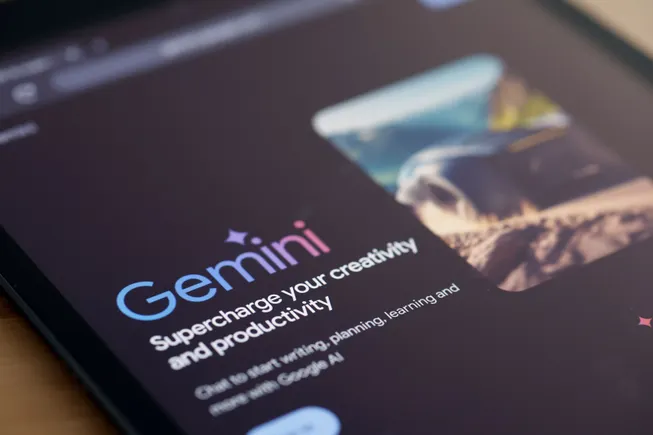
As the digital landscape pivots from the traditional "ten blue links" to a more fluid, conversational paradigm, Google is aggressively retooling its business model to ensure it remains the primary gateway for both information and commerce. During its recent Marketing Live summit, the tech giant unveiled a comprehensive suite of generative AI-powered tools designed to bridge the gap between AI-driven discovery and final consumer transactions.
This transformation is not merely cosmetic; it represents a fundamental shift in how the world’s most valuable search engine perceives its role. By integrating "agentic" capabilities—where AI not only provides information but performs complex tasks on behalf of the user—Google is attempting to stay ahead of a rapidly evolving competitive field that includes AI startups like OpenAI and Anthropic, as well as e-commerce titans like Amazon.
Main Facts: The New Agentic Ecosystem
The cornerstone of Google’s latest strategy is the introduction of "Ask Advisor," a centralized intelligence hub scheduled to launch later this year. Designed to act as a unified entry point, Ask Advisor integrates data across Google Ads, Google Analytics, the Google Marketing Platform, and Google Merchant Center.
For the average marketer, this represents a significant shift in workflow. Rather than manually navigating disparate dashboards to build a campaign, a user can now task Ask Advisor with a goal—such as identifying a specific customer demographic—and the agent will automatically pull product details from Merchant Center, draft creative assets, and deploy a Google Ads campaign in a single, cohesive action.
Furthermore, Google is deepening its reliance on the Gemini model family. The updated Asset Studio, now powered by the highly capable Gemini Omni, allows marketers to generate high-fidelity text, images, and video simply by uploading a marketing brief or providing natural language instructions. This focus on "agentic marketing" aims to reduce the friction between creative conception and live deployment, effectively lowering the barrier to entry for brands looking to leverage complex advertising strategies.
Chronology: A Rapid Path to Integration
Google’s shift toward AI-centric commerce has been deliberate and fast-paced:
- January 2025: Google introduces the Universal Commerce Protocol (UCP), an open standard for agentic commerce developed alongside retail giants like Walmart, Target, and Shopify.
- May 2025: The company begins integrating advertisements directly into "AI Mode," the chatbot-driven interface of its search engine.
- August 2025: Asset Studio enters beta, providing early testing for generative creative tools.
- May 2026 (I/O Summit): Google formally unveils a revamped search experience that prioritizes AI Overviews and introduces "information agents."
- May 2026 (Marketing Live): The company debuts the full suite of agentic advertising tools, including Ask Advisor, Conversational Discovery, and native checkout capabilities.
Supporting Data: The Scale of the Transition
The urgency behind these developments is driven by a shifting market reality. Google’s AI Mode currently boasts over 1 billion monthly active users, a massive captive audience that necessitates a seamless monetization strategy. With the integration of Gemini 3.5 Flash, the speed and accuracy of these AI interactions have improved, making the platform more reliable for high-consideration purchases.
The stakes are equally high on the financial front. Analysts have noted that for the first time, Google is facing the prospect of being surpassed in total ad revenue by Meta Platforms, a reality that has pushed the company to diversify its ad formats. The introduction of "Conversational Discovery" and "Highlighted Answers" is a direct response to this pressure. These formats are designed to integrate advertisements into the heart of AI-generated responses, turning what would have been a static search result into a persuasive, curated recommendation.
Official Responses: Reimagining the Value of an Ad
During a virtual press briefing, Dan Taylor, Google’s vice president for global ads, framed these changes as an evolution of the advertising value proposition. "These formats are rethinking not only how the ads look, but also the value they provide, because ultimately the best ads are just answers," Taylor noted.
The internal logic is clear: if the search experience becomes a conversation, the advertisement must become a participant in that conversation. By providing "explainers" for high-consideration purchases—such as why a specific product is the optimal choice for a user’s unique set of requirements—Google is attempting to move beyond the "click-to-site" model and toward a "chat-to-purchase" model.
Ashish Gupta, vice president and general manager of merchant shopping, emphasized that the backend infrastructure—specifically the Universal Commerce Protocol—is designed to scale this vision safely. "UCP solves a very core challenge of scaling agent e-commerce across the entire web by defining a common language which allows agents to connect to businesses securely and seamlessly," Gupta said.
Implications: The Death of the Traditional Funnel?
The implications of these tools are profound for both marketers and traditional e-commerce retailers.
1. The Consolidation of Marketing Services
As platforms like Google and Amazon build "one-stop shops" that handle everything from creative generation to campaign management and performance reporting, the traditional marketing services industry faces an existential challenge. If an AI agent can perform the tasks of a junior analyst or a creative coordinator, the value proposition of human-led agency work will be forced to shift toward high-level strategy and brand vision.
2. Frictionless Commerce
The "agentic" push aims to eliminate the "leaky bucket" of the traditional sales funnel. By implementing native checkout experiences—where a user can buy an item directly within an AI chat interface without ever visiting a third-party website—Google is minimizing the time between intent and conversion. This is a massive boon for retailers, as it removes the technical hurdles that often cause users to abandon their carts.
3. The Retailer as the Merchant of Record
Despite the deep integration of Google’s AI into the purchasing process, the company is careful to emphasize that it is not becoming the retailer itself. Under the UCP framework, the retailer remains the "merchant of record." This distinction is critical for regulatory and brand-ownership reasons, ensuring that data and customer relationships remain, at least legally, with the brand.
4. A New Era of Competition
Google’s shift is a defensive move against the "intelligent search box." As users become accustomed to receiving direct answers from AI rather than links to websites, Google’s traditional ad revenue—based on clicks to external landing pages—was at risk. By embedding the advertisement into the answer itself, Google is protecting its revenue stream while simultaneously enhancing the user experience.
Conclusion: The Future is Conversational
Google’s pivot at Marketing Live is a testament to the company’s ability to adapt its core product to an AI-first reality. By blending the generative power of Gemini with the logistical, transactional, and analytical tools of its existing ecosystem, Google is building a future where the line between searching for a product and buying it is effectively erased.
For brands, the message is clear: the future of search is no longer about competing for the top spot on a list of blue links. It is about being the most relevant answer in a conversation, the most useful agent in a task, and the most frictionless option for a transaction. As these tools roll out throughout the year, the winners will be the brands that learn to speak the language of the agent—and, in turn, speak more directly to the needs of the consumer.


 Reynand Wu
 Iffa Jayyana
 Raul Delapena Setiawan

 Sagoh
Sagoh

 Azzam Bilal Chamdy
 Ali Ikhwan