
 Rifan Muazin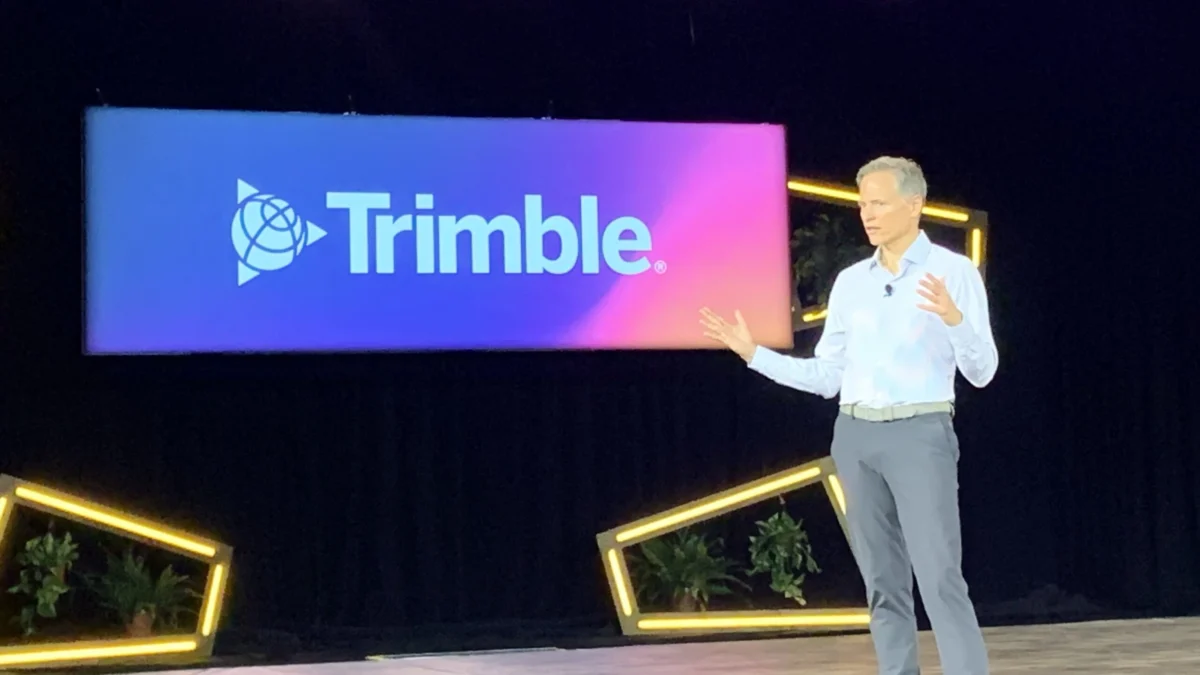
SAN DIEGO — At the annual Insight 2026 conference, Trimble CEO Rob Painter navigated a delicate duality: addressing the intense market speculation surrounding the company’s transportation and logistics business while simultaneously unveiling a massive technological leap forward for the sector. As the company continues its formal strategic review of the division, it is sending a clear signal to the industry that, regardless of ownership, the business remains at the cutting edge of global supply chain modernization.
The Strategic Review: A Fiduciary Obligation
The discourse surrounding Trimble’s transportation unit reached a fever pitch in August, when the company officially confirmed it had received "credible, unsolicited interest" from multiple external parties. In response, the Trimble board of directors launched a formal strategic review, enlisting the financial advisory services of Goldman Sachs to evaluate the potential for a sale, a spin-off, or a continued path as a wholly-owned subsidiary.
During a media roundtable at Insight 2026, Painter provided a candid update on the process. When asked if the interest from multiple parties remains active, his response was succinct: "Yes to everything you said."
However, Painter was quick to temper expectations regarding an imminent deal. "There is no update," he told reporters. "Most strategic reviews end up with continuing to do what we do." He underscored that the process is not necessarily a precursor to divestiture, but rather a standard fiduciary responsibility. "It’s a scarce asset, a scarce set of capabilities. We’re a public company. We have a fiduciary obligation to the shareholders to listen if we have credible interest."
For now, the mandate for the transportation team is "business as usual." Painter expressed a high degree of personal comfort in maintaining the status quo, stating, "I’m super, super comfortable to be the ongoing owner of the business." He further noted that he would be just as comfortable addressing stakeholders in a year, explaining that if the company continues to execute its current "playbook," that outcome would be entirely consistent with the goals of the strategic review.
Chronology of a Potential Transition
The timeline of Trimble’s current situation reflects a company at a strategic inflection point:
- 2023: Trimble completes the high-profile acquisition of Transporeon, a move intended to deepen its footprint in the European freight market and strengthen its platform connectivity.
- August 2025: Trimble publicly acknowledges receipt of unsolicited interest in its transportation segment, triggering a formal review process led by Goldman Sachs.
- Q4 2025 – Q1 2026: Throughout the review, Trimble continues to integrate Transporeon capabilities into its broader North American portfolio.
- February 2026: At the Insight 2026 conference in San Diego, CEO Rob Painter confirms the review is ongoing but emphasizes that no timeline for completion exists.
- Ongoing: The company continues to roll out new AI-driven platforms, operating under the assumption that the division remains a core component of the Trimble ecosystem until proven otherwise.
Accelerating the AI Transformation
While the corporate boardroom debates the future of the unit’s ownership, the engineering labs are operating at full throttle. At the Insight 2026 conference, Trimble unveiled an aggressive suite of AI-powered technologies, aiming to solve the "heavy lift" of digital transformation that has plagued the trucking industry for decades.
Michael Kornhauser, who leads Trimble’s transportation operations in North America, articulated the core strategy: "We felt that the quickest way to get our customers in their existing systems to a place where AI can impact their business today was to build on top of their existing platforms."
The "Arc Agent" Paradigm
The most significant announcement was the introduction of "Arc Agent." Unlike standard chatbots that handle singular, narrow tasks, Arc Agent is designed as a modular, multi-skill AI assistant. Trimble’s vision is for this agent to operate across the entire freight lifecycle—from procurement and execution to final settlement.
Philipp Pfister, vice president of Transporeon, described the user experience as analogous to onboarding a new employee. "You can teach it a task, verify its work, and gradually give it greater responsibility as trust develops."
The practical application of this technology is already yielding results. Kornhauser cited a case study involving TMT Trucking, where a complex task involving currency conversion—previously requiring a three-to-six-month proof-of-concept and expensive custom engineering—was executed within the Arc framework in just 35 minutes. "You don’t have to have an engineering degree to build a skill," Pfister added, emphasizing the democratization of AI within the logistics workflow.
Security, Governance, and the "Human-in-the-Loop"
The aggressive deployment of autonomous agents has naturally raised concerns regarding data integrity and cybersecurity. Painter acknowledged that while the potential for AI is immense, the transition from "this is cool" to "how do we govern this?" happens rapidly in a corporate environment.
"Pretty quickly, you go from, wow, this is pretty cool to wait a minute, how are we going to govern this?" Painter noted.
To mitigate these risks, Trimble is doubling down on its cybersecurity posture, with Painter confirming that the company invests "tens and tens of millions of dollars every year" in cyber resilience. The Arc Agent platform is specifically built with a "human-in-the-loop" model. This governance structure ensures that every AI-driven action can be reviewed, approved, and audited by a human operator. "The data of our customers is the number one priority," Pfister emphasized. "We need to protect the data of our customers at any point in time."
Expanding the Global Footprint: The Mexico Focus
Beyond artificial intelligence, Trimble is aggressively targeting the shifting dynamics of North American supply chains, specifically the surge in U.S.-Mexico freight movements.
Kornhauser highlighted that Trimble is significantly expanding its "Mexico Maps" data. By adding thousands of truck-relevant points across Mexico—such as specialized logistics hubs and cross-border transit facilities—the company is attempting to provide the granular visibility that has historically been missing in cross-border logistics.
"We see the same thing: there’s an increased volume, there’s a lot of complexity," Kornhauser explained. By enhancing mapping data and integrating it into their existing Transport Management Systems (TMS), Trimble is positioning itself as an essential partner for firms managing the complexities of nearshoring and the rapid growth of the U.S.-Mexico trade corridor.
Implications for Stakeholders
The ambiguity surrounding the strategic review creates a unique landscape for Trimble’s customers, employees, and shareholders.
For customers, the message from leadership is one of stability. The emphasis on allowing clients to keep their legacy systems while "layering on" AI means that companies can modernize without the catastrophic risk of a full-scale IT overhaul. This "low-lift, high-impact" strategy is designed to keep customer loyalty high even as the ownership of the underlying software remains in flux.
For shareholders, the situation is a classic "wait-and-see." The transportation unit is a "scarce asset" with a proprietary network and a high barrier to entry. Whether Trimble keeps the business to leverage these AI synergies or spins it off to unlock hidden value, the underlying asset continues to gain market relevance through its aggressive modernization.
For the industry, Trimble’s focus at Insight 2026 suggests that the logistics tech sector is moving away from standalone platforms and toward an integrated, AI-orchestrated future. By focusing on cross-border mapping, AI agent orchestration, and seamless integration, Trimble is ensuring that the unit—regardless of its future parent company—will remain a foundational piece of the modern logistics stack.
As the conference concluded, Painter remained focused on the long-term potential of the unit. "This business is a terrific business with an exciting future providing real value and unique value," he concluded. Whether that future is realized under the Trimble banner or a new owner, the "playbook" currently in motion is one that prioritizes aggressive technological expansion over the uncertainty of the boardroom.

 Nila Kartika Wati
 Lina Hope

 Jia Lissa
 Basiran
 Sagoh
Sagoh