
 Nila Kartika Wati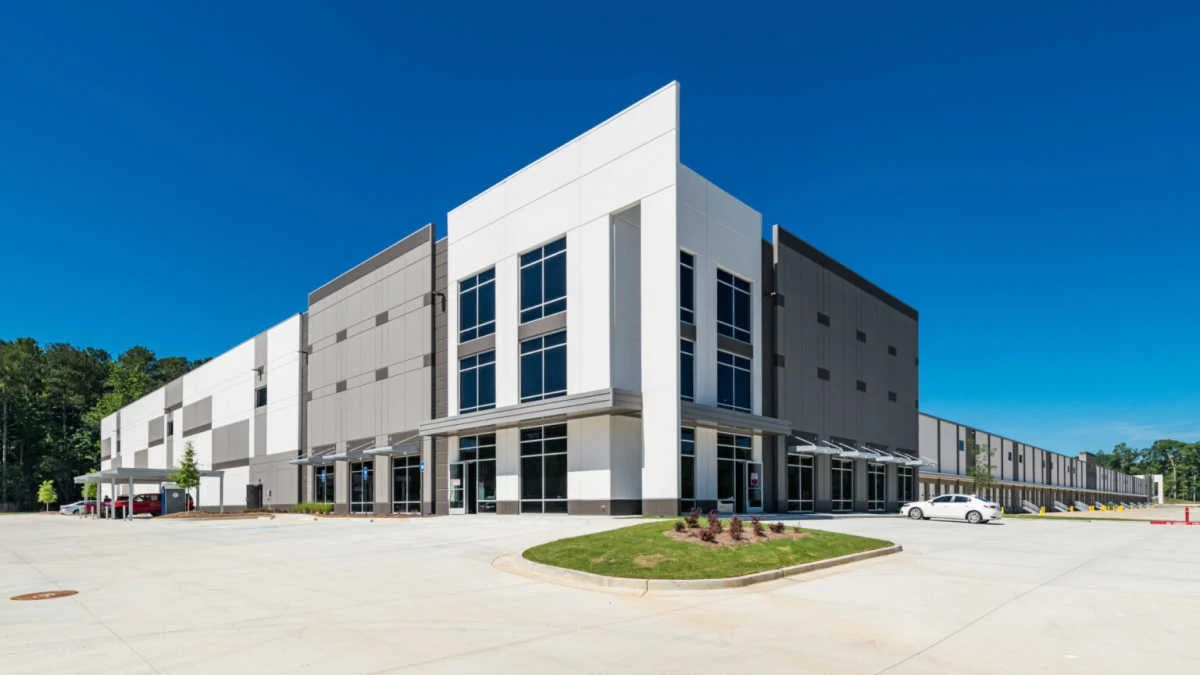
In a significant move that underscores the continued maturation of the e-commerce logistics sector, Atlanta-based fulfillment powerhouse Stord announced on Thursday that it has successfully closed a $400 million credit facility. The funding, led by global banking giant Citi, represents a pivotal moment for the privately held company as it seeks to solidify its position as an industry leader. The facility, which closed oversubscribed—nearly doubling its initial target—demonstrates robust investor confidence in Stord’s business model and long-term trajectory.
The syndicated deal included participation from an impressive roster of major financial institutions, including Morgan Stanley, JPMorgan, First Citizens, Citizens, and KeyBank. This infusion of capital, combined with a $250 million Series F funding round led by Strike Capital in May, brings Stord’s total equity and credit capacity for 2026 to a staggering $650 million.
Beyond the financial news, Stord simultaneously announced two high-profile executive hires, poaching seasoned leaders from the public markets to guide the company through its next phase of scaling. These dual developments—a massive capital injection and the strengthening of its C-suite—signal that Stord is preparing for a future defined by aggressive technological investment and expansion.
A Strategic Timeline: From Niche Fulfillment to Industry Titan
To understand the scale of Stord’s current ambition, one must look at the company’s aggressive growth trajectory over the past several years. Founded with a vision to modernize the fragmented world of e-commerce fulfillment, Stord has evolved from a boutique operation into a global logistics infrastructure company.
2024: The Year of Strategic Consolidation
Stord began its transformation into a behemoth through a series of tactical acquisitions. In 2024, the company moved to consolidate its footprint by acquiring ProPack Logistics and the e-commerce fulfillment segment of Pitney Bowes. These moves were designed to expand Stord’s North American presence and integrate existing, high-performing networks into its proprietary software stack.
2025: Expanding the Physical Network
The momentum continued into 2025, a year characterized by physical infrastructure expansion. In May, Stord acquired Ware2Go, a move that proved transformative. Ware2Go brought 21 e-commerce warehouses and approximately 2.5 million square feet of storage capacity into the Stord ecosystem. In January of that same year, the company had already acquired Shipwire from Ceva Logistics, adding 12 additional fulfillment centers to its network.
2026: The Year of Scaling and Capitalization
The current year has been defined by financial milestones and a pivot toward AI-driven logistics. With the $250 million Series F in May—which valued the company at $3 billion—and the current $400 million credit facility, Stord has secured the balance sheet required to maintain its rapid pace. The company now claims to operate nearly 100 fulfillment locations worldwide, serving over 1,000 brands.
Supporting Data: By the Numbers
Stord’s growth is not merely anecdotal; the metrics provided by the company paint a picture of a business that is hitting its stride.
- Financial Velocity: The company’s revenue run-rate is now approaching the $1 billion threshold. Over the past four years, Stord has grown tenfold, a testament to the surging demand for digitized, integrated supply chain solutions.
- Market Reach: Stord processes more than $15 billion in gross merchandise volume (GMV) annually.
- Consumer Impact: The efficacy of the company’s distribution network is perhaps best illustrated by the fact that Stord’s packages now reach one in every four U.S. households on an annual basis.
- Infrastructure: With nearly 100 fulfillment locations, the company has created one of the most comprehensive "middle-mile and last-mile" networks in the industry, effectively challenging legacy logistics players.
Strengthening the C-Suite: Public Market Pedigree
A company aiming for the next tier of global enterprise requires leadership that understands the rigors of the public markets. Stord’s recent hires of Bill Zerella and Mark Wayland are clear indicators that the company is building a foundation that could support a future initial public offering (IPO) or a similar liquidity event.
Bill Zerella, Chief Financial Officer
Bill Zerella joins Stord as CFO, bringing with him a wealth of experience in guiding companies through the complexities of the public markets. Having served as CFO at three public companies, including taking Fitbit through its high-profile 2015 IPO, Zerella’s expertise is expected to be instrumental in managing Stord’s capital structure and financial reporting. His most recent tenure as CFO of ACV Auctions further cements his reputation as a leader capable of managing high-growth, technology-forward organizations.
Mark Wayland, Chief Revenue Officer
Mark Wayland, the incoming Chief Revenue Officer, arrives at Stord with a deep background in enterprise sales and cloud-based growth. Formerly the CRO at Box and having held the same position at Tanium, Wayland brings more than a decade of experience from Salesforce, where he rose to the position of Senior Vice President of the Marketing Cloud. His background in scaling revenue for massive software-as-a-service (SaaS) enterprises aligns perfectly with Stord’s mission to marry logistics with proprietary software.
Official Responses and Strategic Intent
In the official announcement, Sean Henry, CEO and co-founder of Stord, articulated the strategic vision behind the recent capital influx.
"This facility, combined with our $250 million Series F, gives us the balance sheet to match the scale, potential, and impact of what we’re building," Henry stated. He emphasized that the company is not merely looking to increase its physical footprint but is also pivoting toward deep-tech integration. "We will use this capital to expand our fulfillment network, accelerate our deployment of robotics, and invest aggressively in AI through Stord Labs."
Henry further characterized the inclusion of major lenders and the recruitment of elite executives as a "vote of confidence in the foundation we’ve created at Stord, as well as a signal of where we are headed."
While the company declined to disclose the specific structure, pricing, or maturity dates of the $400 million credit facility, the market’s enthusiasm for the deal—evidenced by the oversubscription—suggests that the terms were favorable, reflecting the lenders’ belief in Stord’s stability despite the broader volatility in the logistics sector.
Implications for the Logistics Industry
Stord’s emergence as a dominant player has several profound implications for the logistics and supply chain industry.
The Rise of the "Logistics-as-a-Service" Model
Stord is part of a wave of companies moving away from the traditional, asset-heavy 3PL (third-party logistics) model toward a "Logistics-as-a-Service" (LaaS) model. By leveraging AI to optimize inventory placement and using robotics to increase warehouse throughput, Stord is effectively turning fulfillment into a software-defined business. The heavy investment in "Stord Labs" suggests that the company views its competitive advantage not just in the trucks and warehouses it controls, but in the intelligence layer it places on top of those assets.
Competition with Incumbents
The scale of Stord’s operations—reaching 25% of U.S. households—puts it in direct competition with legacy giants like UPS, FedEx, and Amazon’s internal logistics division. By absorbing assets from companies like Pitney Bowes and UPS (Ware2Go), Stord is signaling that it is prepared to inherit the mantle of infrastructure that traditional players may find too costly or rigid to maintain.
AI and Robotics: The Next Frontier
The stated intent to invest aggressively in robotics and AI is the most critical element of Stord’s future strategy. As labor costs rise and the demand for rapid, next-day delivery becomes the industry standard, the companies that can automate the picking, packing, and sorting process most efficiently will win. By deploying capital toward these technologies, Stord is attempting to insulate its margins from the volatility of the labor market.
A Potential Path to IPO?
The hiring of Bill Zerella is perhaps the strongest signal yet that Stord is contemplating a path to the public markets. While the company has not confirmed any immediate plans for an IPO, the appointment of an executive with a track record of guiding three companies to the public markets is rarely a coincidence. The company is clearly positioning itself to be "public-ready," ensuring that its financial controls and growth narrative are prepared for the scrutiny of institutional investors.
Conclusion
The closing of a $400 million credit facility, paired with a $250 million Series F raise, has provided Stord with a war chest that few competitors can match. By aggressively acquiring infrastructure, investing in AI-driven innovation, and hiring veterans of the public markets, Stord has successfully positioned itself as a critical node in the global e-commerce supply chain.
As the company enters the next chapter of its development, the industry will be watching closely to see how it integrates these new assets and whether its heavy bet on AI and robotics can deliver the efficiency gains required to sustain its rapid revenue growth. With a footprint reaching 1 in 4 American homes and a war chest that gives it the flexibility to scale without immediate reliance on equity dilution, Stord has successfully moved beyond the "startup" phase and into the ranks of the logistics elite.

 Evan Lee Salim
 Asep Darmawan
 Dwi Wanna
 Muslim
 Nana Wu

 Rifan Muazin
 Asro
Asro