
 Iffa Jayyana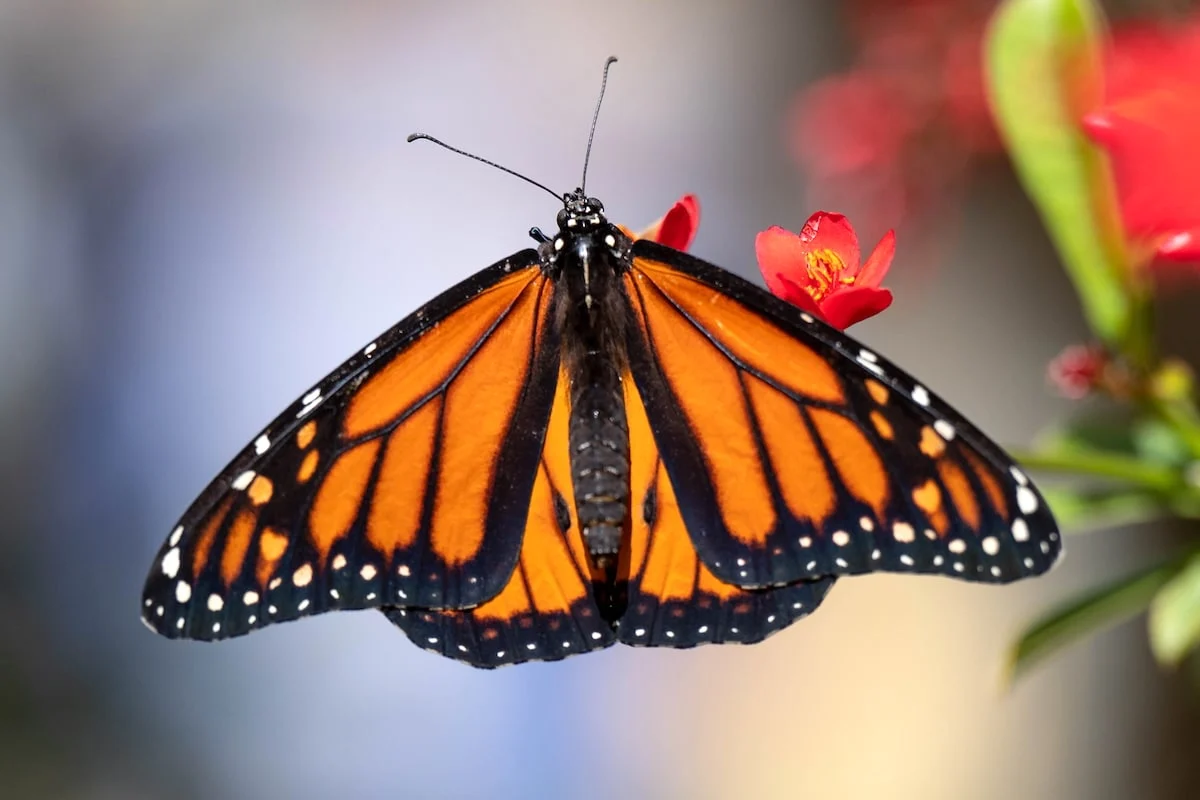
In the quiet groves of the Pacific coast, where Western monarch butterflies have historically clustered by the millions to survive the winter, a chilling scene unfolded in January 2024. Researchers discovered hundreds of monarch butterflies scattered across the ground, dead or in the final throes of life, within the Pacific Grove Monarch Sanctuary. What was initially feared to be an environmental anomaly has now been confirmed as a symptom of a broader, systemic failure: the pervasive impact of human-made toxins on one of North America’s most iconic species.
A landmark peer-reviewed study, published in the journal Environmental Toxicology and Chemistry, has officially linked this mass mortality event to neurotoxic pesticide poisoning. The findings offer a sobering look at the precarious state of the Western monarch population, which is currently teetering on the brink of functional extinction.
The Smoking Gun: Scientific Analysis of the Die-Off
When the butterflies were first discovered in early 2024, the immediate question was whether the cause was biological—such as a pathogen—or environmental. To solve the mystery, researchers employed highly sensitive diagnostic techniques, including liquid and gas chromatography and mass spectrometry, to analyze the tissues of the deceased insects.
The results were staggering. The team identified a chemical cocktail consisting of 15 distinct insecticides, herbicides, and fungicides present on the butterflies. On average, each individual insect carried seven different pesticides. Among these were three highly potent synthetic pyrethroids—bifenthrin, cypermethrin, and permethrin—all of which were detected at or near lethal doses.
"We found an average of seven different pesticides per butterfly, including multiple insecticides that are highly toxic to insects," said Staci Cibotti, the study’s lead author and a pesticide risk prevention specialist at the Xerces Society for Invertebrate Conservation. "Although a review by Monterey County could not determine the exact source of the chemicals, the high levels detected suggest that insecticides were likely responsible for the monarch deaths."
A Chronology of Decline: From Millions to Thousands
The 2024 Pacific Grove incident did not occur in a vacuum; it is a tragic chapter in a decades-long decline. To understand the gravity of this event, one must look at the historical trajectory of the Western monarch.
- The 1980s Baseline: Historically, the Western monarch population was vast, with numbers estimated in the millions. These butterflies completed a complex migratory cycle, moving between inland breeding grounds and coastal overwintering sites in California.
- The 95% Collapse: Over the last forty years, habitat loss, climate change, and chemical exposure have decimated the population, leading to an almost 95% decline since the 1980s.
- January 2024: The mass mortality event occurs at the Pacific Grove Monarch Sanctuary. Researchers launch an intensive investigation to determine the cause of death.
- The 2025 Reality Check: Following the events of 2024, the population continued to struggle. By early 2025, the annual Western Monarch Count recorded just 9,119 individuals—a staggering low that highlights the species’ extreme vulnerability.
- July 2025: The findings of the Environmental Toxicology and Chemistry study are released, confirming that chemical exposure was the primary driver of the previous year’s tragedy.
The Mechanics of Poisoning: Why Overwintering Sites Are Traps
One of the most concerning aspects of the study is how it illuminates the unique vulnerability of monarchs during their "resting" phase. While the public often associates pesticide exposure with agricultural fields, the reality is far more pervasive.
"Pesticide exposure is a widespread threat to monarchs across their range," Cibotti noted in an update to the study. "These chemicals are commonly used not only in agriculture, but also across developed landscapes for structural pest control, home gardening, landscaping, turf management, and mosquito abatement."
Because monarchs aggregate in high densities at overwintering sites, they become "sitting ducks." A single, localized application of a pesticide—perhaps intended for a backyard mosquito infestation or a nearby commercial landscaping project—can drift onto the clusters, resulting in mass casualties. This phenomenon was previously observed in North Dakota in 2020, where aerial mosquito spraying resulted in the death of hundreds of migrating monarchs, proving that the Pacific Grove event is not an isolated incident but a recurring pattern of human-wildlife conflict.

Supporting Data: A Species on the Brink
The data regarding the monarch’s status is uniformly grim. The International Union for Conservation of Nature (IUCN) has formally listed the migratory monarch as an endangered species. The threats are multifaceted, but the combination of habitat fragmentation and toxic exposure creates a "perfect storm."
According to reports from the U.S. Fish and Wildlife Service and analyses featured in the Los Angeles Times, the mathematical projections for the Western monarch are dire: there is an estimated 99% probability of the population reaching functional extinction by 2080 if current trends are not reversed. The 9,119 individuals counted in 2025 represent a fraction of the population required for genetic diversity and reproductive success, making every single death—whether from natural causes or chemical poisoning—a significant blow to the species’ long-term survival.
Official Responses and Calls for Reform
The Xerces Society, which has been at the forefront of monarch advocacy, is using the study’s findings to push for systemic policy changes. They argue that voluntary measures are no longer sufficient to protect a species facing a 99% risk of extinction.
"Protecting monarchs from pesticides will require both public education and policy change," said Emily May, co-author of the study and agricultural conservation lead at the Xerces Society.
The organization is calling for a multi-pronged approach:
- Pesticide-Free Buffer Zones: Establishing mandatory non-spray zones around known overwintering sites, particularly during the months when monarchs are present (typically October through March).
- Regulatory Oversight: Improving the coordination between local, state, and federal officials to track pesticide usage and evaluate the cumulative impact of various chemicals, rather than just analyzing them in isolation.
- Public Awareness: Launching aggressive educational campaigns to inform homeowners and commercial landscapers about the lethal impacts of common chemicals like pyrethroids on pollinators.
- Conservation Integration: Ensuring that all recovery plans for the monarch butterfly include strict protections against pesticide drift and direct exposure.
Implications for the Future: A Broader Environmental Warning
The death of these monarchs is more than just a conservation tragedy; it serves as a "canary in the coal mine" for the broader health of our ecosystems. Pesticides that kill monarchs are also lethal to a wide array of other pollinators—including native bees and butterflies—that are essential for food security and ecosystem services.
"Because migration and overwintering are particularly sensitive phases of the monarch’s migratory cycle, reducing pesticide exposure during these windows is critical," Cibotti emphasized. "Not only to prevent immediate losses, but also to support the population’s ability to rebound in the spring and recover over the long term."
As policymakers digest the findings of this study, the pressure is mounting to move beyond rhetoric and toward tangible action. The loss of the Western monarch would be a permanent indictment of our current land management practices. The question remains whether society will prioritize the health of these delicate travelers or continue to favor the convenience of chemical convenience at the cost of biodiversity.
For now, the surviving thousands of Western monarchs continue their cycle, unaware that their existence hangs by a thread—and that their future depends entirely on whether we can learn to share our landscapes with the pollinators upon which we all depend.

 Raul Delapena Setiawan
 Laily UPN
 Reynand Wu
 Sagoh
Sagoh

 Azzam Bilal Chamdy
 Ali Ikhwan