
 Lina Hope
By Ravie Lakshmanan | October 16, 2026
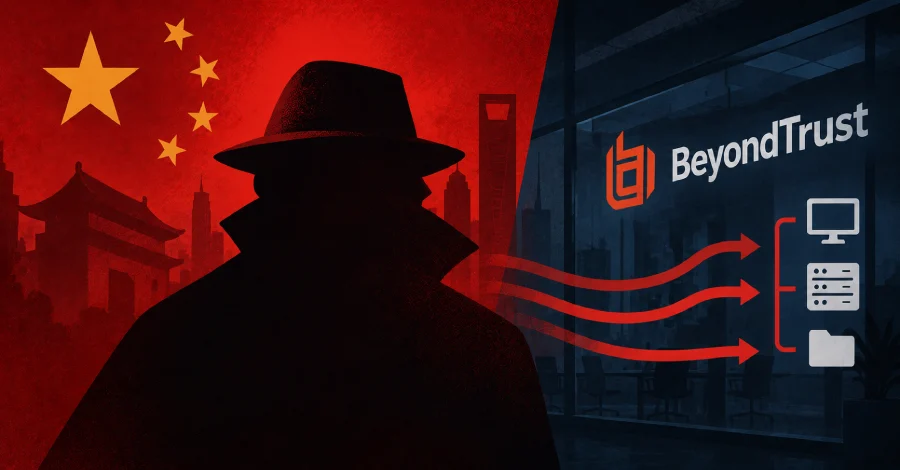
In an increasingly precarious digital landscape, the line between secure infrastructure and compromised networks has once again been blurred. The China-nexus advanced persistent threat (APT) group known as Armory Castle (formerly tracked as UNC5221 or Warp Panda) has demonstrated a chilling level of sophistication, successfully weaponizing a critical zero-day vulnerability in BeyondTrust Remote Support (formerly Bomgar) to infiltrate high-value networks.
The breach, which came to light in late August 2026, underscores a disturbing trend: the systematic targeting of edge appliances by nation-state actors to facilitate long-term intelligence collection. By exploiting CVE-2026-102764, Armory Castle has once again proven that perimeter defense systems are not just entry points, but prime real estate for attackers looking to maintain a persistent, covert presence within global corporate and government infrastructures.
The Anatomy of the Breach: CVE-2026-102764
At the heart of this incident is CVE-2026-102764, a critical vulnerability in BeyondTrust Remote Support that carries a CVSS severity score of 9.3. The flaw is rooted in an improper origin validation mechanism within an internal messaging component of the appliance.
In technical terms, the appliance failed to adequately verify the source of incoming messages. An unauthenticated remote attacker, by manipulating these internal communications, could execute arbitrary file operations on the affected hardware. This is not merely a localized glitch; it is a fundamental breakdown in the trust model of the appliance’s internal architecture.
BeyondTrust, in an urgent security advisory, confirmed that the vulnerability allows for unauthorized manipulation of the appliance’s file system. For an organization relying on Remote Support to manage internal systems, this flaw effectively provides a "skeleton key" to the infrastructure that the appliance is meant to protect.

Chronology of the 2026 Campaign
The timeline provided by BeyondTrust and augmented by researchers at Mandiant (part of Google Cloud) paints a picture of a calculated, stealthy operation.
- August 29, 2026: Armory Castle initiates the first recorded exploitation of the zero-day on a single, self-hosted Remote Support appliance. This indicates that the group had identified the vulnerability well before it was publicly disclosed or patched.
- September 27, 2026: A separate, unrelated security device provider suffers a public exploit, which serves as a catalyst for broader industry-wide scrutiny. Upon observing the tactics used in this secondary incident, BeyondTrust initiates a proactive investigation into its own environment.
- October 9, 2026: BeyondTrust releases critical patches. All SaaS customers are updated automatically, while self-hosted users are urged to manually deploy the BT26-05-RS patch.
- October 16, 2026: Public disclosure of the vulnerability and attribution to Armory Castle, alongside comprehensive mitigation guidelines.
The Armory Castle Modus Operandi
Armory Castle is not a newcomer to the stage of high-stakes cyber espionage. Active since at least October 2023, the group has established a track record of identifying and exploiting zero-days in critical infrastructure components. Their previous exploits—targeting Citrix NetScaler (CVE-2023-4966) and various Ivanti Connect Secure vulnerabilities—demonstrate a consistent preference for "gateway" software.
According to threat intelligence reports, Armory Castle maintains a highly organized approach to cyber warfare. They are believed to keep a "working model" of their targeted products, likely maintained in an AI-augmented environment. This allows them to iterate on exploit chains in real-time, adapting to defensive updates with alarming efficiency.
"The actor uses a zero-day selectively against chosen targets," BeyondTrust noted in their assessment. "Once the vulnerability is public, the actor typically moves to broad exploitation of every instance still unpatched."
The SAWFLY Web Shell and Persistence
Once the initial breach is achieved, the group deploys a lightweight, highly stealthy PHP web shell dubbed SAWFLY. This tool is the centerpiece of their post-exploitation phase, providing:
- Interactive Remote Access: A conduit for manual operator intervention.
- Encrypted C2: Bidirectional communication with their command-and-control infrastructure, masked to blend in with legitimate traffic.
- Persistence: The ability to survive system reboots, ensuring that even if an IT administrator restarts the appliance, the backdoor remains active.
To maintain their anonymity, the operators utilize commercial VPN exit nodes and a network of compromised Small Office/Home Office (SOHO) routers. By routing their traffic through these legitimate, low-profile endpoints, they effectively hide in the noise of global internet traffic.

Implications for Global Security
The implications of the Armory Castle campaign extend far beyond a single software patch. The group’s activities represent a structural threat to the integrity of the global supply chain. By targeting software used by legal services, SaaS providers, technology firms, and government agencies, the actors are casting a wide net for high-value intelligence.
Lateral Movement and Credential Theft
Once inside the appliance, Armory Castle does not simply sit idle. They move to the "crown jewels" of the network. By reading stored secrets and leveraging administrative access, they can pivot to downstream systems, effectively turning the victim’s own remote management tools against them. This is the ultimate "living-off-the-land" strategy—using trusted, authorized tools to conduct unauthorized surveillance.
The "AI-Driven" Threat Landscape
The assertion by researchers that Armory Castle utilizes AI-driven workflows to develop exploit chains is a harbinger of a new era in cybersecurity. If threat actors are utilizing AI to maintain a persistent repository of exploit logic, the "time-to-patch" window for organizations is effectively shrinking. Organizations that take weeks or months to apply security updates are, in this new reality, providing a massive window of opportunity for automated, AI-assisted exploitation.
Official Responses and Remediation
BeyondTrust has taken aggressive steps to mitigate the impact of the flaw. SaaS customers have been updated, and the company has issued clear guidance for self-hosted installations:
- For Versions 24.3.1 through 26.2.3: Immediate application of the BT26-05-RS patch is mandatory.
- For Older Versions: Customers must perform a full version upgrade to a supported release before the patch can be applied.
The Google Threat Intelligence Group (GTIG) and Mandiant researchers have issued a stark warning to the global security community: "Any appliance that was reachable from the internet on a vulnerable version during the exploitation window should be treated as potentially compromised until it has been reviewed."
This is not a recommendation for a simple reboot. It requires forensic analysis of logs, checking for the presence of the SAWFLY web shell, and monitoring for unauthorized outbound connections.

Conclusion: Lessons for the Future
The Armory Castle campaign serves as a grim reminder that no piece of software is inherently secure. The shift toward targeting edge appliances—the very devices meant to secure the perimeter—has created a paradox where the "front door" is the most dangerous part of the house.
To defend against such adversaries, organizations must move beyond a "patch-and-pray" mindset. A robust defense-in-depth strategy, including strict network segmentation, the use of EDR (Endpoint Detection and Response) on critical appliances where possible, and constant behavioral monitoring, is no longer optional.
As Armory Castle continues to evolve its AI-supported attack methodology, the cybersecurity industry must match that pace. The race between those building the defenses and those weaponizing the infrastructure is accelerating, and as of October 2026, the attackers are maintaining a terrifyingly consistent lead. Organizations are encouraged to audit their BeyondTrust environments immediately and treat the threat as an ongoing risk to their intellectual property and operational continuity.


 Basiran
 Iffa Jayyana

 Raul Delapena Setiawan

 Reynand Wu

 Sagoh


 Azzam Bilal Chamdy

 Ali Ikhwan
