
 Ali Ikhwan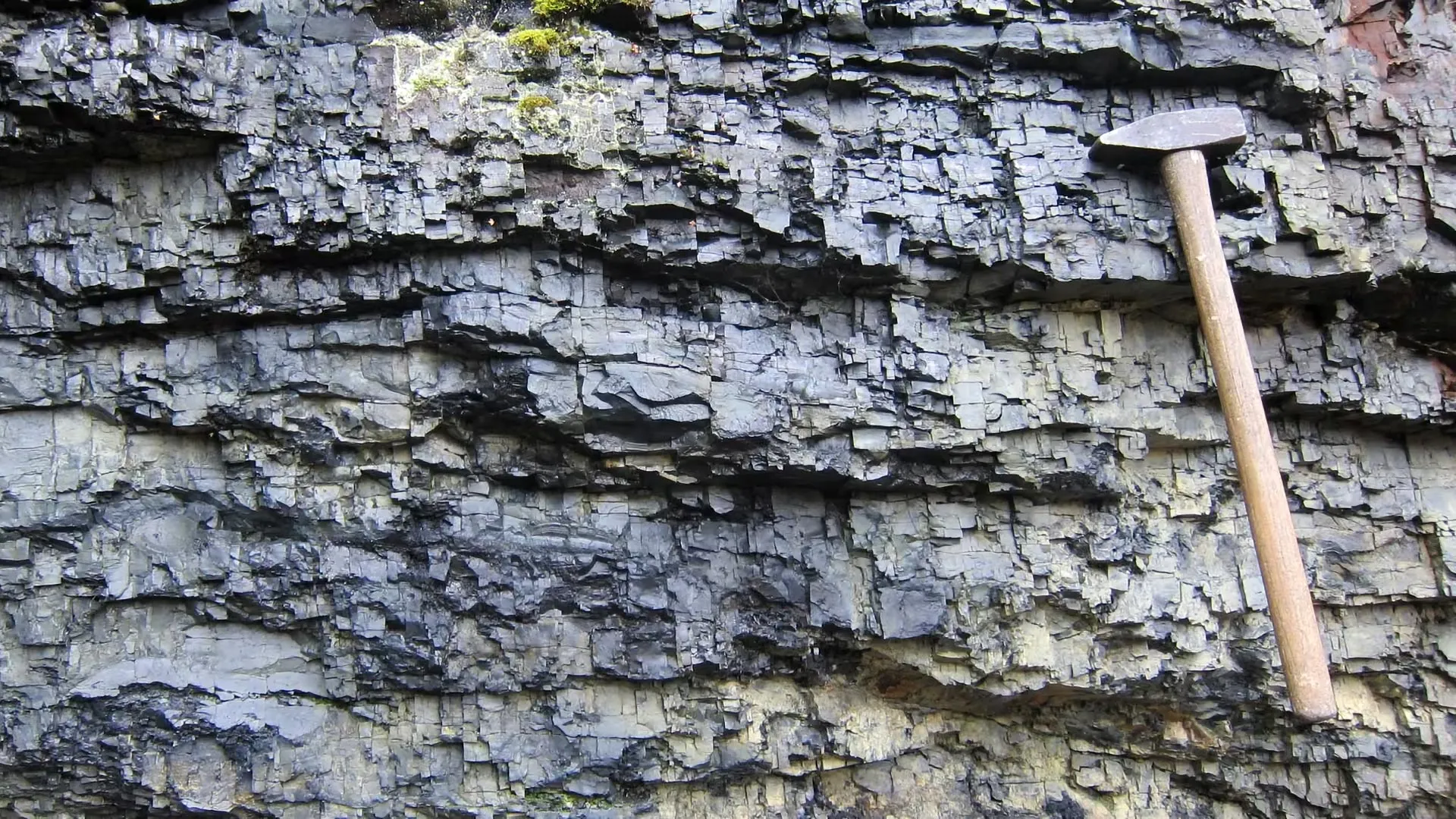
The Great Oxidation: A Planetary Turning Point
Between 2.5 and 2 billion years ago, Earth underwent a metamorphosis of unparalleled significance. Our planet transitioned from an oxygen-poor, methane-rich atmosphere to an oxygenated environment, a chemical sea-change that acted as the primary catalyst for the eventual emergence of complex life. Without this "Great Oxidation Event" (GOE), the subsequent evolution of animals and plants half a billion years ago would have been biologically impossible.
For decades, geologists have scrutinized the rock record to understand the mechanics of this shift. Among the most tantalizing pieces of evidence are unusual carbon-isotope signatures found in ancient marine sediments. These isotopic "fingerprints"—specifically the Shunga-Francevillian event—have long been interpreted as proof of a catastrophic, planet-wide imbalance in the global carbon cycle. However, a groundbreaking study led by researchers at Caltech is now challenging this consensus, suggesting that what we once thought was a global signal may actually be a localized geological phenomenon.
Chronology of a Scientific Reassessment
To understand the gravity of this discovery, one must look at the timeline of Earth’s early geological research.
- 2.5 to 2 Billion Years Ago: The Paleoproterozoic era. Earth experiences the first major influx of oxygen into its atmosphere. Microbial life, sequestered in marine basins, undergoes rapid changes.
- Decades of Interpretation: Scientists studying drill cores from the Zaonega Formation in Russia and the Francevillian Basin in Gabon identify a unique, heavy isotopic signature in the carbon record. This is widely accepted as evidence of a global "reset" in the carbon cycle, triggered by the massive burial of organic matter.
- The Caltech Collaboration: Nivedita Thiagarajan, a senior scientific researcher at Caltech, and her colleagues began a comprehensive re-evaluation of the Russian drill cores. By examining gases trapped in microscopic fluid inclusions—a method akin to inspecting a time capsule—the team began to dismantle the long-held "global" theory.
- 2025 and Beyond: A new international drilling project in Gabon, supported by the International Continental Scientific Drilling Program (ICDP), is currently underway. This campaign represents the next phase of the investigation, aiming to determine if the Gabonese rocks mirror the localized processes discovered in the Russian samples.
Unlocking the Secrets of Ancient Gases
The research, published in the journal Geology under the title "Paleoproterozoic thermogenic hydrocarbon generation, Zaonega Formation, Russia," relies on advanced isotopic analysis of trapped gases.
The Zaonega Formation is famously known as one of the oldest fossil oil fields on Earth. Within these rocks, researchers found microscopic pockets of fluid trapped for two billion years. By analyzing the ratios of carbon isotopes—the varying weights of the element that serve as markers for biological origins—the team was able to reconstruct the environmental history of the site.
"Earth, in a way, went crazy during that time interval when oxygen appeared in the atmosphere," says Aivo Lepland, a researcher at the Geological Survey of Norway (NGU) and co-author of the study. "What we are trying to assess are the causes and consequences of Earth oxygenation. This information is archived in the rocks, so, in order to study what happened, you have to study rocks."
The Role of Pyrobitumen
The researchers focused on rocks rich in pyrobitumen—an insoluble organic material that forms when crude oil or kerogen is subjected to intense subterranean heat. By measuring the isotopes within this material, the team observed patterns that were strikingly similar to those seen in modern oil and gas basins. This observation provided the first clue that the isotopic signal might be the result of internal, site-specific processes rather than a planetary atmospheric shift.
Magma, Methane, and Microbes: A New Hypothesis
The team’s findings suggest a dramatic geological scenario that unfolded beneath the prehistoric oceans. According to the study, a massive sheet of molten magma likely forced its way through layers of organic-rich marine sediment.
The Thermal Chain Reaction
The heat from this magma intrusion acted as a natural refinery, "cooking" the surrounding sediment. This process, known as thermogenic hydrocarbon generation, released methane and propane. As these gases migrated upward through the seafloor, they encountered a thriving community of microbes.
These methane-consuming organisms metabolized the gases and, in the process, left behind a specific carbon-isotope signature. The team verified this theory by mapping the thermal gradient of the region. They identified temperatures as high as 350 degrees Celsius near the magma intrusion, cooling to roughly 72 degrees Celsius near ancient seafloor asphalt spills located 300 meters above.
"This chain of geological and biological processes can account for the unusual carbon-isotope signal recorded at the Zaonega Formation," Thiagarajan explains. "It was interesting to see that some of the same signatures that we observe in modern oil and gas basins are also there and preserved in 2-billion-year-old samples."
Official Perspectives and Scientific Implications
The implications of this research are profound. If the Shunga-Francevillian event is not a global marker, it forces geologists to recalibrate their understanding of Earth’s early oxygenation.
The Case for Localized Events
"One major debate centers on an unusual carbon-isotope signal that has often been interpreted as evidence of a worldwide environmental change," says Thiagarajan. "We found that the carbon-isotope signal at this key site can be explained by local phenomena that occurred in a several-hundred-square-kilometer sedimentary basin rather than across the entire globe."
The research team, which includes Florian Eichinger of Hydroisotop GmbH and Anthony Prave of the University of St. Andrews, emphasizes that while they cannot rule out global atmospheric contributions entirely, the evidence at Zaonega points firmly toward a localized, albeit massive, geologic event. This creates a "reference site" problem: if the primary evidence for a global event is actually local, the entire theory of a synchronous, planet-wide carbon disruption requires rigorous re-examination.
Testing the Theory: The GOE-DEEP Project
Science is a process of refinement, and the next step for this team is to subject the Gabonese samples to the same scrutiny. The GOE-DEEP project is currently at the forefront of this effort.
Following a four-month drilling campaign in Gabon in 2025, a new suite of rock cores has been transported to the Geological Survey of Norway. These cores are scheduled to be analyzed by a massive international consortium comprising researchers from 18 countries.
"Now we can really put things together by doing a similar type of study on the Gabonese rocks to compare the two sites," says Lepland. "This is how science moves forward."
Looking Toward the Future
The goal of this upcoming research is to determine if the Gabonese rocks tell the same story as the Russian ones. If the isotopic signatures in Gabon also show evidence of magma-driven thermogenic activity, it would deal a significant blow to the "global event" hypothesis. Conversely, if the Gabonese samples display a different, truly global signature, it would reaffirm the existence of a massive, planet-wide carbon cycle disruption while refining our understanding of how to differentiate between local and global signals in the ancient rock record.
For now, the geological community waits with bated breath. The work being done by Thiagarajan, Lepland, and their colleagues serves as a potent reminder that our history is written in stone, but the interpretation of that history is constantly subject to the scrutiny of new data. As we peer further into the deep time of our planet, we are discovering that the story of Earth’s oxygenation is far more complex, and perhaps more localized, than we ever dared to imagine.


 Layla Zulfa
 Pevita Pearce
 Nana
Nana
 Rifan Muazin

 Iffa Jayyana