
 Neng Nana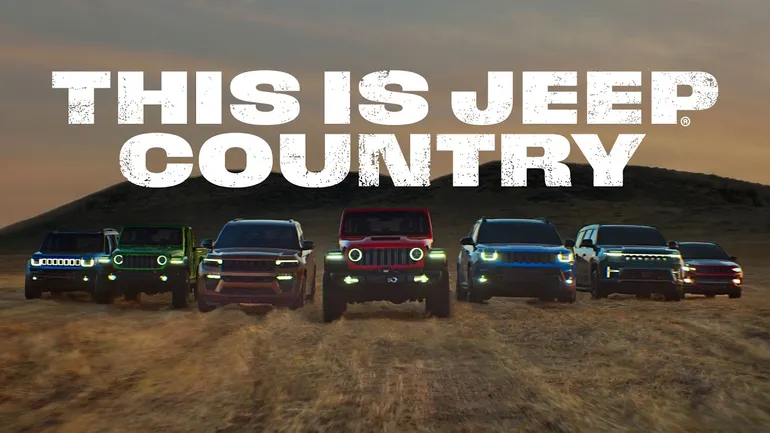
In a landscape defined by political polarization and shifting consumer sentiment, Jeep, the iconic Stellantis SUV brand, has launched an ambitious new marketing campaign titled “This Is Jeep Country.” The initiative, designed to reinforce the brand’s deep-seated American heritage, arrives at a critical juncture for both the company and the nation. As the United States approaches its 250th anniversary, Jeep is positioning itself not merely as a manufacturer of rugged off-road vehicles, but as a cultural artifact that has evolved in lockstep with the American identity for 85 years.
Crafted by the agency Highdive, the campaign is a departure from previous marketing efforts, opting for a narrative that feels less like a traditional commercial and more like a historical chronicle. By weaving together the brand’s military origins with modern, diverse expressions of American life, Jeep is attempting to redefine what "patriotism" looks like in a modern, often fractured, political climate.
Main Facts: The Anatomy of the Campaign
At the heart of the campaign is a "hero spot"—a cinematic advertisement that functions as a visual essay on the history of the United States. The footage oscillates between stark, black-and-white archives of World War II-era Jeeps being deployed to the front lines and vibrant, high-definition clips of contemporary life. The narrative bridges these eras through recurring motifs: Revolutionary War reenactments, the sweat-soaked intensity of a boxer in training, and the raw, unpolished grit of outdoor adventure.
The core creative premise, according to Highdive creative director Jeremy Adams, was born from a simple but profound observation: "America was the Jeep brand’s first customer." This foundational truth serves as the anchor for the entire campaign, allowing the brand to claim an inherent connection to the nation’s history that few other manufacturers can legitimately mirror.
The campaign spans the entirety of the Jeep portfolio, showcasing the Wrangler, Gladiator, Grand Cherokee, Cherokee, Compass, Grand Wagoneer, and the upcoming, all-electric Jeep Recon. By placing these diverse models under the umbrella of "Jeep Country," the brand is attempting to broaden its appeal from traditional off-road enthusiasts to a more inclusive, modern demographic.
A Chronology of Evolution: From War Horse to Lifestyle Brand
To understand the weight of "This Is Jeep Country," one must examine the brand’s trajectory over the last eight decades.
- 1940s-1950s: The Military Roots: Jeep’s genesis lies in the urgent demands of the Second World War. The original Willys MB was the "workhorse" of the Allied forces, a vehicle built for utility, durability, and survival. This era established the "code" referenced in the current campaign’s voice-over: "Build for Uncle Sam long enough, and you start to share a code."
- Late 20th Century: The Civilian Transition: Following the war, Jeep successfully pivoted to the civilian market, transforming its military-grade engineering into the quintessential symbol of American freedom and exploration.
- 2024-2025: The Precursor Efforts: The current campaign is the culmination of a year-long strategy aimed at aligning the brand with the upcoming 250th anniversary of the United States. Previous marketing efforts included partnerships with the Marvel cinematic universe—most notably around Captain America—which leveraged symbols of American iconography to keep the brand top-of-mind.
- August 2026: The Strategic Pivot: With the appointment of Branden Coté as CEO of Jeep on August 3, 2026, and the recent departure of longtime global CMO Olivier François, the brand entered a period of leadership transition. "This Is Jeep Country" serves as the first major creative manifestation of this new executive era.
Supporting Data and Market Context
Jeep’s pivot comes at a time when the broader automotive industry is grappling with a cooling market and, according to recent Gallup polling, a 25-year low in American pride. Brand Keys research, however, consistently ranks Jeep as America’s "most patriotic brand," a status the company is clearly leveraging to build consumer loyalty in a challenging economic environment.
Financially, the brand is showing resilience. In Q2 2026, parent company Stellantis reported a 6% sales increase in the U.S. market, bucking the wider industry trend, which saw a 0.3% decline. This success underscores the efficacy of the "full-funnel" marketing approach employed by the company.
The campaign’s reach is significant, targeting massive audiences through NFL broadcasts—a bastion of American cultural consumption—as well as digital, connected TV, and major streaming platforms including Disney+, Paramount+, Max, and Peacock. By utilizing these channels, Jeep is ensuring that its message of "American grit" reaches both legacy fans and younger, cord-cutting audiences.
Official Responses: Defining the New Tone
Lindsay Dyer Fifelski, who has headed Jeep’s U.S. advertising since May 2026, describes the new tone as "bold and forward." She notes that while the brand is acutely aware of the political divide currently defining the national conversation, it has chosen to focus on the common denominators of the American experience: freedom, grit, and the spirit of adventure.
"We really wanted the creative to feel extremely culturally grounded," Dyer Fifelski said regarding the campaign’s tailored extensions for Hispanic and African-American audiences. For the Black-targeted spots, the message highlights that "freedom was never a finished road—it’s one we’re still paving." The Hispanic-targeted creative emphasizes that "America is who we are, and you are America," effectively democratizing the concept of the "American Dream" that Jeep has historically represented.
When asked about the global viability of a campaign so deeply rooted in U.S. nationalism, Dyer Fifelski was firm: "Jeep Country isn’t a specific place. It’s an attitude. It’s a mindset. It’s a way of life." This suggests that while the current imagery is American, the brand intends to export this "pioneering spirit" as a universal value proposition in international markets.
Implications: The Future of Brand Patriotism
The "This Is Jeep Country" campaign carries several long-term implications for the automotive sector:
- The Shift Toward Inclusive Patriotism: Jeep is navigating a tightrope, attempting to appeal to a sense of national pride without alienating a diverse, global customer base. By reframing patriotism as a "work in progress" (as seen in the African-American-targeted ads), the brand is attempting to modernize what it means to be an American company.
- Leadership-Driven Rebranding: The influence of the new Stellantis leadership—specifically the $70 billion, five-year strategic plan announced in May 2026—is evident. The campaign signals a move toward a more cohesive, aggressive, and unified brand identity under the new management team.
- The Persistence of Traditional Media: Despite the digital-first era, Jeep’s heavy reliance on the NFL and premium streaming platforms proves that "event-based" television remains the primary vehicle for building brand stature in the automotive world.
- Resilience Through Narrative: As electric vehicles (like the new Jeep Recon) continue to enter the lineup, the brand must ensure that its historical "rugged" identity translates to a battery-powered future. By linking the brand’s history to an "attitude" rather than just a mechanical engine, Jeep is future-proofing its identity against the industry’s transition to electrification.
Ultimately, "This Is Jeep Country" is an exercise in brand preservation. By tethering its identity to the 250-year-old story of the United States, Jeep is insulating itself from the volatility of the automotive market. Whether this bold, patriotic tone will resonate with a younger generation that is increasingly skeptical of corporate nationalism remains to be seen. However, as it stands, Jeep is doubling down on the premise that when the world feels uncertain, there is a powerful comfort in the heritage, durability, and, above all, the story of the road ahead.

 Jia Lissa
 Basiran
 Nila Kartika Wati
 Sagoh
Sagoh

 Lina Hope