
 Muslim
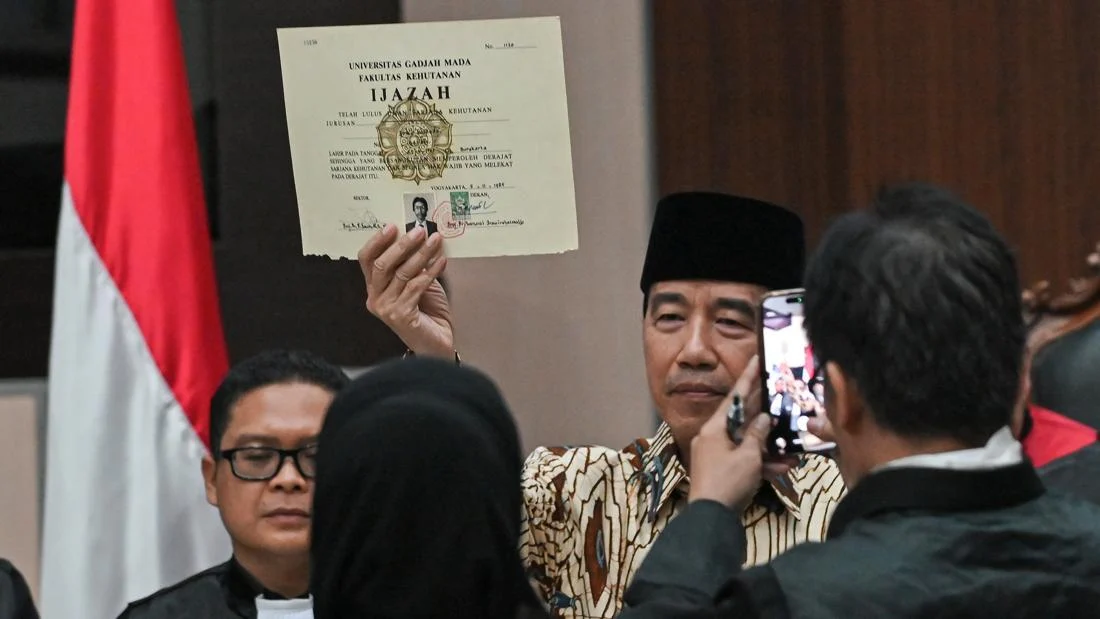
Jakarta, Indonesia – In an unprecedented move for a sitting Indonesian head of state, President Joko Widodo (Jokowi) appeared as a witness at the East Jakarta District Court on Thursday, November 5, 2026. The President’s testimony came in the high-profile defamation case against Roy Suryo, a former Minister of Youth and Sports, who stands accused of spreading false information regarding President Widodo’s academic credentials. The court session saw President Jokowi meticulously recount his educational history, from his foundational years in primary school through to his graduation from one of Indonesia’s most prestigious universities, Gadjah Mada University (UGM).
The President’s presence in court underscored the gravity with which his administration views the proliferation of disinformation, particularly when it targets the integrity of the nation’s leadership. His detailed account aimed to definitively quash persistent rumors and accusations that have plagued his public life for years, culminating in a legal battle that has drawn national attention.
Main Facts: A President’s Stand Against Disinformation
President Joko Widodo, Indonesia’s seventh president, took the witness stand to directly address accusations that his academic degree from Gadjah Mada University was fraudulent. The defendant, Roy Suryo, is facing charges related to defamation and the spread of hoaxes, specifically through posts on social media platforms, including X (formerly Twitter). The core of the accusation against Roy Suryo revolves around his alleged dissemination of content questioning the authenticity of President Widodo’s undergraduate diploma.
During his testimony, President Jokowi calmly and systematically outlined his educational trajectory: from his elementary school days at SD Negeri Nomor 111 Surakarta, through SMP Negeri 1 Surakarta and SMA Negeri 6 Surakarta, culminating in his higher education at the Faculty of Forestry, Gadjah Mada University. This detailed exposition served as a direct rebuttal to the allegations, providing a verifiable timeline of his academic pursuits.
The President revealed that the accusations of a fake diploma had been circulating since 2020, intensifying significantly in 2024 and 2025. He described these persistent allegations as having crossed a line, becoming "kebablasan" – an Indonesian term signifying something that has gone too far or become excessive and out of control. It was this perceived escalation and the sheer volume of unsubstantiated claims, amplified through social media videos and posts, that ultimately prompted him to consult legal counsel and initiate a police report. His appearance in court, therefore, was not merely a procedural requirement but a deliberate public affirmation of his personal and academic integrity, sending a clear message against the unchecked spread of falsehoods.
Chronology: The Escalation of a Persistent Claim
The legal proceedings against Roy Suryo are the culmination of a protracted campaign of disinformation targeting President Joko Widodo’s academic background. Understanding the timeline of these events is crucial to grasping the significance of the President’s testimony.
Early Origins (Pre-2020): While the specific fake diploma claims intensified later, political discourse in Indonesia, particularly around election cycles, has often been marred by personal attacks and character assassination. President Widodo, a figure who rose from outside the traditional political elite, has frequently been a target of such campaigns, including questions about his origins and identity.
Emergence of Specific Claims (2020): According to President Jokowi’s testimony, the allegations concerning his supposedly fake diploma first surfaced around 2020. This period coincided with heightened political tensions, even outside major election years, as various factions sought to undermine the incumbent administration. These initial claims, often circulated through anonymous channels and fringe media, began to sow seeds of doubt.
Intensification and Digital Amplification (2024-2025): The accusations gained significant traction and became "increasingly rampant" during 2024 and 2025. This period saw a noticeable shift in the nature and scale of the disinformation campaign. With the proliferation of social media platforms, particularly X (formerly Twitter) and various video-sharing sites, the claims rapidly reached a wider audience. Content, often decontextualized or fabricated, was designed to appear credible, leveraging the virality of digital media. The President specifically referenced "two videos and one post on X" that were presented to him by his aide, which he deemed particularly egregious and indicative of the "kebablasan" nature of the attacks.
Legal Consultation and Police Report (Early 2025): Faced with the unrelenting and escalating nature of these allegations, President Jokowi took decisive action. He consulted with his legal advisors to explore available remedies. The decision was made to pursue legal recourse by filing a police report, signaling a departure from merely ignoring the rumors to actively countering them through the judicial system. This move highlighted a strategic shift in combating disinformation, moving from passive defense to active prosecution of those spreading falsehoods.
UGM’s Proactive Affirmation (April 2025): In a significant development preceding the court hearing, Gadjah Mada University, President Widodo’s alma mater, issued a comprehensive official statement in April 2025. This statement unequivocally affirmed Joko Widodo as a legitimate alumnus of its Faculty of Forestry, providing specific dates of enrollment (1980) and graduation (November 5, 1985), along with his student identification number. This proactive institutional response aimed to provide authoritative proof against the circulating allegations, reinforcing the President’s academic integrity.
The Court Hearing (November 5, 2026): The culmination of these events was President Jokowi’s appearance as a witness in the East Jakarta District Court on November 5, 2026. His direct testimony served as the most definitive public statement on the matter, providing first-hand accounts of his academic journey and directly confronting the allegations in a formal legal setting. This marked a pivotal moment in the legal battle against Roy Suryo, as the prosecution sought to establish the falsity of the defendant’s claims using the highest officeholder’s direct testimony.
Ongoing Legal Process: The trial against Roy Suryo continues, with President Jokowi’s testimony forming a crucial part of the prosecution’s evidence. The outcome of this case will not only determine the fate of the defendant but also set an important precedent for how Indonesia addresses disinformation campaigns targeting public figures.
Supporting Data: Contextualizing the Claims and Responses
The controversy surrounding President Jokowi’s diploma is not an isolated incident but rather indicative of broader trends in Indonesia’s political landscape, characterized by the weaponization of information and challenges to institutional integrity.
The Landscape of Disinformation in Indonesia: Indonesia, like many democracies, grapples with a persistent problem of hoaxes and disinformation, particularly amplified during election cycles or periods of political tension. These campaigns often exploit existing societal divisions, target public trust in institutions, and aim to discredit political opponents. President Jokowi has been a frequent target of such attacks, ranging from claims about his ethnic background to his religious beliefs, and now, his academic credentials. The "fake diploma" narrative taps into anxieties about elite legitimacy and can be particularly damaging to a leader whose public image is built on authenticity and a humble background. The proliferation of such content poses a significant threat to democratic discourse and social cohesion.
Academic Structure at UGM in the 1980s: President Jokowi’s explanation regarding the absence of formal "jurusan" (majors) within the Faculty of Forestry at UGM during his time as a student (1980-1985) provides crucial context. Many Indonesian universities, particularly in technical and scientific fields during that era, operated with a more flexible curriculum structure for undergraduate programs. Instead of rigidly defined "majors" from the outset, students often pursued a broad foundational education within their faculty and then specialized by selecting a concentration of elective courses.
Jokowi detailed this system: "So, in the Faculty of Forestry, since I entered, there was no such thing as a ‘major.’ But we, the students, were given the choice to take elective courses. It was there that some of us would say, ‘Oh, you are in the wood technology or forest product technology major. You are in the silviculture major. You are in the forest economics major. Oh, you are in the forest conservation major.’" He further clarified that his personal focus was on "forest product technology" or "wood technology" because he chose a significant number of relevant electives, including courses like "wood structure and properties," "wood drying," "wood preservation," "pulp and paper," "plywood industry," and "sawmilling." This comprehensive selection led his peers to informally associate him with that specialization. This practice was common and legitimate, differing from the more compartmentalized "major" systems adopted by some universities in later decades or in other academic disciplines. His detailed account underscores the legitimacy of his specialization despite the lack of a formal "major" designation on his diploma.
Legal Framework: The ITE Law: The defamation charges against Roy Suryo are likely brought under Indonesia’s Electronic Information and Transactions (ITE) Law (Undang-Undang Informasi dan Transaksi Elektronik). This law, enacted in 2008 and amended in 2016, criminalizes various forms of online content, including defamation, hate speech, and the spread of false information (hoaxes). While controversial for its potential to stifle free speech, the ITE Law is frequently invoked by public figures to counter what they perceive as libelous or misleading online content. For spreading hoaxes, Article 28 of the ITE Law carries potential penalties of imprisonment and fines. The prosecution’s case hinges on proving that Roy Suryo knowingly disseminated false information with the intent to defame President Jokowi. The President’s testimony, corroborated by UGM’s official statement, serves as direct evidence to establish the factual falsity of the defendant’s claims.
Official Responses: Unwavering Support and Institutional Integrity
The responses from both President Jokowi and Gadjah Mada University have been clear, consistent, and unequivocal, aiming to leave no room for doubt regarding the President’s academic credentials.
President Jokowi’s Direct Testimony: President Widodo’s decision to personally testify in court is a powerful statement. Rather than allowing his legal team to handle all aspects, his direct engagement lends significant weight to the proceedings. His demeanor in court was reportedly calm and methodical, as he systematically dismantled the claims by simply stating facts. His detailed recitation of his school names, locations, and the specific faculty at UGM he attended was a deliberate act of transparency. The emphasis on the specific elective courses he took at UGM, which led to his informal "wood technology" specialization, was crucial in explaining away any potential confusion arising from the absence of a formal "major" on his diploma. By directly addressing these specifics, Jokowi aimed to leave no ambiguity and to underscore that his academic journey was legitimate and verifiable. His testimony wasn’t just about winning a legal case; it was about reaffirming his personal narrative and integrity in the face of relentless attacks.
Gadjah Mada University’s Official Statement (April 2025): Long before the court hearing, UGM, as an esteemed academic institution, took a proactive stance to defend the integrity of its alumni and its own records. In April 2025, the university issued a comprehensive official statement that left no ambiguity. The statement, signed by the University Secretary, Dr. Andi Sandi Antonius Tabusassa Tonralipu, SH, LL M, explicitly confirmed:
- "Joko Widodo is an alumnus of the Faculty of Forestry, Universitas Gadjah Mada."
- "The individual concerned has completed the entire study process which began in 1980 with student number 80/34416/KT/1681 and graduated on November 5, 1985."
Furthermore, UGM underscored its commitment to institutional principles:
- The statement was "not related to conflicts of interest of any party," emphasizing its neutrality and academic integrity.
- UGM, as a public institution, is "bound by laws and regulations relating to personal data protection and Public Information Disclosure." This highlights the balance the university must strike between transparency and privacy.
- Crucially, UGM stated, "UGM is only willing to show data that is public, while data that is personal will only be provided if officially requested by law enforcement officials." This last point is significant, as it indicates the university’s careful adherence to legal protocols, providing public confirmation while reserving more sensitive personal academic records for official legal requests, such as those from the court. This robust and detailed statement from UGM provides independent, institutional corroboration of President Jokowi’s testimony, significantly strengthening the prosecution’s case.
Implications: Setting a Precedent in the Fight Against Hoaxes
The trial involving President Joko Widodo’s testimony and the charges against Roy Suryo carries significant implications, not only for the individuals involved but also for the broader political and legal landscape of Indonesia.
For Roy Suryo: If found guilty, Roy Suryo faces potential imprisonment and fines under the ITE Law. Beyond the legal penalties, a conviction would severely damage his public image and political career. As a former minister and a prominent public figure, his actions are under intense scrutiny, and a guilty verdict would serve as a stark reminder of the consequences of spreading disinformation. This case could mark a definitive end to his credibility in public discourse.
For President Jokowi: The President’s direct testimony and the consistent support from UGM effectively reinforce his legitimacy and integrity. By actively participating in the legal process, Jokowi sends a strong message that his administration will not tolerate baseless attacks on his character and credentials. This proactive stance could strengthen public trust in his leadership and demonstrate a commitment to truth in an era rife with falsehoods. It also sets a precedent for how high-ranking officials might choose to address similar smear campaigns in the future, signaling a move towards legal recourse rather than simply ignoring the accusations.
For Indonesian Politics and the Fight Against Disinformation: This trial serves as a high-profile example of the ongoing battle against hoaxes and disinformation in Indonesian politics. With general elections having recently passed and future political contests always on the horizon, the spread of false information remains a significant challenge. The outcome of this case could establish a critical legal precedent, potentially deterring others from engaging in similar campaigns of character assassination through fabricated claims. It underscores the judiciary’s role in upholding truth and accountability in the digital sphere. The fact that a sitting President chose to testify personally highlights the severity of the disinformation problem and the commitment to combating it through legal means. This could encourage a more responsible information ecosystem, where claims are scrutinized, and those who propagate falsehoods face genuine legal repercussions.
For Academic Institutions: UGM’s strong and proactive defense of its alumnus reinforces the importance of academic institutions in maintaining the integrity of their records and supporting their graduates. Their clear statement, balancing transparency with data privacy, provides a model for how universities can respond to challenges against the credentials of their alumni, particularly when those individuals hold prominent public office. It reaffirms the value and credibility of higher education degrees in the face of attempts to undermine them.
In conclusion, President Jokowi’s testimony in the Roy Suryo defamation trial is a landmark event. It not only addresses specific allegations against the President but also represents a broader stand against the corrosive impact of disinformation on democratic processes and public trust. The outcome will undoubtedly resonate throughout Indonesian society, shaping future discourse and the legal approach to combating online falsehoods.


 Nila Kartika Wati
 Nana Wu
 Azzam Bilal Chamdy
 Ammar Sabilarrohman

 Lina Hope
 Asro
 Suro Senen
