
 Siti Muinah
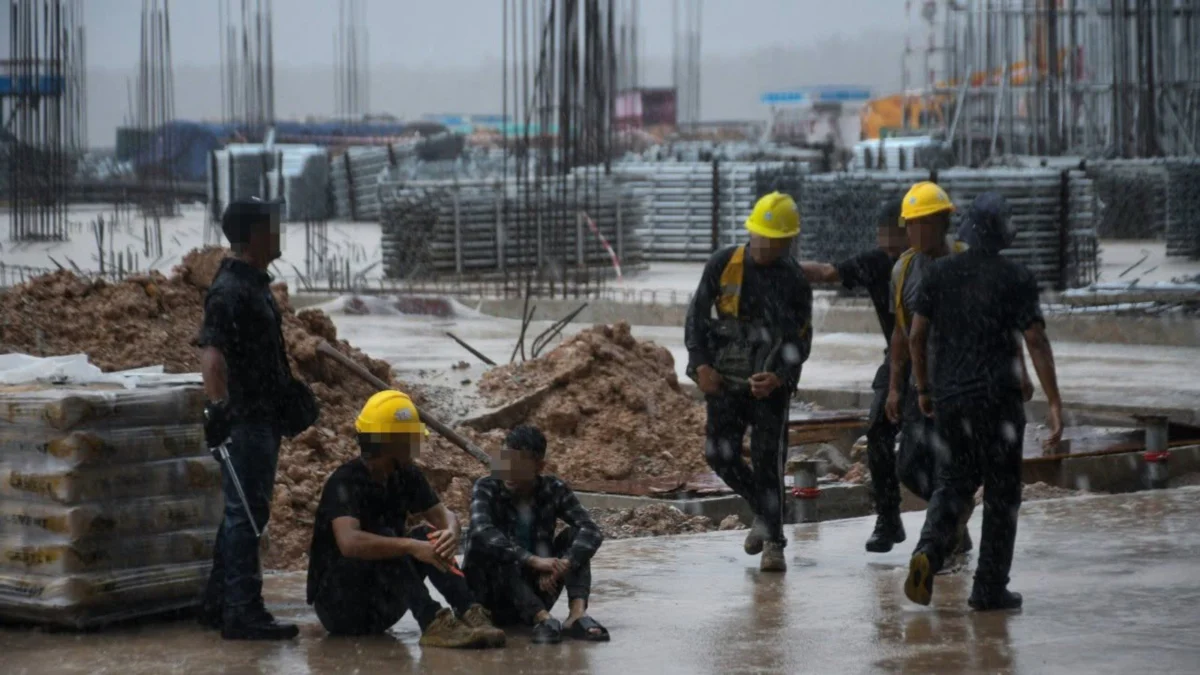
KULIM, KEDAH – In one of the most significant enforcement actions targeting undocumented labor in recent years, the Malaysian Immigration Department (JIM) successfully executed a massive sting operation at a sprawling construction site in Padang Meha, Kulim. Conducted on October 12, 2026, the operation—codenamed Ops MEGA—resulted in the detention of 630 foreign nationals following a high-tension pursuit through hazardous terrain and unfinished infrastructure.
The operation underscores the Malaysian government’s intensifying crackdown on immigration violations within the construction sector, a move aimed at tightening national security and ensuring that all foreign labor adheres to the strict legal frameworks governing employment and residency.
I. The Core Facts: A Large-Scale Mobilization
The enforcement action began at approximately 11:00 AM on a Saturday, targeting a massive construction project spanning nearly 500,000 square meters. The scale of the site required a sophisticated, multi-agency approach, drawing resources not just from local Kedah units but from across the Malaysian peninsula.
According to official statements released by the Kedah Immigration Department on October 13, a total of 159 immigration officers were deployed for the mission. This elite force comprised personnel from:
- JIM Headquarters Enforcement Division
- Intelligence and Special Operations Division
- Special Tactical Team (PASTAK)
- Regional Immigration Departments from Kedah, Perlis, Perak, Kuala Lumpur, and Negeri Sembilan.
By the end of the day, officers had screened a total of 697 individuals, including both foreign nationals and Malaysian citizens. Of those screened, 630 individuals—approximately 90% of the group—were found to be in violation of various immigration laws and were subsequently detained. The group of detainees consisted of 622 men and eight women, aged between 18 and 50.
II. Chronology of the Operation: "Ops MEGA"
The success of the October 12 raid was not a matter of chance but the result of weeks of meticulous intelligence gathering.
Intelligence Gathering
The Intelligence and Special Operations Division of JIM, in collaboration with the Kedah Immigration Department, had been monitoring the Padang Meha site for some time. Reports had surfaced regarding a high concentration of foreign workers whose documentation status appeared irregular. Using a combination of ground surveillance and data cross-referencing, authorities identified the optimal window for a "saturation" raid—a time when the maximum number of workers would be present on-site.
The Morning of the Raid
At 11:00 AM, the 159-man team moved in to seal all primary and secondary exits of the 500,000-square-meter site. The presence of the Special Tactical Team (PASTAK) was crucial, as these officers are trained to handle high-risk environments and potential resistance.
The arrival of the authorities triggered immediate chaos. Recognizing the potential for deportation, scores of workers attempted to flee into the labyrinthine structures of the unfinished buildings. The operation quickly turned into a tactical pursuit across a site fraught with physical dangers.
Adverse Conditions
The environmental factors on the day of the raid added a layer of complexity to the enforcement effort. Heavy tropical rain had lashed the region, leaving the ground saturated and pathways transformed into thick, slippery mud. Stagnant water pools hidden beneath construction debris created additional hazards for the pursuing officers.
Despite the mud, the height of the buildings, and the presence of exposed reinforcing steel (rebar) and open lift shafts, the immigration teams managed to secure the perimeter and systematically round up those attempting to hide. By mid-afternoon, the situation was brought under control, and the processing of detainees began.
III. Supporting Data: Demographics and Legal Violations
The data emerging from the raid provides a revealing snapshot of the demographic makeup of the undocumented labor force in Malaysia’s northern construction corridor.
Nationalities of Detainees
The detainees represented 11 different countries, highlighting the global nature of labor migration to Malaysia. The breakdown is as follows:
- China: 396 (391 men, 5 women) – The largest contingent.
- Bangladesh: 199 (198 men, 1 woman)
- Pakistan: 10 men
- Myanmar: 7 men
- India: 5 men
- Ghana: 4 men
- Nigeria: 3 men
- Kenya: 2 men
- Indonesia: 2 women
- New Zealand: 1 man
- Senegal: 1 man
The presence of a New Zealand national and individuals from several African nations suggests that immigration non-compliance is not limited to traditional labor-sending countries in South and Southeast Asia, but spans a wider array of professional and non-professional roles within the construction industry.
The Legal Framework
The 630 individuals were arrested under three primary sections of Malaysian law:
- Section 6(1)(c) of the Immigration Act 1959/63: This pertains to entering and staying in Malaysia without a valid pass or permit. This is often the most common charge for those who entered the country via unofficial channels or never obtained a work permit.
- Section 15(1)(c) of the Immigration Act 1959/63: This covers individuals who remained in the country after the expiry or cancellation of their permit (overstaying).
- Regulation 39(b) of the Immigration Regulations 1963: This is applied when a foreign national violates the conditions of their permit—for example, a person holding a social visit pass who is found working on a construction site.
In addition to the 630 arrests, the department issued six summonses to witnesses. These are typically served to site managers, supervisors, or Malaysian colleagues who are required to assist the department in the ongoing investigation into the hiring practices of the companies involved.
IV. Tactical Challenges and Operational Hazards
The Kedah Immigration Department highlighted the "cat and mouse" games played by the detainees during the raid. The sheer size of the construction site—equivalent to roughly 70 football pitches—made it a difficult environment to police.
Evasion Tactics
Reports from the field indicated that several workers climbed onto the roofs of unfinished high-rise buildings to avoid capture. Others hid in crawl spaces, ventilation ducts, and behind stacks of construction materials. The department noted that "provocative actions" were taken by a group of detainees against the officers. While the nature of these provocations was not detailed, it required the immigration teams to exercise "swift and decisive action" to maintain order and ensure the safety of both the officers and the detainees.
Site Hazards
The logistical hurdles were immense. Officers had to navigate:
- Slippery surfaces and mud due to heavy rain.
- Exposed hazards, such as moving heavy machinery and unsecured scaffolding.
- Structural risks, including open lift shafts and unfinished stairwells without railings.
The fact that the operation concluded without major injuries to the 159 officers or the 697 people screened is a testament to the professionalism and tactical training of the JIM units involved.
V. Official Responses and Industry Warnings
Following the operation, the Kedah Immigration Department issued a stern warning to the corporate entities that oversee such projects.
Accountability for Employers
The department reminded employers, main contractors, and subcontractors that the legal responsibility for the status of workers lies squarely on their shoulders. Under Malaysian law, companies found to be harboring or employing undocumented migrants can face heavy fines, imprisonment, and in some cases, corporate blacklisting.
"We urge all employers to ensure that every foreign worker in their service possesses a valid travel document and the correct work permit," the department stated. "Ignorance of a subcontractor’s hiring practices is not a valid legal defense."
Commitment to Continued Enforcement
JIM has signaled that Ops MEGA is part of a broader, ongoing strategy. The department stated it would "continue to intensify enforcement action" across the state and the country. This indicates that the construction industry, which historically relies heavily on foreign labor, will remain under high scrutiny for the foreseeable future.
VI. Broader Implications for Malaysia
The Kulim raid serves as a microcosm of the larger labor challenges facing Malaysia in 2026.
Economic Impact
The detention of 630 workers at a single site will undoubtedly lead to significant delays for the Padang Meha project. For the construction industry, such raids highlight the precarious nature of relying on undocumented labor. While "informal" hiring may lower costs in the short term, the risk of massive operational shutdowns and legal penalties presents a significant threat to project viability.
National Security and Policy
The diverse range of nationalities found in this raid suggests that Malaysia remains a highly attractive destination for global labor, but also indicates gaps in the visa monitoring system. The government’s decision to deploy PASTAK and multi-state units shows a shift toward a "zero-tolerance" enforcement posture.
This may lead to a renewed push for the recalibration of foreign workers, a program where undocumented workers are given a path to legalize their status or return home without prosecution. However, the intensity of Ops MEGA suggests that for those who choose to remain in the shadows, the window for leniency is closing.
Human Rights and Safety
The reports of workers climbing onto roofs and hiding in dangerous areas during the raid raise concerns about the desperation of the undocumented population. While the immigration department is tasked with enforcing the law, the industry must also grapple with the safety conditions that lead to such high-risk evasion tactics.
Conclusion
The October 12 operation in Padang Meha stands as a landmark enforcement action for the Kedah Immigration Department. By detaining 630 individuals across 11 nationalities, JIM has sent a clear message to the construction sector: the era of turning a blind eye to undocumented labor is over.
As the 630 detainees await processing and eventual deportation, the focus now shifts to the employers and contractors. The investigation into the "witnesses" and the companies behind the project will determine whether the legal consequences extend beyond the workers to the entities that fueled the demand for their labor. For the Malaysian construction industry, the Kulim raid is a stark reminder that compliance is no longer optional—it is a prerequisite for doing business.


 Nana


 Raul Delapena Setiawan

 Reynand Wu

 Sagoh


 Azzam Bilal Chamdy

 Ali Ikhwan
