
 Lina Hope
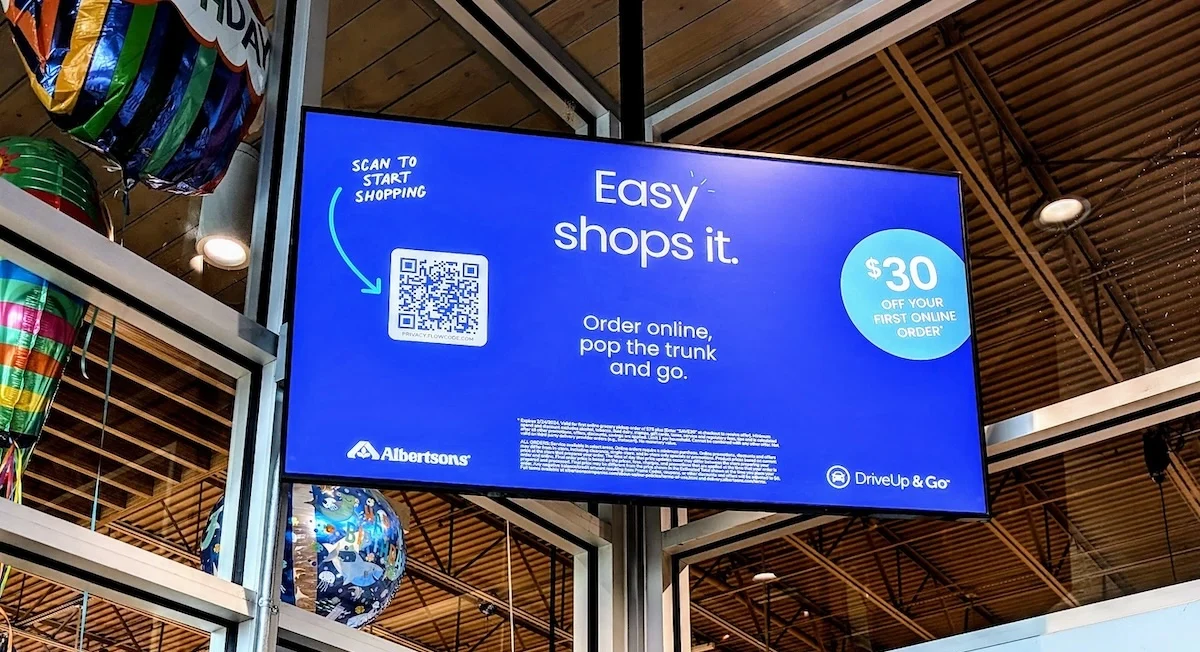
The year 2026 has proven to be a crucible for the American retail sector. With inflation remaining stubbornly high and consumer sentiment oscillating between caution and fatigue, the grocery industry has found itself at a crossroads. Yet, even against this backdrop of sector-wide volatility, the second-quarter earnings report released by Albertsons Companies this Tuesday stood out for its bleakness. As the company grapples with shrinking margins and a fundamental loss of consumer relevance, the grocery giant finds itself in an existential race against time.
The Core Data: A Quarter of Contraction
The numbers released by Albertsons paint a picture of a business struggling to find its footing. For the second quarter, the company reported a 0.8% decline in comparable sales year-over-year—a metric that, while seemingly small, signals a dangerous retreat in an industry that relies on high-volume consistency.
The bottom-line figures were even more sobering. Net income plummeted to $52 million, a stark drop from the $168.5 million reported during the same period in 2025. This precipitous decline forced leadership into an unusual position: they officially withdrew the company’s full-year guidance, a move that effectively signals a loss of visibility and control over their own fiscal trajectory for the remainder of the year.
A Chronology of Instability: From Merger Hopes to Strategic Limbo
To understand the current crisis, one must look at the recent history of Albertsons, a company that has spent the better part of two years in a state of corporate upheaval.
- 2024: The federal court system blocks the long-anticipated merger between Albertsons and Kroger, citing antitrust concerns. The collapse of the deal leaves Albertsons in a precarious financial position, lacking the scale and synergies it had banked on to compete with industry titans.
- Late 2024 – Early 2025: Albertsons initiates legal proceedings against Kroger, alleging a lack of "best efforts" in securing regulatory approval. The animosity culminates in recent court filings revealing that Albertsons is seeking no less than $8 billion in damages from its former suitor.
- Fall 2026: Recognizing the need for a radical shift in strategy, the board appoints former eBay and Hewlett-Packard CEO Meg Whitman as executive chair. Her mandate is clear: serve as a strategic architect to CEO Susan Morris and catalyze a turnaround.
- Present Day: The "ACI Edge" restructuring program, designed to streamline operations by moving from 11 regional divisions to four, is currently underway. However, market analysts suggest these structural tweaks may be too little, too late.
The Identity Gap: Why Consumers are Looking Elsewhere
At the heart of the debate over Albertsons’ future is a fundamental question of brand identity. For decades, the company thrived by occupying a "middle-ground" position—a reliable, if unremarkable, place to pick up items that a primary grocery trip might have missed.
However, the modern grocery landscape has evolved into a hyper-competitive arena. Albertsons is no longer just competing with regional chains; it is battling the relentless efficiency of club retailers like Costco, the technological superiority of Amazon, and the specialized, low-cost appeal of discounters like Aldi.
The "Secondary Trip" Problem
Bryan Gildenberg, founder and CEO of Confluencer Commerce, argues that Albertsons’ historical strength—being a convenient "second stop"—has been dismantled by e-commerce. "The competition for that secondary trip has become way more intense," Gildenberg noted. "Shoppers can now buy much of what they would have picked up on that second run online, often at a better price and with greater convenience."
A Fading Premium
Safeway, one of Albertsons’ most prominent banners, is a case study in this decline. According to industry analysts, Safeway has been hemorrhaging market share to Costco for two decades. More recently, the rise of Sprouts Farmers Market has effectively "disintermediated" the brand by offering a superior value proposition for premium and health-conscious products.
Official Perspectives: Leadership Calls for Speed
During Tuesday’s earnings call, the tone from leadership was one of blunt admission. Meg Whitman, stepping into her role with the gravity the situation demands, did not mince words regarding the company’s current standing.
"Our performance has fallen short," Whitman stated. "Sales and earnings growth have not met our expectations." She emphasized that she and CEO Susan Morris are in full alignment regarding the need for radical change. "Everything should be on the table," she added, "as we figure out how Albertsons should be structured to better compete in the years ahead."
CEO Susan Morris highlighted the aggressive cost-reduction efforts and initiatives to improve product quality and variety. However, the lack of granular detail regarding the performance of individual banners left investors and analysts wanting more. When pressed on the specifics, management remained guarded, suggesting that the company is still in the early, messy stages of its internal overhaul.
Strategic Implications: The Path Forward
The path to recovery for Albertsons is narrow and fraught with structural obstacles. Analysts point to several critical areas that require immediate attention if the company is to survive as an independent entity or prepare itself for a future sale.
1. The "Tired Store" Dilemma
Neil Saunders, managing director at GlobalData Retail, believes the physical experience is a major deterrent. "Too many of these stores are old-fashioned and tired," Saunders observed. "In some, the shopping experience is dispiriting and looks like it is stuck in the 1990s." He argues that to survive, Albertsons must pivot toward providing "inspiration and excitement," something currently missing from its aisles.
2. Maximizing Private Label Potential
While Albertsons boasts strong private-label lines like Signature Select, these products are often underutilized. Saunders suggests that the company needs to aggressively market these goods through in-store tastings, meal kits, and promotional events, rather than letting them languish on shelves.
3. The Digital Tug-of-War
Albertsons has invested heavily in its e-commerce infrastructure and retail media capabilities, with digital sales up 11% year-over-year. Yet, there remains an unresolved tension regarding its digital interface. As Gildenberg notes, Albertsons has struggled to decide if it wants to be an omni-channel master or if it should simply outsource its logistics to players like Instacart. This ambiguity has prevented the company from developing a cohesive, proprietary customer experience.
4. The $8 Billion Lifeline
The ongoing legal battle with Kroger represents a potential, albeit temporary, source of liquidity. While an $8 billion settlement would provide the capital necessary to pay down debt or reinvest in store modernization, experts warn against viewing it as a panacea. "This lifeline cannot be relied upon as a savior of the business," Saunders warned. "It provides relief on the cost side, but it does nothing to fix the fundamental disconnect between the brand and the consumer."
Conclusion: A Business at the Brink
Albertsons is a sprawling enterprise, managing over 2,200 stores across 22 different banners. This size, once considered a moat, has become a burden in an era that demands agility and a razor-sharp value proposition. As the company moves to consolidate its operations under the ACI Edge initiative, it must also grapple with the reality that its current business model is being squeezed from all sides.
Whether Albertsons can successfully reinvent itself into a "destination grocer"—a place where customers choose to shop for the experience, quality, and value rather than out of mere convenience—remains to be seen. For now, the company remains in a state of transition, caught between the echoes of a failed merger and the daunting necessity of a total strategic pivot.
Stat of the Week
1 Million: The total number of robots now deployed across Amazon’s global fulfillment centers, highlighting the widening technological gap between traditional grocers and tech-integrated retail giants.


 Reynand Wu
 Iffa Jayyana

 Raul Delapena Setiawan


 Sagoh

 Azzam Bilal Chamdy

 Ali Ikhwan
