
 Raul Delapena Setiawan
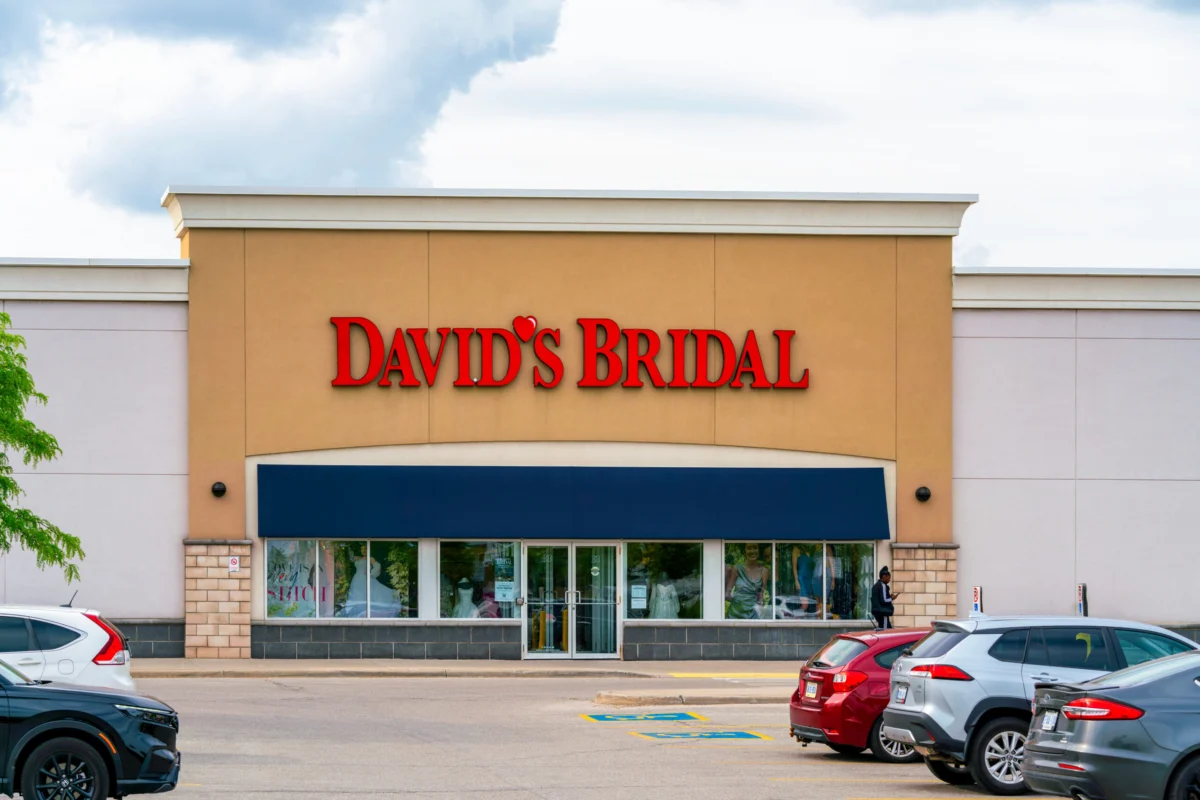
In a move that signals a seismic shift in the bridal industry’s digital landscape, David’s Bridal has announced a transformative plan to spin off its high-tech wedding planning engine, Pearl, into a standalone, publicly traded entity. This ambitious maneuver, unveiled in late October 2025, represents a departure from traditional brick-and-mortar retail strategy, positioning the company to capitalize on the explosive intersection of generative artificial intelligence and the multibillion-dollar wedding services market.
The proposal involves a nonbinding letter of intent between David’s Bridal and K&F Growth Acquisition Corp. II, a special purpose acquisition company (SPAC). If finalized, this deal would not only take Pearl public but would eventually see the tech-forward entity assume ownership of the iconic David’s Bridal brand and its extensive intellectual property.
The Evolution of Pearl: From Internal Tool to Industry Disruptor
The genesis of Pearl lies in a broader technological overhaul initiated by David’s Bridal. Following a comprehensive migration to Shopify in 2025, the retailer sought to leverage its massive troves of customer data to solve a perennial pain point for engaged couples: the fragmented, stress-heavy nature of wedding planning.
Pearl began as a digital assistant, but quickly evolved into an "agentic" AI—a sophisticated class of artificial intelligence capable of taking autonomous action on behalf of users. Unlike standard chatbots, Pearl is designed to execute tasks, from booking vendors and managing timelines to coordinating logistics.
A Chronology of the Transformation
- Early 2025: David’s Bridal completes its migration to the Shopify platform, providing the infrastructure for a more agile, omnichannel retail experience.
- June 2025: The company introduces the beta version of the Pearl wedding planner, integrating agentic AI capabilities that allow for proactive vendor coordination.
- December 2024: Laying the groundwork for its media strategy, David’s Bridal acquires Love Stories TV, effectively establishing the "Pearl Media Network" and securing a vital content and advertising arm.
- October 22, 2025: David’s Bridal and K&F Growth Acquisition Corp. II sign a nonbinding letter of intent to take Pearl public.
- Projected 2026–2027: The company outlines aggressive growth targets, aiming for over 30% profit margins in 2026 and a revenue surge exceeding 100% year-over-year by 2027.
Supporting Data: The Case for a High-Valuation Spin-Off
The financial logic behind the spin-off is rooted in the immense reach and projected scalability of the Pearl platform. According to data provided by David’s Bridal, the company’s reach is already pervasive; approximately 90% of all brides in the United States interact with some component of the Pearl ecosystem during their engagement journey.
The valuation of the deal sits at $350 million, supported by an additional $75 million in private investment. A significant portion of this liquidity—$25 million—is slated to come from CION Investment Corporation, the largest current shareholder of David’s Bridal. This indicates a strong vote of confidence from the company’s institutional backers.
Beyond the raw reach, the economic model is designed for high efficiency. By pairing an "asset-light" software model with its existing retail presence, Pearl is positioned to function as a two-sided marketplace. It connects couples with vetted vendors through "Pearl Connect," a proprietary lead-conversion tool that bridges the gap between digital discovery and actual service bookings.
Official Responses and Leadership Vision
The leadership team at David’s Bridal, which is expected to transition into the leadership of the new entity, views this move as the culmination of a 75-year evolution.
Kelly Cook, CEO of David’s Bridal, characterized the decision as a "defining moment" for the brand. "Pearl is shaping the next generation of wedding planning," Cook stated in a press release. "This next step will give both businesses room to grow independently while continuing to strengthen each other."
Under the proposed structure, Cook is slated to take the helm as CEO of Pearl, with Elina Vilk, currently the president and chief business officer of David’s Bridal, transitioning to the role of president of the new entity.
From the perspective of the acquiring SPAC, the appeal lies in the stability of the core business coupled with the "hockey-stick" growth potential of the AI platform. Edward King, co-CEO of K&F, noted that the partnership combines "longstanding relationships across the wedding industry with an asset-light software and media monetization model." His colleague, co-CEO Dan Fetters, highlighted the "compelling trifecta" of established profitability, high growth potential, and a pristine, unlevered balance sheet as the primary drivers of the deal.
Implications for the Industry and Consumers
The most immediate question for the millions of couples currently planning weddings with David’s Bridal is: What changes?
According to the official announcement, the transition will be seamless for the end user. The company has explicitly stated that David’s Bridal stores will remain unaffected, continuing to operate as usual. There will be no disruption to appointments, product availability, or the overall in-store guest experience. The retail footprint, essentially, will continue to serve as the physical touchpoint for the digital-first AI engine.
A New Model for Retail Media
The inclusion of the Pearl Media Network—born from the acquisition of Love Stories TV—into the public entity signals a broader industry trend. Retailers are increasingly moving away from being mere product purveyors to becoming platforms. By monetizing the attention and data of brides, Pearl is effectively pivoting to a software-as-a-service (SaaS) and retail-media-network model.
This is a high-stakes pivot. If Pearl succeeds in scaling its revenue to the projected $85 million-plus by 2027, it could set a template for other legacy retailers struggling to remain relevant in a digital-first economy. By spinning off the tech arm, David’s Bridal is effectively "un-tethering" the high-growth software valuation from the lower-multiple retail business, allowing investors to value the AI platform for its growth potential rather than its brick-and-mortar overhead.
The Road Ahead: Challenges and Opportunities
While the vision is ambitious, the transition is not without challenges. Integrating an AI-driven, asset-light software company with a physical retail chain requires balancing two distinct operational cultures. The success of the "agentic" technology—the promise that the AI can truly act as a concierge for the consumer—remains the core value proposition.
Furthermore, the retail media space is becoming increasingly crowded. Pearl must successfully compete not only with traditional wedding platforms like The Knot or Zola but also with the broader advertising capabilities of major tech giants who are increasingly encroaching on the wedding vertical.
However, the "trifecta" described by K&F’s leadership suggests that they are banking on the fact that no other entity has the combination of physical retail trust and deep-funnel AI integration that David’s Bridal possesses. By owning the gown—the central "anchor" purchase of a wedding—the company captures the consumer at the exact moment they begin their planning, a distinct advantage that competitors operating purely as digital platforms lack.
As the industry watches, the proposed spin-off of Pearl stands as a landmark case study in digital transformation. It is a story of a 75-year-old brand refusing to be left behind by the AI revolution, choosing instead to become the very platform that defines the future of its industry. Should the deal close, the wedding market may find that the most powerful "planner" in the room is no longer a human, but an agentic algorithm.


 Reynand Wu
 Iffa Jayyana



 Sagoh

 Azzam Bilal Chamdy

 Ali Ikhwan
