
 Asro
Asro
In the high-stakes world of modern entrepreneurship, the narrative of success is often dominated by Silicon Valley software titans or venture-backed tech unicorns. Yet, far from the gleaming towers of tech hubs, David Royce, the founder and chairman of Aptive Environmental, has quietly engineered a masterclass in business growth, proving that the most lucrative opportunities often reside in the sectors others deem "unsexy."
Royce’s journey—from a student who struggled with undiagnosed ADHD to the architect of the third-largest residential pest control firm in North America—is a testament to a singular philosophy: true success is not found in the prestige of an industry, but in the willingness to perform the tasks others shun, for long enough to become the undisputed master of them.
Main Facts: The Anatomy of a Stealthy Wealth Builder
David Royce is not your typical tech-founder archetype. He operates in the realm of "blue-collar" essential services, an industry characterized by high recurring revenue and recession-proof demand. His firm, Aptive, now stands as a titan in the home services market, having scaled to over $500 million in annual revenue.
His strategy is as unconventional as it is effective. While his peers with finance degrees were chasing roles in high-end investment banking, Royce saw potential where others saw only bugs and labor. By combining sophisticated financial modeling with a grassroots approach to sales, Royce transformed a traditionally fragmented, low-tech industry into a high-performance machine.

Chronology: A Path Forged in Persistence
The Early Lessons: Beyond the Classroom
Royce’s early life was marked by a struggle to fit into traditional educational structures. Labeled as not "smart" by his own childhood estimations, it wasn’t until he encountered a supportive sixth-grade teacher, Mrs. Luft, that he began to see his potential. Years later, an adult diagnosis of ADHD reframed his early struggles: in boring, rote environments, he struggled, but in high-stakes, engaging scenarios, his brain functioned as a superpower.
His first foray into the professional world was humble—a stint at McDonald’s after being let go from a pizza parlor. It was here, amidst the fryers and the uniforms, that he learned the foundational value of "best practices." He realized that even in minimum-wage roles, there was a system that, if followed with precision, created efficiency.
The Door-to-Door Crucible
During his college years, Royce sought to fund his education through door-to-door pest control sales. His start was disastrous. He spent a week in Sacramento without a single sale, performing what he calls "free cardio." Rather than quitting, he spent his weekends studying sales literature, eventually rising to become the top rookie in a company of 200. This period solidified his mantra: "Persistence is genius in disguise."
From Sales to Scaled Enterprise
Encouraged by a mentor who had successfully exited his own pest control business for $10 million, Royce pivoted. He invested his hard-earned savings of $300,000—money initially intended for an MBA—into his first venture. He didn’t invent a new product; he invented a better way to sell and service existing ones.

Over the next two decades, Royce utilized an "asset deal" structure to grow. He would sell the customer base and technical staff to strategic buyers, while retaining his core leadership team. This allowed him to repeatedly launch new ventures, better capitalized and more efficient than the last, without the burden of equity dilution or outside investors.
Supporting Data: Why "Unsexy" Wins
The data behind Royce’s strategy is compelling. The U.S. economy is currently witnessing a "silver tsunami" as baby boomer business owners retire. Many of these firms, particularly in essential services like plumbing, HVAC, and pest control, lack successors.
- The "Stealthy Wealthy": According to data referenced by Royce, roughly 43% of the top 0.1% of income earners in the United States—those making over $2.3 million annually—are involved in "boring" blue-collar industries.
- The Power of Recurring Revenue: Unlike tech startups that struggle with "churn," pest control provides a stable, recurring revenue stream that is highly attractive to private equity buyers.
- AI Resilience: While Artificial Intelligence continues to disrupt white-collar sectors like legal analysis and coding, it remains unable to address physical infrastructure issues. As Royce notes, "AI can’t climb on your roof to treat termites."
Official Responses and Strategic Philosophies
In a deep dive with Foundr CEO Nathan Chan, Royce broke down the core pillars that allowed Aptive to grow seven to ten times faster than its competitors:
1. The Sales Machine
Royce’s training program focuses on the "RAC" method: Resolve the doubt, Add a new, compelling piece of information (the "ace"), and Close in a different way. He emphasizes that sales performance is often hampered by body language; he taught his reps that their "face was saying ‘please don’t hurt me’" before they even spoke a word.

2. Radical Retention Through Ownership
Perhaps the most significant differentiator in Royce’s business model was his decision to distribute 25% of the company to his employees. By aligning the financial success of his team with the exit valuation of the firm, he ensured that his top talent remained committed. "Ownership is a far better retention tool than ping-pong tables," he argues.
3. The Architect vs. The Hero
A critical inflection point in Royce’s career was his transition from CEO to Chairman. He learned that to scale, he had to stop being the "hero" who jumps in to fix every problem and instead become the "architect" who builds a system capable of operating without him. This meant accepting that others might perform tasks differently than he would—a necessary trade-off for true organizational growth.
Implications: The Future of Entrepreneurship
David Royce’s trajectory offers several profound implications for the next generation of founders:
- The Myth of the "Exit": Royce warns that entrepreneurship is not merely a path to a financial windfall. He observes that even after achieving massive success, the human brain is wired to want "just a little more." He suggests that if one does not find joy in the daily "climb" of building a business, the summit will ultimately prove disappointing.
- Culture as Design: Royce warns against the misconception that company culture is just "vibes." Following the lessons from Tony Hsieh’s Delivering Happiness, Royce emphasizes that culture must be intentional, designed, and grounded in meaningful growth opportunities for employees, rather than just superficial perks.
- The Value of Failure: His experience with a high-level CFO hire who nearly derailed a $1.6 billion sale serves as a cautionary tale. It taught him the importance of "trust but verify" and the dangers of missing financial forecasts during a sale process. It also reinforced the lesson that a candidate’s resume—no matter how impressive—is not a guarantee of operational excellence.
Conclusion
David Royce’s career is a masterclass in pragmatism. By avoiding the allure of prestige and focusing on the unglamorous but essential needs of the market, he has built a legacy that transcends his bank account. His story reminds us that the most significant business opportunities are rarely found in the headlines; they are hidden in the day-to-day problems that people are desperate to solve. For those willing to do the work that others refuse, the path to building a billion-dollar empire is not just open—it is waiting.


 Iffa Jayyana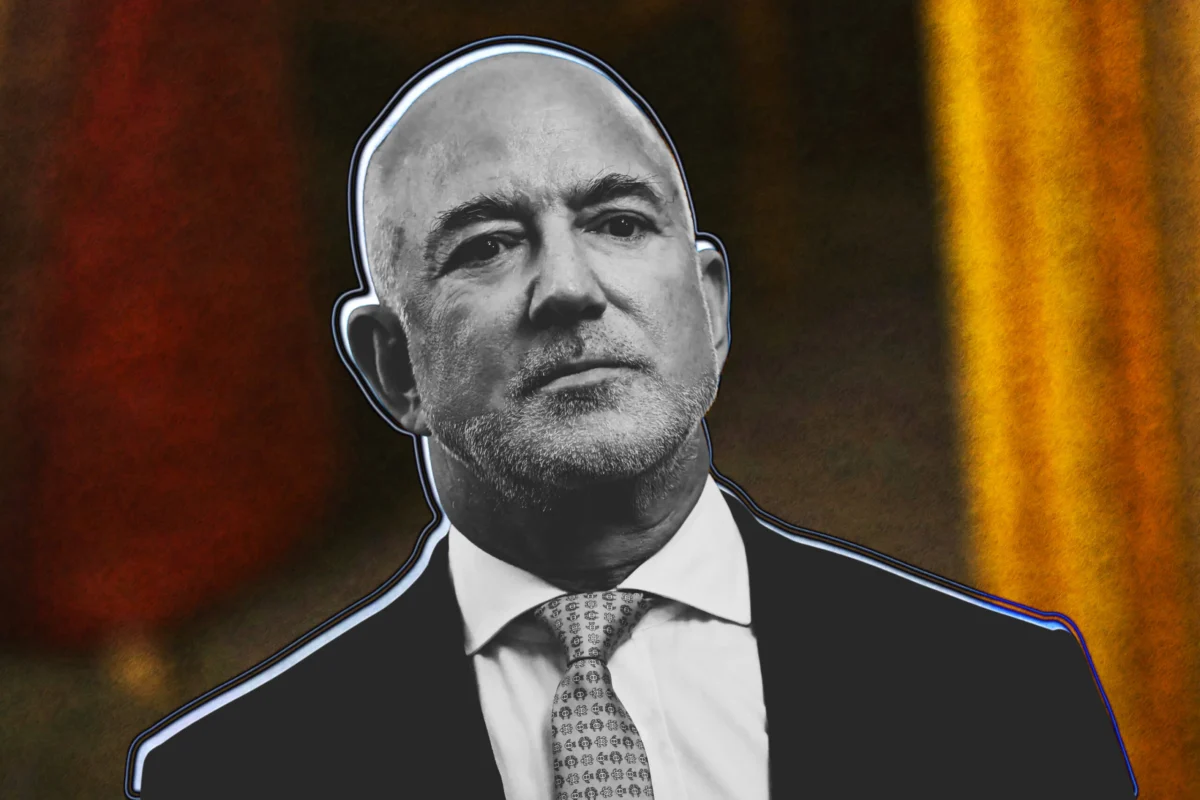
 Raul Delapena Setiawan
 Laily UPN
 Rifan Muazin
 Suro Senen
 Lina Hope
 Lina Irawan