
 Lina Irawan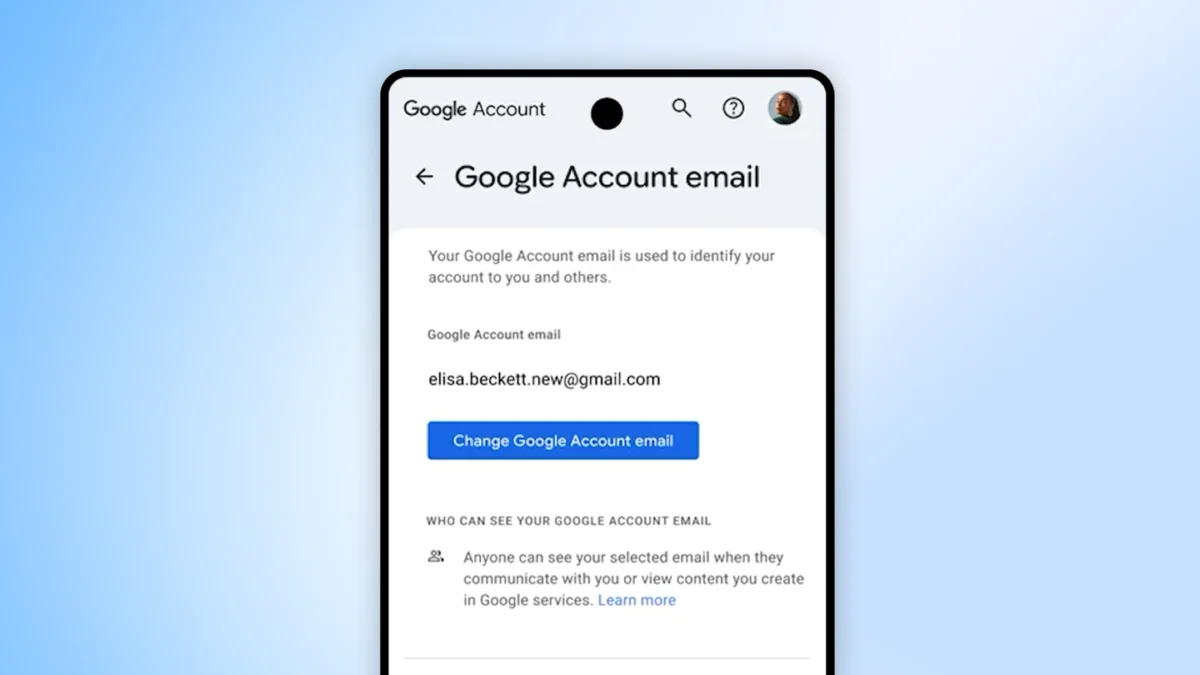
In a significant pivot for one of the most widely used digital ecosystems on the planet, Google has officially authorized a feature that users have requested for nearly two decades: the ability to change one’s primary Google Account username. For millions of users, the “@gmail.com” handle has functioned as a digital anchor—a permanent identifier that, once created, could never be modified. Today, that rigidity is a thing of the past.
The update, which began its phased rollout last year and is now fully accessible to all Google Account users in the United States, represents a fundamental shift in how the tech giant manages user identity. Whether users are looking to rebrand their professional presence, correct a handle created in their youth, or simply align their digital footprint with a new chapter in their lives, Google’s latest update provides the mechanism to do so without the logistical nightmare of migrating data between accounts.
The Core Facts: What Has Changed?
At the heart of this announcement is the decoupling of the "username" from the permanent backend identification of a Google Account. Historically, the part of the email address preceding the “@gmail.com” domain was treated as an immutable string of characters, baked into the structural DNA of the account.
Key Takeaways of the Update:
- Username Modification: Users can now edit the primary identifier associated with their Google Account, which dictates their Gmail address and login credentials for integrated services including Google Drive, Photos, Calendar, and third-party applications using "Sign in with Google."
- Seamless Integration: The transition is designed to be internal. Google’s infrastructure will automatically map existing files, emails, and cloud-stored data to the new handle, ensuring that users do not lose access to their history.
- Regional Availability: As of this writing, the feature is fully live for all U.S.-based accounts. Google has indicated that the rollout will continue to expand globally, though specific timelines for international markets remain pending.
- Procedural Requirements: The change is not instantaneous in terms of security verification. Users must navigate to the Google Account management portal, satisfy multi-factor authentication (MFA) requirements, and verify the new handle before the change is finalized.
Chronology: The Road to a Flexible Identity
To understand why this change is being hailed as a major milestone, one must look at the historical constraints of the Google ecosystem.
The "Permanent" Era (2004–2022)
When Gmail launched in beta in 2004, it was marketed as a permanent email service. Users were encouraged to secure their "name" early, and the lack of an edit function was initially viewed as a security feature—preventing account takeovers and identity spoofing. For nearly 20 years, users were effectively stuck with the choices they made as teenagers or early tech adopters.
The Testing Phase (2023)
Recognizing that user identity is fluid, Google initiated a quiet rollout of username-modification tools for specific Google Workspace (enterprise) accounts. This served as a "sandbox" to ensure that changing an email address wouldn’t break critical business integrations. The success of these trials paved the way for the consumer-facing rollout.
The Public Launch (2024)
Following the success of the Workspace trials, Google began the gradual expansion to personal Gmail accounts. Throughout late 2023 and early 2024, the feature appeared for select accounts, culminating in today’s announcement that the tool is available to all users within the United States.
Supporting Data: Why Digital Identity Matters
The necessity of this update is backed by a shift in how the modern workforce and digital society interact with online platforms. According to recent reports on digital literacy and identity management:
- The "Professionalization" Gap: A study by the Digital Identity Institute found that approximately 40% of adult professionals report feeling "embarrassed" or "less than professional" when using an email address created during their secondary school years.
- Security vs. Convenience: Data suggests that users who are dissatisfied with their email handles are more likely to create secondary accounts, which increases the "attack surface" for hackers. By allowing users to update their primary handle, Google is effectively encouraging account consolidation, which is a net positive for security.
- Service Integration: With the average user now relying on their Google account to log into over 50 third-party applications—ranging from banking and productivity software to entertainment streaming—the "Google ID" has become the primary key for digital access. Changing this ID is not just about email; it is about maintaining a cohesive identity across the entire internet.
Official Responses and Guidance
In an official statement regarding the rollout, a Google spokesperson noted: "We understand that your digital identity evolves. Our goal is to ensure that our tools grow with our users, providing flexibility without compromising the robust security that defines the Google experience."
Google’s support teams have released comprehensive documentation to guide users through the process. They emphasize that while the username change is straightforward, users should be aware of the "lingering effect." Specifically, emails sent to the old address may continue to be received by the account for a temporary period, but users are advised to manually update their contact information in banking portals, government systems, and professional resumes to ensure long-term stability.
For detailed tutorials, users are encouraged to visit the official Google Account Help Center, where video walkthroughs demonstrate the specific steps required to update a handle while maintaining account security.
Implications: The Future of User Autonomy
The ability to change one’s Google username has profound implications for both individual privacy and the broader landscape of the internet.
1. Privacy and Reputation Management
In an age of "cancel culture" and digital stalking, the ability to refresh one’s public-facing email identifier is a powerful privacy tool. Users who find themselves targeted by unwanted attention or simply looking to start fresh can now sanitize their digital presence without abandoning their historical data, such as photos or drive files that may hold significant sentimental value.
2. Streamlining the User Experience
By eliminating the need for users to manage multiple accounts, Google is effectively reducing "digital clutter." Users no longer need to "forward" mail from an old account to a new one, nor do they need to worry about losing access to paid Google One subscriptions or YouTube Premium memberships that are tied to specific legacy email handles.
3. Challenges for Third-Party Developers
While this is a win for users, it poses a minor challenge for third-party developers who rely on email addresses as unique identifiers in their databases. Developers will now need to ensure their systems utilize "Google Unique IDs" (an alphanumeric string behind the scenes) rather than the email address itself, to avoid breaking user records when a handle is changed. This represents a maturing of the internet’s authentication infrastructure.
Conclusion: A More Human-Centric Web
Google’s decision to allow username modification is a recognition of the fact that the internet is no longer a place of static, permanent handles. It is a dynamic space where the users of 2024 are vastly different from the users of 2004. By offering this flexibility, Google is not just updating a setting; they are acknowledging that digital identity is a fluid, evolving concept.
As this feature continues to roll out, users are advised to approach the change with caution. Changing an email address is a significant event that ripples through every corner of one’s digital life. It is recommended to perform an audit of all critical accounts linked to the old email before initiating the change.
Ultimately, this update serves as a reminder that as we change, our tools should change with us. In the race to build a more user-centric internet, Google has taken a decisive step toward giving users back the most important asset in the digital age: control over their own identity.


 Nana
Nana
 Siti Muinah
 Raul Delapena Setiawan
 Reynand Wu
 Sagoh
Sagoh

 Azzam Bilal Chamdy
 Ali Ikhwan