
 Asep Darmawan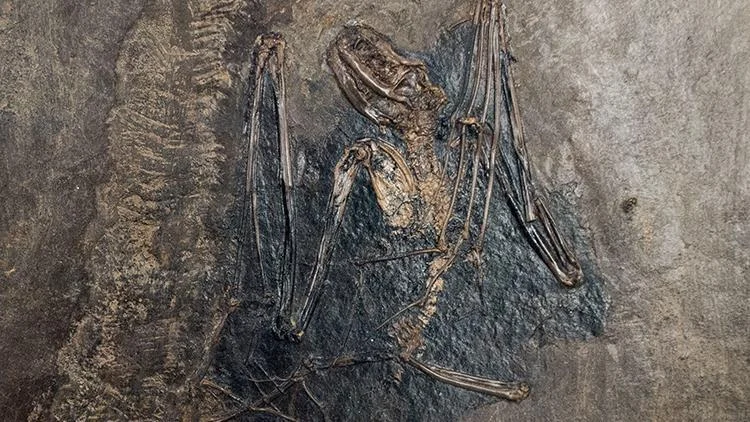
Jakarta – For decades, scientific consensus held that the world’s only flying mammals, bats, took their first flights over the ancient landscapes of Africa, Asia, or North America. This long-standing theory, deeply embedded in evolutionary biology textbooks, has now been dramatically challenged by groundbreaking research. A monumental new study, published in the prestigious journal Nature on September 23, 2026, presents compelling evidence suggesting that bats, in fact, likely originated in Europe.
This paradigm-shifting discovery is the culmination of an unprecedented global scientific endeavor known as Bat1K, an ambitious initiative dedicated to sequencing the genomes of all bat species. Bringing together the expertise of 137 researchers from 64 countries, the study meticulously compiled and compared genomic data from every living bat family, integrating these findings with the existing fossil record. The result is a robust and detailed reconstruction of bat evolution, painting a vivid new picture of their ancient journey.
The implications of this research are profound, not only for understanding the origins of these fascinating creatures but also for broader evolutionary biology, biogeography, and even future conservation efforts. The question that now echoes through the scientific community is clear: Did bats truly take to the skies for the first time in Europe?
Unearthing the European Roots: A Paradigm Shift in Bat Evolution
The traditional view of bat origins, largely inferred from the distribution of early bat fossils and the current diversity of species, pointed towards a genesis in the vast landmasses of Africa, Asia, or North America. These regions were thought to provide the ideal ecological conditions for the evolution of powered flight in mammals. However, the Bat1K study’s findings fundamentally overturn this entrenched understanding, proposing a revised narrative that positions Europe as the crucible of bat evolution.
According to the new research, the most probable scenario is that the ancestors of all modern bats first evolved in Europe during the late Paleocene epoch. This period, roughly 56 to 66 million years ago, was characterized by warmer global temperatures and a proliferation of early mammalian forms. From this European epicenter, these pioneering flyers then embarked on an extraordinary journey, dispersing across continents. Their initial expansion is hypothesized to have taken them to Africa, from where subsequent waves of migration led them to colonize the Americas, Asia, and Australia. Over millions of years, as they adapted to diverse habitats across the globe, bats underwent an incredible adaptive radiation, giving rise to the astonishing variety of species we observe today. This revised evolutionary roadmap compels scientists to re-evaluate established theories about early mammalian dispersal and the biogeographical patterns of life on Earth.
The Bat1K Initiative: A Deep Dive into Evolutionary Chronology
The Bat1K initiative, at the heart of this discovery, represents one of the most comprehensive genomic studies ever undertaken for a mammalian order. Its overarching mission is to sequence the complete genomes of all 1,400+ known bat species, creating an invaluable resource for understanding their unique biology, evolutionary history, and ecological roles. The scale of collaboration required for such an endeavor is immense, involving a global network of geneticists, paleontologists, bioinformaticians, and field biologists.
The methodology employed in this particular Nature study was rigorous and multi-faceted. Researchers analyzed 103 bat genomes, a substantial dataset that included 42 newly sequenced chromosome-level assemblies. These "chromosome-level" assemblies are particularly significant as they provide a highly accurate and contiguous view of an organism’s genetic blueprint, allowing for more precise comparisons and phylogenetic reconstructions than fragmented genome data. This extensive genomic collection represents 21 of the 22 recognized bat families, offering near-complete coverage of extant bat diversity.
Crucially, the genomic data was not analyzed in isolation. The researchers meticulously integrated these genetic insights with data from 44 bat fossils, acting as vital calibration points for their evolutionary timelines. Fossils provide tangible evidence of past life forms and their anatomical features, allowing scientists to anchor genomic divergence estimates to specific geological periods. By combining the molecular clock derived from genomic comparisons with the chronological markers from the fossil record, the team was able to build an exceptionally robust and reliable phylogenetic tree for bats. This integrated approach allowed them to pinpoint the probable geographic origin and the timing of the initial evolutionary diversification of bats with unprecedented accuracy. The late Paleocene, an epoch marked by significant geological and climatic changes, thus emerges as the most likely period for the genesis of powered flight in mammals within the European landmass.
Genomic and Paleontological Evidence: The Pillars of the New Theory
The strength of the new European origin hypothesis rests firmly on the sophisticated integration of high-resolution genomic data and critical paleontological evidence. The 42 new chromosome-level genome assemblies are a cornerstone of this study. Unlike earlier, more fragmented genome sequences, these high-quality assemblies allowed the researchers to perform incredibly detailed comparisons of genetic markers across different bat lineages. This level of resolution enabled them to identify ancient genetic signatures and reconstruct ancestral genomes with greater confidence, revealing deep evolutionary relationships and divergence times that were previously obscure. The sheer volume of data—103 genomes representing nearly all bat families—provided a comprehensive genetic tapestry from which to infer the common ancestor of all bats.
The genomic analysis indicated a pattern of genetic divergence that consistently pointed towards an earlier evolutionary node in Europe. This molecular evidence was then cross-referenced and validated with the fossil record. While bat fossils are notoriously rare and often incomplete due to their delicate bone structure, the existing 44 fossil specimens provided crucial chronological benchmarks. For example, the earliest undisputed bat fossils, such as Icaronycteris and Onychonycteris, found in North America, date back to the early Eocene (around 52 million years ago). However, the genomic analysis, when calibrated with these and other fossils, suggested an even older common ancestor, placing its emergence squarely within the Paleocene and pointing towards a European locale before the transcontinental migrations began. The congruence between the molecular clock and the fossil evidence significantly bolstered the credibility of the new evolutionary narrative, providing a "clearer picture" that resolves many previous contradictions and ambiguities in bat evolutionary history.
Expert Perspectives: Validating a Revolutionary Finding
The publication of this study marks a significant milestone in evolutionary biology, and the scientific community’s response reflects its profound impact. Professor Emma Teeling, a lead author of the study and the director of the Bat1K initiative, underscored the significance of the findings. "It’s extraordinary," she remarked, quoted by University College Dublin, "after decades of research and conflicting findings, we finally have a robust phylogenetic tree that we can now use to properly understand how and where the unique characteristics of bats evolved."
Professor Teeling’s statement highlights the long-standing challenges in reconstructing bat phylogeny due to their rapid diversification and the scarcity of early fossil records. The "strong phylogenetic tree" achieved through the Bat1K initiative provides an unprecedented framework for future research. It allows scientists to accurately map the evolution of key bat traits, such as echolocation, powered flight, and their remarkable immunity, onto a reliable timeline and geographic context. This foundational work will enable researchers to explore questions that were previously intractable, offering new avenues for understanding the genetic basis of these unique adaptations. Furthermore, the collaborative spirit of the Bat1K initiative itself is a testament to the power of global scientific cooperation in tackling complex biological mysteries, setting a precedent for future large-scale genomic projects.
Far-Reaching Implications: Reshaping Our Understanding of Bats
The revelation of Europe as the likely birthplace of bats carries a cascade of implications across multiple scientific disciplines, fundamentally reshaping our understanding of these enigmatic creatures and the broader sweep of life’s evolution.
Evolutionary Biology and Biogeography
Firstly, this discovery necessitates a re-evaluation of the evolutionary trajectory of mammalian powered flight. Bats are the only mammals to achieve true, sustained flight, a feat that evolved independently from birds and insects. Pinpointing their origin to Europe in the Paleocene provides crucial context for understanding the environmental pressures and ecological opportunities that may have driven this extraordinary adaptation. It opens new avenues for investigating the specific genetic and developmental changes that enabled the transformation of a quadrupedal mammal into an aerial master. Furthermore, the proposed dispersal route—Europe to Africa, then globally—requires a reassessment of global biogeographical models for early mammalian radiation. It suggests a more dynamic and complex pattern of continental exchange than previously assumed, potentially influencing our understanding of how other ancient lineages spread across the planet. This new framework will guide future studies seeking to understand the adaptive radiation of bats into their incredible diversity, from tiny bumblebee bats to giant fruit bats.
Conservation Efforts
From a conservation perspective, understanding the deep history and ancestral habitats of bats is invaluable. By identifying the region where bats first evolved, scientists can gain insights into the fundamental environmental requirements and evolutionary resilience of these mammals. This knowledge can inform targeted conservation strategies, helping to identify potential ancient refugia or critical habitats that might harbor unique genetic diversity or ecological traits important for bat survival. Moreover, a clearer understanding of their dispersal patterns can help predict how different bat lineages might respond to ongoing environmental changes, such as climate change or habitat loss, allowing for more proactive conservation measures to protect vulnerable populations.
Biomedical Research
Bats possess several unique physiological traits that make them subjects of intense interest in biomedical research. They exhibit remarkable longevity for their size, exceptional resistance to various diseases, and an unusual immune response that allows them to host numerous viruses (including coronaviruses) without succumbing to illness themselves. By tracing their evolutionary origins and subsequent diversification, scientists can better understand how these unique immunological and physiological characteristics evolved. This deep evolutionary context could provide critical clues for developing new treatments for human diseases, understanding aging processes, or even predicting and mitigating future zoonotic disease outbreaks by understanding the ancient co-evolutionary dance between bats and their pathogens. The Bat1K initiative’s genomic data offers an unparalleled resource for comparative genomics, allowing researchers to pinpoint the specific genes responsible for these extraordinary traits.
Beyond Biology
The implications extend beyond pure biology. Bats’ sophisticated echolocation system has long inspired engineers in the fields of acoustics and robotics. A deeper understanding of their evolutionary development and the neural mechanisms behind their collision-free flight, especially in dense swarms, could lead to innovations in autonomous navigation systems, drone technology, and even medical imaging. The insights gleaned from their unique flight mechanics could also inform biomimetic design for more efficient aerial vehicles.
Beyond Origins: Unveiling the Enigmatic World of Bats
While their evolutionary origins are now being rewritten, the inherent biological marvels of bats continue to captivate scientists and the public alike. Beyond their deep history, several unique characteristics set them apart in the animal kingdom.
Not Blind, But Masters of Echolocation
One of the most persistent myths about bats is that they are blind. This is far from the truth. While many bat species do possess relatively small eyes and rely less on vision than diurnal animals, they are certainly not blind. Their primary mode of navigation and hunting, particularly in low-light conditions, is an extraordinary sensory system called echolocation. Echolocation involves emitting high-frequency ultrasonic sounds, typically through the mouth or nose, and then listening to the echoes that bounce back from objects in their environment. By precisely interpreting the timing, intensity, and frequency shifts of these echoes, bats construct a detailed, three-dimensional "sound map" of their surroundings. This allows them to detect prey, avoid obstacles, and navigate in complete darkness with astonishing precision. Interestingly, there is often an evolutionary trade-off: species with highly developed echolocation capabilities may have comparatively less acute vision, and vice-versa. This specialization highlights the efficiency of natural selection in fine-tuning sensory systems to specific ecological niches.
Guano: From Ancient Caves to Explosive Power
The excretions of bats, known as guano, might seem like a mundane byproduct, but historically and ecologically, they hold immense significance. Bat guano is rich in various minerals, most notably saltpeter (potassium nitrate, KNO3). This compound played a crucial role in human history as a primary ingredient in gunpowder. During critical periods, such as the American Civil War, guano-rich caves were vital strategic resources for manufacturing explosives. Beyond its explosive past, guano is an exceptionally potent organic fertilizer, prized by farmers for its high nitrogen, phosphorus, and potassium content, enriching soil and promoting vigorous plant growth. Ecologically, guano deposits form the base of unique cave ecosystems, supporting diverse communities of invertebrates, fungi, and bacteria. Furthermore, the chemical properties of guano can aid in the preservation of ancient artifacts and fossils within cave environments, acting as a natural preservative layer.
Aerial Acrobats: The Science of Collision-Free Flight
Imagine hundreds, even thousands, of bats emerging from a cave at dusk, spiraling and weaving through the air at high speeds without colliding. This remarkable feat of aerial coordination is a testament to the sophistication of their echolocation system and neural processing. Studies by neuroscientists, including those from Brown University, have revealed that bats possess complex mechanisms to avoid mid-air collisions. While each bat emits its own ultrasonic calls, they are adept at filtering out the sounds of their conspecifics and focusing on their own echoes. They can rapidly adjust the frequency and timing of their calls, essentially "tuning in" to their own signals while simultaneously processing information about the movements of other bats. This dynamic acoustic landscape, combined with rapid flight maneuvers, allows for highly synchronized, collision-free movement in dense swarms, a marvel that continues to inspire research into swarm robotics and autonomous vehicle navigation.
The Upside-Down Enigma: More Than Just a Perch
The iconic image of a bat hanging upside down by its feet is deeply ingrained in popular culture. Indeed, most bat species do rest and sleep in this inverted position. This seemingly precarious posture is, in fact, incredibly energy-efficient and strategic. Bats have specialized tendons in their feet that lock their claws into place with minimal muscular effort, allowing them to hang effortlessly for extended periods. This position also offers a distinct advantage for takeoff; by simply releasing their grip, they can drop into flight, gaining instant momentum without the need for a running start. However, not all bats conform to this stereotype. A fascinating exception are six species of bats belonging to the family Thyropteridae (disk-winged bats) and Myzopodidae (sucker-footed bats). These bats rest in a manner more akin to birds, with their heads positioned upwards, clinging to smooth surfaces like the inside of unfurling leaves. They achieve this extraordinary feat through specialized suction cups or sticky pads located on their wrists and ankles, which allow them to adhere firmly to slick surfaces. This diversity in roosting behavior underscores the incredible evolutionary adaptations found within the order Chiroptera.
The Bat1K initiative’s groundbreaking research not only provides a definitive answer to one of evolutionary biology’s long-standing questions but also opens a new chapter in our understanding of these ecologically vital and biologically unique mammals. The notion of Europe as the cradle of bats challenges conventional wisdom and forces a fresh look at the ancient movements of life across our planet. As scientists continue to unravel the genomic secrets of bats, the mysteries surrounding their resilience, longevity, and unparalleled flight capabilities will undoubtedly continue to inspire and inform, cementing their place as one of nature’s most extraordinary creations.


 Ali Ikhwan
 Lina Irawan
 Dwi Wanna
 Muslim
 Nana Wu

 Rifan Muazin
 Asro
Asro