
 Laily UPN
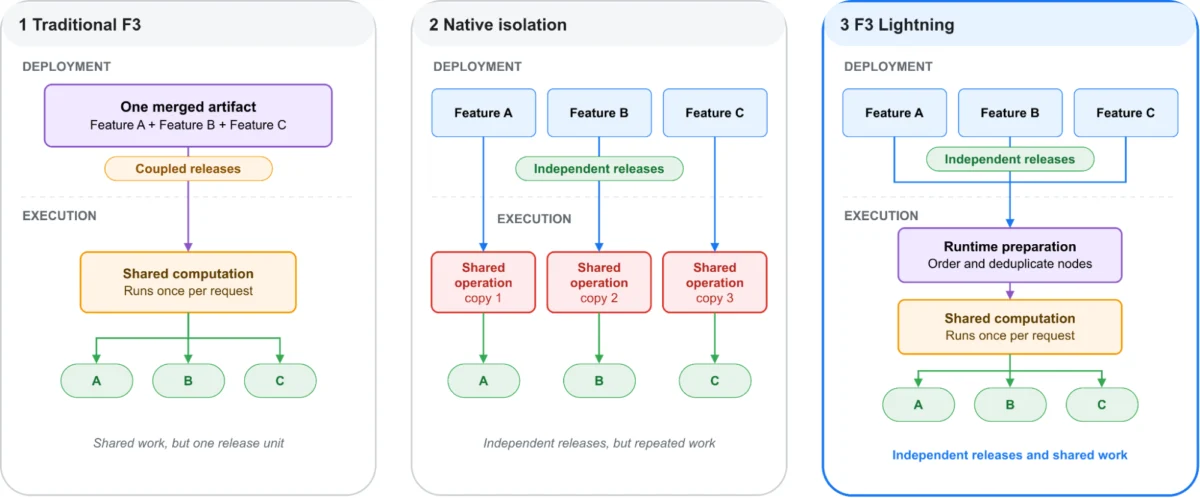
In the high-stakes world of production machine learning, the gap between a model’s potential and its real-world performance is often bridged by a "feature-serving system." These systems are the unsung engines that take raw, chaotic data—clicks, impressions, user interactions—and transform them into structured signals that models can understand. For years, Meta’s F3 platform served as the backbone for this pipeline. However, as the scale of Meta’s services ballooned to over 20,000 unique features, the very architecture that made F3 efficient began to hinder the speed of innovation.
The introduction of "F3 Lightning" marks a fundamental shift in how machine learning infrastructure manages complexity, decoupling the release cycle from the execution graph to achieve a 3.6x increase in deployment velocity without sacrificing computational performance.

The Architectural Challenge: The All-or-Nothing Trap
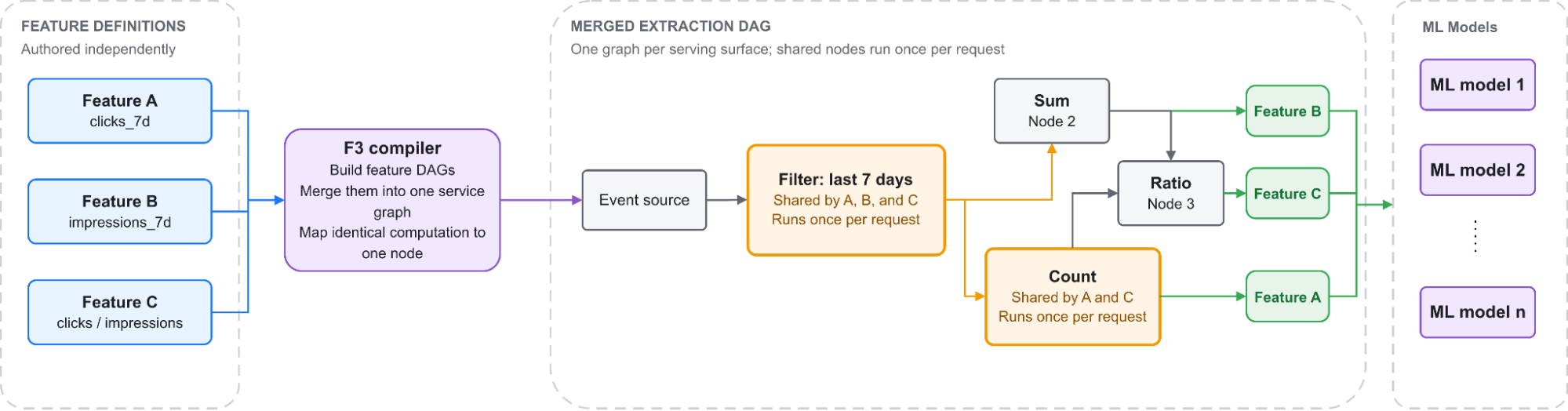
To understand the necessity of F3 Lightning, one must first understand the "shared execution architecture" of the original F3 system. Machine learning features are rarely independent. For example, calculating a seven-day click-through rate requires both a seven-day click count and a seven-day impression count. In a naive system, these would be calculated separately, leading to redundant filtering and processing of the same data.
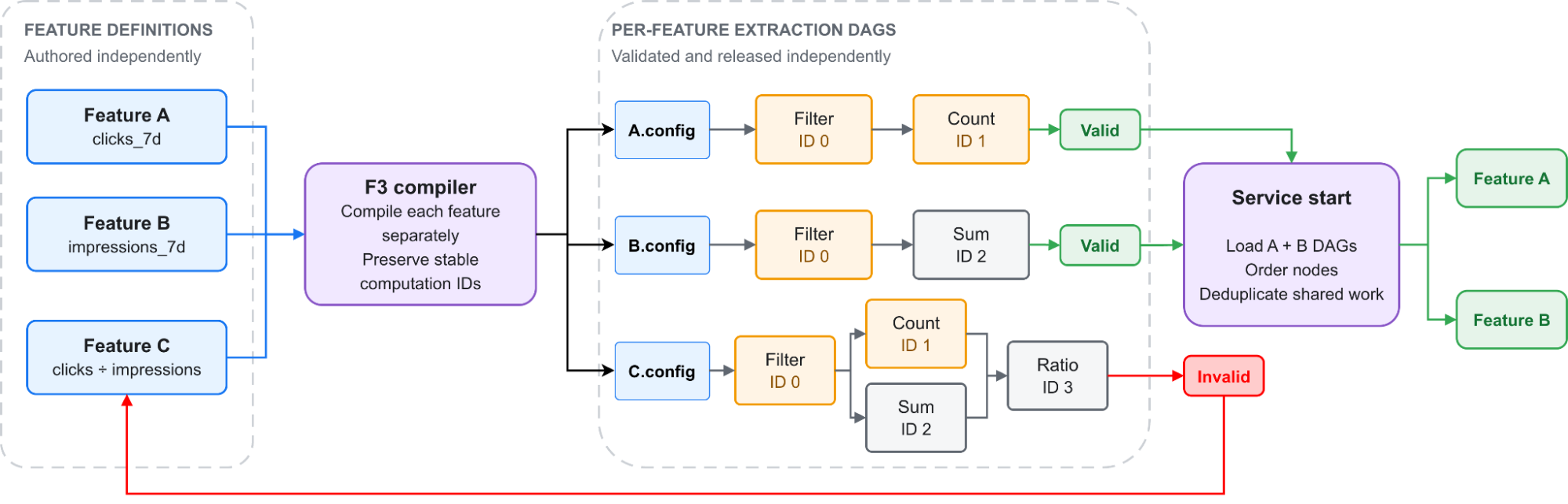
F3 solved this by representing feature extraction as a Directed Acyclic Graph (DAG). The F3 compiler would take individual feature definitions, merge them into a single, monolithic graph, and collapse redundant operations into shared nodes. This meant the work of filtering or aggregating data was performed exactly once per request.
While this was a triumph of efficiency, it created a structural bottleneck: the "all-or-nothing" release. Because the entire service relied on one massive, unified graph, a single malformed feature definition could—and often did—block the release of every other feature. If Feature A and Feature G were ready, but Feature D contained a syntax error or a logical bug, the entire deployment pipeline would stall. As the number of features grew from hundreds to tens of thousands, the frequency of these "blockers" increased, turning the deployment process into a high-friction, error-prone endeavor.
Chronology: From Monolith to Lightning
The journey to F3 Lightning was not an overnight overhaul but a series of iterative optimizations that eventually necessitated a fundamental redesign.
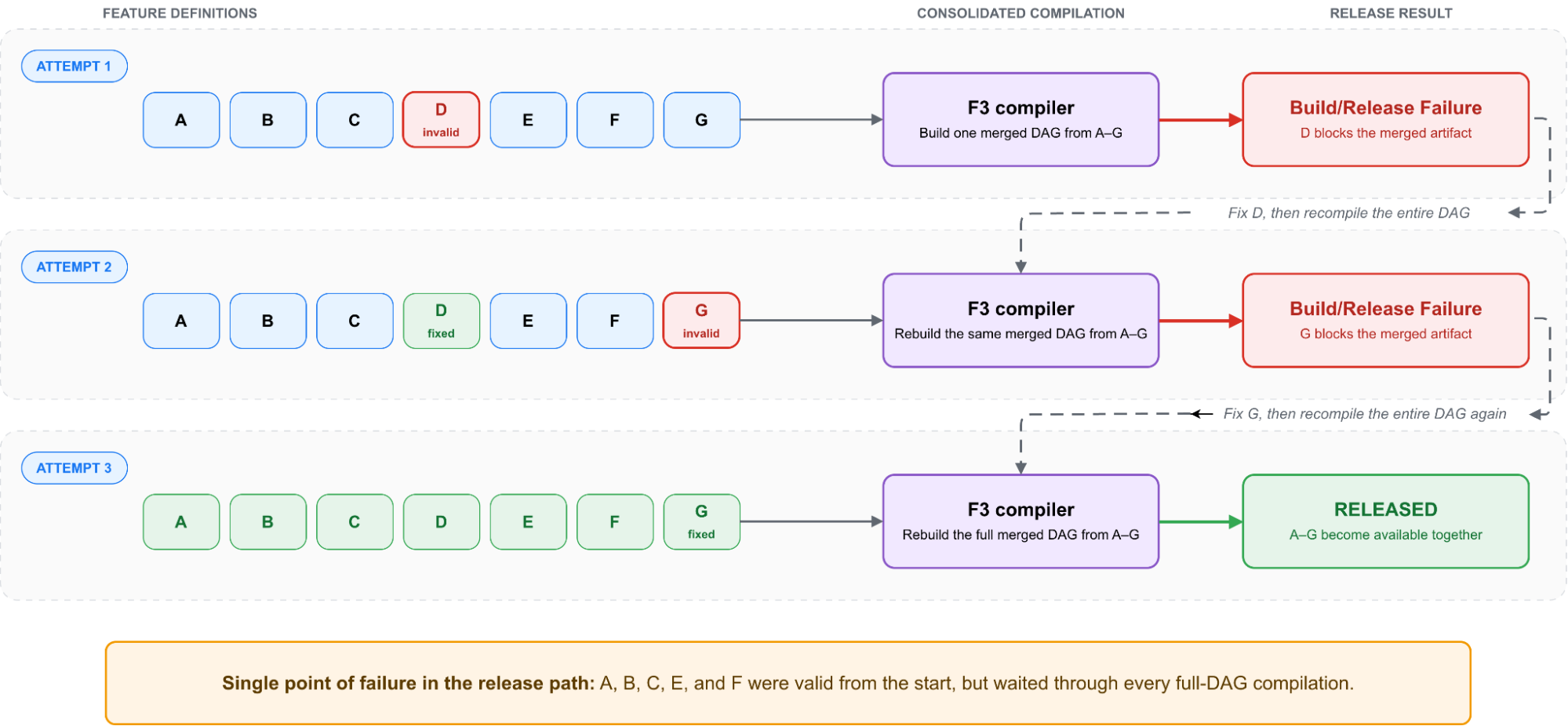
- Phase 1: The Monolithic Era: The original F3 system relied on a centralized compiler to merge all features into a single, optimized graph. This provided optimal CPU efficiency but centralized the risk of failure.
- Phase 2: The Scaling Crisis: As Meta’s feature count hit the 20,000-mark, the "all-or-nothing" release became unsustainable. Different features required different validation bars—some were simple updates, while others required intensive, computationally expensive model-related testing. Because they were bound to the same graph, a trivial change was held hostage by a complex, slow-to-verify feature.
- Phase 3: The Prototype Phase: Early attempts at "de-merging" the system focused solely on deployment. Engineers allowed features to be released independently, but this destroyed the efficiency of the original F3. By breaking the merged graph, the system reverted to redundant computations, causing CPU usage to spike significantly.
- Phase 4: The Lightning Breakthrough: The team realized that deployment boundaries and execution boundaries did not have to be the same. F3 Lightning was developed to allow features to be compiled and released individually while still being merged at runtime for maximum efficiency.
The Mechanics of F3 Lightning: How It Works
The magic of F3 Lightning lies in its ability to separate the "release" from the "execution." This is achieved through a four-step process that re-optimizes the system during service startup rather than at compile time.
1. Stable Identifiers
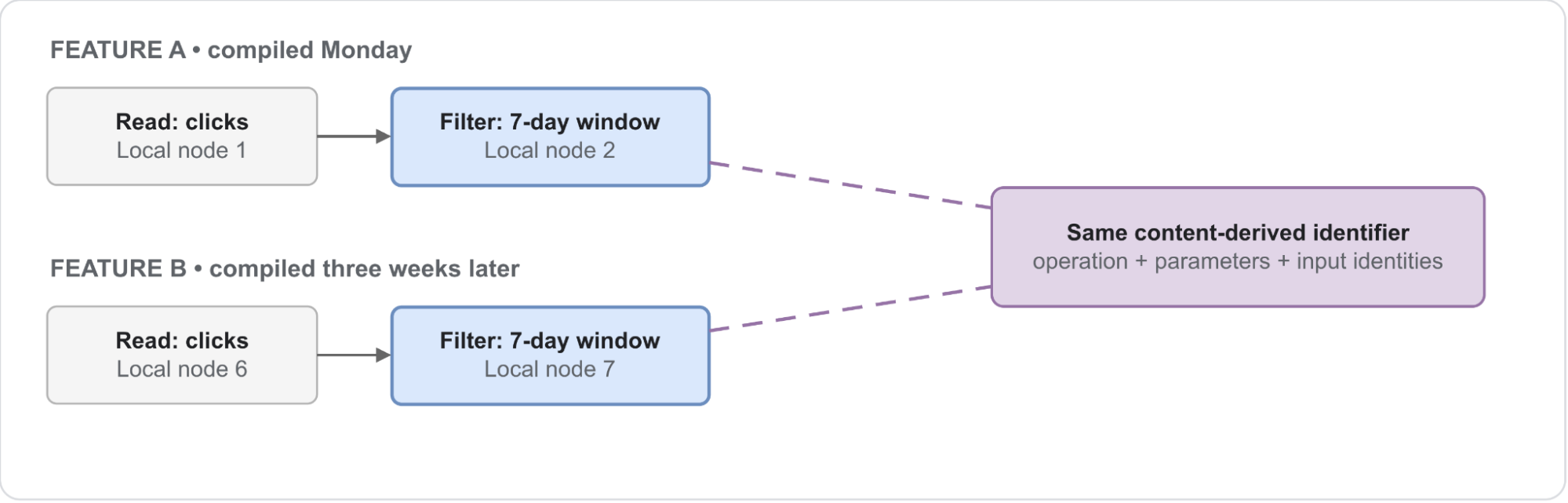
To deduplicate execution without a centralized compiler, F3 Lightning uses stable identifiers. Instead of relying on local, variable node numbers, the compiler derives an identifier based on the operation, its parameters, and its inputs. If two independently compiled features perform the same calculation, they are assigned the same identifier. This allows the runtime to recognize shared work across disparate, independently released configurations.
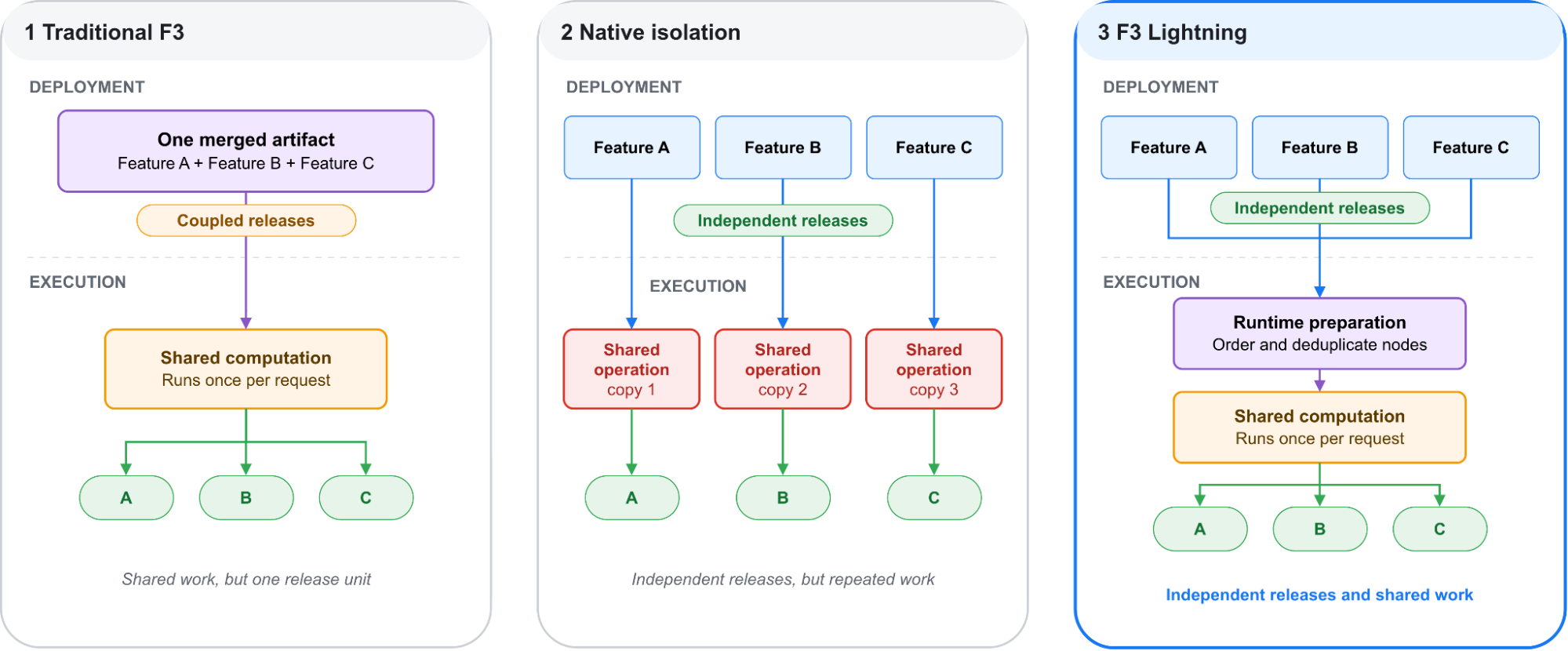
2. The Unified Execution Plan
At startup, the service aggregates all active feature configurations. It performs a topological sort to arrange the nodes, ensuring dependencies are respected. If multiple features request the same computation, the plan keeps one copy, effectively merging the graphs at runtime. To prevent a "bad" feature from affecting the entire pipeline, the system utilizes a robust error-handling layer: if one node fails, only its downstream dependents are marked as "not ready," allowing the rest of the graph to function correctly.
3. The Shared Memory Buffer
The most subtle, yet critical, optimization involved memory. Even when redundant computations were removed, CPU usage remained high due to memory fragmentation. Each feature configuration originally carried its own data container, leading to "cache misses" as the system jumped between disparate memory blocks. F3 Lightning replaced these with a single, unified memory buffer per request. This ensures that consecutive plan steps access adjacent memory, mirroring the efficiency of the original monolithic graph while maintaining the flexibility of independent deployments.
4. Dense Index Mapping
The final step involved eliminating the overhead of hash-map lookups. By assigning every unique identifier a consecutive integer slot at startup, the system transformed complex lookups into direct array index accesses. This removed the final vestige of computational cost from the request path.
Supporting Data and Performance Metrics
The results of the F3 Lightning implementation have been profound. By shifting the complexity of graph optimization from the compile-time/release-time phase to the startup phase, the system successfully balanced speed and efficiency.
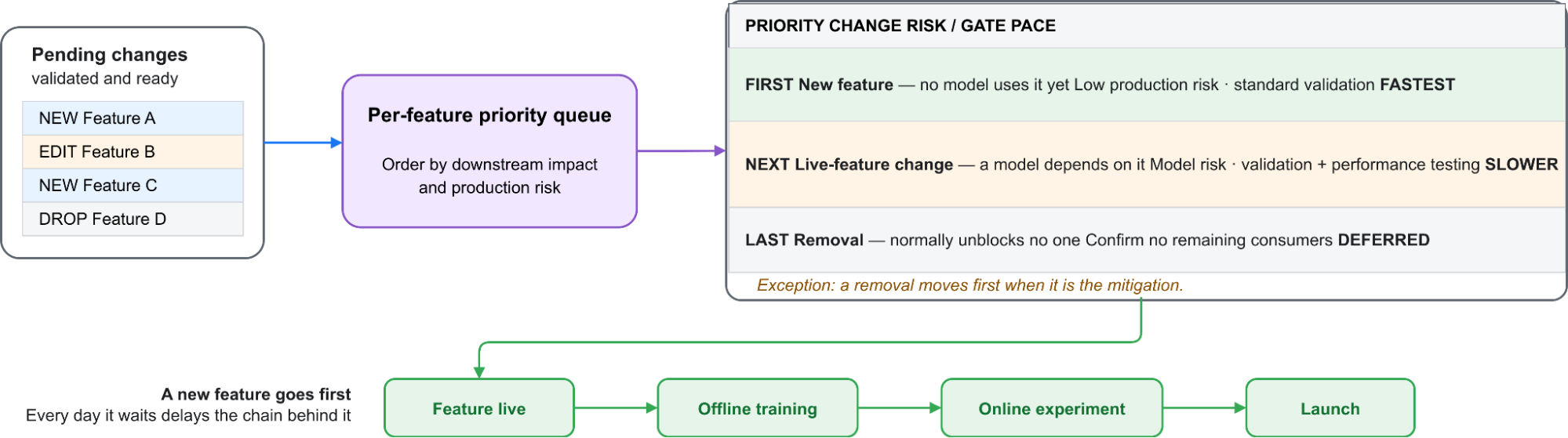
- Deployment Velocity: Features now reach production approximately 3.6 times faster than in the original F3 system.
- Computational Parity: Despite the transition to independent deployments, the system maintains the same low CPU usage levels as the original, highly optimized monolithic graph.
- Scale: The architecture now supports over 20,000 features, with the ability to scale indefinitely without the linear increase in deployment risk that plagued previous versions.
Official Perspectives: Lessons Learned
In their technical post-mortem, the Meta engineering team highlighted three core takeaways that serve as a blueprint for other large-scale distributed systems:
- Separate Deployment and Execution: A system that ties its deployment artifact to its execution graph will eventually succumb to the "blocker" problem. Decoupling these allows for agility without compromising operational performance.
- Move Invariant Work to Startup: Any task that remains constant across requests—such as determining execution order or memory layout—should be performed once at service startup. Moving this logic out of the request path is the primary driver of performance in high-volume systems.
- Memory Locality is Paramount: In modern CPU architectures, the location of data and the number of copies in memory are as vital as the algorithm itself. Consolidating memory usage not only saves space but significantly improves cache hit rates, which is often the silent killer of performance in distributed systems.
Implications for the Future of AI Infrastructure
The development of F3 Lightning highlights a shifting trend in machine learning infrastructure: the transition from "monolithic efficiency" to "modular agility." As AI models grow more complex and the demand for real-time inference increases, the ability to iterate on individual features without destabilizing the entire ecosystem has become a competitive necessity.
For Meta, this means that data scientists and ML engineers can now ship updates to their models at a pace previously impossible. The ability to push a fix for a single, high-risk feature without waiting for the rest of the 20,000-feature suite to pass its validation checks effectively removes the "release tax" on innovation. As the industry continues to push toward more automated and real-time ML systems, the architectural lessons provided by F3 Lightning—specifically the use of runtime-based graph consolidation and memory optimization—are likely to become standard patterns for large-scale production environments globally.

 Ammar Sabilarrohman

 Azzam Bilal Chamdy


 Lina Hope

 Asro
 Suro Senen
